

How Vietnam’s Electronics Manufacturing Sector Is Evolving
- June 10, 2026
- Posted by: admin
- Category: Blog
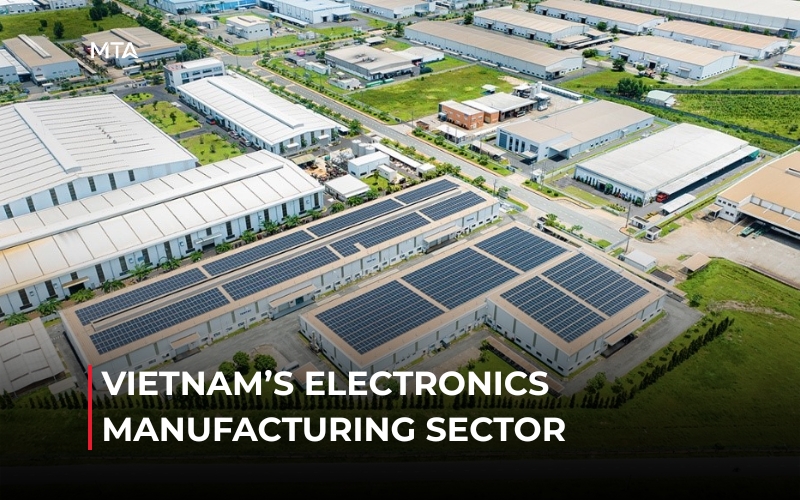
Vietnam’s electronics manufacturing sector is becoming one of the clearest signs of the country’s shift toward more technical and higher-value production. In the first five months of 2026, exports of computers, electronic products and components exceeded US$56 billion, increasing by more than 46% compared with the same period last year.
For international buyers, this growth shows that electronics is no longer a secondary category within Vietnam’s manufacturing industry. Vietnam is increasingly relevant for electronic components, assembled modules, smart devices, lighting products, PCBA production and selected electronics manufacturing services.
However, export growth alone does not tell buyers which supplier is suitable for a specific project. Electronics manufacturing requires process control, testing systems, technical documentation, quality management, trained operators and export readiness. The practical question is therefore not only whether Vietnam is growing as an electronics manufacturing location, but how buyers can identify the right Vietnamese factory for the right product, quality standard and production volume.
Why Vietnam’s Electronics Manufacturing Landscape Is Expanding
Vietnam’s electronics manufacturing landscape is expanding as part of a broader industrial transition. For many years, the country was widely associated with labour-intensive production such as textiles, footwear, furniture, packaging and general assembly. These sectors remain important, but they no longer represent the full picture of what Vietnam can offer to international buyers.
Today, more Vietnamese manufacturers are entering technical product categories, while some existing suppliers are upgrading from traditional manufacturing into more value-added activities. This shift can be seen in products such as electronic components, control boards, assembled modules, smart lighting systems, connected devices, electrical products, household technology products and finished electronic goods.
At the same time, international companies are rethinking their sourcing strategies in Asia. Many buyers are looking for additional manufacturing locations that can support supply chain diversification, regional procurement and long-term sourcing flexibility. Vietnam fits into this strategy because it combines a growing industrial base, an export-oriented manufacturing environment, improving technical capabilities and a location within Southeast Asia that can support regional supply chain planning.
This does not mean Vietnam is suitable for every electronics project. Some product categories still depend heavily on imported components, specialised materials or external testing partners. However, the direction of the market is clear. Vietnam is becoming more relevant for buyers looking for electronics manufacturing services, OEM production, selected ODM development, smart device assembly and PCBA-related sourcing opportunities.
Key Electronics Products Manufactured in Vietnam
Vietnam’s electronics sector covers a wide range of products and production stages. For international buyers, it is useful to understand these categories before starting supplier search.
One important area is electronic components and modules. These may include connectors, cables, control boards, sensors, small assembled parts, electronic sub-assemblies and product-specific modules. These components are often used in finished goods such as lighting products, household appliances, smart devices, industrial equipment and consumer electronics.
Lighting and electrical products are also important within Vietnam’s electronics landscape. Some Vietnamese manufacturers have long experience in traditional lighting, switches, electrical devices and household electrical products. A growing number of these companies are now moving toward smart lighting, connected devices and integrated electrical systems.
Finished electronic goods are another area of interest. These may include smart-home devices, assembled electronic products, technology-enabled household items, control units, lighting systems and other export-ready products. In these projects, final assembly is just as important as the electronic components inside the product. Wiring, casing, connectors, labels, screws, packaging and final testing all affect reliability.
PCBA production is also becoming more relevant in Vietnam’s electronics manufacturing landscape, especially for buyers working with smart devices, lighting systems, control units and connected products. At this stage, it is enough for buyers to understand that PCBA is a critical production step within many electronics projects. The deeper question is whether a supplier can manage PCBA, testing, final assembly and export preparation as part of a complete manufacturing process.
For buyers, this product variety creates more sourcing opportunities. However, it also means supplier selection must be based on the exact production scope. A factory that is suitable for basic assembly may not be suitable for PCBA-related production. A supplier that can produce lighting products may not automatically have the engineering capacity to support a more complex smart device. Product category, production process and factory capability should therefore be reviewed together.

Main Electronics Manufacturing Locations in Vietnam
Vietnam’s electronics manufacturing activities are concentrated across several important industrial locations.
Northern Vietnam plays a strong role in electronics and component production. Provinces such as Bac Ninh, Bac Giang, Thai Nguyen and Hai Phong are often associated with industrial parks, export manufacturing, electronics assembly, component supply and supporting industries. These locations benefit from proximity to logistics infrastructure, supplier networks and established manufacturing clusters.
Bac Ninh and Bac Giang are particularly relevant for electronics-related production and supplier networks. Thai Nguyen is known for its role in high-volume electronics manufacturing, while Hải Phòng offers advantages linked to seaport access, industrial zones and export logistics.
In the south, Ho Chi Minh City and surrounding industrial areas continue to support technology-oriented production, engineering-related activities, assembly and export-focused manufacturing. Saigon Hi-Tech Park is especially relevant for companies looking at more advanced manufacturing, smart devices, electronics-related development and high-tech industrial activity.
For international buyers, these locations are useful starting points. They help narrow down where certain types of suppliers may be found and how Vietnam’s electronics manufacturing ecosystem is geographically structured. Location, however, should be treated as one factor within a broader sourcing decision, together with product requirements, material availability, production scope and supplier capability.
From Traditional Manufacturing to EMS, PCBA and OEM/ODM Capabilities

One of the most important developments in Vietnam is the gradual movement from traditional manufacturing toward electronics manufacturing services.
EMS, or electronics manufacturing services, can include component sourcing, PCBA production, product assembly, functional testing, box-build assembly, packaging and sometimes engineering support. Not every Vietnamese manufacturer offers the full EMS scope, but more suppliers are beginning to provide selected EMS-related services.
PCBA, or printed circuit board assembly, is a key part of many electronics projects because it connects product design with final product performance. Buyers looking for a Vietnamese PCBA factory should review whether the supplier can manage component sourcing, component placement, soldering quality, inspection, testing and traceability. If PCBA production is outsourced, the buyer should understand who the subcontractor is, what part of the process is outsourced and how quality is controlled.
Some factories are strong in final assembly but rely on external partners for PCBA production. Others can support lighting products, control boards or smart devices but may still depend on imported components. Some suppliers are suitable for small and medium production runs, while others are better prepared for larger export-oriented orders.
This is why buyers should define the exact production scope before selecting an EMS partner. The supplier should be able to answer practical questions clearly. Does it source components itself, or does the buyer provide them? Can it manage PCBA production in-house? Does it perform functional testing? Does it have inspection records? Can it support packaging and export preparation? Does it understand international documentation requirements?
OEM and ODM capabilities should also be reviewed carefully.
In OEM manufacturing, the buyer usually provides the design, specifications, bill of materials, quality standards, testing requirements and packaging instructions. The factory produces according to these requirements. This model can work well when the buyer has clear technical documentation and wants more control over the product.
ODM manufacturing requires more input from the supplier. The factory may provide an existing product design, support product adaptation or contribute to technical development. This can be useful for buyers looking for faster market entry, but it requires careful discussion around intellectual property, product ownership, customisation, compliance and long-term control.
For both OEM and ODM projects, written specifications are essential. Electronics manufacturing should not rely only on verbal explanations, product photos or reference samples. Drawings, component requirements, testing standards, packaging details and acceptance criteria should be agreed before production begins.
What Buyers Should Review in a Vietnam Electronics Factory
When evaluating a Vietnam electronics factory, buyers should look beyond the company profile, product catalogue or sales presentation. These materials can provide a first impression, but they do not confirm whether the supplier can maintain stable quality under real production conditions.
The first area to review is equipment. Depending on the product, this may include SMT lines, soldering equipment, assembly stations, testing tools, inspection equipment, ageing test areas, packaging lines and component storage facilities. Equipment is important, but buyers should also understand whether it matches the product requirements, how it is maintained and how it is used during production.
The second area is production flow. Buyers should observe how materials enter the factory, how components are stored, how workstations are arranged, how products move through each production stage and how finished goods are inspected before packing. A structured production flow can reduce mistakes and improve consistency.
The third area is workforce and process discipline. Electronics production often involves small components, connectors, boards, wires, casings, screws, labels and packaging materials. Small assembly mistakes can lead to product failure or customer complaints. Clear work instructions, operator training and supervision are therefore important signs of factory maturity.
Testing is another critical point. Depending on the product, testing may include visual inspection, electrical testing, functional testing, ageing tests, safety checks or final product verification. Buyers should ask where testing happens, who performs it, what standards are used and how results are recorded.
Documentation and traceability should also be reviewed, especially for products involving multiple components or production steps. A capable supplier should be able to keep records for materials, production batches, inspection results, defects, corrective actions and shipments. If a quality issue appears after delivery, these records help identify the affected batch and understand the root cause.
Finally, buyers should confirm export readiness. A Vietnamese factory may have strong domestic production experience but limited experience with international buyers. This can create challenges around labelling, packaging standards, compliance documents, communication, logistics coordination and shipment preparation.
This type of review is especially important before moving from sampling to mass production. A good sample does not always prove that the factory can repeat the same quality at scale. Mass production involves more workers, more materials, tighter timelines and more opportunities for variation. For electronics products, process stability is often more important than a single successful sample.
A Practical Look from On-Site Factory Evaluation

Recent on-site factory evaluations show how Vietnam’s electronics manufacturing sector is evolving in practice.
In one evaluation conducted at a Vietnamese electrical and lighting manufacturer located inside Saigon Hi-Tech Park, MoveToAsia observed how a company with a traditional product background was developing stronger capabilities in smart-home applications, connected lighting systems and integrated electrical solutions.
This type of factory development reflects a broader transition within Vietnam’s industrial base. Some manufacturers are no longer limited to simple assembly or standard electrical products. They are gradually building capabilities in product integration, functional testing, OEM/ODM support and more export-oriented production processes.
For international buyers, this kind of field observation adds practical context to market data. It shows how a supplier’s development path may move from traditional products toward more technical applications, especially in areas such as smart lighting, connected devices and integrated electrical systems.
MoveToAsia supports this process by helping international companies identify suitable Vietnamese manufacturers, arrange supplier evaluation, review production capability and understand how a factory fits into the buyer’s sourcing strategy.
Vietnam in Long-Term Regional Sourcing Strategies
Vietnam should not be viewed only as a short-term alternative sourcing location. For many international companies, its value lies in how it can become part of a long-term regional sourcing strategy.
In practice, this means using Vietnam to build additional supplier options, test new product categories, support selected production stages or develop a more flexible procurement structure in Southeast Asia. A buyer may start with one product line, one component category or one assembly project before expanding into a wider supplier relationship.
This long-term approach is especially relevant for electronics manufacturing because supplier development often takes time. Technical alignment, sample approval, testing standards, documentation, packaging requirements and logistics coordination all need to be built step by step. A supplier that is not suitable for a complex project immediately may still become valuable for a more focused production scope.
Vietnam can also support buyers that want to balance cost, capability and supply chain resilience. Some products may be suitable for full production in Vietnam, while others may only fit selected stages such as assembly, packaging, testing or component sourcing. The right approach depends on the product, the supplier ecosystem and the buyer’s internal requirements.
For European buyers in particular, long-term supplier relationships often depend on transparency, communication and process reliability. Price remains important, but it should be considered together with technical capability, documentation, quality control and the supplier’s ability to improve over time.
Conclusion
Vietnam’s electronics manufacturing sector is evolving from basic assembly and traditional production toward more technical and higher-value activities.
The growth of computers, electronic products and components in Vietnam’s export structure shows that electronics is becoming a central part of the country’s manufacturing industry. At the same time, the development of smart devices, lighting systems, electronic modules, PCBA production, OEM/ODM support and selected electronics manufacturing services creates new sourcing opportunities for international buyers.
But opportunity should still be approached with a structured process. Buyers need to understand the real production environment, equipment, testing systems, workforce discipline, documentation, export readiness and ability to scale.
For companies looking to source electronics from Vietnam, the strongest results come from combining market understanding with factory-level verification. Vietnam can be a valuable part of a regional sourcing strategy, but supplier selection must be based on evidence, not assumption.
MoveToAsia helps international companies approach this process with local knowledge and practical support, from supplier search and factory evaluation to quality control, logistics coordination and sourcing strategy development in Vietnam.