

When companies evaluate Vietnam as a manufacturing destination, cost is usually the primary driver. However, many expectations are based on outdated assumptions or simplified comparisons—often with China or other low-cost countries.
The reality is more nuanced.
Vietnam is not simply a low-cost alternative. It is a developing industrial ecosystem with:
- strong capabilities in certain sectors
- fragmentation in others
- and a mix of local and imported supply chains
This means that cost is not determined by one factor, but by how well the entire production system is structured.
Cost in Vietnam is not about unit price — it is about total execution cost.
This includes:
- product development
- supplier coordination
- production efficiency
- quality control
- logistics
Companies that approach Vietnam with a narrow “price comparison” mindset often underestimate the complexity of execution—and end up facing hidden costs.
Understanding the Full Cost Model
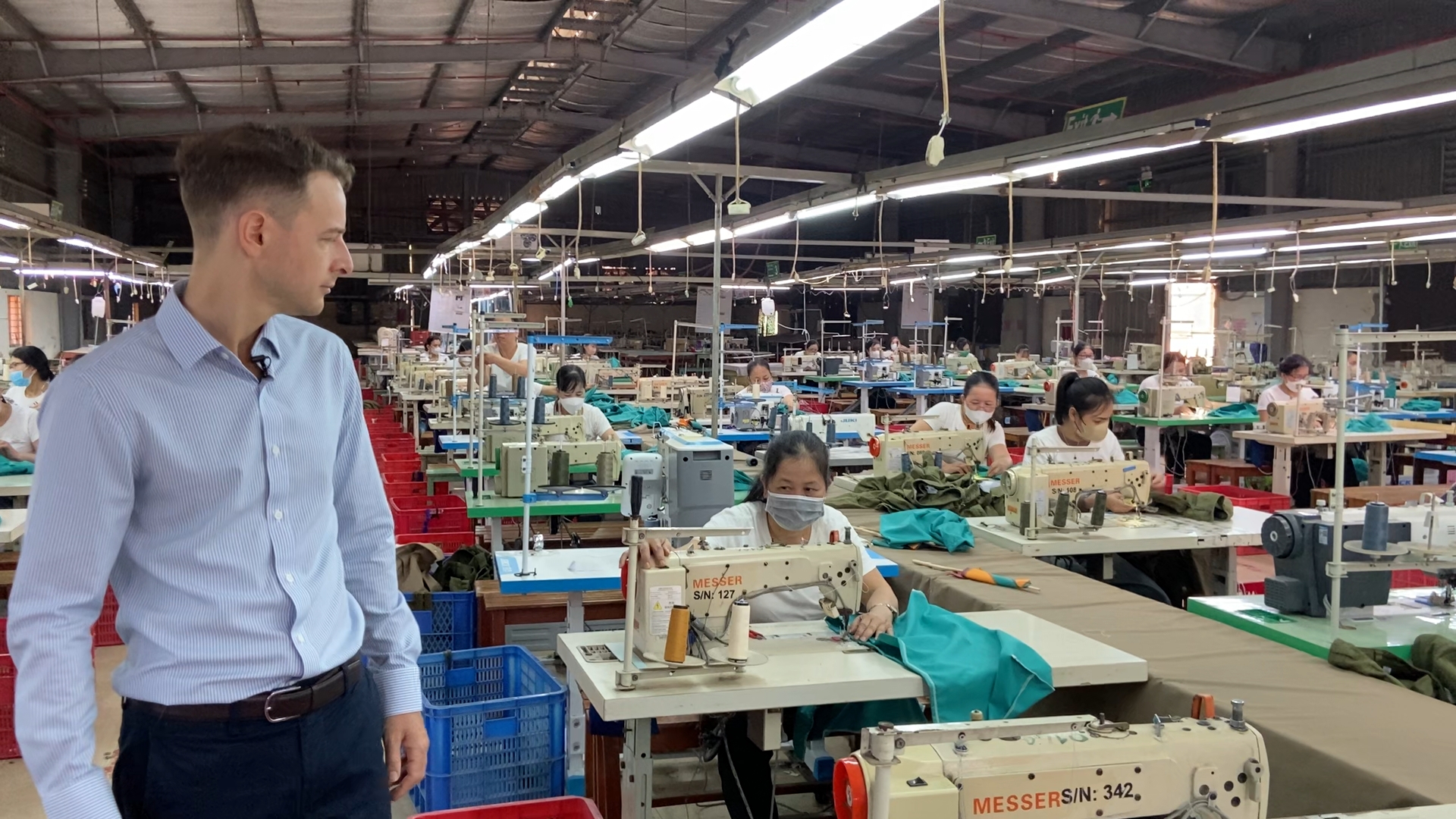
A proper cost analysis should be structured across multiple layers.
Direct Manufacturing Cost
This includes:
- raw materials
- labor
- production processes
These are the visible elements of a quotation.
Indirect Production Cost
Less visible but equally important:
- tooling and setup
- sampling and development
- quality control
- supplier coordination
Execution & Risk Cost
Often ignored in initial calculations:
- delays
- miscommunication
- rework
- supplier inconsistency
In Vietnam, these indirect and risk-related costs can represent a significant portion of the total project cost if not properly managed.
Raw Material Cost (30–60%)
Raw material is the single most important cost component across almost all industries.
Local vs Imported Materials
Vietnam has strong access to certain materials:
- wood (especially plantation wood)
- some textiles
- basic plastics
However, many materials are imported:
- steel and aluminum (partially)
- technical fabrics
- electronic components
- chemicals and coatings
👉 This creates dependency on global supply chains.
Price Volatility
Material prices are often linked to global benchmarks:
- metals → London Metal Exchange (LME)
- plastics → oil derivatives
- fabrics → cotton or synthetic fiber markets
👉 This leads to:
- fluctuating quotations
- limited validity periods (7–30 days)
Supplier Behavior
Some suppliers:
- hedge against volatility by increasing margins
- or provide conservative quotations
👉 Understanding how suppliers manage material risk is critical.
Practical Example
In a metal project:
- aluminum may represent 50% of total cost
- a 10% fluctuation in material price can impact final cost significantly
👉 Buyers should track material trends, not just supplier pricing.
Labor Cost (10–25%)
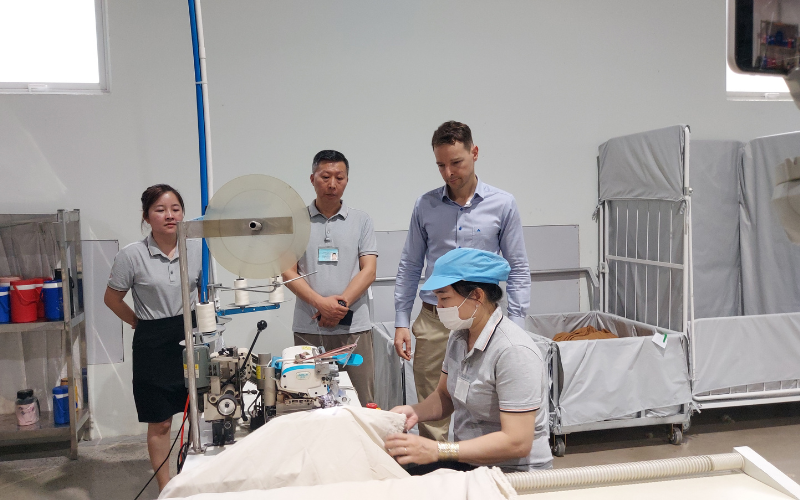
Labor is often seen as Vietnam’s main advantage, but this must be understood in context.
Labor Cost Structure
Vietnam offers:
- lower labor cost than China
- competitive rates for skilled and semi-skilled workers
Productivity Matters More Than Cost
A lower hourly rate does not guarantee lower production cost.
Factors that impact productivity:
- worker skill level
- training
- production organization
- supervision
Industry Differences
Labor impact varies by sector:
- high impact: garments, upholstery, assembly
- medium: furniture, packaging
- lower: automated industrial processes
In labor-intensive industries, Vietnam remains highly competitive.
In automated industries, labor advantage becomes less significant.
Manufacturing & Processing Cost
Manufacturing and processing costs represent the core transformation stage—where raw materials are converted into finished products. While often grouped into a single line in quotations, this category is one of the most complex and variable components of total cost.
Understanding Cost per Operation
Each manufacturing step has a direct cost impact. In Vietnam, production is often organized in sequences of operations rather than fully integrated lines.
A typical process chain may include:
- material preparation (cutting, splitting, forming)
- primary processing (CNC, stitching, molding, welding)
- intermediate handling (transport between stations)
- assembly
- finishing
Each of these stages adds:
- labor time
- machine usage
- handling cost
The more fragmented the process, the higher the cumulative cost.
Time-Based Costing (Critical Insight)
In many Vietnamese factories, cost is indirectly tied to time spent per unit rather than purely material or machine rates.
This means:
- complex products → longer cycle time → higher cost
- inefficient workflows → increased labor hours → higher cost
For example:
- a product requiring 5 minutes of labor vs 15 minutes can triple labor cost
- additional handling steps (moving between workshops) increase inefficiency
👉 Optimizing production time is one of the most effective cost reduction levers.
Industry-Specific Cost Drivers
Metal & Industrial Manufacturing
Costs are heavily influenced by:
- machining time (CNC minutes per part)
- number of operations (cutting, bending, welding)
- precision requirements (tight tolerances increase time)
A small design change (e.g. fewer holes, simpler geometry) can significantly reduce cost.
Furniture Manufacturing
Cost is driven by:
- level of manual work (sanding, finishing, upholstery)
- complexity of structure
- finishing requirements
Highly detailed designs with complex finishes can double production cost.
Garments & Apparel
Cost depends on:
- number of sewing operations
- complexity of patterns
- fabric handling
Products with multiple panels and detailed stitching require more time and skill.
Machine vs Manual Trade-Off
Vietnam offers a mix of production styles:
- manual production → lower cost, higher variability
- semi-automated → balanced
- automated → higher cost, better consistency
👉 Choosing the right level depends on:
- volume
- quality expectations
- product complexity
Subcontracting Impact on Processing Cost
Many manufacturers do not perform all operations in-house.
Common outsourced processes include:
- laser cutting
- heat treatment
- specialized machining
- finishing
This creates:
- additional margins
- coordination cost
- potential delays
A supplier may appear competitive but include hidden subcontracting layers.
Design-to-Cost Optimization
One of the most powerful ways to reduce manufacturing cost is through design simplification.
This includes:
- reducing the number of components
- simplifying geometry
- minimizing manual operations
- standardizing parts
Tooling & Product Development Cost
Tooling and development are often seen as initial costs, but they are actually strategic investments that influence long-term production performance.
Tooling as a Production Foundation
Tooling defines:
- product accuracy
- repeatability
- efficiency
Examples include:
- injection molds
- stamping dies
- assembly fixtures
- positioning jigs
Poor tooling leads to recurring production issues.
Cost Breakdown of Tooling
Tooling cost is influenced by:
- complexity of the product
- material used for tooling (steel vs aluminum molds)
- required lifespan (prototype vs mass production)
Typical ranges:
- prototype tooling → $300–$1,000
- medium production tooling → $1,000–$5,000
- industrial-grade tooling → $5,000–$20,000+
Development Phase Cost
Beyond tooling, development includes:
- engineering adjustments
- prototype testing
- sampling iterations
- communication and coordination
These costs are often embedded in pricing or absorbed by suppliers.
Iteration Cost & Learning Curve
In Vietnam, development often requires several iterations.
Each iteration involves:
- material use
- labor
- time
The more complex the product, the higher the development cost.
Supplier Approach to Development
Suppliers may handle development differently:
- large factories → structured engineering teams
- smaller factories → trial-and-error approach
This impacts:
- cost
- timeline
- product quality
Long-Term Cost Impact
Investing more in development and tooling upfront can:
- reduce defect rates
- improve production speed
- lower long-term cost
Finishing & Surface Treatment Cost
Finishing is one of the most critical—and sensitive—cost components in manufacturing.
Role of Finishing
Finishing impacts:
- product appearance
- durability
- resistance to environment (corrosion, UV, humidity)
Types of Finishing Processes
Depending on industry:
- painting (spray, manual)
- powder coating
- anodizing (for aluminum)
- plating (zinc, chrome, nickel)
- polishing and buffing
Cost Structure of Finishing
Finishing cost depends on:
- surface area
- complexity of shape
- type of coating
- required quality level
Outsourcing Reality in Vietnam
A significant portion of finishing is outsourced to specialized subcontractors.
This introduces:
- additional margin layers
- transportation cost
- extended lead times
- quality variation
Quality vs Cost Trade-Off
Lower-cost finishing often leads to:
- uneven coating
- color inconsistency
- reduced durability
Higher-quality finishing:
- increases cost
- improves product lifespan
- reduces returns
Industrial Risks
In industrial manufacturing:
- improper coating thickness
- inconsistent anodizing
- poor adhesion
can lead to:
- product failure
- warranty claims
- reputational damage
Cost Optimization Strategy
Instead of reducing finishing cost directly, optimize by:
- standardizing finishes
- reducing variation
- aligning specifications with supplier capability
Packaging & Logistics Cost

Packaging and logistics are often treated as secondary cost elements. In reality, they are critical components of the total manufacturing cost—especially for export-oriented production.
Packaging Is Part of the Product, Not an Add-On
In Vietnam, packaging is not only about protection—it is part of the manufacturing process.
It directly affects:
- product integrity during transport
- loading efficiency
- final landed cost
👉 Poor packaging decisions often lead to higher overall cost despite lower initial expenses.
Packaging Cost Structure
Packaging typically includes:
- outer cartons (single-wall vs double-wall)
- internal protection (foam, EPE, cardboard inserts)
- pallets (wood or plastic)
- labeling and compliance markings
The cost varies depending on:
- product fragility
- shipping method (sea vs air)
- destination market requirements
Container Optimization
One of the most underestimated cost drivers is container utilization.
Two suppliers offering the same unit price may result in very different total costs depending on how efficiently products are packed.
For example:
- Supplier A: optimized packaging → 1,000 units per container
- Supplier B: inefficient packaging → 800 units per container
👉 Even with identical unit price, Supplier A results in lower landed cost per unit.
8.4 Vietnam-Specific Logistics Considerations
Vietnam’s export logistics are well developed but still present some structural characteristics:
- ports concentrated around Ho Chi Minh (Cat Lai) and Hai Phong
- inland transport from factories can add cost (especially from remote clusters)
- congestion or delays may occur during peak seasons
👉 Factory location directly impacts logistics cost.
8.5 Hidden Packaging Issues
Common problems include:
- insufficient protection → damage during transport
- oversized packaging → wasted container space
- inconsistent packing → loading inefficiencies
These issues often appear only after shipment.
8.6 Cost Optimization Strategy
Rather than reducing packaging cost directly, optimization should focus on:
- improving packing density
- standardizing carton sizes
- testing packaging through drop tests or simulations
👉 A slightly higher packaging cost can significantly reduce total logistics cost.
Hidden Costs in Contract Manufacturing
Hidden costs are the main reason why initial quotations often do not reflect the true cost of a project.
Why Hidden Costs Occur
In Vietnam, manufacturing projects often involve:
- multiple suppliers
- partially outsourced processes
- evolving specifications
This creates complexity and potential misalignment.
Sampling & Iteration Costs
Sampling is rarely a one-step process.
Each iteration involves:
- additional materials
- labor
- coordination time
For complex products, sampling can represent a significant portion of total cost before production even begins.
Quality-Related Costs
Quality issues generate indirect costs such as:
- rework at factory level
- replacement shipments
- customer complaints
- loss of time
Production Delays
Delays may be caused by:
- material shortages
- subcontractor issues
- production bottlenecks
Impact includes:
- missed delivery deadlines
- increased logistics cost
- potential penalties
Communication & Coordination Cost
Working across languages, time zones, and cultural contexts introduces friction.
Miscommunication can lead to:
- incorrect specifications
- repeated adjustments
- inefficient decision-making
Supplier Fragmentation
In Vietnam, production is often fragmented across multiple suppliers.
For example:
- one factory produces components
- another handles finishing
- another performs assembly
Cost of Choosing the Wrong Supplier
The biggest hidden cost is selecting a supplier that is not properly aligned.
This can result in:
- production failure
- inconsistent quality
- need to restart with another supplier
The “Cheap Supplier Trap”
A lower quotation often hides:
- simplified processes
- lower-quality materials
- lack of quality control
How to Control Hidden Costs
Hidden costs can be reduced by:
- structured supplier selection
- clear specifications
- strong quality control
- on-ground coordination
The objective is not to eliminate risk—but to control it.
Q&A about Cost of Contract Manufacturing in Vietnam
Is manufacturing in Vietnam really cheaper than other countries?
Vietnam can offer cost advantages, particularly for labor-intensive products. However, it is not always cheaper than other countries such as China.
The final cost depends on multiple factors:
- product complexity
- supply chain structure
- level of integration
- logistics
For simple products, Vietnam may offer clear savings. For more complex products, the difference may be smaller or even reversed due to supply chain fragmentation.
Cost competitiveness should be evaluated at the project level, not country level.
What is the biggest cost driver in Vietnam manufacturing?
Raw materials are typically the largest cost component, often representing 30% to 60% of total cost.
However, for certain products, other factors can become dominant:
- labor (for garments and assembly-heavy products)
- machining time (for industrial components)
- finishing (for high-quality products)
Why do quotations vary so much between suppliers?
Price variation can be caused by:
- different interpretations of specifications
- different material assumptions
- varying production processes
- inclusion or exclusion of subcontracting
Some suppliers may provide aggressive pricing to secure business, while others take a more conservative approach.
How can I reduce manufacturing cost in Vietnam?
Cost reduction should focus on optimization rather than negotiation alone.
Effective strategies include:
- simplifying product design
- reducing unnecessary operations
- selecting the right supplier for the right product
- optimizing packaging and logistics
Are there hidden costs when manufacturing in Vietnam?
Yes, and they are often significant.
Hidden costs typically arise from:
- sampling iterations
- quality issues
- delays
- coordination challenges
These costs are not included in initial quotations but impact the final project outcome.
Is Vietnam suitable for small production volumes?
Vietnam can accommodate smaller production volumes compared to more industrialized countries.
Many suppliers are open to:
- pilot production
- low-to-medium MOQ
However, smaller volumes may result in higher unit costs due to:
- setup cost
- lower efficiency
Can I rely on one supplier to manage everything?
In some cases, yes—but often no.
Vietnam’s manufacturing ecosystem is fragmented, meaning:
- different processes may involve different suppliers
- coordination is required across multiple parties
How do I know if a supplier is truly competitive?
A competitive supplier is not the cheapest, but the one that offers:
- reliable production
- consistent quality
- clear communication
- scalable capacity
What is the safest way to control manufacturing cost?
The safest approach combines:
- structured sourcing
- supplier validation
- controlled sampling
- quality monitoring
Final Takeaway
The cost of manufacturing in Vietnam is not defined by price alone.
It is defined by:
- how well the project is structured
- how suppliers are selected
- how production is managed
We help companies control manufacturing cost in Vietnam by:
- structuring supplier selection
- managing development and production
- ensuring quality and execution
With strong expertise in OEM and industrial manufacturing projects across Vietnam.