

Finding a manufacturer in Vietnam is not simply about searching online directories or contacting factories directly. Unlike more mature manufacturing ecosystems, Vietnam operates through a combination of specialized suppliers, fragmented production processes, and relationship-based networks.
For companies looking to engage in OEM or contract manufacturing, this means that identifying the right supplier is only one part of the process. What matters more is understanding how to evaluate, validate, and manage that supplier within a broader production system.
Many buyers approach Vietnam expecting a plug-and-play model similar to China. In reality, the process requires more structure, especially when dealing with custom products or multi-supplier production.
This guide focuses specifically on how to find manufacturers in Vietnam for OEM and contract manufacturing projects.
Define Your Product Before Searching for Suppliers

One of the most common mistakes is starting the supplier search too early, without clearly defining the product.
In contract manufacturing, suppliers cannot provide accurate quotations or confirm feasibility without detailed specifications.
What You Need to Prepare
Before contacting any factory, you should have:
- technical drawings (2D or 3D)
- material specifications
- dimensions and tolerances
- finishing requirements
- target quantities
Why This Matters
Vietnamese factories often:
- interpret incomplete specifications differently
- make assumptions about materials or processes
This leads to:
- inconsistent quotations
- incorrect sampling
- production issues later
Real Insight
The quality of your supplier shortlist depends directly on the clarity of your product definition.
Understand the Manufacturing Landscape in Vietnam
Vietnam does not operate as a fully integrated manufacturing environment.
Instead, it is composed of:
- specialized factories
- subcontractors
- supporting industries
Vietnam’s manufacturing ecosystem covers a wide range of industries beyond traditional sectors such as furniture and garments. Industrial capabilities have expanded significantly in recent years, particularly in:
- metal fabrication and CNC machining
- industrial equipment and mechanical engineering
- chemical processing and surface treatment
- electronics assembly and electrical components
These industries often operate within specialized clusters and require a more technical approach to supplier sourcing and validation.
This means that sourcing is not only about identifying a factory, but understanding the industrial ecosystem behind the product.
Example (Metal or Furniture Project)
A single product may involve:
- fabrication by one factory
- surface treatment by another
- assembly by a third
Implication for Buyers
You are not just finding a factory — you are building a supplier ecosystem.
This is why:
- supplier selection must consider compatibility
- coordination becomes essential
Where to Find Manufacturers in Vietnam
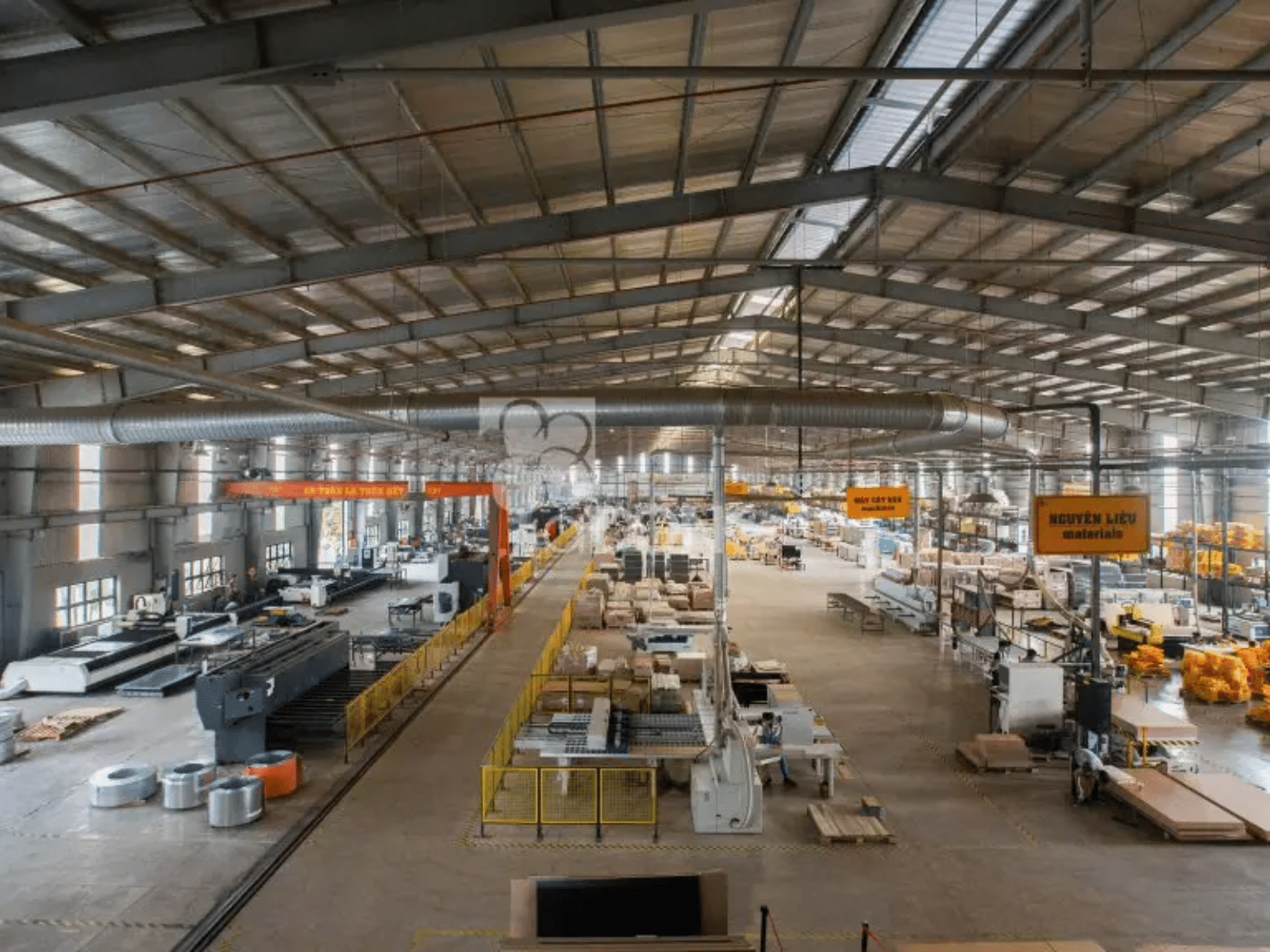
Online Platforms
Platforms such as:
- Alibaba
- Global Sources
- Made-in-Vietnam directories
can help identify initial contacts.
Limitation
These platforms:
- do not reflect real capabilities
- often include trading companies
- provide limited technical validation
They should be used only as a starting point.
Trade Shows & Industry Events in Vietnam
Trade shows remain one of the most effective ways to identify and meet manufacturers in Vietnam—especially for contract manufacturing projects that require technical validation.
Unlike online sourcing, trade shows allow you to:
- physically assess product quality
- compare multiple suppliers in a short time
- understand the level of industrial maturity within a sector
- identify both direct manufacturers and supporting industries
Key Trade Shows by Industry
Metal, Steel & Industrial Fabrication
- Vietnam Manufacturing Expo (VME) – Hanoi
Focused on precision engineering, CNC machining, metalworking, and industrial automation. - METALEX Vietnam – Ho Chi Minh City
One of the most relevant exhibitions for metal processing, tooling, and industrial machinery.
These shows are particularly relevant for:
- CNC parts
- sheet metal fabrication
- industrial components
- welding and assembly
Mechanical Engineering & Industrial Equipment
- MTA Vietnam – Ho Chi Minh City
Covers machine tools, automation systems, and advanced manufacturing technologies.
Useful for:
- contract manufacturing with engineering requirements
- industrial equipment sourcing
- production process validation
Chemical, Mixing & Processing Industries
- ACHEMA Asia / Vietnam Industrial & Manufacturing Fair (sector overlap)
- Vietnam ChemTech / Chemical Industry Expo
These events focus on:
- industrial chemicals
- mixing systems
- coatings and treatment solutions
- processing equipment
Particularly relevant for:
- coatings and finishing subcontractors
- chemical-based manufacturing processes
- industrial material treatment
Electronics & Electrical Manufacturing
- NEPCON Vietnam
Focused on electronics manufacturing, PCB assembly, and components - Vietnam ETE & Enertec Expo
Electrical equipment, energy systems, industrial electronics
Relevant for:
- PCB assembly
- cable harnesses
- electrical components
- contract electronics manufacturing
Construction Materials & Industrial Supply
- Vietbuild (multiple editions across Vietnam)
Covers building materials, construction systems, and industrial supply
Relevant for:
- steel structures
- aluminum systems
- tiles, flooring
- prefabricated components
How to Use Trade Shows Effectively
Attending a trade show without preparation often leads to limited results. For contract manufacturing projects, a structured approach is required.
Step 1 — Pre-Selection
Before attending:
- identify relevant exhibitors
- shortlist 10–20 potential suppliers
- define your product requirements
Step 2 — On-Site Evaluation
During the show:
- assess product quality (not just presentation)
- ask technical questions
- evaluate responsiveness
Step 3 — Post-Show Factory Visits
The most critical step is after the show:
- visit 3–5 shortlisted factories
- validate actual production capability
- confirm alignment with your project
Trade shows should not be the end of the sourcing process — they are the starting point for deeper validation.
Industrial Clusters & Regions
Manufacturing in Vietnam is geographically structured.
Key regions include:
- South (Binh Duong, Dong Nai, Long An)
Furniture, plastics, industrial production - North (Hanoi, Bac Ninh, Hai Phong)
electronics, metal, garments - Central (Quy Nhon, Da Nang, Hue, Quang Nam)
outdoor furniture, wood processing
Understanding clusters helps:
- identify relevant suppliers
- optimize sourcing trips
Local Networks & On-the-Ground Research
Many of the most relevant suppliers in Vietnam are not visible online.
They are accessed through:
- local networks
- referrals
- sourcing professionals
This is particularly true for:
- specialized manufacturing
- subcontractors
- mid-sized factories
How to Shortlist the Right Manufacturers
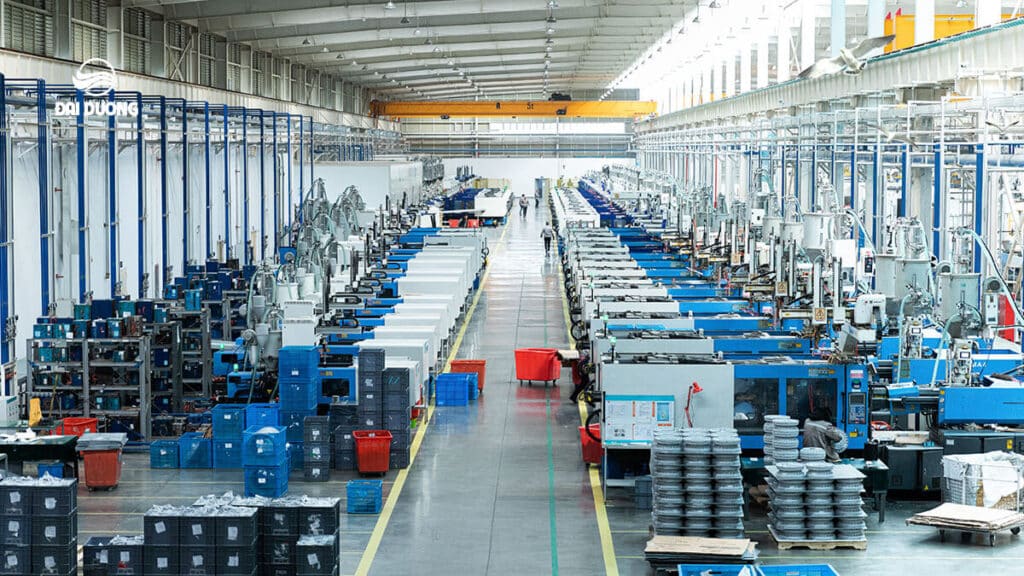
Once you’ve identified potential suppliers through trade shows, online research, or local networks, the next step is to move from a broad list to a qualified shortlist of manufacturers that are actually capable of executing your project.
This step is often underestimated, yet it is where most sourcing failures originate.
The goal is not to find “many suppliers,” but to identify 3 to 5 relevant and technically aligned manufacturers.
When sourcing in technical industries such as metal fabrication, chemical processing, or electronics, supplier selection becomes more complex.
In these sectors, it is not enough to evaluate a factory based on general capabilities. Buyers must assess:
- engineering expertise
- production processes (CNC, stamping, coating, assembly)
- subcontracting dependencies (e.g. anodizing, chemical treatment)
- compliance with industrial standards
For example:
- A metal component supplier may outsource surface treatment
- A chemical-related manufacturer may rely on external formulation or processing partners
- An electronics assembler may depend on imported components
This reinforces the need to evaluate not only the factory itself, but its entire production ecosystem.
Go Beyond Surface-Level Filtering
At an early stage, many buyers rely on superficial indicators such as:
- website quality
- responsiveness
- initial pricing
While these elements are useful, they do not reflect the true capability of a factory.
In Vietnam, some suppliers:
- present themselves as manufacturers but act as trading intermediaries
- showcase products that are partially or fully subcontracted
- provide quotations without fully understanding technical requirements
Build a Structured Comparison Framework
To properly shortlist suppliers, it is recommended to evaluate them using consistent criteria across all candidates.
Instead of comparing suppliers based on isolated impressions, build a framework that includes:
- Technical capability
Can the factory actually produce your product with the required processes (CNC, welding, upholstery, coating, assembly)? - Product experience
Have they already manufactured similar items or worked on comparable projects? - Production capacity
Can they handle your current volumes—and scale if needed? - Export experience
Are they familiar with international requirements (packaging, compliance, documentation)? - Communication quality
Do they understand your specifications, ask relevant questions, and respond clearly?
This structured approach allows you to compare suppliers objectively rather than relying on intuition.
When sourcing in technical industries such as metal fabrication, chemical processing, or electronics, supplier selection becomes more complex.
In these sectors, it is not enough to evaluate a factory based on general capabilities. Buyers must assess:
- engineering expertise
- production processes (CNC, stamping, coating, assembly)
- subcontracting dependencies (e.g. anodizing, chemical treatment)
- compliance with industrial standards
For example:
- A metal component supplier may outsource surface treatment
- A chemical-related manufacturer may rely on external formulation or processing partners
- An electronics assembler may depend on imported components
This reinforces the need to evaluate not only the factory itself, but its entire production ecosystem.
Understand Supplier Positioning
Not all manufacturers are suited for all types of projects. During shortlisting, it is important to identify the positioning of each supplier.
For example:
- A large export-oriented factory may be highly reliable but less flexible for customization or low volumes
- A mid-sized factory may offer a strong balance between flexibility and capacity
- A smaller workshop may be agile but lack structured processes
The best supplier is not the largest or the cheapest—it is the one that aligns with your project requirements.
Identify Red Flags Early
Certain signals should immediately raise caution during the shortlisting phase.
These include suppliers who:
- agree to all specifications without asking clarifying questions
- provide significantly lower pricing without clear justification
- cannot show concrete examples of similar projects
- change answers or specifications during discussions
In Vietnam, overly “smooth” early interactions often lead to problems later in the process.
Shortlist Strategy (Practical Approach)
A strong shortlist typically includes:
- 1–2 structured, larger manufacturers
- 2–3 mid-sized or flexible suppliers
This creates:
- competitive tension
- fallback options
- better negotiation leverage
Never rely on a single supplier at this stage.
Factory Audit & Capability Evaluation
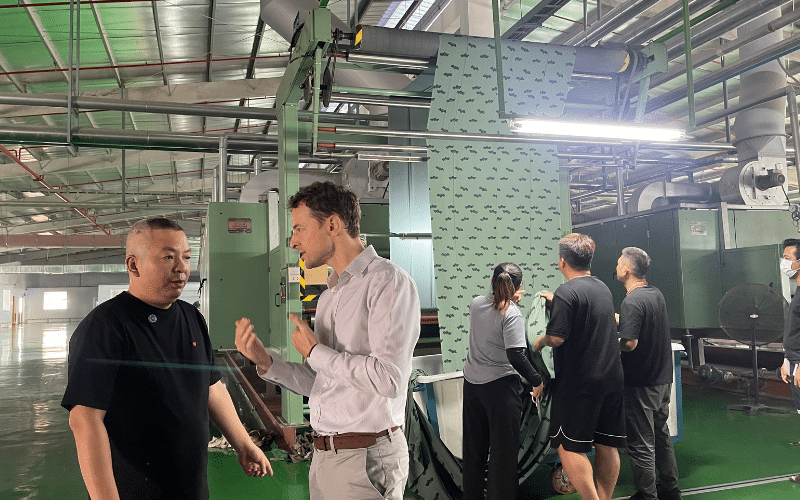
Once a shortlist is established, the next step is to validate the real capabilities of each manufacturer. This is where the process moves from theoretical evaluation to practical verification.
In Vietnam, what a supplier says and what they can execute are not always the same.
Why Factory Audits Are Critical
Factory audits are essential because:
- online information is often incomplete or outdated
- quotations do not reflect operational reality
- production capabilities may be partially subcontracted
A factory visit allows you to:
- verify actual processes
- assess organization and workflow
- identify hidden risks
What to Look for During a Factory Visit
A proper audit should focus on how the factory operates on a daily basis—not just how it presents itself.
Production Flow & Organization
Observe how materials move through the factory:
- Is the workflow structured or chaotic?
- Are processes clearly separated?
A well-organized production flow usually indicates:
- better efficiency
- fewer errors
- more consistent output
Machinery & Equipment
Instead of focusing on the number of machines, evaluate:
- whether equipment matches your product requirements
- whether machines are well-maintained
- whether processes are manual or automated
For industrial projects, this is a key indicator of precision and consistency.
Workforce & Skill Level
The quality of the workforce directly impacts the final product.
Observe:
- operator skill level
- finishing quality
- attention to detail
Skilled labor is often what differentiates a good factory from an average one.
Quality Control System
Assess whether the factory has:
- dedicated QC staff
- documented inspection processes
- checkpoints during production
Factories without structured QC systems often rely on:
- final inspection only
- visual checks
This increases the risk of inconsistency.
Hidden Subcontracting
One of the most important aspects to verify is subcontracting.
Many Vietnamese factories outsource parts of production, such as:
- coating or anodizing
- heat treatment
- specialized machining
This is not necessarily a problem, but it must be:
- identified
- controlled
- integrated into your production plan
Practical Evaluation Outcome
After visiting a factory, you should be able to answer:
- Can this supplier technically produce my product?
- How reliable is their production system?
- What risks are involved?
If the answer is unclear, the supplier is not yet validated.
Sampling & Product Validation
Sampling is one of the most critical phases in contract manufacturing. It is not simply about receiving a sample—it is about validating whether a supplier can execute your product consistently at scale.
Sampling as a Development Phase
In Vietnam, sampling should be treated as an engineering and development phase, especially for OEM projects.
It allows you to:
- validate design feasibility
- test materials and finishes
- identify production constraints
- refine specifications
Making sample in Vietnam is not just a preview; but this is a real test of the entire production process.
In industrial sectors such as metal, chemical processing, or electronics, sampling often includes technical validation beyond visual inspection.
This may involve:
- dimensional verification
- material testing
- coating or treatment validation
- functional testing (for assemblies or electronic components)
Sampling in these industries is closer to an engineering validation phase than a simple product check.
Iteration Is Part of the Process
It is common for sampling to require several iterations.
This may include:
- adjustments to dimensions
- changes in materials
- refinements in finishing
If a factory fails a sample, this is not a sign of inefficiency; but it is a great occasion to evaluate their ability to receive your feedback, improve its process with a next iteration and recommend improvement points if you are at a product-development stage.
Technical Validation
For industrial products, sampling often goes beyond visual inspection.
It may involve:
- dimensional verification
- tolerance measurement
- coating or treatment validation
- functional testing
In sectors such as metal fabrication, electronics, or chemical processing, this step is critical to avoid large-scale issues later.
Communication During Sampling
The sampling phase is also a test of how well a supplier communicates.
A good supplier will:
- highlight potential issues
- propose alternatives
- confirm specifications
A weaker supplier may:
- proceed without clarification
- make assumptions
- deliver inconsistent samples
Approval Before Production
Production should only start once the sample is fully validated.
This includes:
- technical approval
- visual approval
- material confirmation
Skipping this step is one of the most common causes of production failure.
From Sample to Mass Production
A critical aspect is ensuring that: what is approved in the sample is what will be produced at scale.
This requires:
- documentation of specifications
- quality benchmarks
- alignment with the supplier
Compare Suppliers Beyond Price
Price vs Total Value
A cheaper supplier may result in:
- delays
- quality issues
- rework
What to Compare
Instead of just price, evaluate:
- capability
- reliability
- communication
- scalability
For industrial manufacturing projects, supplier comparison must include technical criteria such as:
- process capability (e.g. CNC tolerance, welding quality)
- finishing quality (e.g. coating thickness, chemical treatment consistency)
- equipment level (manual vs automated production)
In these cases, a technically stronger supplier with a slightly higher price may offer significantly better long-term reliability.
Start with a Pilot Production
Before committing to large orders, start with:
- small batch production
- pilot run
Why This Matters
It allows you to:
- validate production consistency
- test logistics
- identify issues early
Build Long-Term Supplier Relationships
Successful sourcing in Vietnam is based on relationships.
What This Means
- consistent communication
- repeat orders
- mutual trust
Over time, this leads to:
- better pricing
- priority production
- improved quality
Q&A : Finding a Contract Manufacturer in Vietnam
How do I find reliable manufacturers in Vietnam?
Finding reliable manufacturers in Vietnam requires more than online research. While platforms like Alibaba or directories can help identify initial contacts, they rarely reflect the real capabilities of a supplier.
In practice, reliable sourcing involves combining several approaches:
- initial screening (online or referrals)
- direct communication and technical validation
- factory visits and on-site audits
Many of the most capable manufacturers in Vietnam are not highly visible online, especially in industrial sectors such as metal fabrication or construction materials. They are often accessed through local networks or industry connections.
Reliability is not determined by visibility, but by validated capability and consistent execution.
Can I rely only on Alibaba or online platforms?
Online platforms can be useful for building a first shortlist, but they should never be the only sourcing method.
In Vietnam, many suppliers on these platforms are:
- trading companies
- intermediaries
- or factories showcasing subcontracted products
As a result, the information available online is often incomplete or misleading.
Online sourcing should be treated as a starting point, not a decision-making tool. Proper validation—through factory audits and sampling—is essential.
How many manufacturers should I contact?
A structured sourcing process typically involves contacting:
- 5 to 10 suppliers at the initial stage
- narrowing down to 3 to 5 qualified manufacturers
This allows you to:
- compare capabilities and pricing
- identify differences in approach
- reduce dependency on a single supplier
What is the biggest mistake when selecting a manufacturer?
The most common mistake is selecting a supplier based primarily on price.
In Vietnam, a lower price often reflects:
- simplified production processes
- lower-quality materials
- or lack of full understanding of the specifications
This can lead to:
- quality issues
- production delays
- hidden costs
Do I need to visit factories in Vietnam?
Factory visits are strongly recommended, especially for OEM and contract manufacturing projects.
A visit allows you to:
- verify actual production capabilities
- assess organization and workflow
- evaluate quality control systems
Many critical aspects—such as production flow, workforce skill, or subcontracting—cannot be fully assessed remotely.
How long does it take to find a manufacturer?
The sourcing process typically takes between 2 to 6 weeks, depending on the complexity of the product.
This includes:
- supplier identification
- initial discussions
- factory visits or audits
- sampling initiation
For more technical or customized products, the process may take longer due to:
- additional validation
- more complex supplier selection
What industries are easiest to source in Vietnam?
Vietnam is particularly strong in:
- furniture manufacturing
- garments and textiles
- metal fabrication
- construction materials
These industries benefit from:
- established supplier ecosystems
- export experience
- available production capacity
More technical industries—such as electronics or chemical processing—are also present but require a more structured sourcing approach.
Can Vietnam handle custom OEM products?
Yes, Vietnam is well-suited for custom OEM manufacturing, particularly for mid-scale production.
Factories are generally flexible and open to:
- product development
- design adaptation
- iterative sampling
However, custom projects require:
- clear specifications
- close communication
- structured validation
What is the typical MOQ in Vietnam?
Minimum order quantities vary widely depending on the industry and supplier.
Compared to China, Vietnam often offers:
- lower or more flexible MOQs
- willingness to support pilot production
However, larger factories may still require higher volumes to optimize their production lines.
How do I know if a factory is really a manufacturer?
Distinguishing between a real manufacturer and a trading company can be challenging.
Indicators of a true manufacturer include:
- ownership of production facilities
- presence of machinery and workforce
- ability to explain production processes in detail
Factory visits are the most reliable way to confirm this.
Many suppliers present themselves as manufacturers but rely heavily on subcontracting.
How important is sampling before production?
Sampling is critical and should never be skipped.
It allows you to:
- validate product feasibility
- test materials and finishes
- identify production challenges
In Vietnam, sampling often requires several iterations, especially for custom products.
Sampling is not just a preview—it is a validation of the entire production process.
What are the main risks when sourcing in Vietnam?
The main risks include:
- supplier fragmentation (multiple vendors involved)
- inconsistent quality between batches
- communication gaps and misinterpretation
These risks are not structural—they are execution-related.
With proper management, they can be significantly reduced.
Should I work directly with factories or use a sourcing partner?
Working directly with factories can be effective for simple or repeat orders. However, for more complex projects, it often becomes difficult to manage all aspects of the process.
A sourcing partner can help:
- identify and validate suppliers
- coordinate production across multiple vendors
- manage quality control and timelines
The value of a sourcing partner lies in execution and coordination, not just access.
How do I ensure consistent quality?
Quality consistency requires a structured approach throughout the production process.
This includes:
- validating samples before production
- conducting in-line inspections
- performing final quality checks
Clear documentation and specifications are also essential to avoid misinterpretation.
Is Vietnam suitable for long-term manufacturing partnerships?
Vietnam is increasingly becoming a long-term manufacturing base for international companies.
Its advantages include:
- growing industrial capabilities
- flexible production
- strong export orientation
However, long-term success depends on:
- selecting the right suppliers
- building relationships
- maintaining structured processes
Vietnam rewards companies that invest in understanding and managing the ecosystem.
Vietnam offers strong opportunities for companies looking to build flexible and resilient supply chains.
The companies that succeed are those that:
- structure their sourcing
- validate suppliers properly
- manage production actively
Acting as your on-ground partner for contract manufacturing in Vietnam.
Final Insight: Most companies entering Vietnam focus on “finding a factory.”
In reality, success comes from building a structured sourcing and manufacturing system:
- supplier selection
- validation
- coordination
- quality control
This is exactly where having on-ground support makes a difference—ensuring that each step of the process is aligned, controlled, and executed properly.
How We Support
We support companies by:
- identifying and qualifying manufacturers
- organizing factory visits
- managing sampling and production
- ensuring quality control
Acting as your on-ground partner for contract manufacturing in Vietnam.