
The growing prominence of Made in Malaysia products reflects a profound transformation in global supply chains. Over recent years, international companies have faced an accumulation of structural challenges, including rising production costs in China, recurring trade tensions, increased geopolitical risks, stricter regulatory requirements, and the need to secure consistent quality over the long term.

Within this evolving landscape, Malaysia has gradually established itself as a strategic industrial platform in Asia, capable of addressing these new challenges. Long perceived as a secondary alternative, the country is now widely recognized for the maturity of its manufacturing sector, the skills of its workforce, and the reliability of its economic and regulatory environment.

The “Made in Malaysia” label is increasingly associated with high production standards, a strong export orientation, and seamless integration into international value chains. For many European and North American companies, it represents a credible solution for diversifying sourcing strategies without compromising on quality, compliance, or operational security.

Thanks to its local presence in Southeast Asia, Move to Asia has been supporting international companies for several years in their sourcing and manufacturing projects in Malaysia, from the early stages of supplier identification through to production ramp-up and quality control.

The Malaysian Manufacturing Industry

The Malaysian Manufacturing Industry: Foundations and Development Path

A Long-Term Industrial Strategy

Unlike some emerging economies that industrialized rapidly under the pressure of globalization, Malaysia has followed a more progressive and structured development path. As early as the 1970s, the government made a strategic decision to pursue export-oriented industrialization, with the dual objective of attracting foreign direct investment while building sustainable local capabilities.

This approach led to the creation of specialized industrial zones, export-oriented free zones, and a regulatory framework particularly favorable to foreign companies. At the same time, continuous investment in technical education, engineering, and infrastructure laid a solid foundation for long-term industrial growth.

Today, manufacturing represents a significant share of Malaysia’s GDP and stands as one of the key pillars of the national economy. Rather than relying solely on low value-added assembly activities, the sector has progressively moved toward more technical, complex, and value-driven segments.

A Value-Added Industrial Model

Malaysia’s industrial model is distinguished by its strong focus on quality and value creation. The country has successfully attracted leading international players in sectors such as electronics, semiconductors, medical devices, and precision engineering. This specialization has enabled Malaysia to develop a robust industrial ecosystem capable of meeting the most demanding international standards.

Made in Malaysia Products: Key Industrial Sectors

Electronics and Semiconductors

Electronics is one of the flagship sectors of Made in Malaysia. The country has become a major global hub for the manufacturing, assembly, and testing of electronic components and semiconductors. Multinational groups such as Intel, Infineon, Texas Instruments, Bosch, and Panasonic have established strategic production and R&D facilities in Malaysia, particularly in the Penang region, often referred to as the Silicon Valley of the East.

This concentration of international players has fostered the development of a comprehensive ecosystem, bringing together component suppliers, specialized subcontractors, and logistics providers, thereby reinforcing Malaysia’s attractiveness for new industrial projects.

Medical Devices and Healthcare Equipment

The Made in Malaysia medical device sector has also experienced sustained growth. Malaysia is now one of the world’s leading exporters of certain medical products, including medical gloves, as well as high value-added components and equipment.

This growth is underpinned by strict compliance with international standards, a skilled workforce, and a regulatory environment aligned with the requirements of European and North American markets.

https://www.youtube.com/watch?v=CAu1uiG1RIs&t=3s

Precision Engineering, Industrial Components, and Technical Plastics

Malaysia has also positioned itself as a reliable supplier of precision mechanical parts, industrial components, and technical plastics. These products serve a wide range of industries, including automotive, aerospace, manufacturing, and industrial equipment.

In these segments, made in Malaysia products are valued for their consistent quality, ability to support medium-scale production runs, and overall industrial flexibility.

Furniture, Wood Products, and Construction Materials

Finally, supported by its natural resources and a well-structured wood industry, Malaysia is recognized for the manufacturing of furniture, engineered panels, and construction materials for export markets. Here again, the emphasis is placed on quality, advanced processing, and compliance with environmental standards.

Why Source Made in Malaysia Products Today?

A Global Context Favorable to Diversification

The successive crises of recent years have exposed the limitations of highly concentrated sourcing models. Companies are now seeking to build more resilient supply chains capable of absorbing economic, health-related, and geopolitical shocks.

In this context, Malaysia emerges as a particularly relevant diversification option. It offers a balanced combination of cost competitiveness, production quality, and institutional stability. For many companies, Malaysia serves either as a partial alternative to China or as a strategic complement within a China+1 approach.

https://www.youtube.com/watch?v=Rz5nqTNr4g4

Competitive Advantages of Made in Malaysia Products

A Reassuring Legal and Regulatory Environment

One of Malaysia’s key strengths lies in the clarity and predictability of its legal framework. In many sectors, the country allows 100% foreign ownership, facilitating establishment, investment decisions, and long-term planning for international companies.

Its legal system, inspired by British Common Law, provides a high level of security in terms of contract enforcement, investment protection, and dispute resolution. This stability is particularly valued by European and North American businesses.

A Skilled, English-Speaking Workforce

The quality of Malaysia’s workforce represents another major advantage. The country benefits from a strong pool of engineers, technicians, and managers trained to international standards. The widespread use of English in the professional environment significantly improves communication, reduces technical misunderstandings, and accelerates project execution.

This linguistic capability, combined with solid technical training, allows companies to collaborate more efficiently with local suppliers.

A Total Cost of Ownership Perspective

While Malaysia is not always the lowest-cost country in terms of hourly labor rates, it stands out for its high productivity, relatively low employee turnover, and strong quality control. For technical or high value-added products, the total cost of ownership is often comparable to—or even lower than—that of other Asian sourcing destinations.

Companies benefit from reduced hidden costs, improved reliability, and greater long-term stability.

Modern Infrastructure and Efficient Logistics

Malaysia offers world-class industrial and logistics infrastructure. Ports such as Port Klang and Penang rank among the most efficient in the region. The road and highway network is well developed, and strong air connectivity supports international trade flows.

These assets help secure export timelines, optimize logistics costs, and facilitate Malaysia’s integration into complex global supply chains.

Made in Malaysia Products: Sourcing, Manufacturing and Supply Chain Opportunities

Political Stability and Geopolitical Neutrality

Malaysia enjoys a relatively stable political environment and a position of geopolitical neutrality that shields it from major trade conflicts and sanctions. This enhances its attractiveness for companies exporting to Europe and North America and seeking to limit their exposure to geopolitical risks.

How to Identify Reliable Made in Malaysia Manufacturers

Supplier sourcing in Malaysia goes far beyond consulting online platforms. While institutional organizations such as MATRADE or the Federation of Malaysian Manufacturers provide useful databases, in-depth analysis remains essential.

Attending trade fairs in Kuala Lumpur or Penang allows companies to meet manufacturers directly, assess their credibility, and better understand their industrial capabilities. However, even in this context, thorough verification is still required.

This is why many companies choose to work with a local sourcing agent, who plays a key role in supplier selection, factory audits, commercial negotiations, and quality assurance.

Move to Asia operates precisely at this level, acting as a trusted intermediary between international companies and Malaysian manufacturers.

Quality, Compliance, and Production Control

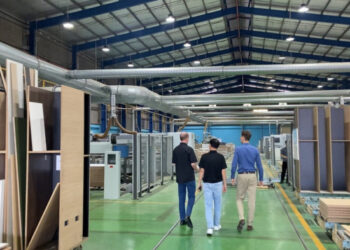
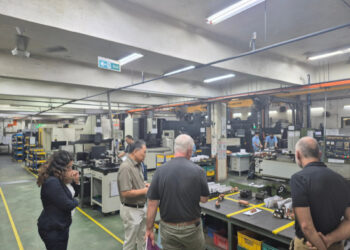
Quality is a central issue in any international sourcing project. In Malaysia, many manufacturers already comply with strict international standards such as ISO 9001 or ISO 14001. Nevertheless, factory audits and on-site inspections remain essential to verify the effectiveness of quality systems and actual production capabilities.

Inspections make it possible not only to assess equipment and processes, but also to ensure compliance with labor conditions and environmental standards. This approach helps reduce operational risks and secure long-term supplier relationships.

Quality, Compliance, and Production Control

Logistics and Export of Made in Malaysia Products

Malaysia offers a favorable export environment, with relatively smooth procedures and strong adherence to international standards. The choice of transport mode depends on product characteristics, value, and delivery timelines. Maritime transport remains the preferred option for large volumes, while air freight is often used for high-value or time-sensitive products.

Careful preparation of export documentation and close coordination with logistics partners are essential to avoid delays and unexpected costs.

Challenges and Risks of Sourcing from Malaysia

Despite its many strengths, Malaysia also has certain limitations. Its industrial capacity is more constrained than China’s when it comes to extremely high volumes or highly standardized products. However, the country performs particularly well in medium-scale production and technical manufacturing.

Like Vietnam, Malaysia also relies partly on imported raw materials, which can extend lead times and introduce some cost volatility. To remain competitive, the country must continue investing in education, training, infrastructure, and talent attraction.

Made in Malaysia and the China+1 Strategy

Within a China+1 strategy, Malaysia plays a key complementary role. It enables geographic diversification, risk reduction, and consistent quality levels while maintaining overall competitiveness. For many companies, the China–Malaysia combination now represents an optimal balance between volume, cost efficiency, and supply chain security.

The Role of Move to Asia in Your Made in Malaysia Project

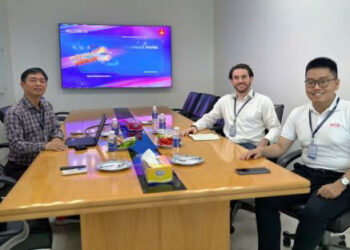
At Move to Asia, we support companies at every stage of their sourcing projects in Malaysia. From strategy definition and supplier identification to audits, negotiations, and production ramp-up, our local expertise helps reduce risks and accelerate decision-making.

Made in Malaysia and the China+1 Strategy

FAQ – Made in Malaysia Manufacturing

Is Malaysia suitable for small and medium-sized production volumes?

Yes. Malaysia performs particularly well in medium-scale and customized production. It is well suited for companies seeking flexibility, quality, and technical support rather than very large, standardized volumes.

How does Malaysia compare to China in manufacturing costs?

While labor costs in Malaysia are generally higher than in China, overall production costs are often comparable when considering quality, productivity, and lower defect rates. Many companies find that the total cost of ownership is competitive.

Can foreign companies fully own manufacturing operations in Malaysia?

Yes. In many sectors, Malaysia allows 100% foreign ownership. This facilitates direct investment, factory setup, and long-term strategic planning.

How reliable are Malaysian suppliers in terms of quality?

Most established manufacturers operate under international standards such as ISO, FDA, or CE compliance. However, regular audits and on-site inspections remain essential to ensure consistent performance.

Is Malaysia suitable for a China+1 strategy?

Yes. Malaysia is one of the most effective China+1 destinations due to its stability, quality standards, and strong export infrastructure. It complements China well for risk diversification.

Do Malaysian factories comply with European and US regulations?

Most export-oriented manufacturers are familiar with EU and US regulations (CE, FDA, REACH, RoHS, etc.). However, verification and documentation review remain critical.

Why work with a sourcing agent like Move to Asia in Malaysia?

A local partner helps you:

Identify reliable suppliers

Conduct factory audits

Negotiate contracts

Monitor production

Manage quality control

Reduce operational risks

This significantly increases project success and reduces costly mistakes.

Conclusion: Made in Malaysia Products as a Long-Term Strategic Choice

Made in Malaysia products are now firmly established as a strategic solution for companies seeking to build more resilient, secure, and high-quality supply chains. With a mature industrial base, a skilled workforce, a stable regulatory environment, and modern infrastructure, Malaysia has become a key player in international sourcing across Asia.
Looking to source Made in Malaysia products or implement a China+1 strategy?
Contact Move to Asia to leverage the expertise of our local team and secure your development in Asia.