
Malaysia is increasingly emerging as one of the most relevant countries in Southeast Asia for OEM and ODM manufacturing projects that require a high level of quality, compliance, and operational stability. Long considered a secondary destination compared to China or other lower-cost countries in the region, Malaysia has nevertheless built, over several decades, a highly mature industrial ecosystem focused on value-added manufacturing and long-term collaboration with international companies.

Unlike countries whose competitive advantage is primarily based on low labor costs, Malaysia has positioned itself on more technical industrial segments, integrating strong engineering capabilities, standardized processes, and rigorous quality control. This strategic orientation explains why the country is now deeply embedded in global supply chains, particularly in electronics, medical devices, precision engineering, and industrial equipment.
In a global context marked by supply chain diversification, geopolitical risk mitigation, and the search for reliable manufacturing partners, Malaysia represents a strategic option for companies seeking to outsource production while maintaining real control over their products and intellectual property. This article aims to provide an in-depth analysis of OEM and ODM models in Malaysia, explain how they operate in practice, and highlight the key conditions for successfully establishing a manufacturing project in the country.
The Development of a Mature Industrial Ecosystem
Malaysia’s industrial development is the result of a long-term and coherent strategy implemented as early as the 1970s, with a clear ambition to integrate the country into global value chains. The Malaysian government actively encouraged foreign investment in advanced industrial sectors through fiscal incentives, the development of modern infrastructure, and significant investments in technical education and workforce training.
This approach led to the creation of well-structured industrial zones supported by efficient logistics networks, reliable public services, and a relatively streamlined administrative framework. Over time, local manufacturers gained extensive experience working with European, North American, and Japanese companies, which has deeply shaped their industrial culture and operational standards.
Today, the manufacturing sector represents a substantial share of Malaysia’s economy and is characterized by a high degree of process formalization. Quality systems, technical documentation, and control procedures are generally aligned with international standards. This level of maturity is a decisive advantage for OEM and ODM projects, which require disciplined execution and the ability to maintain consistent quality over time.

Key OEM and ODM Sectors in Malaysia
Electronics and Advanced Manufacturing Services
Electronics remains the historical backbone of Malaysia’s industrial sector and the primary driver of OEM and ODM activities. The country plays a strategic role in the global semiconductor value chain, particularly in assembly, testing, and integration operations. This specialization has fostered the development of a comprehensive supplier ecosystem, ranging from component manufacturers to advanced electronics manufacturing service providers.
Under an OEM model, Malaysian manufacturers are capable of producing electronic boards, modules, or complete systems based on highly detailed specifications provided by the client. Quality requirements, repeatability, and traceability are generally well controlled, allowing manufacturers to meet the expectations of highly regulated and demanding markets.
Under an ODM model, some players go further by offering integrated solutions that include electronic design, product industrialization, and component optimization based on cost, availability, and regulatory constraints. This ability to contribute at the design stage is a major advantage for companies seeking to accelerate time-to-market while minimizing technical risks.
Medical Devices and Healthcare Equipment
Malaysia is also recognized as a key player in the medical device sector. While the country is historically known for the production of medical consumables, it has also developed advanced OEM and ODM capabilities for more complex devices that combine electronics, precision mechanics, and strict regulatory requirements.
Manufacturers operating in this sector are accustomed to highly regulated environments and typically have quality systems aligned with international standards. This experience is particularly valuable for companies targeting markets such as the European Union or the United States, where regulatory compliance is a critical prerequisite for commercialization.
In ODM projects, some Malaysian manufacturers offer existing product platforms that can be adapted to the client’s specific requirements. This approach allows companies to shorten development timelines while relying on solutions that are already validated from both an industrial and regulatory perspective.
Precision Engineering and Metal Manufacturing
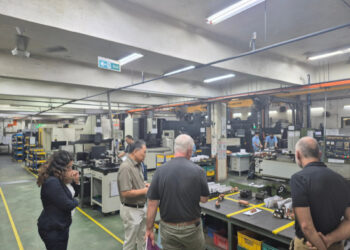
Malaysia’s industrial landscape also includes a strong base of companies specializing in precision machining, metal forming, and mechatronic assembly. These capabilities are essential for OEM projects involving complex parts, tight tolerances, or close integration between mechanical and electronic components.
In an ODM context, manufacturers may be involved from the early design phase to optimize the product for manufacturability, improve reliability, and reduce long-term production costs. This collaborative approach often results in more robust designs that are better suited for industrial-scale production.
https://www.youtube.com/watch?v=PFH0CJrDMLk&t=388s
Why Malaysia Is a Strategic Destination for OEM and ODM
One of Malaysia’s main strengths lies in the quality of its industrial workforce. The country benefits from a large pool of technicians, engineers, and mid-level managers trained to international standards. These professionals are generally able to quickly understand the technical requirements of foreign clients and operate effectively in multicultural environments.
The widespread use of English in the business and industrial context significantly facilitates communication, particularly during critical phases such as product development, industrialization, and ramp-up. This linguistic and cultural accessibility helps reduce misunderstandings, errors, and delays, which are common risk factors in international manufacturing projects.
From a cost perspective, Malaysia is positioned in an intermediate range. Labor costs are higher than in some neighboring countries, but this difference is often offset by higher productivity, lower employee turnover, and reduced non-quality costs. When considering the full cost structure, including delays, rework, and quality issues, the total cost of ownership can be highly competitive.
Intellectual property protection is another key differentiator. Malaysia’s legal framework, influenced by British common law, offers a relatively predictable environment and stronger protection mechanisms than many other Southeast Asian sourcing destinations. This aspect is particularly important for ODM projects or products involving sensitive technologies and proprietary designs.

Understanding OEM and ODM Models in the Malaysian Context
The OEM Model
Under an OEM model, the client company retains full control over product design. It provides the Malaysian manufacturer with complete technical specifications, drawings, bills of materials, and quality requirements. The manufacturer’s role is strictly to execute production according to these instructions, without intervening in the product design.
This model is particularly well suited to companies with strong in-house research and development capabilities or those seeking to maintain strict control over their intellectual property. However, it also implies greater responsibility for the client, especially in cases of design flaws or product performance issues.
The ODM Model
The ODM model is widely developed in Malaysia and represents one of the country’s key competitive advantages. In this framework, the manufacturer actively participates in product design and industrialization. This may involve offering existing designs, technology platforms, or co-development support tailored to the client’s needs.
This approach allows companies to reduce upfront development costs and accelerate market entry, making it especially attractive for businesses launching new products. However, it requires careful contractual management to clearly define intellectual property ownership, usage rights, and potential exclusivity arrangements.
Managing Intellectual Property in OEM and ODM Projects
Intellectual property management is a central issue in any manufacturing project in Malaysia. In an OEM framework, it is essential to ensure that contracts clearly define the client’s rights over designs, tooling, and technical data. In an ODM framework, the situation is more complex, as the manufacturer may retain rights to certain elements of the design or underlying know-how.
It is therefore critical to clarify, from the outset, what constitutes the manufacturer’s pre-existing know-how and what is considered a client-funded, custom development. Registering trademarks and, where relevant, designs or patents in Malaysia further strengthens protection and helps secure the collaboration over the long term.
Structuring an OEM or ODM Project in Malaysia
The success of an OEM or ODM project largely depends on preparation. Before engaging with manufacturers, companies should clearly define their project objectives, desired level of customization, and regulatory constraints related to target markets. Detailed specifications, even in an ODM framework, help minimize costly adjustments during development.
Supplier selection should be based on a thorough assessment of actual manufacturing capabilities, experience with similar projects, and financial stability. Factory audits, pilot production phases, and ongoing performance monitoring are essential steps to ensure alignment between client expectations and manufacturer practices.

Logistics, Supply Chain, and Operational Continuity
Malaysia benefits from well-developed logistics infrastructure, including major ports with strong international connectivity. This facilitates exports to global markets and contributes to overall supply chain reliability. Malaysian manufacturers are generally familiar with international incoterms and the logistical requirements of foreign clients, which simplifies cross-border operations and coordination.
Conclusion
Malaysia represents a highly relevant destination for OEM and ODM projects that require a strong focus on quality, compliance, and reliability. Its mature industrial ecosystem, skilled workforce, and robust legal framework make it a strategic choice for companies seeking to build a sustainable supply chain in Southeast Asia. By adopting a structured approach and integrating local specificities from the early stages of a project, companies can leverage Malaysia as a long-term manufacturing partner and a powerful driver of industrial performance and competitiveness.