


This page provides a practical overview of Cambodia across three key dimensions:
- Sourcing and manufacturing;
- Market entry and business opportunities;
- Operating environment for foreign companies.
→ Talk to our team
🟦 1 — Sourcing & Manufacturing
Manufacturing in Cambodia at a Glance
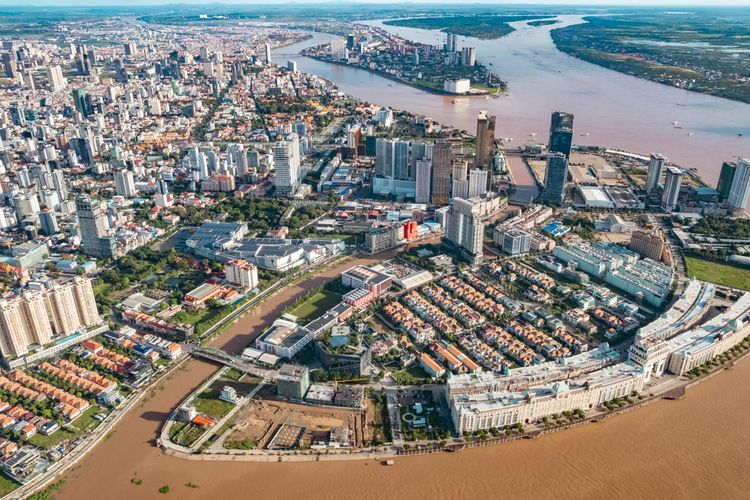
Cambodia’s manufacturing base is strongly linked to export-oriented production. The country is best known for garments, footwear, travel goods, bicycles, and selected light manufacturing activities. These sectors have developed through years of collaboration with international buyers, especially from the United States, Europe, Japan, and other Asian markets.
Compared with Vietnam, Cambodia has a narrower industrial base. It is not yet a deep manufacturing ecosystem for complex industrial products, electronics, or high-precision components. However, it can be attractive for labor-intensive production, simple assembly, textile-related products, packaging, furniture, agro-processing, and selected export categories.
Cambodia’s positioning is therefore different from Vietnam’s. Vietnam is often selected for scale, reliability, and broader industrial depth. Cambodia is more relevant when companies are looking for:
- Competitive labor costs;
- Export-oriented production;
- Simpler product categories;
- Low- to mid-complexity manufacturing;
- Additional supplier diversification within ASEAN;
- Smaller or more flexible factory ecosystems in specific sectors.
The country’s industrial zones and special economic zones have also contributed to the development of export manufacturing. These zones can provide infrastructure, administrative support, customs facilitation, and proximity to other export-oriented companies. For manufacturers, choosing the right zone or location is a key part of the project.
Cambodia can be a good option for specific sourcing categories, but factory qualification is essential. The gap between suppliers can be wide. Some factories are export-ready and familiar with international standards, while others may have limited documentation, weaker production systems, or less experience with demanding buyers.
Key Manufacturing Industries
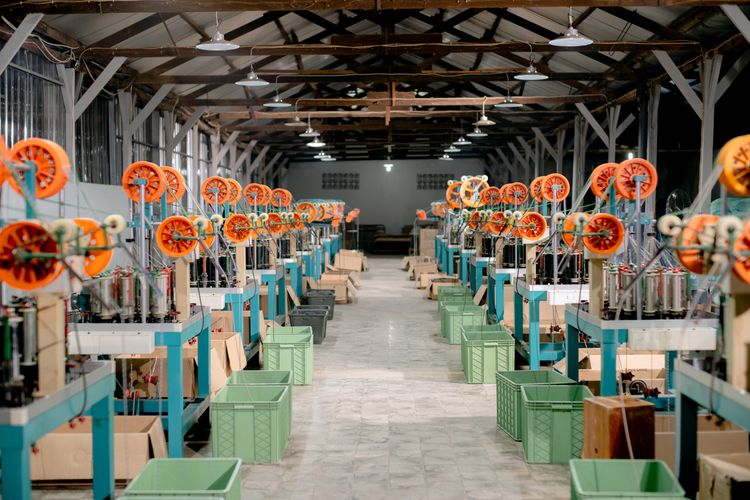
Cambodia’s manufacturing ecosystem is concentrated around several main verticals. Understanding these strengths helps foreign buyers assess whether the country is relevant for their sourcing or production project.
Textile, Garments & Apparel
Textile and apparel remain Cambodia’s most established manufacturing sector. The country has a large base of garment factories producing for export markets. Many factories are familiar with international buyers, social compliance requirements, quality expectations, and export documentation.
This sector is particularly relevant for:
- Basic apparel;
- Workwear;
- Uniforms;
- Knitwear;
- Woven garments;
- Simple fashion products;
- Promotional textile products.
Cambodia can be competitive for labor-intensive garment production. However, buyers should carefully assess fabric sourcing, lead times, compliance, production capacity, and quality control systems. Many factories still depend on imported materials, which can affect timing and flexibility.
For SMEs, the main challenge is often finding factories willing to support reasonable minimum order quantities while maintaining consistent quality.
Footwear & Travel Goods
Footwear and travel goods are among Cambodia’s strongest export categories. This includes shoes, bags, backpacks, luggage, and related soft goods. The sector benefits from labor availability, export experience, and an existing base of suppliers working with international brands.
Cambodia can be relevant for:
- Casual footwear;
- Sandals;
- Basic sneakers;
- Backpacks;
- Soft bags;
- Travel accessories;
- Simple luggage products.
This sector is well suited for buyers looking for labor-intensive assembly and export-oriented production. However, it requires careful factory screening. Technical footwear, performance footwear, and complex travel goods may require more advanced suppliers or stronger development support.
For buyers comparing Cambodia with Vietnam, Cambodia may be more cost-competitive in some categories, but Vietnam often offers deeper material sourcing, more mature development teams, and broader supplier options.
Bicycles & Parts
Cambodia has developed a strong export position in bicycles, particularly toward the European market. The sector has benefited from investment in assembly, export manufacturing, and supply chain integration.
This makes Cambodia relevant for:
- Bicycle assembly;
- Selected bicycle components;
- Frames and parts;
- OEM bike production;
- Export-oriented bike programs.
For companies in this sector, Cambodia can be attractive as part of a regional production strategy. However, buyers should assess local value-added requirements, component sourcing, rules of origin, export documentation, and factory capacity before committing to production.
Furniture, Wood, Veneer & Plywood Products
Cambodia has opportunities in furniture, veneer, plywood, and wood-related products. This sector is supported by demand from export markets and the country’s broader push toward value-added manufacturing.
Potential products include:
- Indoor furniture;
- Simple wooden furniture;
- Plywood products;
- Veneer products;
- Decorative wood items;
- Selected hospitality furniture;
- Furniture components.
However, wood sourcing requires careful due diligence. International buyers must pay close attention to legality, certification, traceability, and sustainability. For European and North American clients, documentation and compliance are often as important as price.
Cambodia may be relevant for selected wood and furniture projects, but supplier qualification, material verification, and quality control are essential.
Agro-Processing & Food Products
Agro-processing is one of Cambodia’s most promising long-term sectors. The country has strong agricultural resources, including rice, cassava, cashews, pepper, rubber, fruits, and other crops. The opportunity is not only in exporting raw commodities, but in developing higher-value processing, packaging, certification, and traceability.
Cambodia can be relevant for:
- Rice and rice-based products;
- Cashew processing;
- Pepper and spices;
- Dried fruits;
- Cassava products;
- Food ingredients;
- Rubber-related products;
- Packaged agricultural goods.
For foreign companies, the opportunity often lies in upgrading the value chain. This can include better processing technology, food safety systems, packaging, branding, export compliance, and international market access.
Agro-processing projects should be assessed carefully based on raw material availability, seasonality, quality consistency, logistics, certification, and export requirements.
Light Manufacturing, Packaging & Assembly
Cambodia is also relevant for selected light manufacturing and assembly operations. This can include packaging, simple consumer goods, plastic products, basic components, and labor-intensive assembly.
This sector is suitable for companies looking for:
- Cost-sensitive assembly;
- Manual production processes;
- Packaging and repacking;
- Simple consumer products;
- Promotional goods;
- Basic industrial components.
Cambodia is not usually the first choice for highly technical manufacturing, but it can be effective for products where labor cost, basic assembly, and export access are more important than advanced automation or deep supplier ecosystems.
How Sourcing Typically Works in Cambodia
Sourcing in Cambodia should be approached with a structured process. The supplier landscape is more limited than in Vietnam or China, which makes supplier identification and qualification even more important.
1. Product Definition & Specifications

The first step is to define the product clearly. Materials, dimensions, finishes, packaging, quality standards, testing requirements, certifications, target price, and expected volumes should be prepared before approaching suppliers.
In Cambodia, unclear specifications can quickly lead to misunderstandings. Many suppliers may not have strong product development teams, so the buyer must provide clear and practical documentation.
2. Supplier Identification
Cambodia’s supplier base can be fragmented. Public information is often limited, and many factories do not have strong online visibility. Identifying relevant suppliers requires local research, network mapping, association checks, and direct outreach.
The goal is not only to find factories, but to determine whether they are actually capable of producing the requested product at the expected quality and volume.
3. Supplier Qualification
Qualification is critical. Buyers should assess factory experience, export history, production capacity, equipment, workforce, certifications, quality systems, compliance, and willingness to work with foreign SMEs.
A supplier may appear relevant at first but fail during deeper qualification. This is why structured screening is necessary before moving to sampling or quotation comparison.
4. Sampling & Development
Sampling may require more iterations than expected, especially for customized products. Buyers should allow enough time for communication, technical clarification, material sourcing, and adjustments.
In Cambodia, the sampling phase is often the best way to test a supplier’s responsiveness, technical understanding, and ability to follow instructions.
5. Factory Visits or Audits
Factory visits or audits are strongly recommended. They help validate whether the supplier has the capacity, organization, and quality systems claimed during the initial discussion.
For export projects, audits can also identify risks related to compliance, working conditions, documentation, subcontracting, and production control.
6. Negotiation & Commercial Terms
Negotiation should cover price, MOQ, lead time, payment terms, tooling, packaging, quality standards, penalties, inspection points, and export responsibilities.
Cambodian suppliers may be flexible in some areas, but buyers should avoid pushing only on price. A lower price can quickly create issues if quality control, materials, or production planning are not properly managed.
7. Production & Quality Control
Once production starts, monitoring becomes essential. Inline inspections, final inspections, production follow-up, and clear communication help reduce the risk of delays and defects.
For first orders, buyers should not rely only on final inspection. Early production checks are recommended to identify issues before they affect the full batch.
Cambodia vs Asia Manufacturing Hubs
| Criteria | Cambodia | Vietnam | China | Thailand | Indonesia | India | Laos | Myanmar |
|---|---|---|---|---|---|---|---|---|
| Cost | Low | Low–Medium | Medium–High | Medium | Medium | Low | Low | Very Low |
| MOQ | Low–Medium | Medium–High | Flexible | Medium | Medium | Flexible | Low | Low |
| Quality | Basic–Mid | Improving fast | High | Stable | Mid | Variable | Basic | Basic |
| Lead Time | Moderate–Slow | Moderate | Fast | Moderate | Moderate | Slow–Variable | Slow | Slow |
| Flexibility | Medium | Medium | High | Medium | Medium | High | Low | Low |
| Infrastructure | Developing | Strong | Very Strong | Strong | Developing | Developing | Limited | Limited |
| Best For | Cost-sensitive production | Scaling SMEs | Large volumes | Niche industries | Domestic + export mix | Engineering + scale | Basic production | High-risk frontier sourcing |
Interpretation
Cambodia is best understood as an emerging manufacturing alternative rather than a full replacement for Vietnam or China.
It can be relevant for:
- Labor-intensive production;
- Garments, footwear, bags, and travel goods;
- Agro-processing;
- Furniture and wood-related products;
- Light assembly;
- Regional diversification.
However, it is less suitable for highly technical products, complex engineering, advanced electronics, or projects requiring deep supplier ecosystems.
For many SMEs, Cambodia can be considered after a structured feasibility check. The key question is not whether Cambodia is cheap, but whether the right suppliers exist for the specific product category.
Common Challenges & How to Address Them
Supplier Depth
Cambodia has fewer suppliers than Vietnam or China in most categories. Buyers may have fewer options and less room for negotiation.
Capability Gaps
Some factories may accept a project without fully understanding technical requirements. Sampling, audits, and phased production are important to reduce this risk.
Material Dependence
Many factories rely on imported raw materials or components, especially from China, Vietnam, Thailand, or other regional markets. This can affect lead time, pricing, and flexibility.
Quality Consistency
Quality can vary from one batch to another if production is not properly monitored. Clear specifications and inspections are essential.
Compliance and Documentation
International buyers should verify social compliance, export documentation, certificates, and subcontracting practices.
Mitigation Strategies
- Start with a feasibility assessment before committing to Cambodia;
- Build a longlist and shortlist of suppliers;
- Validate capabilities through questionnaires, calls, and document checks;
- Visit or audit factories before production;
- Use detailed specifications and approval samples;
- Implement inline and final inspections;
- Start with controlled pilot orders before scaling.
🟨 2 — Market Entry & Investment Opportunities
Doing Business in Cambodia

Beyond sourcing and manufacturing, Cambodia can also be relevant for companies looking to establish a commercial presence in Southeast Asia. The country offers an open investment environment, relatively accessible company registration procedures, and a business landscape where foreign investors can often own their company directly.
Cambodia is particularly relevant for companies looking at:
- Local distribution;
- Import and trading;
- Regional sourcing;
- Light manufacturing;
- Agro-processing;
- Logistics;
- Tourism and hospitality;
- B2B services;
- Infrastructure-related services;
- Education and training.
The country is smaller than Vietnam, Thailand, or Indonesia, but it can be easier to enter in certain sectors. For SMEs, Cambodia may provide a lower-cost and more accessible starting point for ASEAN expansion, provided that the business model is realistic.
High-Potential Sectors for Foreign Companies in Cambodia
Cambodia’s economy should not be reduced to garments or low-cost labor. Several sectors are developing and can create opportunities for foreign companies, especially those bringing know-how, systems, quality standards, technology, or regional business experience.
Manufacturing & Industrial Services
Manufacturing remains a key driver of Cambodia’s export economy. However, opportunities are not limited to setting up a factory. Foreign companies can also position themselves around the manufacturing ecosystem.
This includes:
- Sourcing and procurement support;
- Quality control;
- Factory audits;
- Technical consulting;
- Production management;
- Machinery supply;
- Maintenance services;
- Compliance support;
- Training and productivity improvement.
As Cambodia’s industrial base develops, companies that help factories improve quality, efficiency, documentation, and export readiness can find opportunities.
Agri-Food & Agro-Processing
Agri-food is one of Cambodia’s most promising sectors. The country has strong agricultural resources but still needs more value-added processing, packaging, cold chain, certification, and export market development.
Foreign companies can enter through:
- Processing facilities;
- Food ingredients;
- Packaging solutions;
- Agricultural technology;
- Export development;
- Certification and traceability;
- Equipment supply;
- Quality management systems.
This sector is particularly attractive because it connects local resources with international demand.
Logistics & Supply Chain
Cambodia’s logistics sector is becoming more important as manufacturing, trade, and cross-border flows grow. The country’s location between Vietnam, Thailand, and Laos gives it a strategic role in regional trade.
Opportunities include:
- Warehousing;
- Freight forwarding;
- Customs support;
- Cold chain logistics;
- Industrial zone logistics;
- Cross-border transport;
- Supply chain coordination;
- Last-mile distribution.
For foreign companies, the opportunity is often to bring more structure, reliability, transparency, and international standards to the logistics chain.
Consumer Goods & Distribution
Cambodia’s domestic market is smaller than Vietnam or Thailand, but urban consumption is growing, especially in Phnom Penh and other major cities. Opportunities exist for selected foreign brands in food and beverage, cosmetics, household products, health products, lifestyle goods, and premium consumer segments.
However, the market requires careful positioning. Price sensitivity remains important, and distribution channels can be fragmented. Companies entering Cambodia should assess importers, distributors, retail channels, e-commerce, modern trade, and local consumer behavior before launching.
Tourism, Hospitality & F&B
Tourism remains a major sector for Cambodia, especially around Siem Reap, Phnom Penh, coastal destinations, and cultural tourism. The sector has long-term potential, but investors must be realistic about demand cycles, competition, infrastructure, and positioning.
Opportunities may exist in:
- Hotels and serviced accommodation;
- Restaurants and F&B concepts;
- Travel services;
- Hospitality supplies;
- Tourism technology;
- Wellness and lifestyle services;
- Destination development.
Success in this sector requires differentiation, strong operations, location selection, and understanding of tourist flows.
Education, Training & Business Services
Cambodia needs skills development to support its next stage of economic growth. Foreign companies can create value through vocational training, technical education, language training, corporate training, business consulting, HR services, accounting support, legal support, and digital tools.
This sector is closely connected to the country’s industrial development. As more companies invest in Cambodia, demand grows for professional services, workforce development, compliance support, and management systems.
Looking to Enter the Cambodian Market?
Entering Cambodia requires more than identifying an opportunity. It requires validating the market, selecting the right partners, understanding the local business environment, and building a practical execution plan.
Our team supports companies with:
- Market-entry strategy;
- Partner identification;
- Supplier and ecosystem mapping;
- Local business development;
- Factory and distributor qualification;
- On-the-ground coordination.
For many SMEs, a phased approach is the most practical way to enter Cambodia. This allows companies to test the market, validate partners, and reduce risk before committing to a larger investment.
Cambodia vs ASEAN Alternatives for Market Entry
| Criteria | Cambodia | Vietnam | Thailand | Malaysia | Indonesia | Philippines | Laos | Myanmar |
|---|---|---|---|---|---|---|---|---|
| Ease of Setup | Easy | Medium | Medium | Easy | Medium | Medium | Medium | Difficult |
| Cost of Operation | Low | Low–Medium | Medium | Medium–High | Medium | Medium | Low | Very Low |
| Market Size | Small | Large | Medium | Smaller | Very Large | Large | Small | Medium |
| Talent Pool | Developing | Growing | Skilled | Highly skilled | Large | English-speaking | Limited | Limited |
| Infrastructure | Developing | Strong | Strong | Very Strong | Developing | Strong | Limited | Limited |
| Regulatory Clarity | Flexible but developing | Improving | Stable | Clear | Complex | Moderate | Limited | Unstable |
| Best For | Low-cost entry + selected manufacturing | Manufacturing + export | Regional operations | HQ/services | Domestic market | Services/BPO | Basic operations | Frontier sourcing |
Interpretation
Cambodia is not the largest or most mature market in ASEAN, but it can be attractive for companies looking for:
- Lower operating costs;
- Easier initial setup;
- Selected manufacturing opportunities;
- Regional sourcing diversification;
- Agro-processing potential;
- A flexible entry point into a frontier market.
In contrast:
- Vietnam is stronger for export manufacturing and industrial depth;
- Thailand is stronger for automotive, industrial maturity, and regional operations;
- Malaysia is stronger for services, headquarters, and higher-value functions;
- Indonesia offers a much larger domestic market but is more complex;
- Laos and Myanmar are more limited and higher-risk for most projects.
Cambodia is best approached as a focused opportunity market, not a one-size-fits-all solution.
Business Setup Essentials
Opening a company in Cambodia requires understanding several key elements:
- Company structure;
- Business scope;
- Tax registration;
- Banking;
- Accounting;
- Labor compliance;
- Work permits for foreign staff;
- Sector-specific licenses;
- Investment incentives where applicable.
While the process can be more accessible than in some neighboring countries, investors should not treat it casually. The company should be structured according to its real activity and long-term commercial plan.
For manufacturing or larger investment projects, investors should also assess whether the project can qualify as a Qualified Investment Project. QIP status may provide tax and customs incentives for eligible sectors, but it requires proper structuring and approval.
🟩 3 — Operating Environment for Doing Business and Investing in Cambodia
Cost of Operating

Cambodia offers a competitive cost structure compared with many regional markets. Office rent, salaries, and general operating costs can be attractive, especially for SMEs, sourcing offices, light manufacturing projects, and local market-entry operations.
However, lower cost should not be the only decision factor. Companies must also consider productivity, training needs, management capacity, logistics, supplier maturity, and compliance requirements.
A low-cost setup can become expensive if the company selects the wrong supplier, location, partner, or operating model.
Business Environment
Cambodia’s business environment is relationship-driven. Trust, local introductions, and reputation can play an important role in commercial success. Companies that invest time in understanding the local ecosystem usually perform better than those relying only on desk research.
Decision-making can be pragmatic, but processes may be less formal than in more mature markets. This creates both flexibility and risk. Foreign companies should use clear contracts, written specifications, proper documentation, and structured follow-up.
For sourcing and manufacturing projects, local execution is especially important. Supplier visits, factory audits, quality control, and production monitoring help reduce risk and improve reliability.
Key Business Locations
Phnom Penh
Phnom Penh is Cambodia’s commercial and administrative center. It is the most relevant location for services, sales, consulting, distribution, headquarters, and access to government institutions.
It is also suitable for companies needing proximity to banks, professional services, logistics providers, and business networks.
Sihanoukville
Sihanoukville is important for port access, logistics, export operations, and selected industrial activities. It can be relevant for companies looking at import-export, warehousing, shipping, and production linked to the port.
Special Economic Zones
Cambodia’s special economic zones can be relevant for manufacturers and export-oriented companies. They may provide infrastructure, administrative support, customs facilitation, and proximity to other industrial companies.
Investors should compare zones carefully based on electricity, road access, labor availability, distance to port or border, rental cost, management quality, and expansion capacity.
Border Areas
Locations near the Vietnam or Thailand borders can be relevant for cross-border trade, regional logistics, and supply chain coordination. However, each location should be assessed based on infrastructure, customs procedures, labor supply, and practical operating conditions.
Practical Considerations
Companies entering Cambodia should pay attention to:
- Local partner selection;
- Banking documentation;
- Tax and accounting setup;
- Labor contracts;
- Import-export procedures;
- Factory compliance;
- Quality control;
- Contract enforcement;
- Anti-corruption and governance standards.
Cambodia can be accessible, but it requires disciplined execution. The most successful companies are usually those that combine local flexibility with international management standards.
🟥 Start Your Project in Cambodia
Cambodia offers real opportunities for sourcing, manufacturing, and market entry — but success depends on selecting the right sector, validating the right partners, and managing execution on the ground.
Whether you are looking for suppliers, exploring production alternatives, or considering a local business presence, a structured approach can help you reduce risk and move faster.
→ Get a supplier shortlist
→ Discuss your Cambodia project with our team
Q&A about Cambodia Sourcing, Market Entry & Doing Business
Is Cambodia a good alternative to Vietnam for manufacturing?
Cambodia can be a good alternative for specific sectors, especially garments, footwear, bags, travel goods, bicycles, agro-processing, furniture, and light assembly. However, it does not have the same industrial depth as Vietnam.
Vietnam is usually stronger for broader manufacturing, supplier depth, logistics, and technical capabilities. Cambodia can be more relevant for cost-sensitive and labor-intensive production.
What are Cambodia’s strongest sourcing sectors?
Cambodia is strongest in textile and apparel, footwear, travel goods, bicycles and parts, agro-processing, furniture, veneer, plywood, and selected light manufacturing.
The right sector depends on the product complexity, required quality level, volume, target market, and compliance expectations.
Can foreign companies own a business in Cambodia?
In many sectors, foreign investors can own a Cambodian company. However, some activities may be regulated or require additional approvals. Investors should always verify the requirements based on the exact business activity.
For most trading, consulting, sourcing, and service businesses, a private limited company is usually the most practical structure.
Is Cambodia suitable for SMEs?
Yes, Cambodia can be suitable for SMEs, especially those looking for a lower-cost entry point, regional sourcing diversification, or selected market-entry opportunities.
However, SMEs should avoid entering without preparation. Supplier qualification, local partner checks, accounting setup, and legal compliance are essential.
What are the main risks when sourcing from Cambodia?
The main risks are limited supplier depth, inconsistent quality, dependence on imported materials, weaker documentation, communication gaps, and varying levels of factory professionalism.
These risks can be reduced through structured sourcing, supplier qualification, factory audits, sampling, and quality control.
How does Cambodia compare with China?
China remains much stronger in supplier depth, speed, technical capabilities, material availability, and product development. Cambodia is more relevant for cost-sensitive, labor-intensive, and selected export categories.
Cambodia should not be seen as a full replacement for China, but as a possible complementary sourcing location.
How does Cambodia compare with Vietnam?
Vietnam is more mature and diversified. It has stronger logistics, supplier networks, industrial parks, and export manufacturing capabilities.
Cambodia can be attractive for selected categories where labor cost, flexibility, or diversification are the main drivers. For many companies, Cambodia is best assessed alongside Vietnam rather than instead of Vietnam.
Do companies need local support to operate in Cambodia?
Local support is highly recommended. Cambodia is accessible, but business information can be limited, supplier visibility is often low, and administrative processes require local understanding.
For sourcing, local support helps identify factories, validate capabilities, coordinate visits, manage communication, and monitor production. For market entry, it helps identify partners, distributors, and practical business opportunities.
Cambodia is best suited for companies with a clear project, realistic expectations, and a willingness to validate the market before scaling.