


This article looks toward 2026 for the Cambodian market for private investment in healthcare, identifying healthcare investment opportunities in the value chain, and discussing the position of private and foreign healthcare in the market. Potential customers for the private sector are healthcare investors, registered healthcare personnel, and doctors.
Cambodia’s Healthcare Market in 2026

Certain demographic trends, financial prospects, and social characteristics present a unique opportunity for the growth of the healthcare industry in Cambodia. Although the public healthcare system provides a substantial amount of basic care, private healthcare facilities are becoming more important to the needs of the growing urban population and the expanding middle-income demographic in Cambodia.
The World Bank and the World Health Organization survey report a population of over 18 million in Cambodia, with most migrating to urban centers. The demand for healthcare in urban centers like Phnom Penh and Siem Reap is evident. Increased income levels have led to a willingness to pay for advanced healthcare to avoid long waiting periods and to have access to healthcare specialists.
Healthcare spending has increased over the last 10 years, and so has public investment in healthcare. Private investment remains a critical part of healthcare financing, and many households in Cambodia prefer private clinics, private hospitals, and private healthcare specialists, particularly for advanced diagnostics, specialist consultations, and elective surgeries.
The healthcare needs of Cambodians are changing. Although there is still a concern for many of the infectious diseases, the non-communicable diseases of heart disease, diabetes, cancer, and respiratory diseases are increasingly becoming more of a concern. This change continues to increase the need for specialized healthcare services, the management of disease, and advanced medical technology.
Although there has been a substantial increase in the size of the healthcare workforce, there are still issues of capacity in the healthcare sector. Although there has been a persistent shortage of specialized healthcare professionals and experienced healthcare managers, Cambodia has continued to invest in the training of healthcare personnel and medical education, with the need for these services particularly beyond the major urban centers of Cambodia.
One more part of the growing demand is the need for elevated healthcare services. More and more, Cambodian patients are seeing the standard of healthcare in countries like Thailand, Vietnam, and Singapore compared to what is available in Cambodia. Because of this, newer healthcare systems and medical equipment are being brought to Cambodia that meet newer healthcare standards and are more modern.
For people looking to invest, it is observably true that the need for healthcare is already surpassing people’s ability to deliver healthcare services in many of the market’s segments. Gaps in the market mean that there is great potential for those businesses that have the skills and the services to offer advanced healthcare practices.
Key Investment Opportunities
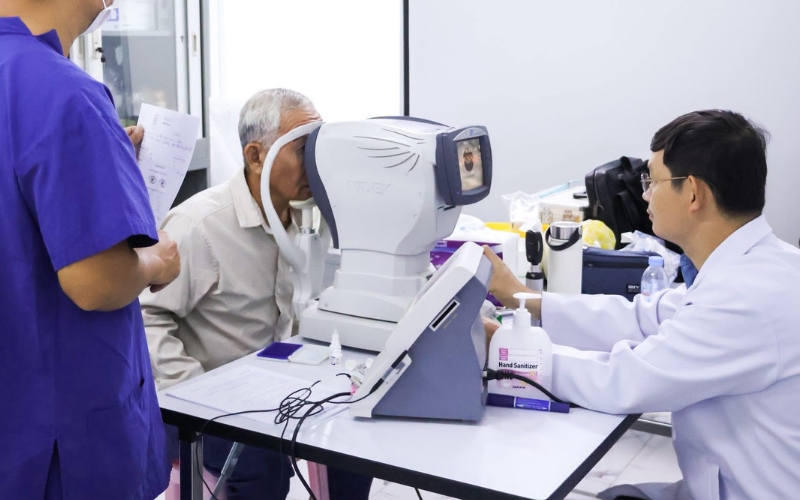
Investing in healthcare in Cambodia, for many, means hospitals. The reality, however, is that there are investment opportunities in a wide variety of healthcare sectors, including medical devices, pharmaceuticals, diagnostics, digital health, and specialized care services.
Health investments in Cambodia are most visible in the private hospital and clinic segment. The demand for private healthcare services is growing in parallel with the income of potential patients and their expectations for modern, fast, and patient-centered healthcare. This demand is most visible in the capital city of Phnom Penh, where private healthcare services have expanded most rapidly.
Investment opportunities exist in medical devices and health systems. Cambodia is a nation of great dependence on imported medical devices, such as diagnostic, imaging, and laboratory devices as well as surgical devices and even devices used to build a hospital. As healthcare services are made available and as healthcare facilities are modernized, the demand for medical devices will grow.
Pharmaceuticals represent another great area of investment. Cambodia relies on the importation of most of its pharmaceuticals, and access, logistics, and partnerships will be needed for many services as the demand for healthcare and the treatment of chronic diseases gain traction.
One additional area of interest is digital health. There is a growing desire in healthcare to use digital tools to increase health system efficiency and enhance patient care and access. Telehealth, electronic medical records, scheduling and appointment systems, and many other digital health services have become popular as they provide scalable options to health systems for improved operations.
Compared with the demand, the necessary healthcare services are still lacking. There are still growth opportunities in the areas of oncology, cardiology, rehabilitation, and elderly and preventive care, as well as diagnostic services. Complex care needs have seen many of the Cambodian population fly abroad for care, thus creating new opportunities for local providers to offer competitive services.
Cambodia’s evolving population provides opportunities in the healthcare market, with a growing population and urbanization leading to growth in most segments of the market. There are also longer life expectancies and a greater focus on preventive care.
The healthcare opportunities within Cambodia are huge and go far beyond ownership of a hospital for an investor. This evolving healthcare market can be of interest to providers in healthcare and technology, (health)care infrastructure, pharma, care consulting, digital health, and services.
Private Healthcare Sector and Foreign Investment Potential

The private healthcare industry is one of the fastest developing parts of the Cambodian economy. Like other countries, the public sector is important for making sure the entire population has some access to healthcare. However, private healthcare is increasingly utilized by patients who wish for a higher standard of care, specialized services, and less time spent waiting.
The demand for high-quality private healthcare is evidenced by the concentration of private hospitals and clinics in Phnom Penh. This is the result of an increase in disposable income and an influx of expat workers. Patients perceive a private healthcare institution to be more modern, and private institutions have an easier and better patient experience.
The development of the healthcare sector is also due to international healthcare providers. Some hospitals and medical centers have foreign partners and practice international management with overseas-trained doctors and other healthcare workers. These partnerships work to improve the quality of healthcare and bring international standards to the field.
Many Cambodians who leave the country for healthcare spend their money in the neighboring countries of Thailand, Vietnam, Singapore, and Malaysia. This is both an opportunity and a challenge. High-quality healthcare that meets the needs of the population will help retain the spending.
Investors must have tempered expectations in this sector. A dedicated plan is the foundation of an investment strategy in the highly regulated healthcare industry. Labor shortages of specialists, nurses, and administrators also plague the field.
Investors also have to consider compliance. Projects in the industry will require navigating licensure and healthcare regulations along with approvals for the standards of the facilities and the operations themselves.
Though there are difficulties, the private healthcare market in Cambodia is one of the most lucrative investment opportunities in the country in the long term. There is a solid basis of demand and an underdeveloped infrastructure that is ready for investment from locals and foreigners.
Challenges, Risks, and Future Outlook

Investors considering Cambodia’s healthcare sector should evaluate the possibility of gaining long-term profits against the potential risks and barriers to project implementation.
Developing the workforce is a common concern. Healthcare practices need a wide variety of highly educated and trained professionals, and many of these positions remain unfilled. Vacancies in healthcare system specialties such as oncology, cardiology, radiology, and other advanced healthcare specialties create challenges for healthcare practices that are trying to offer additional services.
There are also challenges with existing healthcare infrastructure, especially in the more rural areas of Cambodia. Large-scale healthcare investments in Phnom Penh have increased advanced healthcare services in urban areas, but access in secondary cities and underserved rural areas has not advanced to the same level. Investors may be able to capitalize on these opportunities, but it also means that there may be greater costs and longer timeframes to invest.
Stakeholders should also consider possible challenges with regulatory adherence. Healthcare service providers must possess and maintain licensure and operate in compliance with augmented standards and regulations of the healthcare industry. Investors that are not familiar with the Cambodian regulatory system are likely to benefit from the presence of local legal, regulatory, and healthcare advisors during the design phase of the project.
There will also be challenges related to import logistics. Many healthcare practices require medical and healthcare technology that is not available in Cambodia. A healthcare practice will experience challenges in operations if there is not an efficient and effective logistics and supply chain system in place.
Continuing to ensure a sustainable positive healthcare investment in the region is possible. Some international development agencies and healthcare market professionals anticipate that demand will continue to grow through 2026 and 2027. Urbanization, an increased population, increased per capita income, and an increased awareness regarding healthcare and improvement of services will likely result in an expanded market.
Private health care should see significant growth, specifically regarding diagnosis, specialty, prevention, and health care technology. Private health care will likely grow due to continued digital health care technology. Health care service providers will use technology to help deliver health care services to clients in a timely and easier way.
Investors will need to understand the dynamics of local health care systems and take a long-term view on the specific segment of the market on which they choose to focus. Good collaborations with the locals and focusing on the underserved specializations will likely bring a good profit.
Despite the difficulties, the health care system of Cambodia still offers long-term growth potential the other sectors of the economy do not offer. his or her home country, especially when their health care systems and policies are very different from Cambodia. The respective embassies could give their instructions, but in fact sometimes the recommendations are not so precise and easy to understand, especially for newcomers. So the conclusion is that you should learn about different options of insurance for your situation before your trip to Cambodia. If you only think about health insurance when your first symptom appears, it might be a little too late.
Conclusion
Cambodia’s advancing healthcare is attributed to urbanization, increasing populations, rising income, and demanding better medical services. While Cambodia’s healthcare has trouble providing the infrastructure and staff needed for specialized care, these deficiencies are major gaps in the market for private investment. These gaps are symptoms of Cambodia’s growing healthcare.
Investment opportunities are available in hospitals and clinics and even pharmaceuticals, medical devices, diagnostics, and digital health. Investors should expect a growing market for businesses providing modern healthcare for the Cambodian population.
Cambodia’s growing healthcare presents opportunities for foreign investment. Being the first to market will be an advantage, especially for companies that are familiar with the rules and regulations of the country and the healthcare needs of the population. Startups with international medical knowledge and expertise, and that invest and operate with the locals, will be the first to benefit from the future advancement of healthcare in Cambodia.