


One characteristic of Cambodia’s economy is the highly dollarized financial system. In most countries, a single national currency dominates business transactions. This is not the case for Cambodia because the Cambodian riel (KHR) and the US dollar (USD) are both heavily involved in everyday transactions, banking, trade, and investment. This may look odd to foreign investors, but, in fact, the duality of the currency system is an important factor of financial planning, risk management, and operational decisions for foreign investors.
The prominence of the USD has made Cambodia look like a very easy market for prospective investors, especially international companies, because they are used to the transactions and business dealings in the USD. Also, because of the policies that the Cambodian government and the National Bank of Cambodia (NBC) have put in place, the riel is gaining prominence, and the policies are geared towards the development of a robust financial system in Cambodia.
This document has a description of the currency system in Cambodia, the implications for prospective investors and companies, the associated risks of doing business with the currencies, and the forecasts for the Riel and the USD in the Cambodian economy.
Understanding Cambodia’s Dual-Currency Economy
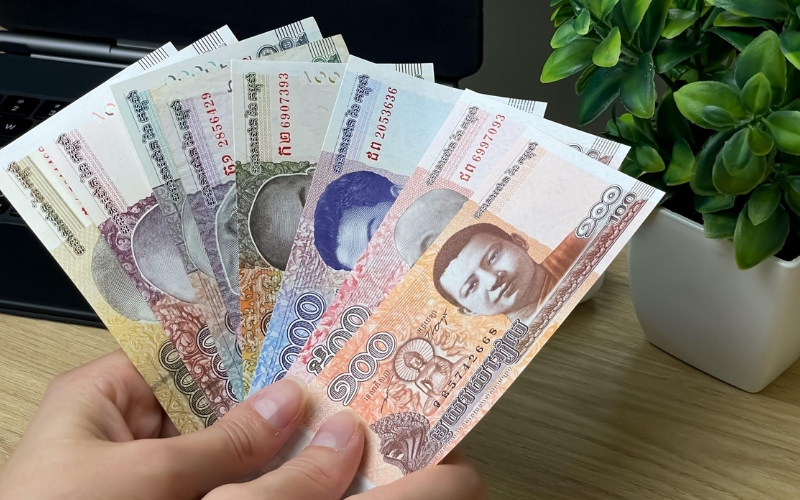
Cambodia differs from most other ASEAN members due to operating a highly dollarized system. In other ASEAN members with a single currency system, the Cambodian Riel (KHR) is the official currency, but the wider economy is very dollarized, and USD is the most important currency for consumers and businesses.
A system of compulsory registration and licensing is implemented under the National Bank of Cambodia (NBC). The NBC is the primary regulator and supervisor of the banking and financial services systems. In other ASEAN countries, the role of central banks in managing monetary policy and maintaining the management of the country’s currency is the norm, but in Cambodia, dollarization makes the environment different for the NBC.
Cambodia’s dollarization is a result of a long history. In the late twentieth century, after years of instability, foreign currencies started being accepted in transactions; the US dollar, in particular, was the trusted store of value. The habit of conducting transactions in other dollarized systems spread to banking and investment.
Today, both currencies coexist within the economy. In practice, the US dollar is commonly used for:
- Corporate transactions
- International trade
- Banking services
- Real estate transactions
- Large-value purchases
- Foreign investment activities
The Cambodian Riel is more commonly used for the following:
- Smaller retail transactions
- Local consumer spending
- Certain salary payments
- Domestic commercial activities
- Government-related transactions
There is a lot of dual currency usage in the system. For example, a firm could sell its products and services in Riel but still hold its bank account in USD and also pay its merchants in USD.
The NBC has tried various things to persuade people to use the Riel more. These have included a focus on local-currency payments to lessen the use of USD banknotes. These things are part of a larger, more long-term policy that is commonly named “dedollarization.”
Dedollarization is also not to be confused with trying to completely get rid of the usage of the US dollar. It is to build more confidence in the riel, with the intention of increasing its presence in the local economy, while also keeping the financial system stable.
This is important to foreign investors because they must accept that the dual-currency system of Cambodia, namely the Riel and the USD, is a normal business practice of the country. For financial and operational purposes, determining the relationship of the Riel with the USD is incredibly important.
How the Currency Environment Affects Businesses and Investors

Operational impacts of the dual-currency system in Cambodia. Most foreign investors will see the prevalence of the US dollar in the company books of Cambodia as a positive operational control and management advantage, as there are fewer difficulties dealing with an emerging market currency as compared to other countries.
Eliminating foreign exchange complexity is a significant advantage. Foreign investors doing business in developing countries are usually faced with the risk of their capital in the local currency and the volatility of the local currency. In Cambodia, most transactions are conducted in USD, and the potential for capital loss due to the volatility of the local currency is greatly reduced.
This can simplify several aspects of business operations, including:
- Corporate banking
- International payments
- Supplier settlements
- Contract negotiations
- Financial reporting
- Cross-border transactions
As an example, an investor-owned USD-funded manufacturing operation would import machinery and equipment paid for in USD and would purchase supplies from an overseas supplier also paid for in USD. This would greatly reduce the risk of exchange rate volatility causing negative impacts on the project.
Dollarization brings a positive effect on business in Cambodia. The export-oriented industries in Cambodia for manufacturing, agriculture, and logistics bring USD into Cambodia by transacting business in Cambodia with international business partners. This increases the ease of doing business for banks.
Different industries also have different payroll business practices, as the amount and the mix of currency used in payroll will differ. Businesses are allowed to deviate from this only if their practices are in line with the judiciary and customers.
Currency may weigh upon many pricing strategies. Businesses with a local clientele often must deal with multiple currencies. Businesses with international customers may only deal in USD. When creating a pricing framework, customer and market behavior are key.
For the USD-centric investor considering Cambodia, the degree of dollarization brings a welcome level of predictability to budgeting. Revenue, costs, and the eventual returns on investments can be assessed with much less currency risk than in many other markets at a similar level of economic development.
That said, currency risk cannot be wholly dismissed. Companies dealing substantially in KHR will be exposed to currency risk (and cash-flow risk) if they deal in KHR and USD.
The general level of confidence in the USD is a notable business benefit in Cambodia. It can ease many operational and FX challenges for a greater number of businesses with foreign ownership.
Currency Risks, Exchange Rates, and Investment Considerations
Cambodia’s dollarized economy may mitigate some foreign exchange risks, but investors need to be mindful of Cambodian currency dynamics, as they will affect business operations and the performance of investments.
Cambodian Riel to USD exchange rates are more stable compared to most currency pairs involving emerging market countries. The National Bank of Cambodia has been successful in its efforts to promote stability and confidence, supporting dual currency operations. As a result, compared to other frontier markets, there have been fewer instances of significant short-term fluctuations.
That said, currency exposure will depend on the type of investment.
For instance, foreign investors buying industrial property in Cambodia with rental income in USD will not be exposed to currency risk. On the other hand, a business in Cambodia whose revenue is in Riel and has a significant USD liability will be exposed to currency risk if there are adverse exchange rate movements.
Different investment types involve different currency considerations:
Real Estate
Commercial and industrial real estate transactions are often linked to USD pricing, particularly in major urban areas. This can reduce currency risk for foreign investors.
Manufacturing
Manufacturers may receive export revenues in USD while incurring labor and local operating costs in Riel. In many cases, this creates a natural balance between revenues and expenses.
Consumer Businesses
Companies focused on domestic consumers are more likely to generate revenues in Riel. Investors should therefore evaluate how local-currency cash flows align with financing structures and cost obligations.
Financial Assets
Investors participating in Cambodian bonds, equities, or other financial instruments should understand the currency denomination of assets and income streams, as this can influence returns.
A common currency risk will be the exposure of income to a liability in different currencies. For example, if a business in Cambodia has significant USD liabilities and earns primarily in Riel, exchange rate risk will affect business profitability. This risk will be reduced if businesses strategically plan their treasury to the extent the currencies of revenues and expenses are matched.
Investors commonly use multi-currency banking arrangements to manage cash flow better. Having both USD and Riel banking will have a positive impact on business operations and highly reduce the cost of currency conversions.
Cambodia’s economy is unique when compared to most of its frontier market peers, as, via the investors’ lens, analyzing currency trading in Cambodia primarily focuses on the stability of the Cambodian Riel as opposed to the volatility investors may experience in other frontier economies. Investors in Cambodia focus primarily on cash-flow management.
Cambodia’s environment demonstrates that currency risk is still present, but it occurs in a different form. The currency in which the majority of business is conducted, the currency of business expenditures, and the currency in which the majority of revenues are collected and realized is often more relevant than the movements of currencies in the international exchanges.
The Future of the Riel
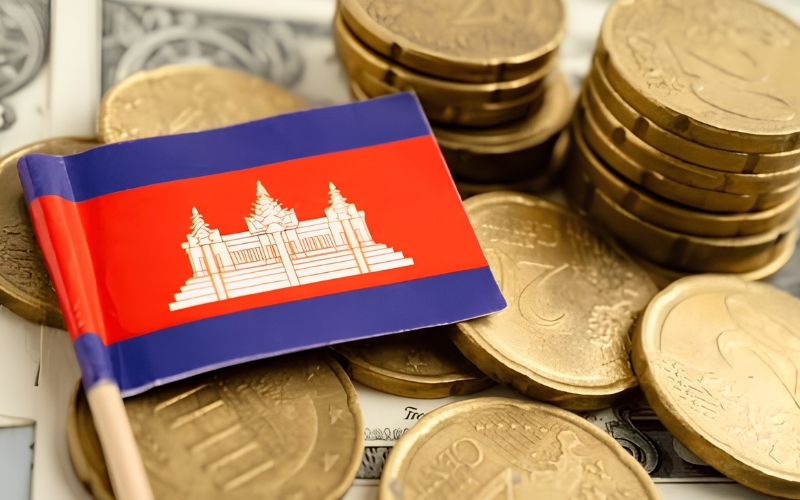
Although the US dollar is very predominant in Cambodia’s economy, the National Bank of Cambodia has committed to long-term policies designed to promote the Cambodian riel.
One of the notable policies has been the implementation of local-currency transactions in all areas of the financial system. The intent is not to eliminate the US dollar but to improve the Riel’s presence in domestic transactions, which would promote greater flexibility of monetary policy.
This goal has been significantly advanced by digital financial technologies. The NBC’s Bakong payment system is one of the advanced financial technologies in Cambodia. Bakong offers users the ability to make digital payments and encourages adoption of local-currency transactions.
As digital payments, mobile banking, and financial inclusion efforts continue, the visibility and accessibility of the Riel to consumers and businesses will increase. The shift to greater digital transactions will support this growing trend.
Several broader economic factors will also influence the future role of the Riel:
- Economic growth
- Inflation management
- Financial sector development
- Trade performance
- Banking sector modernization
- Financial inclusion initiatives
There is an overall expectation that the use of the riel will increase in the future, but a considerable decrease in the dominance of the US dollar is not likely. The dollar is an integral part of the financial system because of the needs of Cambodia’s business community to engage in extensive international trade.
The most plausible scenario for foreign investors in the 2026-2030 timeframe is that both currencies will continue to exist side by side. Companies will encounter greater Riel use in domestic transactions. However, investments, international trade, and corporate finance activities will continue to be conducted in US dollars.
Investors should therefore monitor developments in:
- NBC monetary policies
- Digital payment adoption
- Banking sector reforms
- Currency-related regulations
- Trends in local-currency financing
These factors may gradually influence how businesses manage cash flows and conduct transactions, but they are unlikely to fundamentally alter Cambodia’s dual-currency structure in the near future.
Conclusion
One notable element of the Cambodian economy is its dual-currency system. Particularly for foreign direct investors or businesses entering the market, the dual-currency system necessitates the widespread use of the US dollar. The use of the US dollar facilitates foreign transactions and allows investors to use the currency for their planning and forecasting. There are added benefits of an increased ease for foreign currency exchanges. Concurrently, the Riel is, and will continue to be, increasing its position in local transactions and is at the forefront of the long-term financial strategies and developments of the country.
The investor community also needs to take into consideration how revenues, expenses, and the banking and payment system interrelate and the risks posed by this dual-currency system in order to be able to effectively mitigate risks. The currency of Cambodia is unique from numerous rapidly developing economies but still needs the same consideration for the local styles of business and treasury practices.
The financial modernization of the National Bank of Cambodia and increased use of the Riel will mean that businesses will need to adapt to new policies and payment systems. Those investors that are able to comprehend the currency position of Cambodia will be able to make long-term decisions that are strategically sound.