


Cambodia is a prime frontier and emerging investment opportunity in Southeast Asia. This has become more evident in the last 20 years, as Cambodia has shifted from being a largely foreign-aid-reliant nation to a new, developing market. This has been supported by industrial growth, foreign direct investments, infrastructure, and regional cooperation. With the modernization of Cambodia’s economy and the strengthening of Cambodia’s position with the ASEAN supply chains, the investment community has been diversifying to new opportunities beyond the real estate and manufacturing sectors.
The modernization of Cambodia’s economy has been accompanied by the development of its financial systems. Currently, commercial banks remain the principal means of obtaining capital, but in time capital markets will begin to develop, providing companies additional means of obtaining capital while providing investors an opportunity for diversification. Familiarity with the fundamentals of the Cambodian economy, as well as the emerging investment opportunities, will assist family businesses, family offices, and institutional investors in spotting opportunities of a longer-term nature.
This report looks at Cambodia’s investment options, new potential in the growth sectors in its capital markets, and the risks and possible rewards associated with investment in this emerging market.
Cambodia’s Investment Landscape in 2026

Key drivers of, formerly, Cambodia’s investment potential include economic growth, urbanization, industrialization, and a greater integration with regional and global markets. External economic factors create uncertainties for Cambodia’s future, though, and Cambodia’s economy continues to be one of Southeast Asia’s fastest growing.
The International Monetary Fund (IMF) and the Asian Development Bank (ADB) forecast consistent and solid growth for the economy of Cambodia at least through 2026, bolstered by tourism and trade’s recovery, growth in manufacturing and infrastructure, and elevated levels of domestic consumption. Less exposure to a handful of economic sectors and a higher level of investment in Cambodia are the goals of the long-term growth strategy of the Cambodian government.
Foreign direct investments are one of the foundations of the economy of Cambodia. Based on reports by the Council for the Development of Cambodia (CDC), approvals for investments in the sectors of manufacturing, logistics, renewable resources, real estate, and services have been on the rise. Chinese, South Korean, Japanese, and Singaporean investors have been and continue to be instrumental for the financing of industrial buildings and trade.
Continuing the diversification of the economy, current and projected growth for manufacturing within Cambodia is dominated by sectors for electronics, automotive components, consumer goods, and light industrial manufacturing and is aided by strategic location and labor costs.
Growth in Cambodia is also driven by development in the infrastructure. Investment in roads, ports, and development of logistics and industrial facilities supports a trade and connective infrastructure network. These investments also help Cambodia strengthen its position in regional export trade.
At the same time, urbanization brings even more possibilities for real estate, retail, healthcare, education, and financial services. With the rise in income and consumer spending, the internal market is playing an increasingly bigger role in economic growth.
Apart from the current economic growth, Cambodia has great potential for the future, and this is another reason why many people are choosing to invest in the country. The young population, the location, infrastructure that is getting better, and an investment-friendly approach are great combined forces that keep drawing businesses to the region for long-term growth and success.
Cambodia’s Capital Markets
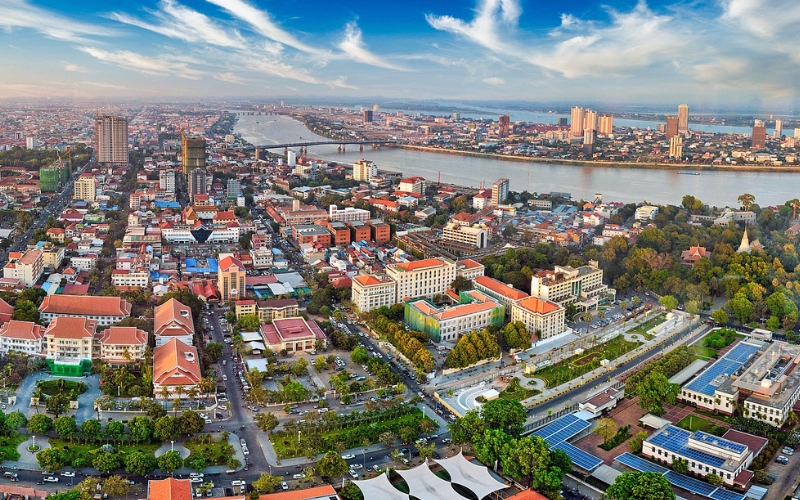
While Cambodia’s banks are the most prevalent method for accessing corporate funds, the capital markets are becoming an essential part of Cambodia’s financial infrastructure.
The Cambodia Securities Exchange (CSX), the country’s primary stock exchange, opened in 2011. Although it is much smaller than the majority of the regional exchanges, the CSX is crucial in meeting Cambodia’s goals of funding integration with regional markets and expanding the capital resources available to its economy.
In the last ten years, CSX has added utility companies, banks, manufacturers, and state-owned companies to its listings. The number of listed companies is small, but the regulatory environment is progressing. There are efforts focused on educating investors, which will lead to more sophisticated financial products. These improved market conditions will lead to more companies listing on the exchange in the near future.
Cambodia’s bond market, strengthened by corporate and government bonds, has also improved. Each of these provides a new method of financing beyond the more traditional option of bank financing. Longer-term bonds are beneficial for the funding of projects, such as expanding a company, improving infrastructure, or financing a large investment.
The capital markets and banking infrastructure of Cambodia are still in their infancy. Compared to the larger ASEAN exchanges, Cambodia’s trading volumes are small, and liquidity is problematic for many potential investors. Institutional investment and participation are growing, but retail investment is still far behind.
Nevertheless, one must analyze these hurdles in light of the broader state of Cambodia’s economic development. With capital markets, there is a correlation between the growth of the economy, the growth of businesses, the development of the financial industry, and the increase in market participation. As businesses become more reliant on sources of capital other than commercial loans, participation in the capital market grows.
Many companies that have raised capital are cognizant of the risks and rewards that come with the market, as compared to the commercial loans that companies would otherwise depend on. It is important to remember that Cambodia’s capital markets are still evolving and developing.
According to the International Capital Markets Association, in developing markets, the existence of capital markets improves the development of the financial industry and helps businesses have a greater awareness of the benefits and costs of raising capital. Therefore, while Cambodia’s capital markets may not have the liquidity seen in more developed Southeast Asian markets, an investment there is an opportunity for participation in the development of Cambodia’s economy, as well as the growth and development of Cambodia’s financial sector.
Where Long-Term Investment Opportunities Are Emerging
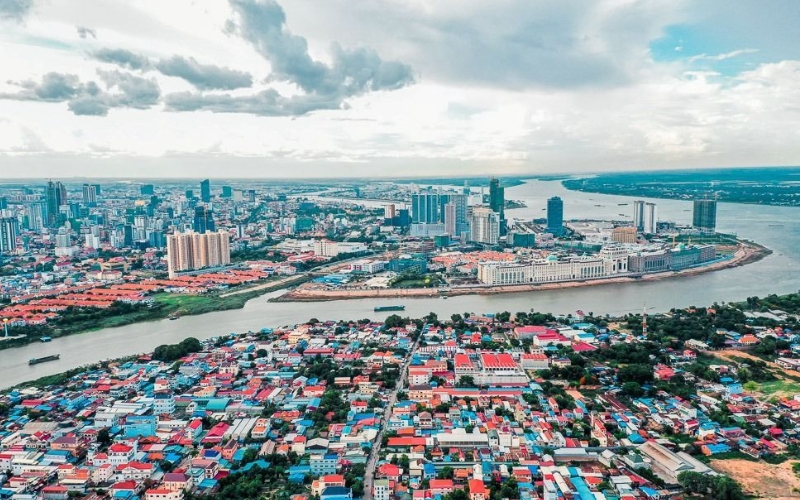
While interests are invested in capital markets, Cambodia offers broader lucrative investment options in line with the long-term changes in the economy.
Rapid industrial and logistics developments are among them. The diversification of manufacturers’ supply chains throughout Southeast Asia means that investment in Cambodia, for the region’s export-centered production, is increasing. The regional integration is resulting in increased trade volumes and developing logistics infrastructure and industrial parks, warehousing, and Special Economic Zones (SEZ).
Real estate and urban development are also opportunities in Cambodia. Although the market experiences adjustments in cycles, long-term demand for commercial activities and the development and growth of cities and their populations remain. Industrial property, commercial real estate that is highly connected to business activities, and logistics and mixed-use developments also remain of interest for investors.
Another area of investment is renewable energy. Cambodia’s development of the economy continues to demand the development and the growth of energy and power generation and the development and the growth of clean, renewable sources of energy. Solar projects and infrastructure will become an increasing part of the country’s energy.
The digital economy is yet another developing area of investment. The growth of digital services, e-commerce, and fintech with the spread of the Internet, smartphones, and digital payments is creating new investment opportunities throughout Southeast Asia. Supply and demand for digital and technology services will also grow with the increased connectivity of businesses and consumers.
Healthcare and education are also long-term opportunities. There are demands for private healthcare services, medical technology, vocational education, and private higher education as incomes rise and the population expects more quality service. These services are impacted less by economic cycles and are usually more favored by demographic shifts.
Urbanization, industrialization, infrastructure development, and human capital investment are long-term shifts. These shifts are expected to impact the Cambodian economy for the next ten years and make these opportunities more attractive. These shifts are structural rather than the factors that determine market opportunities and are likely to have a much longer-term impact.
For investors with a more medium- to long-term horizon, these shifts are likely to offer much more growth and investment than speculative opportunities. These investments are especially valuable for structuring the economy.
Risks, Challenges, and Strategic Considerations for Investors
There are opportunities and obstacles regarding investment in the Cambodian market as there are with any economy in the developing world. Because of the level of risk with investments in developing economies, savvy investors realize that identifying lucrative sectors is not enough for gaining high returns in the long run.
The limited size of a developing market is one of the biggest hurdles for investors. With Cambodia’s relatively small economy when compared to its ASEAN neighbors, many investment decisions are based on more than just domestic demand.
Investors also have to consider the fluidity of developing economy regulations. In Cambodia, significant improvements have been made to the investment climate, but developing economy regulations keep changing. Investors should stay in close contact with their advisors to ensure compliance.
Gaps still exist in certain sectors and areas in the developing economy with infrastructure, even with the improvements that have been made. When assessing the potential of an investment, the state of the infrastructure in the area should be considered.
The young developing economy and labor force of Cambodia can be an advantage to investors but often need significant investment in improvements and training to increase their operational performance and equity.
Investors need to keep in mind how the liquidity of Cambodia’s capital markets will impact their investment in comparison to more developed markets.
Comprehensive due diligence continues to be required. Before securing any investment, deal participants need to evaluate business partners, regulatory requirements, land ownership issues, local demand issues, and financial assumptions. In many instances, local collaboration and professional advisory services can help reduce negative impacts and improve decisions.
As we look toward 2030, some trends will likely strengthen the view toward investing in Cambodia. Opportunities in many sectors are likely to emerge from continuing urban population growth, infrastructure construction and improvements, expansion of manufacturing, accelerated digital development, and increased consumer spending.
For passive and/or long-term investors, particularly Cambodia may be enticing if it is viewed as part of an even larger economic growth strategy in the ASEAN region. In the ASEAN region over the next few decades, markets are expected to become integrated and connected in a way that is beneficial to business. Companies focusing on fundamentals, maintaining realistic expectations, and having a long-term view are likely to be the most successful in Cambodia.
Conclusion
Cambodia is becoming an attractive market for investors as a result of its industrial development, infrastructure, urban improvement, and an increase in regional integration. The relatively immature state of Cambodia’s capital markets in comparison to more developed ASEAN economies has not adversely impacted the development of Cambodia’s financial ecosystem, as the markets are growing.
Manufacturing, logistics, renewable energy, healthcare, education, technology, and real estate present substantial investment opportunities. They are all interconnected and aligned with the anticipated long-term structural changes in the Cambodian economy.
Investors must consider a number of additional factors, beyond the obvious opportunities, if they wish to achieve success in Cambodia. Intensive risk assessment, reasonably optimistic expectations for the outcome, the formation of quality business partnerships, and a committed long-term investment horizon all represent critical success factors. Investors and businesses may expect to experience the benefits of being among the first market participants in one of the emerging growth economies in South East Asia. This is especially true for businesses that are aligned with the sectors of the economy of Cambodia that are undergoing the most fundamental and greatest change.