


The latest prognostications show a more developed Cambodia in 2026, and this article will focus on the potential investment opportunities along with the expected risks in a market that is expected to offer real value to long-term investors.
Cambodia’s Real Estate Market in 2026
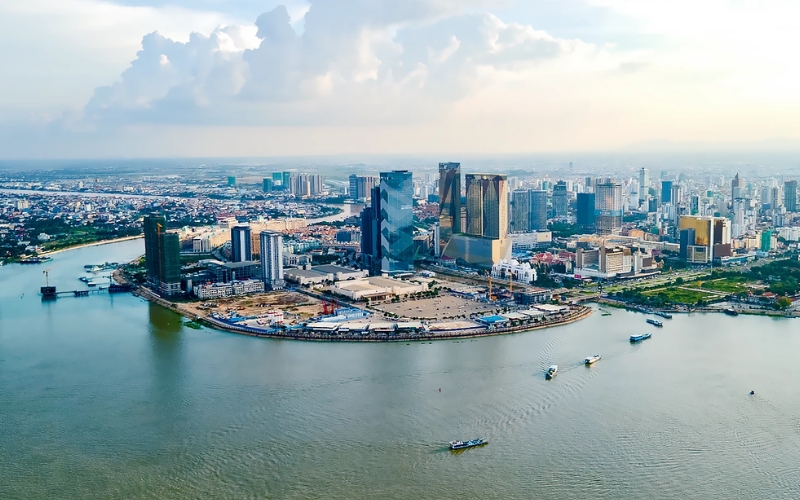
The growth of Cambodia’s real estate market can be used as a progress meter for the growth of the nation as a whole. Potential customers for real estate have changed as more people occupy cities and as more businesses expand to previously underserved areas.
The Cambodia country report from the World Bank describes the benefits to the economy for investments in manufacturing, services, tourism, and infrastructure. These all create demand for commercial and residential real estate. Rapid growth creates real estate market corrections, but demand will always be there with a growing population, an urbanizing population, and a growing economy.
The concentration of commercial activities and urban development in the capital city of Phnom Penh creates demand for office space and residential real estate.
The deepwater port in Sihanoukville means that it will remain a location of interest for industrial, logistics, and commercial activities. The real estate market in Siem Reap is determined by the tourism and hospitality sectors.
Recent improvements and an increased focus on industrial activities are pulling attention to previously neglected areas. Kampong Speu and Kandal are now developing industrial parks and manufacturing activities, which will demand industrial real estate.
Market conditions in 2026 demonstrate a shift toward a more sustainable environment following speculative growth periods. Investors and developers are looking to fund projects that respond to genuine demand rather than building speculative projects. Similarly, occupiers are more concerned with functionality, access, and operational efficiency. This concern is more pronounced in the commercial and industrial sectors.
This progressive change is more pronounced in the real estate market in Cambodia. While residential real estate development is still dominant, industrial, logistics, commercial, and mixed-use developments are becoming more important.
For investors, this change is an opportunity to invest in projects that are aligned with the objectives of the broader economy beyond the development of residential real estate.
Key Trends Shaping Cambodian Real Estate Development
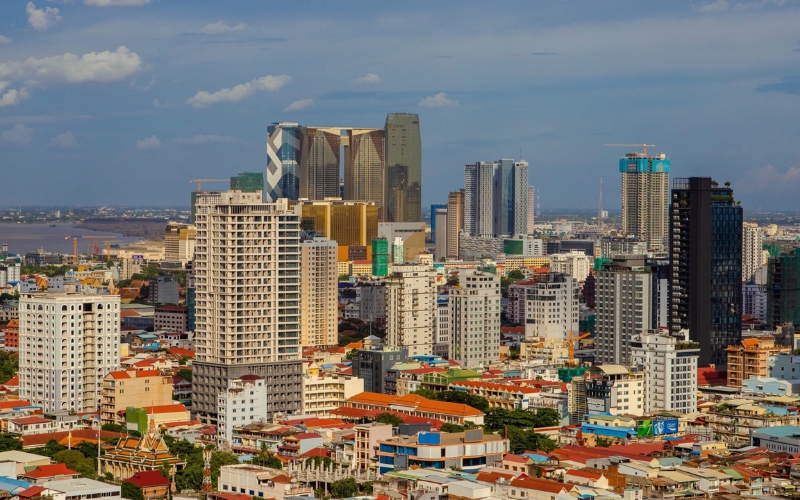
There are a number of sizable structural trends that are bringing the Cambodian real estate market in particular directions. These trends are giving developers and investors an increasing number of opportunities.
One growing segment, industrial real estate, is especially important. As companies realign regional supply chains and look for places to set up manufacturing that are cost-competitive, Cambodia’s manufacturing sector is growing. There is more and more need for industrial parks and a range of warehousing and logistics facilities along the transport corridors and near the Special Economic Zones (SEZs).
Modern supply chains and the e-commerce boom are also increasing the need for logistics facilities. Warehousing and fulfillment centers along infrastructure that can accommodate the growing needs of trade and the increasing demand of consumers are being more and more sought after.
There are also opportunities in the development of commercial real estate. Demand for Grade A office space, for example, is growing in Phnom Penh, especially for offices of multinational companies, banks, and foreign-invested professional and business service firms. Demand for office space slows down at times, but the demand that remains is a result of business and economic growth.
Developers have the opportunity to do even more innovative projects using mixed-use zoning. These large zoning projects are simply a reflection of the changing lifestyles of the urban environment.
The changing lifestyles of urban environments are also being reflected in the changing residential market. Mid-range housing projects and the like are being focused on to a greater degree than in years past when luxury condominiums dominated the market. Rising household incomes and urban population growth provide a clear indication that these projects are needed.
Sustainability is becoming more relevant in this context. Developers are more focused on the energy and environmental performance of a building, as well as building to the current standards. More international investors and corporate occupants assess the properties they deal with on a sustainability basis, leading to the acceptance and integration of sustainability and green building practices.
Additionally, the development and evolution of technology are impacting real estate development. Smart and connected building systems, digital and connected infrastructure, and energy management solutions are becoming a norm in today’s commercial building construction. These systems positively impact operating efficiency and the competitive position of the asset.
Cambodia’s real estate market is becoming more sophisticated. The development of industrial and commercial property is becoming more important to market growth, as developers are focusing on property projects that are aligned with the fundamentals of the economy over the long term, as opposed to the short-term speculative projects.
Where Investment Opportunities Are Emerging in Cambodia
For investors seeking entry to Cambodia’s property market, the most promising opportunities can likely be found in the sectors most closely related to industrialization, urbanization, and infrastructure.
Growth in Cambodia’s industrial and logistics real estate is one of the most rapidly developing sectors. Positive foreign investment into Cambodia’s manufacturing sector increases the demand for manufacturing facilities, industrial parks, warehouses, and distribution centers. Investors in industrial real estate can look to Cambodia’s place in regional supply chains and economies to stimulate demand.
Special economic zones provide the necessary infrastructure and encourage investment by providing incentives for manufacturers and logistics operators to locate in the zone. Property in or near major industrial corridors is becoming a more desirable investment, a more necessary investment, and a more strategically located investment.
As foreign investment increases and businesses expand, there is a growing need for quality office space, and as a result, commercial real estate in Phnom Penh is becoming more attractive. Grade A office space, business parks, and modern corporate facilities will likely realize sustained positive investment and/or demand from the private sector and the ongoing positive de/expansion of the economy.
Tourism real estate development in Cambodia will be a more appealing investment as there are positive long-term impacts on demand driven by the business’s core activities and services of developing tourism infrastructure, e.g., hotels and resorts. Although the market for tourism-related investments can be more closely associated with the business cycle, there is demand for tourism in Cambodia driven by the country’s cultural services.
Because of their ability to incorporate and combine a variety of income-generating activities, such as residential, commercial, retail, and hospitality, into a single project, mixed-use developments are becoming an increasingly appealing investment/cautious property choice.
This growth in infrastructure presents opportunities for investment in real estate. The construction and enhancement of roads and railways, logistics hubs and corridors, airports, and ports create interest in ancillary commercial and industrial properties. Investors who identify where new infrastructure is likely to stimulate economic and commercial development may find these opportunities as well.
The intersection of infrastructure and economic development presents unique opportunities from previous property cycles. The expansion and development of manufacturing and logistics, the integration of trade and services, and urban and real estate development create property value, as opposed to purely speculative investments.
For companies and institutional investors, the areas in which the greatest opportunities for investment and growth are the services and sectors that support the long-term economic development of Cambodia. Industrial real estate, logistics, and business infrastructure and flexible property services are all more aligned to the opportunities and challenges in the economy than residential property.
Risks, Challenges, and the 2026–2030 Outlook
Investors looking at the real estate potential in Cambodia should carefully review the risks that come with investing in property there.
One of the obvious risks that come with investing there is the cyclicality of the market. Investors should be aware of the expansions and contractions of the Cambodian property market and what the longer-term fundamentals of the property market say, rather than relying on some of the more immediate trends of the property market.
Project viability can be influenced by the potential for changing lending environments, interest rates, and available capital. The more conservative and flexible the financial assumptions are, the better.
There can be an oversupply of property if the development pace outstrips demand. This can be avoided with good market research and feasibility studies.
Investors need to become familiar with the legal and regulatory aspects of investing in Cambodian property. There should be land due diligence reviews and partnership agreements.
The future profitability of property is highly influenced by location and the access to the core infrastructure of transportation and networks.
The future potential of the Cambodian property market is good. It’s likely that the pending improvements to infrastructure, the ongoing economic growth, and increasing urbanization will all contribute to an increased demand for commercial property in Cambodia.
Between 2026 and 2030, industrial real estate will likely continue to be one of the strongest-performing segments. Logistics facilities, warehouses, and industrial parks and related manufacturing real estate will continue to benefit from the diversification of supply chains and the increased levels of trade.
As economic growth continues to support business expansion, demand for good office space will lead to stability in commercial property markets. Cities will continue to grow, and as a result, there will be more emphasis on mixed use and on projects tied to the infrastructure.
Cambodia’s property market will, most importantly, start to exhibit models that are based on real fundamentals. Growth will likely be derived from real demand based on economic growth, industrial development, and urban growth as opposed to speculative demand.
For those that invest with a long horizon, this will present a greater opportunity to realize growth from less speculative realms that will be associated with the earlier stages of development.
Conclusion
The transformation of the Cambodian economy induces the same in the real estate sector. While the construction of new homes continues to be vital to the country, new investment opportunities arise in the sectors of industry, logistics, commerce, and integrated projects.
The strongest opportunities will be the investments most closely related to the trends of the future, like industrialization, urbanization, and the improvements of infrastructure and regional trade. These phenomena will create property that will be useful for the operations of a business and for the networks of logistics and urban development. These will create new opportunities, unlike speculative investments.
In the future, appealing opportunities will still be present in Cambodia’s evolving real estate sector, in the construction of new homes, for institutional investors, for property developers, and for businesses interested in value-generating opportunities in Southeast Asia.