
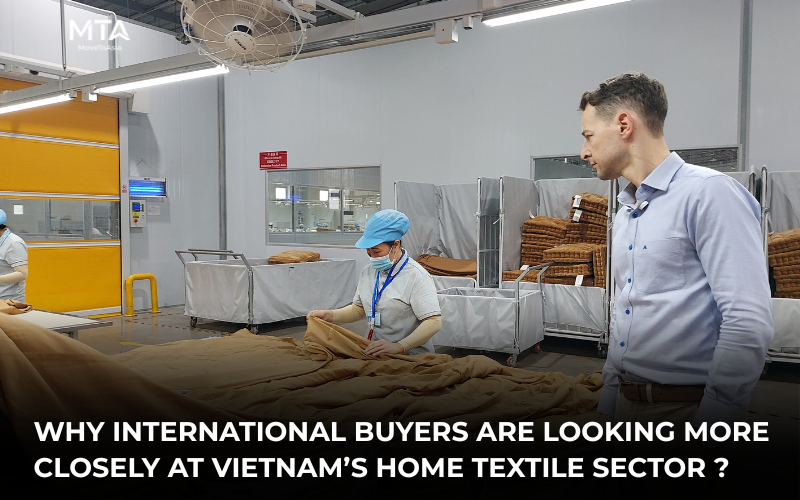
Over the past decade, global sourcing patterns have undergone significant realignment. Trade tensions, Covid-19 disruptions, rising production costs, and regulatory shifts in consumer markets have all contributed to a reassessment of supply chain architecture. In the U.S. market, for example, China’s role in apparel imports has contracted sharply over the last decade, reinforcing the structural move toward supplier diversification rather than single-country concentration.
Home textile supply chains are structurally complex. They involve multiple upstream inputs, as well as compliance management, quality control, and distribution logistics. Because the sector sits at the intersection of industrial execution and consumer-market regulation, procurement strategies increasingly emphasize reliability, traceability capacity, and lead-time control alongside unit cost considerations.
Within this broader context, Vietnam’s home textile sector has drawn growing attention from international buyers. Vietnam’s textile and garment exports were estimated at around USD 46 billion in 2025, and sector targets and subsequent performance indicate a rebound trajectory in the mid-2020s.
The question is not merely whether Vietnam can manufacture home textiles, but why buyers are now examining the sector more closely and how its structural characteristics align with current sourcing priorities.
The Structure of Vietnam’s Home Textile Industry
Vietnam’s home textile sector is part of the country’s broader textile and garment industry, one of its most export-oriented manufacturing sectors. While apparel dominates volumes, home textiles, bedding, towels, curtains, upholstery fabrics, and decorative items rely on the same industrial base: established factories, export experience, compliance familiarity, and logistics networks.
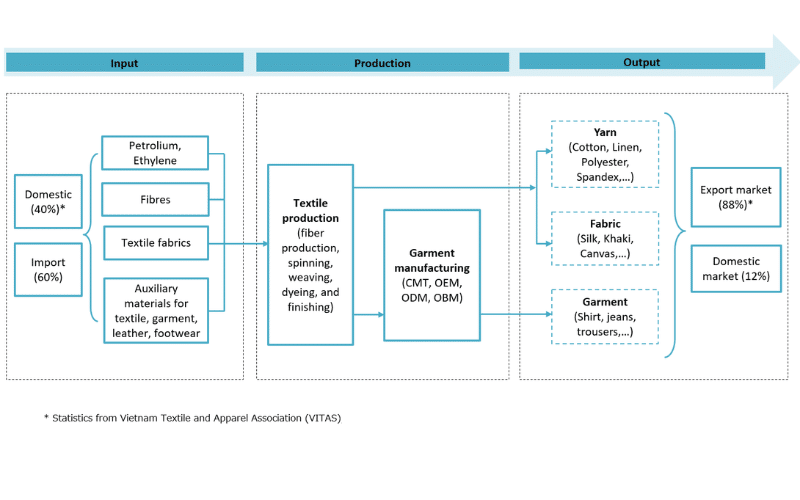
The industry operates across three levels.
- Upstream, Vietnam remains dependent on imported raw materials such as cotton and certain synthetic fibers, which exposes producers to global price fluctuations. However, domestic spinning and fabric capacity have expanded, improving responsiveness for selected product categories.
- Midstream production includes cutting, sewing, quilting, and assembly. The factory base ranges from medium-sized firms to large export manufacturers serving international buyers. In home textiles, performance depends less on innovation and more on process stability, dimensional accuracy, finishing consistency, and packaging control.
- Downstream, exports define the sector. The United States remains Vietnam’s largest textile market; in the first three quarters of 2025, exports to the U.S. exceeded USD 13.4 billion. For home textile buyers, this reflects an ecosystem accustomed to large-scale export procedures, compliance documentation, and audit requirements.
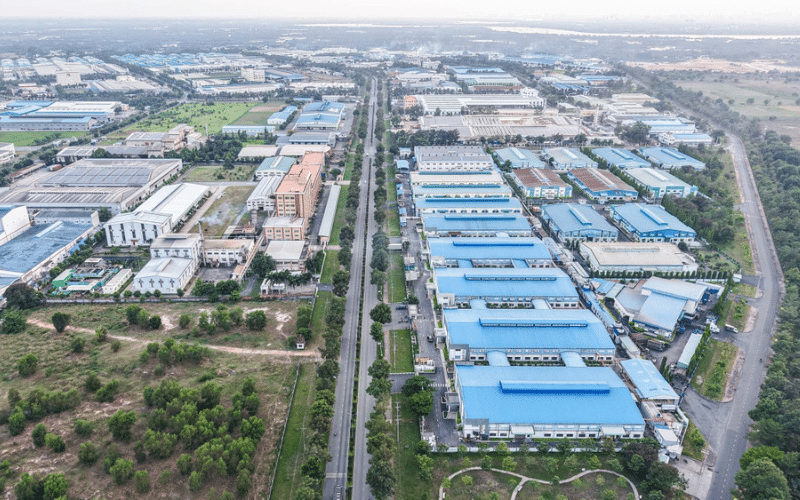
Overall, the sector benefits from developed industrial zones, improving port infrastructure, and regulatory alignment with major markets. While dependence on imported inputs and environmental constraints in dyeing remain structural limit, the industry demonstrates increasing operational maturity and coordination.
Supply Chain Diversification and Risk Management
The primary driver of buyer interest in Vietnam’s home textile sector is diversification. Over-reliance on a single production base has proven vulnerable to tariffs, policy shifts, health crises, and logistics disruptions. Home textiles, often seasonal and margin-sensitive, are particularly exposed to these shocks.
Vietnam fits within broader “China Plus One” strategies. The objective is not full replacement, but risk distribution. Buyers increasingly split production across countries, keeping high-volume or complex items in established hubs while reallocating selected product lines to alternative bases.
This rebalancing is visible in U.S. sourcing trends: China’s share of U.S. apparel imports has declined, while Vietnam’s role has expanded. In home textiles, this translates into dual sourcing models and backup capacity for seasonal peaks.
Vietnam offers more than cost competitiveness. Buyers consider operational continuity, factory discipline, workforce stability, and support services such as testing and third-party inspection. These factors reduce lead-time uncertainty and quality risk.
Regulation also matters. EU buyers face growing traceability and due diligence requirements. Vietnam’s participation in trade agreements such as EVFTA and CPTPP signals familiarity with rules-of-origin and compliance documentation.
Logistically, Vietnam benefits from an established containerized export infrastructure, supporting predictable shipping cycles for time-sensitive collections.
Diversification today is about system design rather than price alone. Vietnam’s home textile sector increasingly serves as one component within a multi-country risk management strategy.
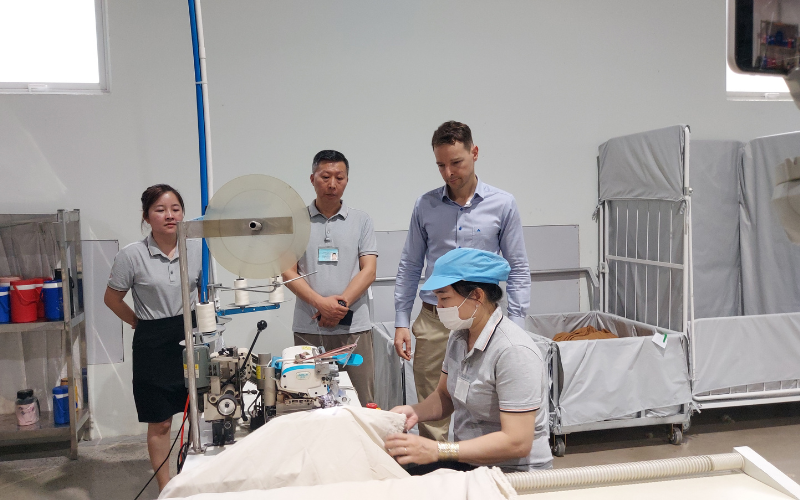
To better understand how these operational standards translate into real production environments, the following factory visit illustrates the workflow inside a Vietnamese home textile manufacturer. From raw material inspection and cutting to sewing, in-line quality control, and final packaging, each stage reflects the structured processes international buyers evaluate when assessing supplier reliability.
Industrial Upgrading and Product Capability
Beyond diversification, buyers assess Vietnam’s home textile sector based on capability. The country is no longer viewed solely as a low-cost base, but as an increasingly structured production environment.
Over the past decade, many factories have invested in automated cutting, quilting equipment, and stronger quality control systems. In home textiles, process stability is critical: defects such as dimensional variation, uneven stitching, or packaging errors can replicate across entire lots. Buyers, therefore, prioritize disciplined workflows and measurable quality control over design innovation alone.
Compliance standards have also strengthened. Export-oriented factories are more accustomed to social audits, chemical restrictions, and traceability requirements. While maturity levels vary, documentation quality and audit readiness have improved across much of the supplier base.
This operational discipline can be visible through factory tours, where production stages: raw material inspection, cutting, sewing, in-line QC, measurement checks, and packaging, are presented sequentially. These are the concrete elements buyers evaluate when assessing consistency and shipment reliability.
Flexibility has also improved. Manufacturers increasingly support controlled customization for private-label programs, allowing design variation without destabilizing core production processes.
Sustainability adds another layer. Dyeing and finishing remain sensitive due to water and effluent management. Stricter local regulations have limited uncontrolled expansion while encouraging more compliant operations. For buyers, environmental governance is now part of supplier risk evaluation.
Overall, Vietnam’s home textile sector is judged less on price alone and more on capability, compliance, and operational transparency.
Structural Evolution and Competitive Positioning
Vietnam’s home textile sector must be understood within the country’s broader export-led industrial strategy. Textiles remain central to Vietnam’s manufacturing model due to strong export integration and a well-developed supplier ecosystem.
However, structural limits remain. Vietnam imports most of its cotton and part of its specialty fibers, thereby exposing manufacturers to volatility in raw material prices. For international buyers, this affects price stability and long-term sourcing planning.
Regional competition is also a key factor. Buyers compare Vietnam with China, Bangladesh, India, Indonesia, and Cambodia depending on product complexity, compliance requirements, and lead times. Vietnam’s competitive advantage lies less in being the cheapest option and more in combining trade access, political stability, and a mature export infrastructure.
As wages gradually rise, competitiveness increasingly depends on productivity. For home textiles, where quality consistency is critical, factories that control defects and reduce rework often secure long-term programs, even without the lowest unit cost.
Digitalization is becoming another differentiator. ERP systems, traceability tools, and structured documentation processes improve visibility and reduce lead-time uncertainty. In data-driven supply chains, operational transparency strengthens supplier positioning.
Sustainability regulation in Europe and North America is tightening. Buyers now require traceable raw materials, chemical management compliance, and auditable documentation. Progress in Vietnam is visible but uneven, requiring careful supplier selection.
Overall, Vietnam’s home textile industry is in transition: more capable and compliant than before, but still developing upstream resilience. Its positioning increasingly reflects operational discipline rather than pure cost advantage.
Stakeholders and Relevance
The growing focus on Vietnam’s home textile sector concerns several key stakeholders:
- International retailers and home décor brands
- Private-label importers and wholesalers
- Institutional buyers (hospitality and healthcare)
- Vietnamese manufacturers and industrial developers
- Trade authorities and policymakers
Retailers integrate Vietnam into diversified sourcing strategies. Importers seek stable execution and controlled customization. Institutional buyers prioritize compliance and durability. Manufacturers evaluate investments in automation and sustainability. Policymakers monitor exports, employment, and environmental standards.
These actors are interconnected: sourcing decisions shape factory investment, while regulation influences cost structures and competitiveness.
Structural Repositioning in Global Supply Chains
Vietnam’s home textile sector is attracting attention because it aligns with current global sourcing priorities: diversification, compliance, industrial reliability, and logistics predictability.
Vietnam is not the largest or lowest-cost producer, but it combines export maturity, improving capability, and growing regulatory alignment. For international buyers restructuring supply chains, this makes Vietnam a strategic option for controlled-risk sourcing.
Its future role will depend on strengthening upstream resilience, maintaining environmental governance in dyeing and finishing, and continuing digital and operational modernization.
The key shift is structural: buyers are no longer optimizing for a single country. They are designing resilient sourcing systems and Vietnam’s home textile sector is increasingly positioned as one component within that multi-country framework.