


Laos enters 2026 with a stronger macroeconomic position than it had during the most acute phase of its recent instability, but it is not a low-risk market. Economic growth reached an estimated 4.8% in 2025, supported by tourism, transport and exports of electricity and electrical equipment. Foreign investment remained active, particularly in resource projects. The World Bank nevertheless expects growth to moderate to 3.8% in 2026 as higher fuel costs, weaker external demand and persistent debt pressures weigh on the outlook.
This combination defines the investment case. Laos offers natural resources, renewable power potential, improving connections with neighbouring markets and opportunities to add value in underdeveloped supply chains. At the same time, a small domestic market, foreign-exchange exposure, infrastructure gaps, skill constraints and activity-specific approvals can materially affect execution. The country should therefore be assessed as a focused investment platform, not as a general-purpose substitute for larger ASEAN economies.
The most credible projects tend to have one of four foundations: a contracted export market, a clear local supply gap, access to a specific resource or concession, or an operating model that benefits from Laos’s location between China, Thailand, Vietnam, Cambodia and Myanmar. The investment thesis is strongest when these advantages are validated at customer, site and licence level.
Market-entry routes and regulatory framework
Choosing the right investment structure
The amended Law on Investment Promotion No. 62/NA, adopted on 28 June 2024, provides the current core framework. It recognises wholly foreign-owned investment, joint ventures, contractual business cooperation, public-private investment and public-private partnerships.
A locally incorporated company is generally the most practical structure for employing staff, contracting with customers, importing equipment and operating a long-term business. A joint venture may be commercially useful where a Lao partner contributes licences, land access, local distribution, stakeholder relationships or sector expertise. It should not be selected merely to simplify entry: governance rights, reserved matters, funding obligations, related-party transactions, transfer restrictions and exit mechanisms need to be documented before capital is committed.
Contractual business cooperation can be relevant when parties want to collaborate without creating a new legal entity, subject to notification and notarisation requirements. A representative office is narrower. It can study the market and coordinate with local parties, but it is not a vehicle for conducting revenue-generating operations. The structure should therefore follow the activity, not the other way around.
Ordinary, controlled and concession activities

The licensing route depends first on how the proposed activity is classified.
For a business outside the controlled list, the investor normally proceeds through enterprise registration with the industry and commerce authorities, followed by any sector-specific operating licence. A promoted project may then apply for an investment-promotion certificate.
A controlled business requires additional review because of potential implications for security, public order, social or environmental interests. The investment authorities coordinate with the relevant sector agencies before issuing an investment licence. The law provides a 25-working-day review period after a complete application is accepted, but this statutory period should not be treated as the total project timeline. Document preparation, clarification requests, technical approvals and local-level processes can extend execution.
Concession activities follow a more extensive route. They include projects involving state land or natural resources and can cover mining, power generation, transport infrastructure, telecommunications, airports, roads and special economic zones. The process may require government approval, a memorandum of understanding, feasibility studies, environmental and social assessment, negotiation of a concession or development agreement, an investment licence and an operating licence. Initial concession terms can extend up to 50 years, with any extension subject to project evaluation and approval under the law.
The central Investment Promotion and Management Committee Office and provincial one-stop offices coordinate these processes. Investors should still build an approval map by agency, document and sequence. “One-stop” coordination does not remove the legal authority of technical ministries, provincial bodies, environmental authorities, tax and customs administrations or utility providers.
Capital, land and profit repatriation
Foreign investors in general businesses are required to import at least 30% of registered capital within 90 days of receiving the relevant business or investment licence, with the balance imported within one year. Capital contributions should pass through the appropriate banking channels and be supported by Bank of the Lao PDR certification.
Land strategy requires particular care. Foreign investors typically rely on leases or concessions rather than assuming that land can be acquired on the same basis as by Lao nationals. The investment law protects rights to lease or concession land and to own buildings and improvements created under the approved project, subject to land and other applicable laws. Title, boundaries, existing use, compensation, access roads, water rights and community claims should be verified independently.
The law also provides protections against unlawful expropriation and permits investors to transfer profits, proceeds and capital abroad through banks after meeting tax, customs and other legal obligations. In practice, repatriation planning should cover supporting documents, audited accounts, tax clearance, the currency of revenue and debt service, and the availability and cost of foreign exchange.
Tax and investment incentives
The 2024 investment law identifies nine promoted areas, including clean agriculture; green industry and agro-processing; digital technology, research and resource efficiency; sustainable tourism; public infrastructure; special economic zone infrastructure; and logistics. Incentives depend on both the promoted activity and the project location.
The standard profit-tax rate for most domestic and foreign companies is 20%. The standard value-added tax rate is 10%, restored under a 2024 presidential ordinance. Sector-specific taxes, withholding taxes, customs duties, excise taxes, natural-resource obligations and treaty treatment can materially change the effective burden, so the tax model should be built around the actual transaction and operating flow rather than the headline rate.
Profit-tax holidays can reach up to 10 years in Zone 1, which covers locations where infrastructure is less supportive of investment, and up to four years in Zone 2. Additional periods may apply to selected priority categories. The law also provides potential customs exemptions for qualifying fixed assets, machinery and inputs, incentives for reinvested profits, and land-rental or concession-fee holidays in eligible cases.
These benefits are not automatic. Investors need to confirm the project classification, zone, promotion certificate, eligible expenditure, start date, reporting obligations and consequences of non-compliance. Incentives should improve the economics of a sound project; they should not be used to justify weak demand, an unsuitable site or an unbankable concession.
Laos investment sectors at a glance
The profiles below cover the requested market themes; renewable-energy, mining, agriculture, manufacturing, logistics, tourism-hospitality, consumer-goods and technology; and focus on practical entry points rather than headline potential alone.
| Sector | Potential entry points | First feasibility checks |
| renewable-energy | Wind, solar, storage, grid equipment, engineering, energy efficiency | Offtake, grid, land, E&S, currency, curtailment |
| mining | Mine services, processing, laboratories, equipment, water and rehabilitation | Concession, reserves, fiscal terms, community, closure |
| agriculture | High-value crops, inputs, aggregation, cold chain, feed and processing | Buyer specs, land, water, SPS, traceability, volumes |
| manufacturing | Electrical assembly, packaging, food processing, light industry | Inputs, power, skills, yield, customs, delivered cost |
| logistics | Dry ports, warehousing, cold chain, forwarding and supply-chain software | Volume, backhaul, licences, customs, seasonal access |
| tourism-hospitality | Boutique hotels, eco-lodges, destination services, management and training | Access, seasonality, occupancy, waste, heritage approvals |
| consumer-goods | Packaged food, personal care, household products, local packing | Registration, labels, pricing, channels, working capital |
| technology | B2B software, payments infrastructure, agritech, hotel tech, cybersecurity | Licences, data, connectivity, talent, customer scale |
Renewable energy
Electricity exports remain an important source of growth, and Laos is broadening its renewable base beyond conventional hydropower. The 600 MW Monsoon Wind Power Project, designed to export electricity to Vietnam, demonstrates the potential for large cross-border wind projects and project-financed regional offtake.
Investment opportunities include utility-scale wind and solar, distributed solar for industrial and commercial users, battery storage, transmission equipment, grid services, engineering, environmental services and energy-efficiency solutions. Suppliers can also support power-intensive manufacturing, tourism assets and remote facilities that need more reliable or lower-carbon electricity.
The critical issue is bankability. Investors should verify resource studies, grid connection, dispatch and curtailment rules, the credit quality and currency of the offtaker, transmission losses, land rights, environmental and social impacts, community agreements and the financing structure. Hydrology, climate resilience and cross-border power-sale arrangements require particular stress testing. Resource availability alone does not create a financeable project.
Mining

Mining continues to attract resource-sector investment. Recent production growth has been strongest in potash and gold, while copper output has faced depletion at mature deposits. This creates a mixed opportunity: new projects and supporting services may grow, but reserve quality and project economics must be proved rather than inferred from national mineral potential.
Entry points extend beyond ownership of a mine. They include geological and laboratory services, drilling, equipment maintenance, mine planning, mineral processing, water and tailings management, occupational safety, logistics, rehabilitation and renewable power for remote operations. Service-led entry can reduce upfront exposure while building relationships with concession holders.
A mining investment is a concession project and should be assessed through its full fiscal and environmental framework. Investors need independent reserve verification, a clear concession area, a valid development agreement, royalty and tax modelling, export permissions, community consultation, resettlement analysis where relevant, water availability, closure obligations and commodity-price sensitivities. The quality of the licence and the social licence to operate are as important as the ore body.
Agriculture and agro-processing
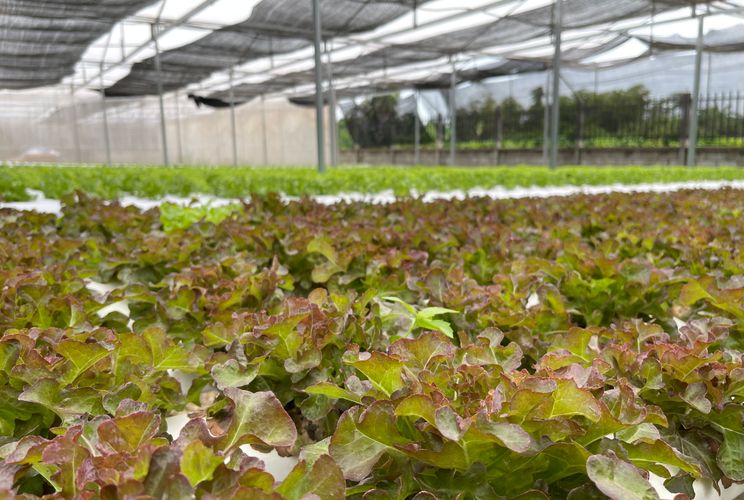
Agriculture offers an opportunity to move from primary production toward higher-value, traceable and export-ready supply chains. The Laos–China railway corridor can improve market access, but smallholder fragmentation, inconsistent quality, limited finance, sanitary and phytosanitary requirements, cold-chain gaps and weak coordination remain material constraints. World Bank analysis highlights the need for better inputs, contract farming, certification, finance and responsible environmental and social monitoring.
Potential models include coffee and specialty crops, cassava, fruit and vegetables, livestock services, seeds and irrigation, collection centres, cold storage, grading, packaging, feed, food processing and export compliance. Projects that organise reliable sourcing and improve farmer productivity can create more durable value than land-intensive production without a secured route to market.
Feasibility should begin with the buyer specification. Investors need to test crop suitability, seasonal volumes, land-use rights, water, farm-gate economics, aggregation costs, pesticide and residue rules, traceability, border protocols and rejection risk. Contract farming should include transparent pricing, quality criteria, extension support and dispute mechanisms rather than relying on informal supply commitments.
Manufacturing
Laos is not yet a broad manufacturing hub, but selected export-oriented and resource-linked activities are expanding. Electrical and electronic equipment production in special economic zones has grown, while agro-processing and materials-based manufacturing can benefit from local inputs and regional corridors.
Potential entry points include electrical assembly, garments and light industry, packaging, wood and paper products that comply with sourcing rules, construction materials, food processing, repair and maintenance, and contract production serving neighbouring markets. Special economic zones may offer serviced land, one-stop administration and incentive eligibility, but zone quality varies.
The investment case depends on total delivered cost. Investors should model imported inputs, electricity quality, backup power, labour availability, supervisor and technician skills, yield, customs procedures, rules of origin, inland transport, inventory buffers and customer qualification. A low nominal wage is not an advantage if it is offset by training, downtime, rejects or expensive logistics.
Logistics
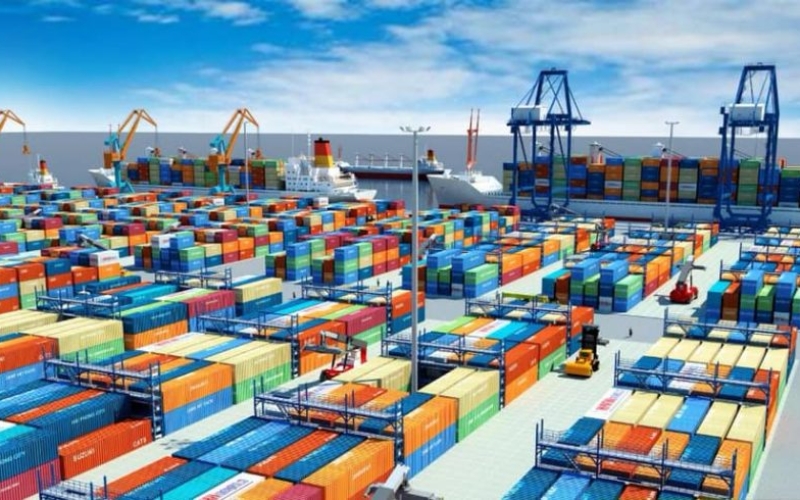
Laos’s location is increasingly relevant to regional trade, and rail and road links create opportunities in multimodal transport, dry ports, warehousing, cold chain, freight forwarding, customs services and supply-chain technology. Trade facilitation has improved: a 2026 ESCAP assessment reported a 75.27% implementation rate for trade-facilitation measures by 2025, with average import processing time falling to 3 hours 19 minutes and export processing to 49 minutes in the 2024 Time Release Study.
These gains do not eliminate corridor risk. Digital systems, cross-border data exchange and provincial implementation remain uneven, while road quality and seasonal disruption can affect first- and last-mile delivery. The railway creates capacity; it does not guarantee volume, competitive pricing or seamless border procedures.
Investors should therefore test shipment density, backhaul, terminal access, customs liability, bonded status, handling equipment, cold-chain integrity, route seasonality, insurance and service-level requirements. Asset‑light forwarding, a customer-anchored warehouse or a joint venture with an established operator may be more prudent than building capacity ahead of demand.
Tourism and hospitality
Tourism supported the 2025 recovery, and official tourism reporting recorded approximately 4.58 million visitors in 2025, up 11% year on year. Laos’s strongest proposition lies in cultural, nature-based and experiential travel rather than mass-market volume alone.
Opportunities include boutique and upper-midscale accommodation, eco-lodges, destination services, food and beverage concepts, wellness, river and adventure products, tourism transport, digital distribution, hotel management, vocational training and local supply networks. A 2025 initiative to promote nature-based tourism investment in forested areas reinforces the policy interest in projects that combine employment, conservation and community participation.
Demand needs to be tested by destination and season. Investors should analyse air and rail access, occupancy, length of stay, source markets, online distribution costs, staffing, water and waste systems, safety, community benefits and environmental carrying capacity. In Luang Prabang and other sensitive sites, heritage and impact-review requirements can materially shape design and timing; UNESCO has continued to scrutinise major tourism and infrastructure proposals affecting the World Heritage property.
Consumer goods
The consumer-goods opportunity is selective rather than mass-scale. Vientiane, provincial centres, tourism corridors and cross-border trade support demand for packaged food, beverages, personal care, household products and affordable convenience products. Yet purchasing power remains exposed to inflation, exchange-rate movements and imported-product pricing.
A staged route is usually more appropriate than immediate local production. An investor can begin with an importer-distributor, a limited retail or e-commerce test, or sales to hotels and restaurants, then move toward local packing or manufacturing if repeat demand is proven. This reduces the risk of committing fixed cost before channel economics are understood.
The feasibility review should cover import licences, product registration, food and drug rules, labelling language, standards, shelf life, cold chain, distributor margins, retailer credit, promotions, counterfeit risk and foreign-exchange working capital. National population is not a substitute for product-market fit; sales velocity and repeat purchase in the target channel matter more.
Technology and digital services
Technology can help address the coordination and service gaps that constrain other sectors. The government’s digital strategy has prioritised a larger digital economy, while World Bank analysis identifies cross-border trade, cashless payments and more efficient public services as major potential benefits.
Commercial opportunities include enterprise software, payments infrastructure, cybersecurity, e-commerce enablement, logistics platforms, agritech, hotel technology, digital identity support, cloud services, connectivity solutions and systems integration. The most realistic entrants solve a defined operational problem for businesses, government-linked systems or regional customers; a generic “digital hub” strategy is unlikely to be sufficient.
Investors should confirm telecommunications and activity licences, data-location and cybersecurity obligations, payment regulation, consumer protection, internet reliability, senior talent and customer acquisition costs. Technology models that depend on high transaction volumes should be tested carefully in a small market. Regional delivery, business-to-business software and solutions embedded in logistics, finance, agriculture or tourism may offer stronger economics.
Cross-sector investment directions

Verified regional access. Laos is more attractive as a corridor and export platform when market access is contractually or commercially verified. Railway access, ASEAN participation and proximity to large neighbours support the thesis, but rules of origin, border protocols and customer demand must be checked product by product.
Local value addition. Adding value locally is a stronger strategy than exporting unprocessed resources. Agro-processing, mineral services, energy-linked manufacturing, packaging, cold chain and digital coordination can deepen supply chains and reduce dependence on a single commodity price.
Environmental and social execution. Energy, mining, agriculture, tourism and land-intensive projects all require credible assessment, consultation, mitigation and monitoring. Weak safeguards can delay approvals, undermine community acceptance and create liabilities that outlast the initial investment term.
Staged commitment. A pilot, distributor arrangement, service contract, minority partnership or customer-anchored facility can test demand and administrative execution before a larger greenfield commitment.
What investors should verify before committing capital
| ✓ Documented demand from customers, offtakers, buyers or concession users. | ✓ Classification as an ordinary, controlled or concession activity; and every authority involved. |
| ✓ Foreign-ownership position and whether a local partner is legally necessary or commercially useful. | ✓ Registered-capital, banking, import-of-capital and foreign-exchange documentation. |
| ✓ Valid land, access, utility, resource and environmental rights, with mapped boundaries and claims. | ✓ Full tax and customs position, including incentives, withholding taxes, royalties and transfer pricing. |
| ✓ Availability of managers, technicians and operational staff at a sustainable employment cost. | ✓ Delivered-cost economics including border delays, seasonal roads, backup power, finance and currency risk. |
| ✓ Workable contracts, dispute resolution, step-in, termination and repatriation mechanisms. | ✓ Pilot milestones and stop criteria if demand, licensing or site conditions fail to validate the thesis. |
The output should be a decision; proceed, redesign, partner, pilot, acquire or stop; not a generic description of the market.
From market interest to execution
Laos offers investable opportunities where natural resources, regional connectivity and an identifiable supply gap come together. Renewable power, responsible mining services, agro-processing, selected manufacturing, logistics, sustainable tourism, targeted consumer products and practical digital solutions can all support viable projects. None of these sectors is automatically attractive, and national growth alone does not remove project-level risk.
At MoveToAsia, we help international companies turn a broad Laos opportunity into an executable market-entry plan. Support can include market research, regulatory screening, competitor and partner mapping, buyer and supplier interviews, site comparison, concession and licence mapping, and financial feasibility modelling. The objective is to establish whether a specific investment has a realistic route to demand, compliance, financing and profitable operation.