

At MoveToAsia, we have supported international companies in exploring Malaysia’s metal manufacturing landscape, from identifying suitable steel and aluminium suppliers to assessing fabrication capabilities, reviewing technical processes, and visiting factories alongside our clients. This hands-on approach helps companies better understand which suppliers can realistically meet their requirements in terms of materials, processes, quality, and production scale.
The sourcing opportunities therefore vary considerably depending on whether a buyer needs raw material, coils, profiles, fabricated components or complete metal assemblies.
This guide breaks down the steel and aluminium landscape in Malaysia from a practical sourcing perspective: what products Malaysia produces, where the main industrial clusters are located, how the market is evolving, and what foreign buyers should verify when evaluating Malaysian suppliers.
Malaysia’s metal market is being pulled by manufacturing, not just construction
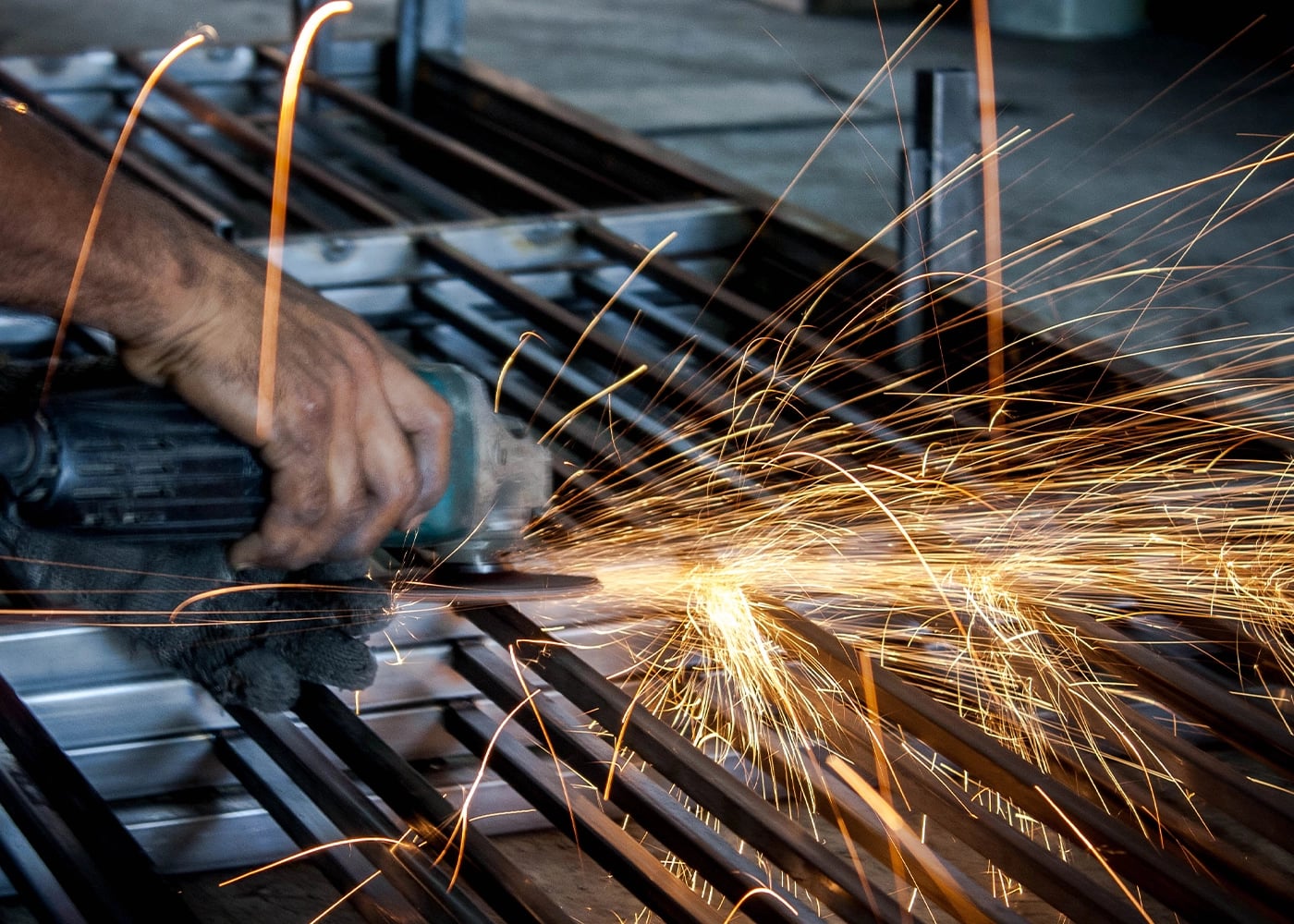
Malaysia’s construction and infrastructure sectors remain major consumers of steel.
But the country’s industrial structure has been changing.
Malaysia is increasingly positioning itself around higher-value manufacturing industries such as:
-
electronics and electrical equipment;
-
machinery and industrial equipment;
-
automotive and EV supply chains;
-
aerospace;
-
renewable energy;
-
data-center infrastructure;
-
precision engineering;
-
medical equipment.
These industries require a broader range of metal inputs than traditional construction.
Instead of primarily needing rebar and structural products, manufacturers may require:
-
hot-rolled and cold-rolled steel;
-
galvanized and coated sheet;
-
stainless and alloy steels;
-
precision tubes;
-
aluminium profiles;
-
machined aluminium;
-
high-quality sheet metal;
-
laser-cut and fabricated components;
-
surface-treated finished assemblies.
This shift explains one of the central challenges facing Malaysia’s steel sector: the domestic manufacturing economy is evolving faster than the historical product mix of the local steel industry.
Malaysia can have substantial steelmaking capacity and simultaneously remain dependent on imports for specific grades or product forms required by industrial manufacturers.
Government policy increasingly recognizes this mismatch. Malaysia’s Ministry of Investment, Trade and Industry has explicitly emphasized the need for the steel industry to move toward higher-value products and to address gaps between domestic capacity and actual industrial demand.
Aluminium is moving in a somewhat different direction.
Large-scale smelting capacity, extrusion operations and growing downstream manufacturing have created an ecosystem that can serve construction as well as solar, automotive, industrial and export markets.
This distinction is important for foreign buyers: “metal sourcing in Malaysia” is not one single market.
Steel in Malaysia: strong capacity, uneven product mix

Malaysia has a substantial iron and steel sector that supports domestic construction, infrastructure and manufacturing.
Major industry participants include companies such as Alliance Steel, Amsteel Mills, Ann Joo Resources, Eastern Steel, Malaysia Steel Works and Southern Steel. The sector manufactures products ranging from reinforcing bars and wire rods to sections, coils and fabricated structural products.
However, understanding Malaysia’s steel industry requires looking beyond total production capacity.
The crucial distinction is between long products and flat products.
Long products: crowded, competitive, and vulnerable to margin pressure
Long products include:
-
reinforcing bars;
-
wire rod;
-
bars;
-
beams;
-
sections;
-
construction-related structural products.
Malaysia has traditionally had considerable production capacity in these categories.
These products are closely tied to domestic construction and infrastructure demand. When construction activity weakens or new steelmaking capacity enters the market, utilization rates and margins can come under substantial pressure.
The imbalance became significant enough that Malaysian authorities introduced restrictions on new upstream steelmaking investment.
In February 2025, MITI announced an extension of the moratorium affecting new upstream long-steel capacity, with the policy to be reviewed when existing domestic producers reach around 80% capacity utilization.
For buyers, this provides useful context.
The large number of producers can create attractive sourcing opportunities for standard steel products, but price should not be the only qualification criterion.
Companies should also evaluate:
-
plant utilization;
-
financial stability;
-
raw-material sourcing;
-
quality consistency;
-
delivery reliability;
-
certification;
-
ability to maintain specifications across repeat orders.
A very aggressive quotation is not necessarily attractive if the manufacturer is operating under severe utilization or margin pressure.
Flat products: strategically important, still relatively scarce
Flat steel is increasingly important to Malaysia’s manufacturing development.
Typical flat products include:
-
hot-rolled coil (HRC);
-
cold-rolled coil (CRC);
-
galvanized steel;
-
pre-painted steel;
-
coated sheet;
-
steel plate;
-
stainless sheet.
These materials feed industries such as:
-
automotive manufacturing;
-
appliances;
-
industrial machinery;
-
electrical cabinets;
-
HVAC;
-
furniture;
-
electronics enclosures;
-
fabricated equipment.
Malaysia’s historical steel production structure has been considerably stronger in long products than in many higher-value flat categories.
The Malaysian government itself has identified this supply-chain gap and has encouraged the development of products that are not sufficiently available domestically, particularly higher-value steel that can support local automotive, electrical and electronics, machinery and equipment industries.
This creates an important sourcing distinction.
A company manufacturing a fabricated machine frame may find plenty of Malaysian suppliers capable of cutting and welding steel.
But the sheet or coil feeding those operations may still be imported.
Consequently, foreign buyers should establish not only who fabricates the component, but also:
-
where the steel originated;
-
which mill produced it;
-
whether the required grade is routinely stocked;
-
whether material certificates are traceable;
-
what happens when imported steel availability changes.
New flat-steel capacity could gradually change the equation
Malaysia has been investing to close parts of this gap.
Eastern Steel’s expansion in Terengganu, alongside other investments in the East Coast Economic Region, reflects the country’s ambition to strengthen integrated steelmaking and improve domestic supply of higher-value products.
At the same time, Alliance Steel has continued substantial investment in the Malaysia-China Kuantan Industrial Park. The East Coast Economic Region reported a RM7.7 billion expansion investment by Alliance Steel in 2024, alongside expansion of Eastern Steel’s plant.
This does not mean Malaysia will suddenly become self-sufficient in every flat-steel category.
It does mean buyers should expect the domestic product landscape to continue evolving over the coming years.
Key steel players and what they signal about the market
Malaysia’s steel ecosystem includes several types of supplier:
Integrated and primary steelmakers
These companies manufacture steel upstream and may produce billets, slabs, long products or coils.
Rolling mills
They process upstream steel into specific forms such as bars, wire rod, sheet or coil.
Steel service centers
These companies purchase coils and perform operations such as:
-
slitting;
-
leveling;
-
cut-to-length;
-
blanking.
Fabricators
These suppliers convert steel into actual components through:
-
laser cutting;
-
bending;
-
CNC machining;
-
welding;
-
drilling;
-
coating;
-
assembly.
For international buyers, confusing these categories creates considerable sourcing risk.
A company presented as a “steel manufacturer” may actually be a service center or fabricator purchasing imported material.
That is not necessarily a problem.
In many sourcing projects, an excellent fabricator using imported Korean or Japanese steel may be considerably more suitable than a local primary steel producer.
The important point is to understand where value is created and who controls each step of the supply chain.
Trade remedies and imported steel: a factor buyers increasingly need to monitor
Malaysia’s reliance on international steel flows also means trade policy matters.
The country has increasingly used anti-dumping investigations and duties to manage imported steel products where authorities determine that imports may be damaging domestic industry.
For example, Malaysia imposed measures involving certain tinplate imports in 2025, while in July 2026 authorities initiated reviews or investigations covering categories including pre-painted or colour-coated coils and aluminium-zinc-coated flat steel originating from several Asian markets.
For an industrial buyer, this matters because sourcing economics can change even when the Malaysian fabricator’s own conversion cost remains unchanged.
If your supplier depends on imported coil, changes to:
-
anti-dumping duties;
-
country of origin;
-
import restrictions;
-
freight costs;
-
exchange rates
may materially affect the finished-component price.
For repeat production, buyers should therefore understand material origin and tariff exposure, not simply negotiate a fixed fabrication price.
Aluminium in Malaysia: a regional strength with real industrial depth
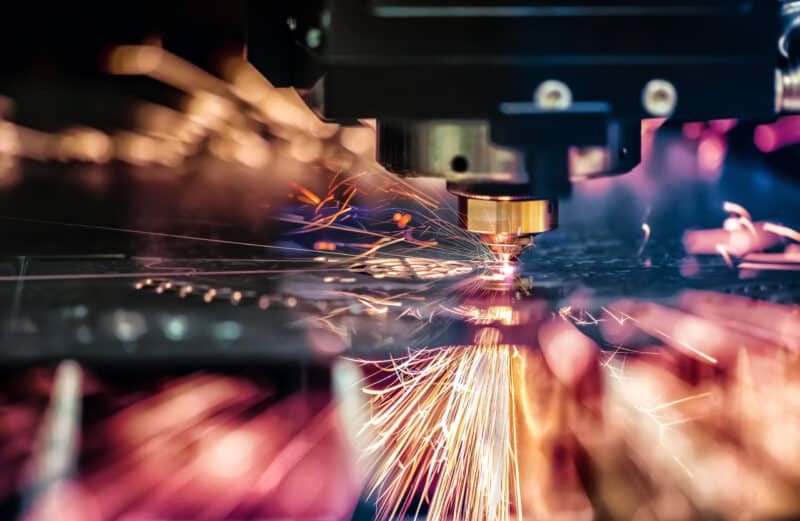
If Malaysia’s steel sector can be characterized by an ongoing effort to rebalance capacity and product mix, aluminium is closer to an established regional strength.
Malaysia has developed significant aluminium smelting capacity, particularly in Sarawak, together with downstream extrusion and fabrication capabilities elsewhere in the country.
For industrial buyers, this creates opportunities across:
-
aluminium billet;
-
extrusion;
-
architectural profiles;
-
industrial profiles;
-
heat sinks;
-
solar-frame products;
-
machined aluminium;
-
fabricated assemblies;
-
anodized and powder-coated finished components.
Aluminium’s role should also grow as industries place greater emphasis on:
-
lightweight design;
-
corrosion resistance;
-
electric vehicles;
-
solar energy;
-
energy efficiency;
-
recyclable materials.
Press Metal and the integrated aluminium model
Press Metal Aluminium represents the scale Malaysia has achieved in aluminium.
According to the group’s 2025 reporting, Press Metal had 1.08 million tonnes per year of aluminium smelting capacity and approximately 230,000 tonnes of annual extrusion capacity at the end of 2025.
The company describes itself as Southeast Asia’s largest integrated aluminium producer and serves customers across Asia-Pacific, Europe and North America.
This degree of integration is strategically important.
A large aluminium ecosystem can provide:
-
stronger primary-metal availability;
-
greater supply-chain traceability;
-
access to extrusion billet;
-
downstream processing;
-
established export logistics.
For foreign buyers, however, this does not mean sourcing directly from a smelter.
Most industrial projects will involve downstream companies that purchase billets or extrusions and then perform additional processing.
Malaysia continues moving further downstream
Malaysia’s aluminium ambitions are increasingly focused on value-added applications rather than simply selling primary aluminium.
One example is the planned cooperation between Press Metal and the Bintulu Development Authority for a new RM600 million solar-frame extrusion facility.
The proposed facility has been designed for annual production capacity of around 80,000 tonnes, targeting the growing domestic and international solar-energy market. Operations were targeted to commence around mid-2026, subject to approvals and final agreements.
Sarawak has also publicly discussed opportunities to expand aluminium manufacturing into more advanced applications, including aerospace-related components.
For buyers, these developments indicate a broader trend:
Malaysia wants to capture more value after the smelting stage.
What aluminium products Malaysia is strongest in
For practical sourcing projects, one of Malaysia’s most interesting areas is aluminium extrusion.
Typical applications include:
-
industrial frames;
-
machinery structures;
-
solar mounting systems;
-
doors and windows;
-
furniture;
-
lighting;
-
heat-management components;
-
electronic enclosures;
-
transportation components.
But an extrusion press is only the beginning of the manufacturing chain.
A complete industrial aluminium supplier may need to provide:
Extrusion → cutting → CNC machining → drilling → bending → anodizing/powder coating → assembly → packaging
Depending on the product, several of these operations may also be subcontracted.
When qualifying suppliers, buyers therefore need to map the complete processing chain rather than evaluating the extrusion press alone.
Industrial geography: why ports matter for metal in Malaysia

Malaysia’s geography is particularly important for metal sourcing because raw materials are heavy and logistics costs quickly become significant.
The country’s strong international trade infrastructure is one of its main industrial advantages.
Malaysia recorded a historic RM3.061 trillion in total merchandise trade in 2025, increasing 6.3% year-on-year. Exports reached approximately RM1.607 trillion, while imports climbed to around RM1.455 trillion.
That scale reflects an economy that is deeply integrated into regional and international supply chains.
For metal sourcing, several areas deserve particular attention.
Kuantan and the East Coast: integrated steel production
Kuantan and the surrounding East Coast Economic Region have become important for large-scale steelmaking.
The Malaysia-China Kuantan Industrial Park hosts major steel investments, including Alliance Steel, while Eastern Steel operates in nearby Terengganu.
This region is particularly relevant when evaluating:
-
primary steelmaking;
-
billets;
-
bars;
-
wire rod;
-
coils;
-
integrated steel projects.
Its port infrastructure also supports bulk raw-material import and steel export flows.
Klang Valley and Port Klang: fabrication and downstream industry
Greater Kuala Lumpur, Selangor and Klang provide a very different sourcing environment.
Instead of being defined mainly by primary steel production, the region offers a dense network of:
-
steel service centers;
-
sheet-metal fabricators;
-
CNC machining companies;
-
laser-cutting operations;
-
industrial equipment manufacturers;
-
automotive suppliers;
-
aluminium extruders;
-
finishing companies.
For international companies looking for finished industrial components rather than raw steel, Klang Valley can therefore be highly relevant.
Port Klang’s international connectivity also simplifies importing materials and exporting finished products.
Sarawak: aluminium and energy-intensive manufacturing
Sarawak has become strategically important to Malaysia’s aluminium industry.
One reason is energy.
Aluminium smelting is extremely electricity intensive, and Sarawak’s hydropower resources have supported the development of large-scale smelting operations.
Bintulu and Samalaju therefore form an important upstream aluminium cluster.
The continued development of downstream aluminium activities around Bintulu could make this ecosystem increasingly relevant beyond primary metal production.
Penang and Johor: metal supporting advanced manufacturing
Penang and Johor are not primarily known as steelmaking regions.
Their importance comes from industrial demand.
Penang’s electronics, semiconductor, machinery and medical-device ecosystems generate demand for:
-
precision machining;
-
sheet-metal fabrication;
-
enclosures;
-
aluminium structures;
-
stainless components.
Johor combines industrial manufacturing with proximity to Singapore and is increasingly relevant for:
-
data-center infrastructure;
-
electrical equipment;
-
machinery;
-
precision manufacturing;
-
regional logistics.
For sourcing finished metal components, these downstream manufacturing ecosystems may be more relevant than proximity to the original metal mill.
From raw metal to finished component: where Malaysia can create the most value
One useful way to approach sourcing in Malaysia is to stop asking:
“Can Malaysia supply steel or aluminium?”
and instead ask:
“How much of my finished component can Malaysia manufacture competitively?”
Malaysia’s value proposition can become significantly stronger when manufacturing combines several processes.
Consider a relatively simple industrial steel enclosure.
The manufacturing flow might include:
Steel coil → slitting → laser cutting → bending → welding → machining → powder coating → electrical assembly → packaging
For an aluminium industrial frame:
Billet → extrusion → ageing → cutting → CNC machining → anodizing → assembly → packaging
The more of this chain a supplier can reliably control, the more attractive Malaysia may become.
This is particularly important when comparing Malaysia against countries where the base material might be cheaper but several value-added processes need to be managed across different suppliers.
Sourcing steel and aluminium in Malaysia: how to avoid the “commodity trap”
The biggest sourcing mistake in Malaysia’s metal sector is treating every project as simple commodity procurement.
Yes, raw-material price matters.
But industrial buyers often experience much greater costs from:
-
incorrect grades;
-
poor dimensional control;
-
inconsistent mechanical properties;
-
weak welding;
-
surface defects;
-
poor galvanizing;
-
coating adhesion failures;
-
cosmetic variation;
-
distortion;
-
late deliveries.
A component can have inexpensive steel and still be an expensive sourcing failure.
For steel buyers: start by defining “flat vs long” and the form you truly need
Before searching for suppliers, clearly specify:
-
steel grade;
-
international standard;
-
thickness;
-
dimensions;
-
mechanical properties;
-
surface requirements;
-
coating;
-
tolerance;
-
testing requirements.
For flat steel, also specify whether you require:
-
HRC;
-
CRC;
-
galvanized;
-
aluminium-zinc coated;
-
pre-painted;
-
stainless.
If the Malaysian supplier purchases imported material, ask for the normal country and mill of origin.
You should also understand whether the company is:
-
a mill;
-
service center;
-
distributor;
-
fabricator.
These distinctions affect price transparency and supply continuity.
For aluminium buyers: the finish and downstream conversion matter as much as the metal
Aluminium extrusions can appear straightforward on a drawing but become considerably more demanding during production.
Critical issues frequently include:
-
straightness;
-
twist;
-
wall-thickness variation;
-
die lines;
-
scratches;
-
dimensional stability;
-
alloy consistency;
-
temper;
-
anodizing variation;
-
powder-coating adhesion.
For cosmetic products, surface consistency can become more difficult than dimensional tolerance.
When sourcing aluminium components, therefore assess the complete production route from extrusion through final finishing.
Factory qualification: what foreign buyers should verify
For custom fabricated products, an effective factory assessment should go substantially beyond a commercial presentation.
Material traceability
Ask how incoming material is identified.
For critical components, determine whether the supplier can trace:
Finished part → production batch → raw material → mill certificate
Machining and fabrication capacity
Verify actual installed equipment.
Relevant equipment may include:
-
laser cutters;
-
press brakes;
-
CNC mills;
-
CNC lathes;
-
robotic welding;
-
manual welding stations;
-
extrusion presses;
-
anodizing lines;
-
powder-coating lines.
Also distinguish between in-house and subcontracted processes.
Welding capabilities
For structural or machinery components, welding deserves particular scrutiny.
Depending on your project, qualification may need to include:
-
WPS/PQR;
-
welder qualifications;
-
EN 1090;
-
ISO 3834;
-
NDT capability;
-
dimensional inspection after welding.
Surface treatment
Finishing is frequently where otherwise capable metal suppliers struggle.
Check:
-
pretreatment;
-
coating thickness;
-
adhesion testing;
-
corrosion testing;
-
color consistency;
-
anodizing control.
Measurement and quality systems
Ask to inspect:
-
calibrated measurement equipment;
-
CMM capability;
-
inspection reports;
-
non-conformance reports;
-
CAPA/8D procedures;
-
incoming inspection;
-
final inspection.
For engineered components, a supplier’s ability to read and challenge drawings can be just as valuable as its machinery.
Decarbonization is becoming a sourcing issue, not only an ESG issue
The environmental footprint of metal manufacturing is becoming increasingly important for international sourcing.
Steel production is highly carbon intensive, while aluminium smelting requires considerable electricity.
Malaysia is therefore increasingly pushing its metal industries toward cleaner and more efficient production.
The country’s New Industrial Master Plan 2030 places decarbonization and higher-value manufacturing among its strategic industrial priorities, while MITI has linked future steel-sector capacity decisions with emissions-compliance technologies and more sustainable industry practices.
For European buyers in particular, carbon intensity is becoming more commercially relevant because of measures such as the EU’s Carbon Border Adjustment Mechanism (CBAM).
Companies sourcing steel and aluminium should increasingly ask suppliers:
-
Can you document the origin of the material?
-
Can you provide emissions data?
-
What electricity source is used?
-
Does the mill have decarbonization targets?
-
Can production emissions be traced to the purchased material?
These questions may currently matter only to some customers.
Over the next few years, they are likely to become considerably more common in international procurement.
Malaysia’s Metal Advantage: Better Product Mix, Higher Value-Added Output
Malaysia’s steel and aluminium industries should ultimately be viewed as two different sourcing stories.
Steel remains a sector in transition.
Malaysia has substantial capacity, but much of the historical production base has been concentrated around long products. The government is actively trying to resolve mismatches between installed capacity and demand, restrict unnecessary capacity expansion, and encourage the development of more sophisticated and higher-value steel products.
At the same time, investments in locations such as Kuantan and Terengganu are gradually expanding Malaysia’s upstream and flat-steel capabilities.
Aluminium is closer to an established competitive strength.
Malaysia already hosts one of Southeast Asia’s largest integrated aluminium producers, with Press Metal reporting 1.08 million tonnes of annual smelting capacity and 230,000 tonnes of extrusion capacity at the end of 2025.
New downstream initiatives, including the proposed 80,000-tonne-per-year solar-frame extrusion project in Sarawak, suggest that Malaysia intends to capture more value from this upstream position.
For foreign sourcing companies, however, Malaysia’s strongest opportunity may not necessarily be buying commodity metal.
The more interesting proposition is often using the country’s combination of metal availability, processing expertise, fabrication capabilities and export infrastructure to manufacture higher-value finished components and assemblies.
This can include:
-
precision-machined components;
-
welded structures;
-
industrial equipment;
-
sheet-metal assemblies;
-
aluminium profiles;
-
enclosures;
-
solar components;
-
electrical cabinets;
-
machinery frames;
-
finished OEM products.
Malaysia’s wider industrial environment reinforces this position.
The country recorded a historic RM3.061 trillion of merchandise trade in 2025, including record exports of approximately RM1.607 trillion, while approved investments across the Malaysian economy reached a record RM426.7 billion in 2025, up 11% from 2024.
If you are considering Malaysia for steel, aluminium, or custom metal fabrication, our team at MoveToAsia can help you structure the sourcing process from initial market mapping to supplier qualification and factory assessment. We can recommend a practical roadmap based on your product requirements and help you identify manufacturing partners with the right technical capabilities, production setup, and export experience.
For companies assessing Malaysia as part of an Asian sourcing strategy, the most important question is therefore not simply whether Malaysia can produce steel or aluminium.
It is:
Can Malaysia’s industrial ecosystem convert the right material into the finished product you need, at the required quality, cost and scale?
That is where supplier identification, technical qualification and factory audits become essential.