


Corporate banking in Vietnam is one of the first practical steps foreign investors and SMEs need to manage when setting up or expanding a company in the country. It is not only an administrative requirement. A functioning corporate bank account affects how a company contributes capital, receives payments, pays suppliers, manages payroll, handles tax obligations, and transfers money between Vietnam and overseas markets.
For many foreign companies, banking is also one of the first real tests of operational readiness. A company may have completed market research, received interest from potential partners, or started the incorporation process. But without the right banking structure, it cannot move smoothly from planning to execution.
This article focuses on company-level banking, not personal banking for expats or individuals living in Vietnam. The goal is to help foreign investors, SME owners, founders, CFOs, finance managers, and business development teams understand how corporate banking works in practice, what to prepare before opening an account, and which issues to consider before choosing a banking partner.
Corporate Banking Versus Personal Banking in Vietnam
In Vietnam, corporate banking and personal banking vary in many aspects. Personal bank accounts can be used to receive salary, pay rent, and save. Personal accounts, however, are not meant to receive company income, settle accounts with suppliers, pay employees, or contribute capital to a company.
Corporate bank accounts are opened in the name of an organization. Corporate accounts enable the segregation of personal and business funds. They also provide business transactions for the purposes of tax, accounting, auditing and assessment of control of business funds. This is crucial for companies with foreign investment since the treatment of investment capital, business operational funds, foreign loans, and profit repatriation all differ.
In reality, foreign investors need to think about banking even before business operations commence. Once a company receives its registration documents, it may need to contribute charter capital, pay service providers, rent an office, hire staff, or prepare for supplier payments. There is also a requirement to pay suppliers even though the company has not yet started making sales. Corporate bank accounts are required for business operations.
Vietnamese banks usually require legal documents of the company, a description of the hierarchy of the company and its authorized signatories, a description of the business activities of the company, and the anticipated transactions of the company. This is part of the bank’s KYC (Know Your Customer) policy. In the case of foreign-owned companies, the barriers become more complex when there are foreign shareholders, cross-border transactions, and complex corporate ownership structures.
Often chosen banks by SMEs and international investment companies in Vietnam are local banks, such as Vietcombank, BIDV, VietinBank, Techcombank, ACB, MB Bank, and VPBank. Some foreign banks are HSBC, Standard Chartered, Shinhan Bank, UOB and Woori Bank. The best bank for a company is one that best meets the company’s transaction requirements and is not purely a bank of choice.
Understanding Business Bank Accounts and DICA in Vietnam
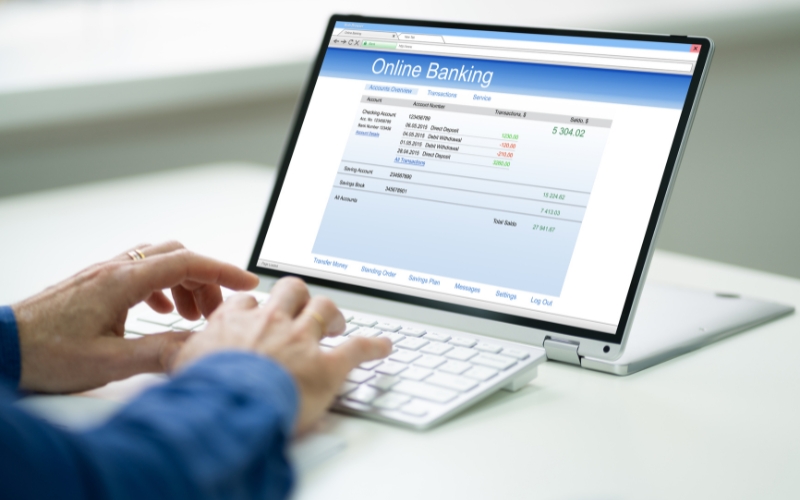
When it comes to bank account types for foreign investment companies in Vietnam, there are basically two types: a direct investment capital account and one or more payment accounts.
The direct investment capital account, which is also referred to as DICA, is for the flows relating to investment which may be capital contribution, some capital transfers, foreign loans, and the foreign company’s profits, if applicable, are remitted. This account is important for foreign investment companies in Vietnam because it helps document how investment capital enters and exits Vietnam.
The payment account (or current account) is for the conduct of day-to-day business. This account is generally used for the collection of payments from local customers, payments to local suppliers, payments for office-related business, payment of employees, and all other routine business transactions. In addition, depending on the business model of the company and the bank’s offerings, the company may also open foreign currency accounts.
It is important to note that a DICA cannot be used like a normal operating account. Capital contributions are undertaken via the prescribed route and the day-to-day transactions should be carried out via the operating account. If funds are transferred via the wrong account or a transaction is not supported by the requisite documentation, the company is likely to encounter problems during the accounting and tax assessments, audits, and during the repatriation of profits.
Typically, a foreign investor who contributes to a company’s charter capital needs to deposit the funds into the relevant investment capital account. The company can subsequently use the relevant account structure to transfer the funds for operational use. Conversely, payments from customers in Vietnam, or payments to local suppliers, generally belong in the company’s operational account.
The primary lesson for foreign investors is that corporate banking involves more than opening “one bank account.” It involves establishing appropriate account structures such that capital, revenues, expenses, and cross-border transactions can be adequately segmented and monitored.
Opening a Corporate Bank Account in Vietnam

A corporate bank account generally becomes necessary once the company is in receipt of its registration documents. The timing is particularly critical for foreign-invested companies since the charter capital must be contributed within the specified time following company registration. If the banking structure is not established in time, the company may be compelled to fulfill the charter capital requirement under adverse conditions.
In fact, even a company that has not yet begun business operations in Vietnam may need to open a corporate bank account early for the purposes of receiving capital contributions from shareholders, making payments to legal and accounting service providers, making payments to procure office facilities and equipment, and making payments to process salary disbursements. Corporate banking must be integrated with the company registration process, tax registration, and the initial operational setup.
The specific requirements of each bank differ based on the profile of the banking business, the structure of the company, the activities of the company, the shareholders, and current rules of engagement. However, most foreign investors need to prepare various sets of documents prior to engaging a bank.
Core company documents usually comprise the Enterprise Registration Certificate, Investment Registration Certificate (if applicable), company charter, tax code and registered office information, and company seal and e-signature (if applicable).
For identity and authority documents, banks may accept the passport or identity documents of the legal representative, signatories, shareholders, and other persons who will operate or control the account. Board resolutions, shareholder resolutions, letters of authorization, ownership charts, and other documents may be requested to determine who has the right to open and operate the account.
Banks may also request more information on the company’s business, such as a description of the business with the amount and type of expected transactions, the main counterparties, and possibly sample contracts or invoices. This is a part of the KYC review, and it does not automatically mean the business is considered risky, it is simply a way to help the bank understand the purpose of the account.
Documents issued abroad will frequently be the cause of delays because they must be legalized, and then translated into Vietnamese and certified, particularly if documents issued from the parent company, shareholders, or directors are located overseas. This may be the main reason for delays, especially if documents are issued from the parent company located overseas.
In many cases, the legal representative or an authorized person must be present in person at some stage of the process. Some banks may allow digital steps, but foreign-invested companies should expect original document checks, signature verification, and communication with the bank.
First, foreign investors should ensure the finalization of company registration and tax codes, identify the legal and corporate signatory representatives, prepare and configure corporate documents, ensure compliance through translation and/or legalization of foreign documents, define the business purpose, identify transaction patterns, and complete the commitment of capital within an estimated time and account for additional time for the bank.
While time offsets are inevitable due to documentation inconsistencies, a properly documented request is ideal for the bank to complete the review within a reasonable time. There are many factors, such as spelling of the company name, addresses, lines of business, missing authorization, etc. that can affect the time taken to complete the request. The purpose is to open the necessary accounts in the correct order for the company to start operations.
Corporate Banking for Daily Business Operations

After completing the account opening process, corporate banking integrates with daily business functions. This is where foreign investors and SMEs recognize the interconnectedness of banking with accounting and taxation, supplier management, payroll, and internal controls.
For day-to-day transactions, the VND payment account is the primary operating account. This account can be used to collect payments from clients, disburse payments to suppliers, settle business operation expenses, and manage other routine costs. For companies that do business with local distributors, service providers, contractors, and clients, this account becomes the center of day-to-day cash movement.
The setup of banking facilities greatly impacts payroll operations. Salaries, allowances, and payments to other employee-related obligations are processed with greater ease when the payments are made through the company account and the transactions are recorded in the accounting system. This also helps the company achieve a greater level of transparency and avoids the ambiguity that is created by the mixing of personal payments and payments to contractors and formal payroll payments.
The setup of banking facilities also impacts the taxation and accounting processes. A company account that has been set up and registered enables the accounting department to record and reconcile all revenue, expenses, tax payments, and supporting documents. It also aids in the preparation of a record of expenses that are tax-deductible and in the preparation of financial statements. Banking services do not replace an accounting function; however, banking does not replace accounting, but it provides the transaction trail accountants need to prepare accurate records.
International payments require additional planning. A business may need to collect payments from abroad customers, pay external suppliers, deal with intra-corporate transactions, pay back loans, or bring back profits. These kinds of transactions usually need supporting documents (contract, invoices, service agreements, loan agreements, tax confirmations, board approvals, etc.) depending on the purpose of the payment.
Multi-currency accounts may be helpful for businesses with significant cross border transactions. Depending on the bank, businesses may hold accounts in currencies such as USD or EUR. This may facilitate import-export transactions, payments to foreign clients, international service contracts, or funding from the parent company.
For SMEs, perception of predictability is most important. A company that knows which account to use, which documents to keep on hand and which payment channels to use will experience fewer problems in the future. Corporate banking should be perceived as a part of the company’s operations, and not a mere store for money.
Common Banking Challenges for Foreign Companies and SMEs
Corporate banking in Vietnam is easy to work with but not completely frictionless. Foreign investors should expect a painstaking review of documents, especially when dealing with companies having foreign ownership, cross-border transactions and business models that the local banking staff are not accustomed to.
A typical challenge is that different banks have different requirements. For the same type of business, two different banks may ask for totally different, additional supporting documents. One bank may request more information about the expected transaction flow of the business, while another bank may be more concerned with the structure of the business’ shareholders. Even within the same banking group, internal reviews may differ depending on the branch and the company profile.
Documentation gaps are another cause of delays. The company name may look different in different documents. For instance, a name in registration documents may look different in documents of foreign shareholders, in translated documents, or in the Bank’s own forms. There may be a mismatch in the supporting records related to the registered address. There may be a mismatch in the business description. Details matter in compliance review, so it’s important to pay attention to them.
KYC questions can slow the process if the company cannot clearly explain its business’ activities. This is particularly concerning businesses that operate in e-commerce, consulting, trading, and cross-border services. While these business models may not be problematic, banks may request further clarifications involving customers, suppliers, and the expected transaction flows.
Foreign exchange controls warrant caution from companies. Not all transactions in and out of Vietnam can be considered a simple commercial payment. For example, different sets of documents may be required for capital, profits, loans, payments to related parties and foreign suppliers.
International payments require more verification. Contracts, invoices, tax documents, customs documents, loan registration papers, and internal approvals may be requested before payments can be made. Requests may be more frequent for large payments, payments that deviate from the norm, or payments that do not align with the company’s registered activities.
These circumstances should not deter foreign investors from doing business in Vietnam. Instead, they depict the level of preparation required for interfacing with the banking system. An explanation of the business that is accompanied by consistent documentation and prepared with an understanding of the timeframes associated with the banking system should minimize the impact of banking constraints.
Local Banks Versus International Banks in Vietnam
Investors will often question the use of local versus international banking in Vietnam. There is no single answer. The correct choice of banking partner will depend on the company’s domestic versus international operations relative to the size of the company, the expected level of transactions, the currency to be utilized, the expected reporting requirements, and the expected cross-border activity.
For companies that have predominantly domestic operations, local banks such as Vietcombank, VietinBank, BIDV, VPBank, Techcombank, ACB and MB Bank may be suitable. They are often familiar with local suppliers and have extensive branch networks. Moreover, they are used to working with the local accounting and tax systems. For SMEs that expect most, if not all, transactions to be in VND, a local bank may offer low-cost convenience.
Global banks that include HSBC, Standard Chartered, Shinhan Bank, UOB, and Woori Bank may best accommodate businesses with complex cross-border operations. Compared to regional banks, these global banks may offer robust English support, multi-currency accounts, trade finance, ease of understanding for multinational firms, and ease of coordination due to the parent company’s use of the same bank abroad.
|
Criteria |
Local banks |
International banks |
|
Domestic branch network |
Usually stronger |
Usually more limited |
|
VND transactions |
Often convenient and cost-effective |
Supported, but may not be the main advantage |
|
English-language support |
Varies by bank and branch |
Usually stronger |
|
Multi-currency services |
Available at major banks |
Often stronger for cross-border needs |
|
Trade finance |
Available at major banks |
Often suitable for international trade |
|
SME packages |
Common among local banks |
More selective depending on client profile |
|
KYC process |
Can be practical for local operations |
May be stricter for complex structures |
|
Best fit |
Domestic operations, local payments, payroll |
Cross-border payments, FDI groups, import-export |
Foreign investors should contact at least three banks and compare thes banks before selecting a banking partner. Your company should inquire about the timeline to open an account, support from DICA, options for foreign currency accounts, international transfer fees, support offered in English, online banking, account approval processes and requirements for payroll and outward remittance documentation.
The best bank is the one that supports your company’s operating model and offers the transactions your company needs, not necessarily the largest bank or the bank you know the best.
Moving From Banking Setup to Practical Execution
Corporate banking in Vietnam is manageable and predictable, given the right preparations. The most important part of this is treating it like a part of your market entry, not a part of the process to be done once everything else has been handled.
For investors and SMEs, banking comes after business registration, licensing, tax and accounting setup, establishing an office, hiring staff, making supplier payments, and managing local partners. Getting this order right is just as important as the bank you choose.
When a company takes too long to prepare its banking documents, it may lose valuable time during the capital contribution period and to start its operations. Building banking documents, preparing signatory authority, account structure, and transaction documents in advance allows companies to operate with greater speed and ease.
MoveToAsia assists foreign companies in expediting the practical execution of their plans in Vietnam after entering the market. MoveToAsia may help with company setup, connect clients to local partners, and aid in the development of business operations and practical plans outlining the necessary preparatory steps to be taken prior to the commencement of business activities. MoveToAsia is not a legal or financial institution and does not provide financial or legal services; however, it works to help foreign investors prepare a practical road map to transition from company establishment to business operations.
When working with companies looking to start or expand business operations in Vietnam, corporate banking is not simply a formality. It is a necessary foundation for the structured growth of a company.