


Choosing the best cities in Vietnam for manufacturing, investment and regional headquarters (HQs) depends on the role each location needs to play. A company looking for a regional HQ will usually prioritize talent, business services, clients, connectivity and access to decision-making networks. In this context, a regional HQ is not simply an office address. It is often the place where foreign companies coordinate market strategy, manage local teams, work with legal and accounting partners, meet clients, support sales channels and oversee operations across Vietnam or the wider region. A manufacturer, by contrast, may focus more on industrial land, supplier access, labor availability, utilities, production costs and export logistics.
Vietnam’s business map also changed after the 2025 administrative restructuring. Some familiar industrial locations are now part of larger administrative regions. The former Binh Duong and Ba Ria-Vung Tau areas are now part of the expanded Ho Chi Minh City (HCMC), Dong Nai has expanded after merging with Binh Phuoc, and the former Hai Duong area is now under the expanded Hai Phong. Still, names such as Binh Duong, Ba Ria-Vung Tau, Dong Nai, Bac Ninh and Hai Phong remain important business references because investors, industrial park operators and foreign companies still use them when comparing Vietnam manufacturing cities.
This article looks at Vietnam through a business location strategy lens, comparing South, Central and North Vietnam based on manufacturing, investment, regional HQs, supplier development, logistics and market entry needs.
Why Location Choice Matters in Vietnam
Vietnam is one of Southeast Asia’s most active destinations for foreign investment and manufacturing. However, it is not one single industrial market. Southern Vietnam, Central Vietnam and Northern Vietnam each serve different business functions.
Southern Vietnam is usually stronger for commercial headquarters, sales operations, finance, business services, port-linked industry and access to the country’s largest southern supplier base. Central Vietnam, led by Da Nang, can be relevant for selected technology, services, light manufacturing and balanced regional operations. Northern Vietnam is especially important for government relationships, electronics manufacturing, export logistics and China Plus One strategies.
The best city to invest in Vietnam therefore depends on the company’s operating model. In many cases, the right answer is not one city, but a connected network of locations. A company may use the southern commercial hub for management and sales, the former Binh Duong area or Dong Nai for production, and Cai Mep-Thi Vai for export logistics. Another company may use Hanoi for institutional access, Bac Ninh for electronics manufacturing and Hai Phong for port access.
Matching Your Business Objective to the Right Location

A clear Vietnam business location strategy starts with the business objective, not with a city name.
For regional offices and sales offices, companies usually need access to senior professionals, banks, lawyers, accountants, consultants, industry associations, airports and corporate clients. Vietnam’s southern commercial hub is often the strongest choice for companies focused on sales, business development, finance, regional coordination and access to the southern market. Hanoi can also be strategic for companies that need government relationships, embassy networks or northern market entry.
For manufacturing and production, companies need to look beyond the urban core. Large-scale production is rarely best placed in the inner areas of Vietnam’s two largest cities. Instead, companies often evaluate industrial zones around the former Binh Duong area, Dong Nai, the former Long An area, Bac Ninh, Hung Yen, Hai Phong and other manufacturing corridors. The key question is not only whether land is available, but whether the location can support stable operations over time.
For sourcing and supplier development, the priority is supplier relevance. Electronics buyers may look closely at Bac Ninh, the former Bac Giang area, Thai Nguyen, Hai Phong and surrounding northern clusters. Buyers in furniture, packaging, plastics, consumer goods or mechanical parts may need to evaluate different supplier ecosystems across the South and North.
For logistics and export operations, companies need to consider port access, road connectivity, customs processes, warehouse options and trucking distance. In the South, Cai Mep-Thi Vai is important for international shipping. In the North, Hai Phong and Lach Huyen support export flows from northern industrial zones.
For regulated sectors, government and institutional proximity may also matter. Hanoi remains important for companies that need regular engagement with ministries, investment promotion agencies, chambers of commerce or policy stakeholders. The southern commercial hub, meanwhile, offers strong local government capacity, business networks and access to the southern investment ecosystem.
Southern Vietnam as a Commercial Hub and Manufacturing Belt
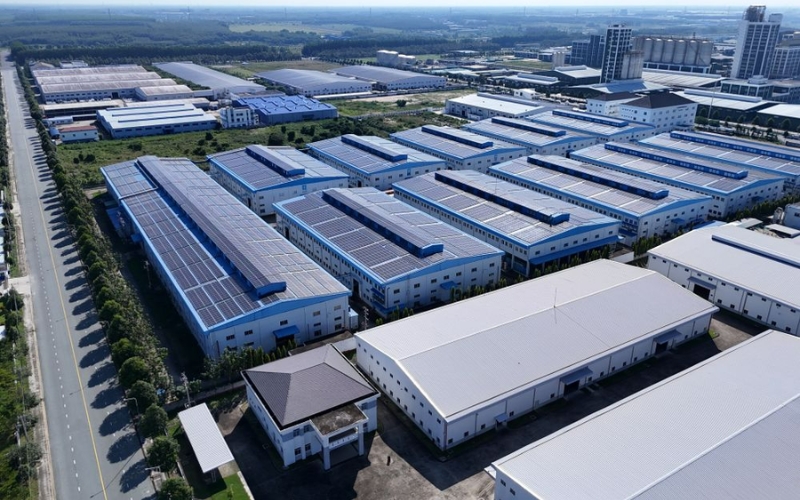
Southern Vietnam is often the first region foreign companies consider when entering Vietnam. It combines the country’s largest commercial center, mature manufacturing zones, strong logistics networks and important deep-water port access.
Ho Chi Minh City remains Vietnam’s leading commercial hub and one of the strongest choices for companies setting up a regional HQ in Vietnam. The city offers access to banks, legal firms, accounting firms, logistics companies, consultants, chambers of commerce and a large professional talent pool. For foreign companies, it is often the most practical base for sales development, partner management, finance, marketing, regional coordination and client-facing activities.
When discussing manufacturing in the southern commercial hub, it is important to distinguish between the urban core and the broader metropolitan industrial region. The inner city is not usually the best choice for large-scale production, but the expanded city now includes major industrial and port-linked areas after the 2025 merger. This larger administrative region includes the pre-merger urban area, Binh Duong and Ba Ria-Vung Tau, with its political-administrative center in District 1. For investors, this means the city now has a larger industrial, logistics and port footprint, but each area still plays a different business role.
The former Binh Duong area remains one of Vietnam’s most mature industrial locations. It is known for industrial parks, manufacturing labor, supplier networks and proximity to the main southern business center. Companies searching for Binh Duong industrial parks are usually looking for established infrastructure, production experience and access to the southern manufacturing ecosystem. It is suitable for furniture, packaging, plastics, consumer goods, industrial components, light manufacturing and selected electronics-related production.
Dong Nai is also a larger province after merging with Binh Phuoc, with Bien Hoa City as its political-administrative center. For investors, Dong Nai remains relevant for manufacturing, warehousing, industrial parks, logistics and access to the future Long Thanh airport corridor. The former Binh Phuoc area may also add more space for longer-term industrial expansion, depending on the project’s land, labor and infrastructure requirements.
The former Long An area, now part of Tay Ninh, can support companies looking for more space and access to both the southern market and the Mekong Delta. Meanwhile, the former Ba Ria-Vung Tau area, now part of the expanded southern municipality, is especially important for port-linked industry, heavy industry, maritime logistics, energy, steel, petrochemicals and export-oriented operations. Its strongest asset is the Cai Mep-Thi Vai deep-water port cluster, which is important for companies exporting to the United States, Europe and other long-haul markets.
Central Vietnam as a Balanced Regional Base

Central Vietnam, led by Da Nang, offers a different value proposition from both the southern commercial hub and Hanoi. It is not usually the first choice for large-scale mass manufacturing or national headquarters, but it can be relevant for companies that need a balanced regional base, technology talent, selected manufacturing, logistics access or a central Vietnam operation.
Da Nang is often attractive for technology, software, digital services, engineering support, business process outsourcing and back-office functions. It offers a growing talent pool, a more manageable operating environment than Vietnam’s two largest cities and improving digital and physical infrastructure.
Manufacturing in Da Nang can be suitable for selected high-tech projects, light manufacturing, supporting industries, assembly, logistics and central Vietnam distribution. The Da Nang Hi-Tech Park and industrial zones give the city a clearer industrial base than a purely service-oriented location.
Still, Da Nang should not be positioned as equal to Vietnam’s strongest southern and northern manufacturing hubs for every production need. Its supplier ecosystem is narrower than the largest northern and southern clusters, so companies must validate suppliers, logistics and technical labor before choosing it as a production base. Da Nang fits best as a central Vietnam operations base, tech and services hub, selected high-tech location or secondary regional office.
Northern Vietnam as a Political Capital and Export Manufacturing Corridor
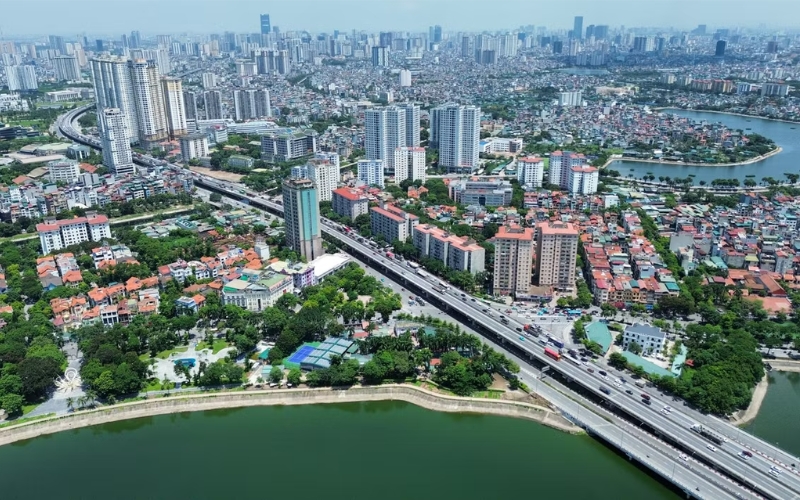
Northern Vietnam is one of the country’s most important manufacturing and export regions. It is especially relevant for electronics, components, precision manufacturing, industrial goods, logistics and China Plus One strategies. The region benefits from proximity to southern China, access to Hanoi, strong industrial clusters and export logistics through Hai Phong.
Hanoi is Vietnam’s capital and remains the country’s most important location for government relationships, ministries, embassies, development agencies, business associations and institutional engagement. For foreign companies operating in regulated sectors, Hanoi can be a strategic base. It is also useful for companies selling to industrial clients, public-sector stakeholders, distributors or large business accounts in northern Vietnam.
Manufacturing in Hanoi itself should be understood as part of a wider northern ecosystem. The urban core is more relevant for offices, representative functions, sales and institutional work. Large-scale manufacturing often sits in surrounding industrial areas such as Bac Ninh, Hung Yen, Hai Phong and other nearby locations.
Bac Ninh is one of Vietnam’s most important electronics manufacturing locations. After the 2025 restructuring, Bac Ninh merged with Bac Giang, creating a larger northern industrial province with its political-administrative center in present-day Bac Giang City. Bac Ninh is strongly associated with electronics, components, displays, semiconductors, precision manufacturing and supplier ecosystems linked to major foreign investors.
The former Bac Giang area, now part of the new Bac Ninh province, has become increasingly relevant for electronics, components and export-oriented production. Hung Yen remains important for industrial parks, packaging, components, logistics and factories serving both Hanoi and Hai Phong. Hai Duong is now part of the expanded Hai Phong city, with the new Hai Phong’s political-administrative center in Thuy Nguyen City. For investors, Hai Duong should still be understood as an industrial production area within the broader northern port and logistics framework.
Hai Phong is northern Vietnam’s leading port and logistics city. It is especially relevant for export-oriented manufacturers that need access to seaports, industrial parks, customs services, warehousing and transport routes to Hanoi, China and global shipping lanes. Hai Phong manufacturing is suitable for electronics, industrial equipment, automotive components, logistics, warehousing, machinery and export-oriented production.
Northern Vietnam is also highly relevant for China Plus One strategies. Its proximity to southern China, electronics clusters, export infrastructure and growing industrial zones make it attractive for companies that want to diversify production while staying close to existing Asian supply chains.
Comparing Vietnam’s Business Hubs
The table below summarizes how different Vietnam investment locations fit different business needs. Because Vietnam’s administrative structure changed in 2025, several familiar names are used here as industrial or regional references rather than purely administrative labels. For licensing and official procedures, companies should verify the current authority and administrative center. For example, the expanded southern municipality is centered in District 1, the new Dong Nai in Bien Hoa City, the new Bac Ninh in Bac Giang City, and the expanded Hai Phong in Thuy Nguyen City.
|
City or Region |
Best Suited For |
Key Advantages |
Suitable Business Types |
|
Ho Chi Minh City |
Regional HQ, sales, finance |
Commercial ecosystem, talent, advisors, southern market access |
Management office, sales office, consulting, finance |
|
Former Binh Duong area |
Industrial production |
Mature industrial parks, manufacturing labor, supplier base |
Furniture, plastics, packaging, light manufacturing |
|
Dong Nai |
Manufacturing and logistics |
Industrial zones, access to the southern metro region, airport corridor, expanded land base after Binh Phuoc merger |
Components, warehousing, assembly, industrial expansion |
|
Former Long An area |
Expansion near the southern market |
Land availability, access to Mekong Delta and the southern metro region |
Packaging, food processing, warehousing |
|
Former Ba Ria-Vung Tau area |
Port-linked and heavy industry |
Cai Mep-Thi Vai, maritime logistics, industrial land |
Heavy industry, energy, export manufacturing |
|
Da Nang |
Central operations and tech |
Central location, tech talent, hi-tech park |
Tech, BPO, light manufacturing |
|
Hanoi |
Government access and northern entry |
Ministries, embassies, chambers, institutional networks |
Representative office, regulated sectors, B2B sales |
|
Bac Ninh |
Electronics manufacturing |
Electronics cluster, industrial parks, supplier ecosystem |
Electronics, components, precision manufacturing |
|
Former Bac Giang area |
Components and export manufacturing |
Expanding industrial base, northern labor pool |
Assembly, components, industrial goods |
|
Hung Yen |
Industrial production near Hanoi and Hai Phong |
Position between capital and port routes |
Packaging, components, support factories |
|
Hai Phong |
Export logistics |
Deep-water port access, logistics, industrial zones |
Export manufacturing, warehousing, logistics |
Common Mistakes When Choosing a Business Location in Vietnam
Foreign companies often make four mistakes when choosing a location in Vietnam.
The first is treating Vietnam as one single market. A location that works for electronics may not work for furniture. A city that works for sales may not work for production.
The second is choosing based on cost alone. Lower rent or labor cost can be offset by longer trucking time, weaker supplier access, limited technical labor or difficulty hiring managers.
The third is underestimating distance. Being “near the southern commercial hub” or “near Hanoi” can mean very different things depending on road access, supplier location, port direction and customer requirements.
The fourth is ignoring administrative and zoning changes. Since Vietnam reorganized its provincial structure in 2025, companies should verify the current official name, investment authority, licensing process, administrative center and industrial zone status before making decisions.
Conclusion
Rather than asking which city is “the best,” companies should first define what the location needs to achieve. Manufacturing efficiency, supplier access, logistics, government engagement and commercial growth rarely point to the same place. The most effective market entry strategies usually combine multiple locations, each serving a different business function.
The former Binh Duong area, Dong Nai, the former Long An area and the former Ba Ria-Vung Tau area are important parts of the southern manufacturing and logistics ecosystem.
Da Nang can support selected technology, services and central Vietnam operations. Hanoi remains important for government relationships and northern market entry. Bac Ninh, the former Bac Giang area, Hung Yen and Hai Phong are highly relevant for electronics, components, export manufacturing and China Plus One strategies.
The best decision often combines several locations: one for management, one for production and another for logistics. MoveToAsia helps foreign companies compare locations, validate industrial zones, visit suppliers and build a site-validated Vietnam market entry plan before committing to a location.