


Many overseas Vietnamese feel a natural pull toward Vietnam when thinking about business. Some have family in the country. Some grew up speaking Vietnamese at home. Others see opportunities in trading, sourcing, food and beverage, retail, private label products, or small import-export activities linked to Vietnam.
That connection is a real advantage. It can help open conversations, create trust, and make the first step feel easier than entering a completely unfamiliar market.
But running a business in Vietnam still requires more than roots, relatives, or memories. Once money, customers, suppliers, quality, documents, and timelines are involved, personal connection needs to be supported by clear communication, local follow-up, market understanding, and practical control on the ground.
For overseas Vietnamese, sometimes referred to locally as Viet Kieu / Việt Kiều, the challenge is often not starting a business idea. The harder part is turning that idea into something reliable, repeatable, and professionally managed.
From Personal Connection to Business Structure
For many overseas Vietnamese, business with Vietnam begins through people they already know.
A cousin introduces a supplier. A friend knows a workshop. A relative can receive samples. A family contact helps ask for prices. In the early stage, this feels natural and efficient. There is already a level of trust, and the business does not feel like it is starting from zero.
This is especially common for small trading businesses, e-commerce sellers, F&B brands, retail products, private label goods, and SMEs testing Vietnam as a sourcing or sales market. Instead of beginning with a formal investment plan, many start with one shipment, one product, or one supplier contact.
This approach can work well at the beginning. The issue appears when the business starts depending on that informal setup for larger decisions.
A relative may be able to introduce a supplier, but may not know how to evaluate production capacity. A friend can help translate a meeting, but may not clarify payment terms, quality standards, delivery conditions, or what happens if the goods are delayed. A trusted contact can receive products, but may not inspect packaging, labeling, quantity, or export readiness in a structured way.
The first few orders can often run on trust. A growing business needs a clearer system.
That does not mean personal networks are a weakness. They are often the reason overseas Vietnamese can move faster than foreign buyers with no connection to Vietnam. But those networks work best when they are combined with business structure: clear roles, confirmed terms, supplier validation, written follow-up, and someone responsible for checking what actually happens on the ground.
Without that structure, a business can become difficult to manage even when everyone involved has good intentions.
Business Communication Requires More Than Casual Vietnamese

Language is one of the most underestimated challenges for overseas Vietnamese doing business in Vietnam.
Some overseas Vietnamese do not speak Vietnamese fluently. They may have Vietnamese heritage, but grew up in the US, Australia, Canada, France, Germany, or another country where Vietnamese was used mainly at home, if at all. They may understand family conversations but feel uncomfortable discussing quotations, contracts, product specifications, tax matters, banking, logistics, or customs documents in Vietnamese.
Others can speak Vietnamese in daily life but still struggle in business settings. A casual conversation with relatives is very different from negotiating with a supplier, confirming an order, reviewing a contract, or asking a factory to correct a production issue.
The difficulty is not only vocabulary. It is also tone, clarity, and follow-through.
A supplier may say, “Yes, we can do it,” but that answer can mean different things. It may mean they have done something similar before. It may mean they are willing to try. It may mean they can do it if the buyer accepts certain changes. Without detailed follow-up, both sides may leave the conversation thinking they agreed, while important expectations remain unclear.
The same problem often happens through Zalo, WhatsApp, email, or phone calls. A supplier sends a quotation without full terms. A message about timeline receives a vague reply. A production issue is explained casually instead of being documented. The overseas business owner wants to push for a clearer answer, but may not know how to be firm in Vietnamese without sounding rude or damaging the relationship.
This is where business communication becomes more than translation.
Overseas Vietnamese may need help turning spoken discussions into written confirmation, asking suppliers the right questions, clarifying technical details, and following up in a way that is professional but still appropriate for the Vietnamese business context.
When communication is unclear, problems usually do not appear immediately. They appear later, when the sample is different from the bulk order, the shipment is delayed, the invoice is incomplete, or the supplier claims that the requirement was never fully confirmed.
Clear communication at the beginning saves time, money, and tension later.
Managing Vietnam From Abroad Needs Local Follow-Up

Many overseas Vietnamese are capable business owners in their country of residence. They may already run a shop, restaurant, online store, distribution business, or service company overseas. The challenge is not a lack of business ability. It is the difficulty of managing people, suppliers, quality, and timelines in Vietnam while living elsewhere.
Remote management has limits.
Suppliers send photos, but photos do not show everything. Staff provide updates, but may avoid reporting small problems. Meetings happen online, but follow-up becomes slow after the call ends. Time zones delay decisions. By the time the owner realizes there is an issue, the order may already be late or the goods may already be finished.
In Vietnam, physical presence still matters in many situations. A supplier may respond faster when someone visits directly. A factory may take the order more seriously when there is local follow-up. A quality issue is easier to understand when someone can see the goods in person. A delayed timeline is easier to address when someone can ask practical questions on site.
Many overseas Vietnamese first solve this by asking family members to help. This can be useful in the early stage, especially when the task is simple. A relative can receive samples, take photos, ask for updates, or introduce contacts.
But family support is not always the same as business management.
Family members may not have time to follow up every week. They may not know how to compare supplier quotations, check product details, negotiate lead times, or push back when a supplier becomes vague. They may also feel uncomfortable being strict because the relationship is personal.
This creates a sensitive situation. The overseas Vietnamese business owner may trust the person, but the business still lacks professional oversight.
Imagine a small importer ordering products from Vietnam. The first shipment goes well. For the second order, the supplier starts delaying production. A relative asks for updates, but no one visits the workshop or checks the real status. After several weeks, the goods are still not ready, customers overseas are waiting, and the business owner has to manage complaints from another country.
The issue is not that nobody cared. The issue is that nobody was clearly responsible for managing the process as a business.
For overseas Vietnamese SMEs, hiring a full team in Vietnam may be too early. But relying only on messages, family favors, and supplier self-reporting can become risky once orders grow. A middle step is often needed: local execution support that can follow up, check, report, and act when the owner cannot be physically present.
Understanding Today’s Vietnam Market Before Committing
Vietnam may feel familiar to overseas Vietnamese, but the market has changed quickly.
Consumer behavior is different from even five or ten years ago. E-commerce, livestream selling, social commerce, modern retail, niche distributors, and digital-first brands have changed how products are discovered and sold. Local competitors have become more professional. Customers are more selective about packaging, convenience, branding, price, and after-sales service.
This matters for overseas Vietnamese who want to bring products into Vietnam. A product that sells well in the US, Australia, Canada, France, or Germany may not automatically fit Vietnamese demand. The price may be too high. The packaging may not match local expectations. The product may need education before customers understand it. The right channel may not be retail; it may be online, community-based, distributor-led, or partnership-driven.
It also matters for those sourcing products from Vietnam to sell overseas. A product may be popular locally, but still need improvement before it is ready for another market. Packaging may need to be stronger. Labels may need to be adjusted. Product information may need to be clearer. Quality may need to be more consistent across batches.
There are also basic documents and compliance questions that should be checked early. Some product categories may require licenses, testing, labeling, import-export documents, tax considerations, or coordination with logistics and accounting partners. This does not mean every small business needs a heavy legal setup from day one. But it does mean overseas Vietnamese should understand which requirements matter before committing too much money.
A common mistake is assuming that cultural familiarity equals market knowledge. It does not always work that way.
Someone may understand Vietnamese food culture but still misread modern consumer expectations. They may remember what people used to buy, but not how people now compare products online. They may know the product category personally, but not the current competitors, pricing range, or distribution channels.
Before scaling, overseas Vietnamese should test the market as it is today. This can include checking competitors, speaking with potential distributors, reviewing pricing, visiting stores, testing customer reactions, or validating whether the product should be sold in Vietnam, sourced from Vietnam, or adjusted before either direction.
The goal is not to slow the business down. It is to avoid spending time and money based on assumptions that no longer match the market.
Keeping Quality Under Control Before Shipment
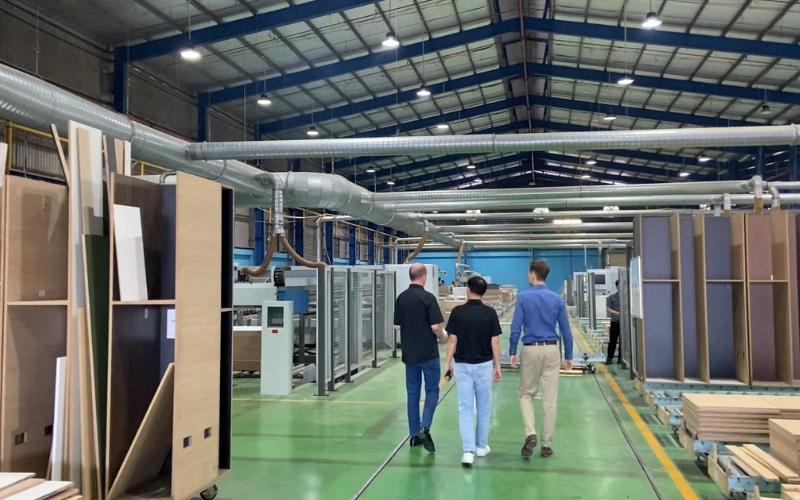
Quality control is one of the biggest risks for overseas Vietnamese involved in trading, sourcing, private label, F&B, retail, e-commerce, or import-export business.
The problem usually begins with the gap between the sample and the real order.
A supplier may prepare a good sample. The photos look fine. The price is acceptable. Communication seems smooth. But when production starts, the product may change. The material may be slightly different. The color may not match the approved sample. The packaging may look cheaper. The label may have errors. Cartons may not be strong enough for shipping. Quantity may be short. Some defects may only appear when the goods arrive overseas.
When the business owner is not in Vietnam, these problems are often discovered too late.
A video call does not show every detail. Photos can miss defects. A family member may look at the goods and say they seem fine, but may not know what to check. The supplier may report that everything is ready, but “ready” may only mean production is finished, not that the goods have been inspected properly.
For small businesses, one bad shipment can have a serious impact. Customers may ask for refunds. Retailers may lose trust. Online reviews may suffer. A restaurant, shop, or e-commerce store may struggle to explain why products are delayed or inconsistent.
The customer overseas does not usually blame the Vietnamese supplier. They blame the business they bought from.
This is why quality control should happen before shipment, not after the goods arrive. Product specifications should be clarified before production. Samples should be approved with details, not only photos. Packaging and labeling should be checked early.
Production progress should be followed before the deadline becomes urgent. Pre-shipment checks should happen while there is still time to correct mistakes.
For overseas Vietnamese, quality control does not need to be complicated at the beginning. But it does need to be intentional. Even a simple checklist, sample comparison, packaging review, and shipment readiness check can prevent costly problems later.
Combining Personal Connection With Local Execution
The most practical path for overseas Vietnamese is not to abandon personal connection. It is to support that connection with local execution.
Family, language, heritage, and trust can help open doors. Local execution helps make sure those doors lead to reliable business results.
For example, an overseas Vietnamese entrepreneur may already know a supplier through a family contact. Instead of placing a larger order based only on trust, they can have someone visit the workshop, confirm production capability, review samples, compare quotations, and check whether the supplier can meet packaging or export requirements.
Another business owner may want to bring a product into Vietnam. Instead of assuming the product will work because it performs well overseas, they can first validate pricing, competitors, sales channels, and possible distributors. If documents or product category requirements are involved, the right legal, accounting, or logistics partners can be brought in only when needed.
A third case may involve a small importer who has already completed a few shipments but now struggles with quality and follow-up. Local support can help track production, confirm timelines, check goods before shipment, and provide updates that are clearer than scattered supplier messages.
This is where MTA can support overseas Vietnamese business owners in a practical way.
MTA acts as a local execution partner for those who already have an idea, supplier, product, or early business activity connected to Vietnam, but need more structure on the ground. The support can include business-level communication with Vietnamese suppliers or partners, meeting arrangement, supplier validation, market checking, production follow-up, quality control, and coordination with relevant specialists when needed.
The role is not to replace the overseas Vietnamese owner’s connection to Vietnam. It is to make that connection more reliable.
You bring the product idea, vision, network, or business direction. MTA helps check what is happening on the ground, clarify what needs to be done, and support the practical steps needed to move from informal opportunity to a more structured business process.
For overseas Vietnamese exploring trading, sourcing, partnerships, or small business opportunities in Vietnam, the right local support can reduce uncertainty and make each step easier to manage from abroad.