


Doing business in Vietnam remains attractive for foreign founders, SMEs, investors, and procurement teams. The country continues to draw attention as a manufacturing base, consumer market, regional supply chain hub, and destination for foreign investment.
But Vietnam is no longer a market where foreign businesses can enter with only a few meetings, a distributor contact, and a flexible plan.
The potential is real. So are the risks.
A business may see strong growth, competitive production capacity, a young consumer base, and a strategic location in Southeast Asia. Yet these advantages do not automatically become results. A promising supplier may still need verification. A local distributor may sound confident but lack follow-through. An entity setup may look simple until banking, tax, licensing, or work permits create delays.
For foreign businesses in Vietnam, success depends less on recognizing the market’s potential and more on understanding what must happen after the first interest is confirmed.
This article looks at the real advantages and practical challenges of doing business in Vietnam, with a focus on what foreign teams should check before committing time, capital, and people.
Why Vietnam Still Stands Out for Foreign Businesses
Vietnam continues to stand out because it combines economic momentum, manufacturing capacity, domestic demand, and a strong position in regional trade.
The latest official data available for 2026 still points to solid momentum. Vietnam’s GDP grew 7.83% year-on-year in the first quarter of 2026, while total registered foreign investment reached USD 24.81 billion in the first five months. These figures support what many investors already see on the ground: Vietnam is no longer only an alternative destination. It is becoming a more strategic market in its own right.
But the new wave of international interest is different from earlier phases.
For years, many businesses viewed Vietnam mainly through a cost or China Plus One lens. They wanted lower production costs, supply chain diversification, or a second manufacturing base outside China. These motivations still matter, but the market has become more competitive. More foreign players are entering. Local suppliers and distributors are more selective. Industrial zones, service providers, and commercial counterparts now have more options.
At the same time, Vietnam’s administrative landscape continues to change. Long-term reforms may improve efficiency, but businesses still need to work with realistic timelines, updated requirements, and local interpretation.
This is why Vietnam should be approached with a clear operating plan, not only a positive impression. The market is attractive, but it rewards structure more than speed.
The Main Advantages Driving Foreign Interest in Vietnam
Vietnam’s appeal does not come from one factor. It comes from a combination of growth, location, trade positioning, industrial development, and a maturing domestic market. For decision-makers, the important question is not simply whether Vietnam is attractive. It is which advantage matters for their business model.
Sustained Growth and a Resilient FDI Pipeline
Vietnam’s economic momentum remains one of the main reasons foreign businesses continue to pay attention. Strong GDP growth and rising registered investment show that the country remains relevant in regional allocation decisions.
For founders and SMEs, this creates room for new products, services, sales channels, and business models. For investors, it signals continued confidence. For procurement and manufacturing teams, it reflects the ongoing development of industrial capacity and export-oriented production.
However, growth should not be confused with easy entry. A growing market can also be a more crowded one. More businesses are looking for the same distributors, suppliers, talent, land, warehouses, service providers, and local networks.
Market growth can open doors, but it does not replace proper assessment.
Strategic Location and Manufacturing Position in the Region
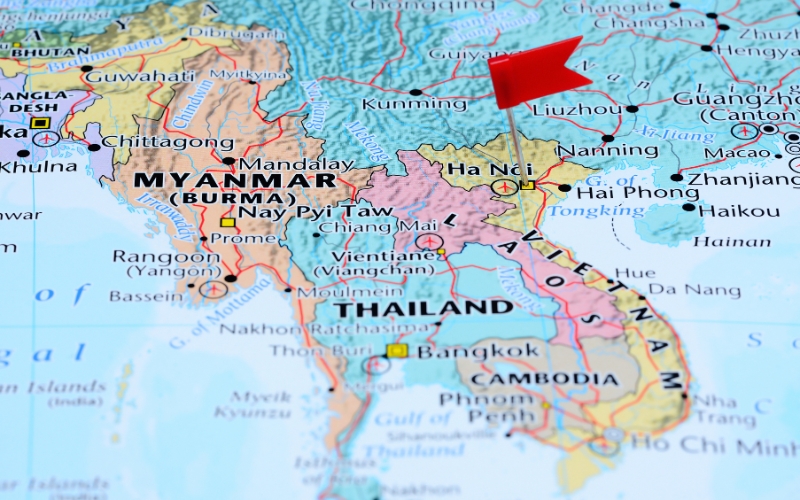
Vietnam’s location gives it a strong role in Southeast Asia. It sits close to China, connects to major regional shipping routes, and has developed a strong position in export manufacturing.
For procurement teams and businesses looking to diversify their supply chains, Vietnam remains one of the most relevant destinations in Asia. The country has built capacity across sectors such as electronics, textiles, furniture, packaging, consumer goods, industrial components, and supporting industries.
For many manufacturers and buyers, the question is no longer whether Vietnam can produce. The real question is which suppliers, regions, and operating structures fit their product category.
Location only becomes an advantage when it is connected to the right local decisions. Choosing the wrong industrial zone, logistics route, supplier region, or warehouse location can affect cost, timing, and reliability. A supplier with attractive pricing may still create delivery problems if the logistics setup does not fit the project.
Vietnam’s strategic position is valuable, but it needs to be translated into a practical operating model.
A Maturing Consumer Market and Business Ecosystem
Vietnam is also attractive because its domestic market is becoming more sophisticated.
Urban consumers are more familiar with international brands. Business buyers are more open to foreign solutions. Local enterprises are investing in technology, branding, operations, and service quality. The surrounding ecosystem has also developed, with more logistics providers, digital agencies, consultants, professional services, and local networks available to support international businesses.
For those selling into Vietnam, this creates openings in consumer goods, industrial solutions, technology, education, healthcare, lifestyle products, and B2B services.
Still, the market is not uniform. Ho Chi Minh City, Hanoi, Da Nang, industrial provinces, and smaller regional markets can behave very differently. A product that works in one urban segment may not move the same way in provincial channels. A distributor with strong access in one region may not have the same reach nationwide.
A more mature market creates more possibilities, but it also requires sharper positioning, pricing, channel selection, and local follow-up.
The Practical Challenges Foreign Businesses Often Underestimate

Vietnam’s advantages are visible early. The challenges usually appear later, when a team moves from interest to implementation.
Many foreign businesses only discover these issues after they have already booked meetings, shortlisted suppliers, started negotiations, or begun entity setup. The problem is not that Vietnam is impossible to navigate. The problem is that the distance between a promising lead and a functioning operation is often underestimated.
Regulatory Complexity and Administrative Change
Vietnam has been working to simplify administrative procedures and improve the business environment. This is positive for long-term investors, but the short-term experience can still require patience.
Procedures may change. Local interpretation may vary. Responsibilities may shift between authorities. Documentation requirements may be updated. A timeline that looks clear in theory may take longer in practice because the business needs to clarify its scope, licensing conditions, required documents, or the right authority to work with.
This matters for entity setup, investment registration, business licensing, work permits, tax registration, and related administrative steps.
Foreign teams should be careful with overly simple timelines. A procedure may be standard, but the actual process depends on document quality, business activity, local review, and how ready the file is before submission.
Supplier and Distributor Selection
Vietnam has many capable suppliers, distributors, manufacturers, and local commercial contacts. But quality is not uniform.
A supplier may communicate well during the first meeting but have weak production control. A distributor may claim national coverage but only have a few active channels. A local contact may have relationships but limited ability to deliver beyond introductions.
For procurement teams, the risk is choosing a supplier based on price, samples, or fast replies without checking capacity, quality systems, lead times, ownership, subcontracting practices, and financial reliability. For market entry teams, the risk is selecting a distributor or agent based on enthusiasm rather than actual channel access and follow-up discipline.
A wrong choice can cost more than the first order value. It can delay the project, damage customer trust, create quality issues, or force the team to restart the search from the beginning.
This is why due diligence is not a formality in Vietnam. It is a core part of risk management.
Banking, Tax, and Compliance Friction
Many foreign businesses assume that once an entity is established, operations can begin smoothly. In practice, several steps still need careful handling.
Bank account opening can require additional documentation, especially when foreign ownership, authorized signatories, capital contribution, or group structure is involved. Tax registration, invoicing, accounting, foreign exchange rules, and payment documentation may also differ from what international teams expect.
This is especially important for SMEs and first-time founders. They may be used to faster banking and compliance processes in their home markets. In Vietnam, banks and authorities may request more explanation or supporting documents before certain transactions can move forward.
Compliance should not be treated as a back-office task that can be solved later. It affects how quickly the business can receive capital, pay suppliers, hire staff, issue invoices, and operate legally.
Language and Business Culture Gaps
Language barriers in Vietnam are not only about translation.
Many foreign teams can hold initial meetings in English, especially in major cities or with internationally exposed suppliers and distributors. The challenge often appears when the discussion moves into technical details, pricing, payment terms, quality expectations, delivery schedules, or problem-solving.
Business culture also matters. A positive meeting does not always mean commitment. A “yes” can mean interest, not confirmation. A counterpart may avoid direct disagreement but still hesitate after the meeting.
This is one reason deals can look promising in person but fail to move afterward.
The gap is often not about trust. It is about coordination. Someone needs to clarify next steps, follow up on the local working style, translate expectations into practical actions, and notice when the project is slowing down.
Common Mistakes When Entering the Vietnamese Market
Many mistakes in Vietnam do not come from bad strategy. They come from incomplete assessments.
One common mistake is evaluating the market through one short trip. A delegation, trade fair, or business visit can be valuable, but it should not be treated as a full market test. A few good meetings may show interest, but they do not prove demand, pricing fit, channel readiness, or supplier capability.
Another mistake is choosing a distributor, agent, or supplier based on first impressions. In Vietnam, hospitality and positive discussions can create confidence quickly. But before committing, foreign teams need to verify background, operational capacity, references, and ability to deliver beyond introductions.
A third mistake is underestimating compliance and licensing timelines. Businesses may plan around an ideal schedule, then discover that document preparation, authority review, banking, work permits, or tax setup takes longer than expected. This can affect launch dates, hiring plans, supplier payments, and customer commitments.
A fourth mistake is leaving follow-up unmanaged after the first agreement. A team may sign a memorandum, confirm a supplier trial, or agree on next steps, then return home.
Without local coordination, progress can slow down. Messages become unclear. Samples are delayed. Documents remain incomplete. The project loses momentum.
In Vietnam, a good first meeting is only the beginning. The real work starts after the meeting ends.
A Practical Framework Before Committing Resources

Before committing significant resources in Vietnam, foreign businesses should work in stages.
The first stage is market assessment. This means going beyond general research and testing whether the business model fits Vietnam’s actual conditions. Who are the real customers? How do they buy? What price level is realistic? Which regions matter first? Who are the existing competitors? What local alternatives already exist?
The second stage is supplier or distributor due diligence. For suppliers, this may involve factory visits, sample review, quality checks, capacity assessment, and commercial comparison. For distributors or sales representatives, it may involve channel mapping, customer access, sales structure, and follow-up discipline.
The third stage is legal, tax, and compliance planning. The business should understand whether it needs a local entity, representative office, distributor model, service agreement, manufacturing arrangement, or another structure. Selling into Vietnam, sourcing from Vietnam, outsourcing production, and building a local team may require different setups.
The fourth stage is local coordination. This is where many projects fall short. The team may know what it wants to do, but not who will follow up on the ground. Vietnam often requires coordination between suppliers, distributors, authorities, banks, accountants, translators, logistics providers, and internal stakeholders.
Planning does not mean slowing down. It means reducing avoidable risk before committing capital, reputation, and time.
Why Local Support Can Change the Outcome
Doing business in Vietnam is not only about having the right strategy. It is about turning that strategy into action inside a local operating environment.
The gap between a good plan and a real result often appears after the first decision is made. A team decides to enter Vietnam, but still needs to test the market. It finds a potential distributor, but needs to check whether that distributor can actually sell. It identifies a supplier, but needs to verify quality and capacity. It sets up an entity, but still needs banking, tax, hiring, and administration to work.
This is where local support can make a practical difference.
A local team can help connect strategy with the next steps: checking assumptions, coordinating meetings, reviewing suppliers and distributors, following up after business trips, supporting document work, and making sure progress does not stop when the foreign team leaves Vietnam.
Vietnam remains a strong market for foreign businesses, but results depend on structure, verification, and follow-through. The businesses that succeed are usually the ones that treat Vietnam not as a quick opening, but as a market that requires a clear operating path.
MTA supports foreign founders, SMEs, investors, and procurement teams by helping them move from initial interest to practical action in Vietnam. Rather than only giving general advice, MTA helps clients understand the local path, prepare the right steps, and coordinate the work needed to enter, operate, or expand in the market.
If your business is considering Vietnam, the best starting point is not only to ask whether the market is attractive. It is to ask what must be checked, organized, and handled before you commit.