

Building Backup Suppliers Before a Supply Chain Disruption
- August 20, 2026
- Posted by: editor
- Category: Blog
Many international buyers spend months developing a stable manufacturing relationship and then assume the most difficult part of sourcing is complete.
When pricing remains acceptable, lead times are predictable and shipments continue to meet expectations, working with one established partner feels efficient. Communication is familiar, specifications have already been discussed and both sides understand the usual order process.
However, this efficiency can hide a structural weakness. A buyer may depend on one company for tooling, material knowledge, product adjustments and delivery capacity without having a realistic alternative. The exposure becomes visible only when something changes: an urgent order is rejected, lead times increase, a key component becomes unavailable or the manufacturer begins prioritising larger customers.
A backup supplier is therefore not simply another contact. It is an alternative that has been assessed far enough to reduce the time and uncertainty involved in transferring an order.
The Risks of Relying on a Single Supplier
A long-term manufacturing relationship can improve consistency, but it can also concentrate several types of risk in one place.
The most obvious is capacity. A manufacturer may own the right equipment and employ an experienced team, yet still be unable to accommodate a buyer’s next order. Production schedules change, seasonal demand creates bottlenecks and priority is often given to larger or more profitable accounts.
This difference between installed capacity and available capacity is easy to overlook. Buyers may receive confirmation that a company can make the item without asking whether the relevant machines, operators and materials will be available during the required delivery window.
Material dependency can create similar problems. A component may come from a single upstream source, an imported material may face delays or a specific finish may depend on an external subcontractor. Even when the main site continues operating normally, disruption elsewhere in the chain can affect the final shipment.
Commercial conditions may also shift. Minimum quantities can increase, payment terms can become less favourable and quotations may change after raw-material or labour costs rise. Without a credible alternative, the buyer has limited room to challenge these changes.
Knowledge concentration is another important concern. Product requirements often extend beyond drawings and specifications. The current team may have learned how to adjust a process, control a difficult tolerance or avoid a recurring packaging issue. When this knowledge has not been properly documented, transferring the item becomes more complex.
For international buyers managing orders from abroad, these risks are harder to identify early. Distance, language differences and limited visibility into day-to-day operations can allow small warning signs to develop into larger delivery problems.
The Cost of Finding Backup Suppliers During a Crisis
An urgent sourcing process is rarely conducted under favourable conditions. Once a shipment has been delayed or rejected, the buyer is no longer working according to a normal qualification schedule. The search is influenced by stock shortages, customer commitments and pressure to recover lost time.
This urgency reduces the number of realistic options. Companies that are technically suitable may not have immediate availability. Others may require new tooling, higher minimum quantities or longer sampling periods. The buyer may be forced to choose between waiting for a stronger candidate and moving quickly with a less proven one.
The financial impact can extend beyond the quotation. Emergency transfers may involve expedited samples, priority freight, duplicate moulds, smaller trial batches or additional inspections. These expenses are often accepted because the cost of doing nothing appears even higher.
Time pressure also makes it easier to miss technical differences. Two manufacturers may use similar equipment but rely on different materials, process parameters or subcontractors. These variations may not appear in the first conversation, especially when the new company is eager to secure the business.
A successful sample does not remove every concern. The site must also be able to repeat the result at the required volume, maintain consistency across batches and meet the agreed packing and export requirements.
The problem with crisis-driven sourcing is therefore not only speed. It is the need to make a high-impact decision with limited evidence.
A Supplier Shortlist Is Not a Qualified Backup Source
Many buyers maintain spreadsheets containing names collected from online searches, exhibitions, referrals and previous sourcing projects.
These lists can support future research, but they should not be confused with operational alternatives. A company that provided a quotation 18 months ago may now have different equipment, customers or commercial priorities. A contact found through a marketplace may be a trading business rather than the actual manufacturer. A promising website may provide little evidence of how the item would be handled in practice.
A qualified backup source has reviewed the requirements in enough detail to confirm basic compatibility. This normally means that expected volumes, materials, processes, tolerances, finishing, packaging and target pricing have been discussed. The buyer also understands which activities are handled internally and which depend on external partners.
For technical or customised products, a sample or pilot order may be necessary. Its purpose is not simply to approve the appearance of one item. It also tests how the team interprets drawings, responds to feedback, handles corrections and communicates when information is incomplete.
Documentation must be prepared for transfer as well. Updated drawings, bills of materials, approved samples, test criteria, colour references and packing instructions should not exist only within the current relationship.
A list provides possibilities. Qualification turns one of those possibilities into a usable option.
Key Steps in Backup Supplier Qualification
The qualification process should begin by identifying what the alternative must replicate and where reasonable differences can be accepted.
Some requirements are non-negotiable. These may include material grade, dimensions, functional performance, regulatory tests or critical cosmetic standards. Other elements, such as internal packaging methods or secondary components, may allow more flexibility.
This distinction helps buyers avoid two common mistakes: selecting an unsuitable company based on price alone or rejecting a viable option because it does not copy every part of the existing setup.
Technical capability should then be assessed against the specific item rather than the general product category. A manufacturer may have experience with metal parts, electronics or textiles but lack the machinery, tooling or process control needed for a particular design.
The assessment should cover equipment, workforce experience, material sourcing, subcontracting, traceability and inspection methods. Buyers should also confirm the realistic output available during the periods when orders are most likely to be placed.
Commercial condition deserve equal attention. Minimum quantities, sample fees, tooling ownership, payment terms, lead times and export arrangements all affect whether the alternative can be used under real business conditions.
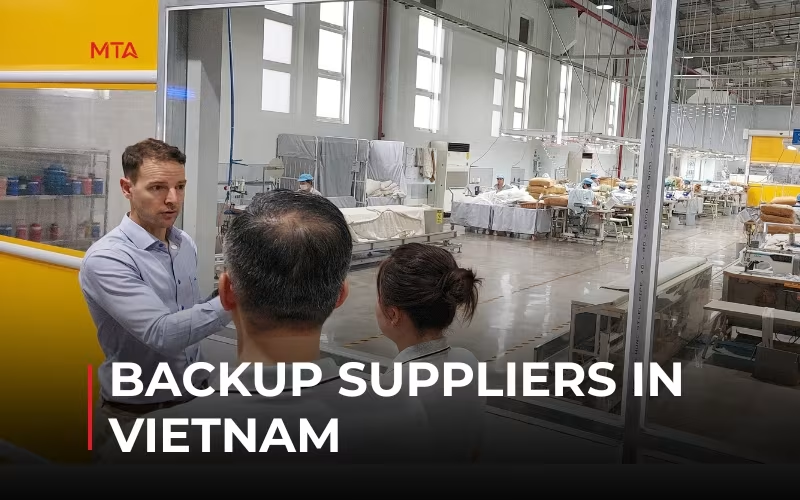
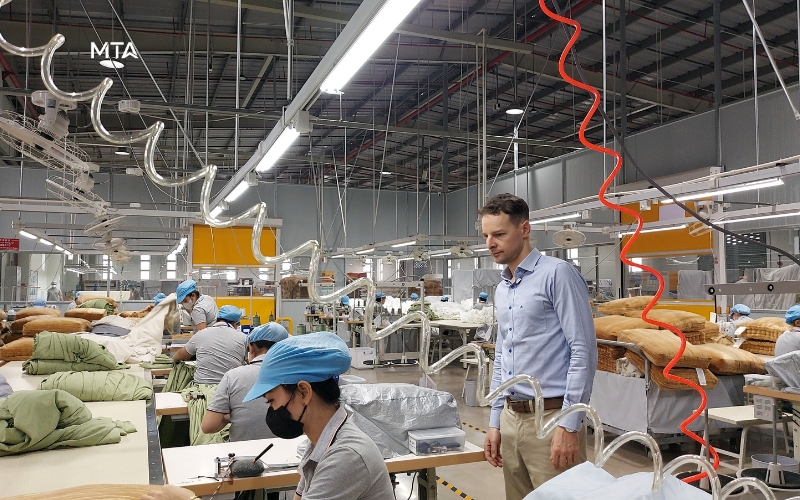
An on-site visit provides evidence that cannot always be obtained through questionnaires and video calls. It allows the buyer to compare declared capabilities with actual workflow, storage practices, maintenance, inspection points and the handling of non-conforming goods.
For overseas SMEs, local support can make this stage more reliable. A team based in Vietnam can verify information directly, clarify inconsistencies, communicate with technical staff and continue following up after the initial assessment.
The final decision should consider both manufacturing capability and working behaviour. Slow feedback, unclear answers and resistance to corrective action during sampling may signal larger problems once commercial orders begin.
Building a Second-Source Strategy Without Increasing Costs
A second-source strategy does not require every order to be divided between two manufacturers.
For SMEs with limited purchasing volume, maintaining two active relationships for every item may be inefficient. A more practical approach is to apply different levels of preparation according to the impact of disruption.
Critical items deserve the most attention. These are often products with custom tooling, long lead times, strict tolerances, limited material options or a high contribution to revenue. A delay affecting one of these items may have a much greater business impact than a delay involving a standard component.
For lower-risk products, an updated shortlist and preliminary commercial assessment may be sufficient. For more sensitive items, the buyer may complete a site visit, technical review and sample. The most important categories may justify a small pilot order or limited annual allocation.
This approach controls cost while improving readiness. Tooling should also be reviewed as part of the strategy. Buyers need to understand who owns it, where it is stored, whether it can be transferred and whether the design files are complete. A backup manufacturer offers limited protection if the original mould or fixture cannot be accessed.
Communication with the alternative should not disappear after approval. Periodic contact helps confirm whether key personnel, capabilities, pricing and availability have changed. It also prevents the relationship from restarting at zero when a new requirement appears.
The goal is not to duplicate the entire supply chain. It is to reduce the amount of work that must be completed after the buyer decides to move.
A Practical Supplier Diversification Plan for International Buyers
Supplier diversification becomes more manageable when it is treated as a focused business exercise rather than a large sourcing programme.
The first step is to review the current portfolio and identify the products that would be most difficult to replace. Buyers can consider revenue exposure, customer commitments, tooling requirements, lead times and the number of available alternatives.
The second step is to select one priority item and qualify one additional manufacturer. Starting with a limited scope allows the team to develop a repeatable process without creating unnecessary complexity.
The third step is to prepare a transfer package. This should contain the latest technical documents, approved references, test expectations, packing requirements and relevant lessons from previous orders. The package should be understandable without relying on information held only by the current contact.
The fourth step is to define when the alternative would be activated. Triggers may include repeated delivery delays, sustained defect increases, major price changes, loss of key certifications or signs of financial instability.
This creates a practical decision framework. Instead of debating whether a problem is serious enough each time it occurs, the buyer already knows which conditions require further action.
For companies sourcing from Vietnam, finding additional names is usually the easiest part. The greater challenge is verifying which manufacturer can meet the technical, commercial and operational requirements of the project.
A structured supplier search, on-site assessment and sample process can turn an uncertain contact into a credible second source. That work provides the most value when it is completed with enough time to compare options properly.
Conclusion
The value of a backup supplier is not measured by how many names appear on a shortlist. It is measured by how quickly a buyer can respond when the current arrangement no longer works.
A credible alternative should already understand the product, the technical requirements and the commercial conditions involved. The documentation should be transferable, the main risks should be known and the buyer should have enough evidence to decide whether the source can be activated.
For international buyers and SMEs, the objective is not to duplicate every manufacturing relationship. It is to remove the most dangerous single points of dependency from the supply chain.
Starting with one critical product and one qualified alternative is often enough to create meaningful resilience. The investment may be limited, but the time saved during a disruption can be significant.