


Cambodia is a prime frontier and emerging investment opportunity in Southeast Asia. This has become more evident in the last 20 years, as Cambodia has shifted from being a largely foreign-aid-reliant nation to a new, developing market. This has been supported by industrial growth, foreign direct investments, infrastructure, and regional cooperation. With the modernization of Cambodia’s economy and the strengthening of Cambodia’s position with the ASEAN supply chains, the investment community has been diversifying to new opportunities beyond the real estate and manufacturing sectors.
The modernization of Cambodia’s economy has been accompanied by the development of its financial systems. Currently, commercial banks remain the principal means of obtaining capital, but in time capital markets will begin to develop, providing companies additional means of obtaining capital while providing investors an opportunity for diversification. Familiarity with the fundamentals of the Cambodian economy, as well as the emerging investment opportunities, will assist family businesses, family offices, and institutional investors in spotting opportunities of a longer-term nature.
This report looks at Cambodia’s investment options, new potential in the growth sectors in its capital markets, and the risks and possible rewards associated with investment in this emerging market.
Cambodia’s Investment Landscape in 2026

Key drivers of, formerly, Cambodia’s investment potential include economic growth, urbanization, industrialization, and a greater integration with regional and global markets. External economic factors create uncertainties for Cambodia’s future, though, and Cambodia’s economy continues to be one of Southeast Asia’s fastest growing.
The International Monetary Fund (IMF) and the Asian Development Bank (ADB) forecast consistent and solid growth for the economy of Cambodia at least through 2026, bolstered by tourism and trade’s recovery, growth in manufacturing and infrastructure, and elevated levels of domestic consumption. Less exposure to a handful of economic sectors and a higher level of investment in Cambodia are the goals of the long-term growth strategy of the Cambodian government.
Foreign direct investments are one of the foundations of the economy of Cambodia. Based on reports by the Council for the Development of Cambodia (CDC), approvals for investments in the sectors of manufacturing, logistics, renewable resources, real estate, and services have been on the rise. Chinese, South Korean, Japanese, and Singaporean investors have been and continue to be instrumental for the financing of industrial buildings and trade.
Continuing the diversification of the economy, current and projected growth for manufacturing within Cambodia is dominated by sectors for electronics, automotive components, consumer goods, and light industrial manufacturing and is aided by strategic location and labor costs.
Growth in Cambodia is also driven by development in the infrastructure. Investment in roads, ports, and development of logistics and industrial facilities supports a trade and connective infrastructure network. These investments also help Cambodia strengthen its position in regional export trade.
At the same time, urbanization brings even more possibilities for real estate, retail, healthcare, education, and financial services. With the rise in income and consumer spending, the internal market is playing an increasingly bigger role in economic growth.
Apart from the current economic growth, Cambodia has great potential for the future, and this is another reason why many people are choosing to invest in the country. The young population, the location, infrastructure that is getting better, and an investment-friendly approach are great combined forces that keep drawing businesses to the region for long-term growth and success.
Cambodia’s Capital Markets
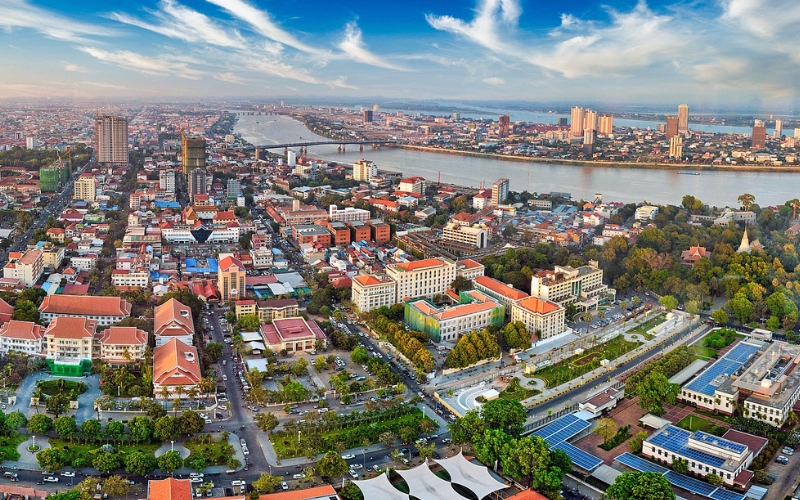
While Cambodia’s banks are the most prevalent method for accessing corporate funds, the capital markets are becoming an essential part of Cambodia’s financial infrastructure.
Cambodia’s Capital Markets in 2026
Capital markets in Cambodia have grown since the founding of the Cambodia Securities Exchange (CSX) in 2011. This was a first step in fostering new paths to financing outside of bank lending in Cambodia.
The CSX and the Securities and Exchange Regulator of Cambodia (SERC) are pillars in the structure of securities in Cambodia. The SERC oversees capital markets and securities and safeguards and stimulates growth in the market.
The market consists of three primary components:
- Equities (listed shares)
- Bonds (government and corporate)
- Collective investment schemes and investment funds
Though the stock market in Cambodia is small when compared to markets in neighboring countries, it has drawn interest from investors in Cambodia and abroad.
Listing on CSX is an option for innovative companies in the ports, utilities, financial services, and real estate and manufacturing sectors. CSX has a limited role in facilitating trading but has focused on raising capital and establishing corporate governance.
The bond market is also developing. Government and corporate bonds facilitate financing for bonds and funding for the projects and ventures that create and sustain the infrastructure in Cambodia. The Asian Development Bank (ADB) and AsianBondsOnline reported that the developing bond market in Cambodia is a priority to implement the reforms to the financial system and sector.
The awareness of more opportunities within the capital markets has increased active investors, resulting in more securities accounts and, in turn, more training and access to trading. The market is still primarily retail, but institutions are starting to become more involved.
Capital markets provide sound financing for businesses while offering investors productive places to put their money. The aid particularly benefits economic growth and the financial sector’s diversification.
For domestic companies and investors, it’s important to note the developing but integral role of capital markets within the financial system of Cambodia.

Stocks, Bonds, and Investment Vehicles Available to Investors in Cambodia
Cambodia’s capital markets provide a plethora of options to potential investors while still having a narrower range of offerings than developed financial markets.
The most common vehicles for investment are public equities. Businesses listed on the Cambodia Securities Exchange cover the infrastructure, banking, logistics, manufacturing, utilities, and real estate sectors. These companies give investors the ability to invest in sectors that will aid the growth of Cambodia’s economy.
Equity investing in Cambodia is perceived to provide the greatest rewards over the long-term horizon rather than over the short-term. Most of the companies listed on the Cambodia Securities Exchange are involved in the facilitation of major economic activities in Cambodia, and thus the equities of these companies appeal to investors who wish to cover the long-term structural changes that are likely to take place in Cambodia, such as urban and rural migration, expansion of trade, and large developments and improvements to the national infrastructure.
Cambodia’s bond market, in addition to equities, also offers investment opportunities. As efforts are made by the government to strengthen and improve capital markets by broadening the range of funding options available, government bonds are becoming of growing importance. These bonds enable investors to support the development of the financial markets while also receiving a predictable rate of return.
Further, corporate bonds are also beginning to gain popularity. Larger companies and financial institutions are beginning to issue corporate bonds to raise financing from the public as an alternative to borrowing from banks. Corporate bonds may provide investors a higher yield; however, increased credit risk is an important consideration.
Investment funds and collectively managed investment schemes, another emerging market in Cambodia, involve professionally managed pools of capital from various investors. Relative to developed financial markets, fund management in Cambodia is at an early stage; however, existing regulatory frameworks in Cambodia, along with professional asset management services, will provide an opportunity for local and regional investment funds. As these services mature, they will provide investors the ability to invest in Cambodian assets in a way that has not existed before.
Typically, foreign investors gain access to the Cambodian capital markets through licensed brokers and custodians. Enabling foreign investors to open a securities trading account usually involves the usual forms of identification and verification procedures. Foreign investors may even have access to Cambodian investments through the regional funds that consider Cambodian assets among other investment opportunities in Southeast Asia.
Although this is the case, investors need to understand that the Cambodian market is still concentrated. There are a limited number of listed securities and consequently a limited number of opportunities to diversify. Therefore, investors usually prefer a combination of direct investments in Cambodia and investments in other Southeast Asian countries.
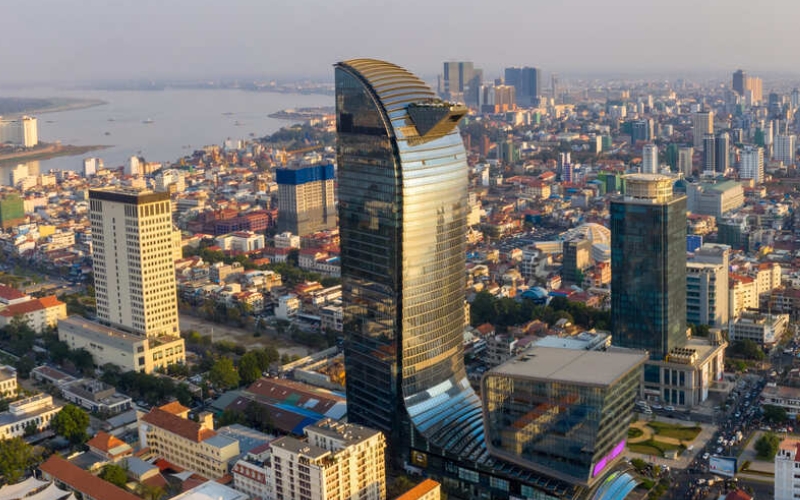
The most important point is that Cambodia provides a wider range of investment opportunities than is commonly perceived. Although equities are, and continue to be, the most evident asset class, the opportunities available to investors will increasingly be enhanced with the introduction of bonds and new fund structures.
Why Cambodia Is Considered a Frontier Market Opportunity
Cambodia is considered a frontier market. Frontier markets don’t usually reach the profitability of emerging markets. However, they can be profitable as they become more stable, while offering a higher risk.
The popularity of a frontier market can arise from a number of things.
First, the remaining population boom is Cambodia’s most favorable long-term trend. Cambodia’s population is much younger than most Asian countries. Labor and consumer needs are predicted to grow within the country, giving it a great advantage over older populations of neighboring countries.
Second, Cambodia is in the process of heavy industrialization. This has brought a number of new sectors into the country. These include electronics, automotive, component manufacturing, consumer goods, logistics, and industrial development. These strengthen Cambodia’s position in regional supply chains while decreasing reliance on garment manufacturing.
Urbanization heavily influences industrialization. Cities produce a large number of services and structures in high demand. This creates a wide variety of investment opportunities.
Numerous service zones are bound to result from the construction of new transportation infrastructure. Large investments into trade will create benefits for businesses and trade throughout the country.
Increased investment in the tech economy due to growing digital infrastructure and increasing digital services is expected to produce a new wave of services.
From the perspective of an investor, frontier markets can be appealing as they can provide openings before the full maturation of the market or the efficient pricing of the market. Due to Cambodia’s early phase in development, many of its sectors (manufacturing, logistics, financial services, healthcare, renewable energy, and technology) have the potential for continued growth and development.
Patience is required with investing in frontier markets. Growth typically occurs over years rather than quarters, and development of markets can be unpredictable. Investors that focus on the underlying fundamentals of an economy rather than short-term fluctuations of a market are better positioned to capture the benefits of economic trends.
Cambodia’s capital markets provide investors a method to access broader economic trends. Even though markets are small, they will start to reflect the economic growth and the greater integration of Cambodia into the market.

Liquidity Challenges and the Future Outlook of the Cambodian Capital Market
Like other frontier markets, Cambodia boasts potential and risk. Prospective investors in Cambodia’s capital markets should be aware of the risks behind younger, developing financial markets.
The biggest hurdle may be liquidity. While exchanges across the region have relatively high levels of activity, the Cambodia Securities Exchange sees comparatively low levels of trade. Less trading makes it harder for investors to buy and sell in a timely fashion, especially during a rapidly changing market.
Market depth is notable in Cambodia compared to its neighbors. With a low number of publicly traded businesses, the domestic market in Cambodia makes it hard to diversify. Investors may need to hold additional regional stakes to ensure they have adequate exposure to the needed sectors.
The landscape for availability of information and commitment towards market transparency has both shown improvement but remains inadequate. Potential investors should be prepared to be extremely careful and rely on themselves and their trusted sources for assessment of potential investment opportunities.
Cambodian regulators are focused on improving the state of affairs in various segments of the market by making the rules more robust and improving governance and protection of investors. While improvement will be beneficial, it introduces additional uncertainty for those participating in the newly regulated market.
The downturn in the market due to these developments has been temporary, and authorities are encouraging new listings, improving the financial markets and the issuance of bonds, and improving the educational outreach to investors. These ongoing developments are intended to improve liquidity and participation and market confidence overall.
By 2030, there are several reasons to believe that the outlook for Cambodia’s capital markets will be positive. This includes ongoing economic growth, further development in the private sector, and the increasing participation of both domestic and foreign institutional investors along with increased sophistication in financial markets.
As the source of financing for business activities becomes more competitive, the Cambodian bond market, in particular, will become more advanced. The market will also become more diverse with more investment products, including collective investment schemes.
In the long term, Cambodia’s capital markets will offer more investment opportunities. Although the market is not as large or liquid compared to the major exchanges in ASEAN, Cambodia’s capital markets are positioned to offer investment opportunities in a growing economy.
Those who have a long-term view when investing in Cambodia’s capital markets will have the opportunity to invest in an economy that has the potential for significant growth as a result of favorable demographic conditions and structural market changes. Frontier investors who are able to bear the risk of long-term illiquidity in the market will be able to include Cambodia in a diversified investment portfolio.
Where Long-Term Investment Opportunities Are Emerging for Cambodia
While interests are invested in capital markets, Cambodia offers broader lucrative investment options in line with the long-term changes in the economy.
Rapid industrial and logistics developments are among them. The diversification of manufacturers’ supply chains throughout Southeast Asia means that investment in Cambodia, for the region’s export-centered production, is increasing. The regional integration is resulting in increased trade volumes and developing logistics infrastructure and industrial parks, warehousing, and Special Economic Zones (SEZ).
Real estate and urban development are also opportunities in Cambodia. Although the market experiences adjustments in cycles, long-term demand for commercial activities and the development and growth of cities and their populations remain. Industrial property, commercial real estate that is highly connected to business activities, and logistics and mixed-use developments also remain of interest for investors.
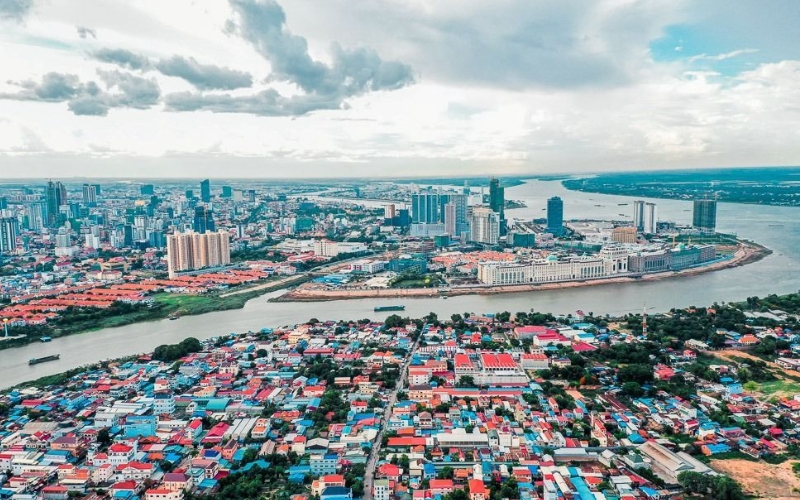
Another area of investment is renewable energy. Cambodia’s development of the economy continues to demand the development and the growth of energy and power generation and the development and the growth of clean, renewable sources of energy. Solar projects and infrastructure will become an increasing part of the country’s energy.
The digital economy is yet another developing area of investment. The growth of digital services, e-commerce, and fintech with the spread of the Internet, smartphones, and digital payments is creating new investment opportunities throughout Southeast Asia. Supply and demand for digital and technology services will also grow with the increased connectivity of businesses and consumers.
Healthcare and education are also long-term opportunities. There are demands for private healthcare services, medical technology, vocational education, and private higher education as incomes rise and the population expects more quality service. These services are impacted less by economic cycles and are usually more favored by demographic shifts.
Urbanization, industrialization, infrastructure development, and human capital investment are long-term shifts. These shifts are expected to impact the Cambodian economy for the next ten years and make these opportunities more attractive. These shifts are structural rather than the factors that determine market opportunities and are likely to have a much longer-term impact.
For investors with a more medium- to long-term horizon, these shifts are likely to offer much more growth and investment than speculative opportunities. These investments are especially valuable for structuring the economy.
Risks, Challenges, and Strategic Considerations for Investors
There are opportunities and obstacles regarding investment in the Cambodian market as there are with any economy in the developing world. Because of the level of risk with investments in developing economies, savvy investors realize that identifying lucrative sectors is not enough for gaining high returns in the long run.
The limited size of a developing market is one of the biggest hurdles for investors. With Cambodia’s relatively small economy when compared to its ASEAN neighbors, many investment decisions are based on more than just domestic demand.
Investors also have to consider the fluidity of developing economy regulations. In Cambodia, significant improvements have been made to the investment climate, but developing economy regulations keep changing. Investors should stay in close contact with their advisors to ensure compliance.
Gaps still exist in certain sectors and areas in the developing economy with infrastructure, even with the improvements that have been made. When assessing the potential of an investment, the state of the infrastructure in the area should be considered.
The young developing economy and labor force of Cambodia can be an advantage to investors but often need significant investment in improvements and training to increase their operational performance and equity.
Investors need to keep in mind how the liquidity of Cambodia’s capital markets will impact their investment in comparison to more developed markets.
Comprehensive due diligence continues to be required. Before securing any investment, deal participants need to evaluate business partners, regulatory requirements, land ownership issues, local demand issues, and financial assumptions. In many instances, local collaboration and professional advisory services can help reduce negative impacts and improve decisions.
As we look toward 2030, some trends will likely strengthen the view toward investing in Cambodia. Opportunities in many sectors are likely to emerge from continuing urban population growth, infrastructure construction and improvements, expansion of manufacturing, accelerated digital development, and increased consumer spending.
For passive and/or long-term investors, particularly Cambodia may be enticing if it is viewed as part of an even larger economic growth strategy in the ASEAN region. In the ASEAN region over the next few decades, markets are expected to become integrated and connected in a way that is beneficial to business. Companies focusing on fundamentals, maintaining realistic expectations, and having a long-term view are likely to be the most successful in Cambodia.
Conclusion
Cambodia is becoming an attractive market for investors as a result of its industrial development, infrastructure, urban improvement, and an increase in regional integration. The relatively immature state of Cambodia’s capital markets in comparison to more developed ASEAN economies has not adversely impacted the development of Cambodia’s financial ecosystem, as the markets are growing.
Manufacturing, logistics, renewable energy, healthcare, education, technology, and real estate present substantial investment opportunities. They are all interconnected and aligned with the anticipated long-term structural changes in the Cambodian economy.
Investors must consider a number of additional factors, beyond the obvious opportunities, if they wish to achieve success in Cambodia. Intensive risk assessment, reasonably optimistic expectations for the outcome, the formation of quality business partnerships, and a committed long-term investment horizon all represent critical success factors. Investors and businesses may expect to experience the benefits of being among the first market participants in one of the emerging growth economies in South East Asia. This is especially true for businesses that are aligned with the sectors of the economy of Cambodia that are undergoing the most fundamental and greatest change.