


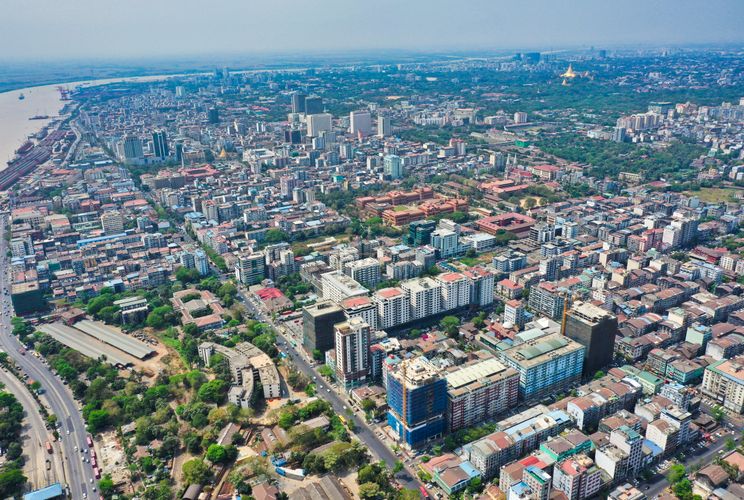
Myanmar today presents a very different market profile from the more mature economies of Southeast Asia. Political uncertainty, operational constraints, and the withdrawal or reduced presence of several international players have significantly raised barriers to entry. At the same time, this environment has also created less contested market spaces: some segments now have fewer established competitors, certain needs remain underserved, and local companies are increasingly looking for solutions that can secure supply chains, improve production capabilities, or replace imports that have become more expensive or difficult to access. For foreign companies with strong analytical capabilities and a phased approach to market entry, these imbalances can therefore reveal niche opportunities that would be far more competitive in other regional markets.
Myanmar should be assessed as a selective, project-level investment market rather than a broad country-growth opportunity. Its agricultural base, natural resources, manufacturing capability, regional location and major gaps in electricity, logistics and food processing can support investable projects. Conflict, sanctions, foreign-exchange controls, weak infrastructure and uneven rule implementation must nevertheless be priced directly into the case.
MoveToAsia supports foreign companies with their market entry and business development projects in Myanmar. Our approach includes market and feasibility studies, sector opportunity assessment, the identification and qualification of local partners, due diligence, and on-the-ground operational support. We typically intervene before major investment or expansion decisions to help clients validate their assumptions, reduce risk, and build a market entry strategy that reflects the realities of doing business in Myanmar.
Before targeting specific opportunities in Myanmar, it is essential to understand the country’s economic fundamentals, key growth drivers, sector dynamics, and the specific characteristics of its local business environment. We have therefore prepared a series of updated 2026 guides combining an overview of the Myanmar market with more in-depth sector analyses.
The objective is to help investors, executives, and foreign companies better assess the country’s market potential, identify the sectors offering the most relevant opportunities, and structure their market entry strategy on a more informed basis.
Myanmar’s macroeconomic figure in 2026
The macroeconomic environment nevertheless remains challenging. The World Bank estimates that real GDP contracted by 2.0% during the 2025/2026 fiscal year and projects growth of 2.0% in 2026/2027. Inflation reached 24.6% year-on-year in April 2026. Despite some improvement in operating conditions across parts of the manufacturing, construction, and services sectors, production, sales, and profits remained below previous levels. Continued pressure on fuel availability, logistics, and access to foreign currency also weighs on business costs and companies’ ability to operate normally.
In this environment, the key question for investors is not simply whether unmet demand exists, but whether that demand can be converted into a viable business generating cash flows that are effectively collectible and proportionate to the level of risk taken. The strongest opportunities are generally those that address essential needs, create more value locally, reduce dependence on imports or unreliable infrastructure, and allow companies to test the market progressively before committing significant fixed capital.
Investment activity has not stopped entirely. At its third meeting of 2026, the Myanmar Investment Commission approved 35 projects, including four foreign-invested projects in manufacturing and electricity. The announcement also indicated that electricity, oil and gas, and manufacturing represented the largest shares of cumulative approved investment. These figures should, however, be interpreted with caution: they reflect the composition of the approved project portfolio rather than capital already effectively deployed or the future profitability of those investments.
Investment Snapshot for 2026 in Myanmar
| MACRO POSITION FY2025/26 GDP -2.0% estimated; FY2026/27 +2.0% projected | CREDIBLE THEMES Food systems, essential manufacturing, distributed energy, logistics, B2B technology | CAPITAL POSTURE Validate first, invest against milestones, retain the ability to pause or exit | DEAL-BREAKERS Unworkable payments, sanctioned counterparties, insecure land or routes, unproven demand |
Where capital can still find a role

Myanmar’s investment framework formally promotes a wide range of activities, including agriculture, manufacturing, infrastructure, electricity, renewable energy, information technology and tourism. Promoted-sector status can support eligibility for investment-law incentives, but it does not make a project feasible by itself (Myanmar Investment Commission [MIC], 2017a).
In the present market, four investment themes are more defensible than a general consumer-growth thesis.
Local production and import substitution. Food processing, packaging, repair, selected building materials and essential goods are stronger where inputs are local and the route to customers is confirmed.
Productivity infrastructure. Storage, cold chain, irrigation, warehousing and industrial services address existing bottlenecks without relying on a rapid national recovery.
Energy resilience. Captive solar, storage, hybrid systems and efficiency can generate measurable savings, provided the customer supports a bankable payment structure.
Asset-light technology and services. Enterprise software, cybersecurity, agritech and logistics systems require less fixed capital and can enter where they solve a defined problem through a compliant payment channel.
Investment routes: Most recommended market access for Myanmar
| ENTRY ROUTE | BEST USED FOR | CAPITAL LOGIC |
| Export or distributor | Demand and channel testing | Prove pricing, collections and repeat orders before local investment |
| Technical service or managed operation | Industrial, energy, logistics and technology solutions | Build contracted revenue without owning major assets |
| Joint venture or contract production | Local licences, assets or operating capability | Protect control, cash, audit and exit rights |
| Acquisition | Existing customers, permits, staff or facilities | Faster access after deep ownership, sanctions, financial and land review |
| Greenfield, MIC or SEZ project | Long-term manufacturing, energy or logistics platforms | Commit only after demand, site, utilities, licences and payments are proven |
A local company is not automatically the first step. An investor may obtain sufficient market access through an export arrangement, distributor, service contract or licensed local operator. This is particularly useful where demand is uncertain or the business depends on imported equipment and foreign-currency payments.
A joint venture can add licences, land access, relationships, distribution or operational knowledge. It can also create governance and compliance risk. The partner should be selected for a defined commercial contribution, not simply because local presence appears reassuring. Shareholder agreements should cover budget approval, banking authority, related-party transactions, compliance controls, information rights, deadlock and exit before capital is transferred.
Acquisition can be faster than greenfield entry when a target has customers, permits, staff and usable assets. The investor must verify ownership, political or military links, land, tax, licences, foreign-currency practices and asset condition. Remediation, working capital and replacement equipment can materially change the economics.
Greenfield investment should be reserved for projects with a clear structural advantage, such as access to local agricultural inputs, a contracted industrial customer, an export buyer or a site that solves a specific logistics or energy problem. Capital should be released in tranches against permits, land, utilities, customer contracts, equipment delivery and operating milestones.
Foreign ownership, investment approval and incentives in Myanmar
Company and ownership structure in Myanmar
International investors can incorporate a company through the Directorate of Investment and Company Administration (DICA). A company may have one shareholder and one director, but at least one director must ordinarily reside in Myanmar for at least 183 days in each 12-month period. DICA states that there is no general minimum capital requirement for incorporation, although the relevant licence, bank or investment approval may create separate expectations.
A Myanmar-incorporated company with foreign ownership of no more than 35% is treated as a Myanmar company under the Companies Law; above that level, it is treated as a foreign company. This is a classification rule, not a universal foreign-equity limit. Ownership restrictions depend on the exact activity. MIC Notification No. 15/2017 identifies activities reserved for the Union, prohibited to foreign investors, permitted only through a joint venture, or subject to approval by the relevant ministry.
MIC permits, endorsements and land

Most projects do not require an MIC permit. A permit is generally relevant to strategically important, capital-intensive or environmentally and socially significant projects, projects involving state-owned land, and other designated activities. A project that does not require a permit may seek an endorsement when it needs investment-law land rights or tax incentives.
For approved investments, the Myanmar Investment Law allows an initial land lease of up to 50 years, with two possible ten-year extensions. Qualifying investments in promoted sectors may apply for income-tax exemptions of three, five or seven years according to the designated development zone. Machinery, equipment, raw materials and reinvested profits may also qualify for specified relief, subject to the law, approval and continuing compliance.
Thilawa Special Economic Zone can be considered for selected manufacturing and export projects. Approved businesses may operate as wholly foreign-owned investments or joint ventures, with separate tax holidays for Free Zone and Promotion Zone investors. Customer access, utilities, logistics, labour, insurance and delivered cost still matter more than the incentive headline.
Tax, foreign exchange and repatriation in Myanmar
The general corporate income-tax rate is 22% under the 2026 Union Taxation Law. Oil and gas exploration and production remain subject to 25%, while capital gains, commercial tax, withholding and other taxes may apply depending on the transaction and activity.
Foreign exchange is a core investment constraint. From 1 January 2026, the Central Bank of Myanmar reduced the mandatory conversion share of export earnings from 25% to 15%. Exporters can retain a larger share of foreign currency, but the wider environment still includes multiple exchange rates, import controls, banking documentation and administrative approvals.
The cash-flow model must cover equity funding, imported equipment, collections, conversion, debt service, fees and dividends. The World Bank reported an average of about 54 days for an import licence and an estimated 90-day entry process for foreign firms. These are planning benchmarks, not guaranteed timelines.
Myanmar top investment sectors at a glance
| Sector Category | INVESTABLE ENTRY POINTS | CONDITIONS TO PROVE |
| Manufacturing | Food processing, packaging, repair, industrial services, contract production | Customers, power, inputs, utilisation, approvals, working capital |
| Agriculture | Seed, irrigation, mechanisation, storage, milling, cold chain | Land, community rights, farmer economics, buyer contracts, routes |
| Mining | Safety, maintenance, environmental monitoring, traceability | Sanctions, ownership, licence, conflict minerals, community impact |
| Oil and Gas | Engineering, integrity, safety and environmental services | MOGE exposure, sanctions, banking, approvals, tax, liability |
| Renewable Energy | Captive solar, storage, hybrid systems, efficiency, maintenance | Offtaker credit, savings or tariff model, imports, currency, servicing |
| Logistics | Warehousing, cold chain, fleet and supply-chain systems | Security, permits, fuel, utilisation, customs, insurance, ports |
| Consumer Goods | Affordable food, hygiene, household products, local packaging | Purchasing power, registration, margins, collections, repeat demand |
| Tourism & Hospitality | Management, maintenance and asset-light partnerships | Security, connectivity, insurance, licences, occupancy |
| Technology | Enterprise software, cybersecurity, agritech, logistics systems | Connectivity, data, licences, collections, talent |
Manufacturing and agro-processing in Myanmar
Manufacturing offers the clearest route from unmet demand to productive investment in Myanmar, especially where a project processes local inputs or substitutes an essential imported product. Potential areas include food and beverage processing, animal feed, packaging, household essentials, repair and maintenance, selected construction inputs and contract production for an identified buyer.
Recent indicators in Myanmar show both resilience and fragility. In March 2026, “Made in Myanmar” manufacturing recorded the strongest improvement in operating capacity among surveyed sectors, and the share of manufacturing firms operating at full capacity rose to 50%. Sales and profit indicators nevertheless remained below the threshold associated with expansion, while weak demand, inputs, labour, fuel and power continued to constrain performance.
An investable manufacturing project should start with customer commitments and unit economics, not factory size. Model backup power, machinery and spares, yield, inventory, logistics and currency. Modular equipment, contract production or leased facilities can preserve capital until utilisation is proven. Export production is stronger with a contracted foreign-currency buyer, subject to rules of origin, port performance and sanctions screening.
Agriculture and food systems in Myanmar
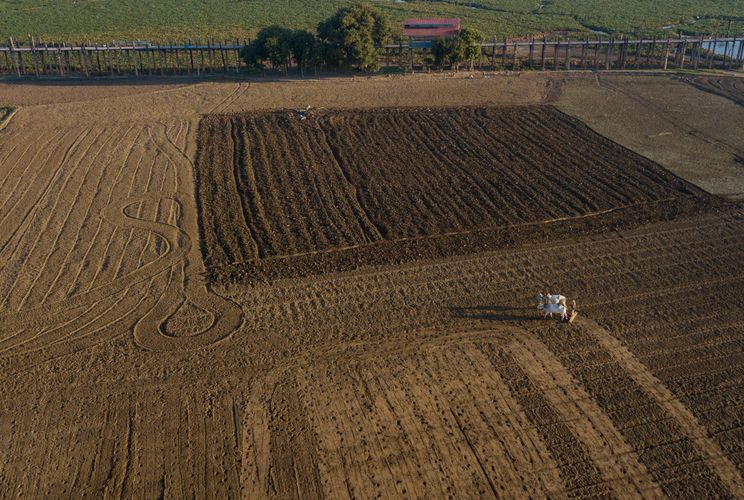
Agriculture remains central to livelihoods and provides a domestic raw-material base for value-added investment. The most credible opportunities are often downstream or productivity-led: quality seed, irrigation, mechanisation, storage, milling, edible-oil processing, feed, cold chain, packaging, testing and traceability.
The World Bank described agricultural conditions as relatively resilient but constrained by reduced cultivated area, input shortages, limited finance and conflict disruption. Agriculture represented 41.9% of employment in 2025, underlining the scale of the value chain but not necessarily the purchasing power of individual farmers.
Land-intensive primary production is generally harder to underwrite than a service, processing or offtake model. Land history, customary use, community consent and water require independent verification. Processing is stronger with contracted supply and a committed buyer; storage and cold chain should be modelled on throughput and seasonal utilisation.
Renewable energy and industrial resilience
Myanmar’s electricity shortage creates a direct investment need. In early 2026, daily generation remained around 3,000 MW, approximately half of demand. Although the share of surveyed firms reporting outages fell to 44%, 58% had invested in diesel generators and 30% in off-grid power systems.
This supports a practical renewable-energy thesis: sell reliability and savings to an identifiable customer. Captive solar, battery storage, solar-diesel hybrids, efficient motors, energy-management systems and operations and maintenance can improve factory, warehouse, farm-processing and commercial performance. Projects with contracted industrial offtakers are generally easier to assess than merchant generation dependent on uncertain tariffs or system-wide reform.
Bankability depends on the customer’s credit, the currency of equipment and revenue, site rights, import permissions, replacement parts, insurance and technical servicing. Savings-based contracts should use a verifiable energy baseline and allocate performance, curtailment and equipment risks clearly.
Logistics, cold chain and trade services
Myanmar’s logistics constraints create both demand and execution risk. The World Bank’s 2025 logistics assessment reported only 15 direct maritime container partners, compared with a regional average of 31, and an average container import dwell time of 15.8 days, compared with 5.8 days regionally. The resulting delay was estimated to create a trade-cost penalty equivalent to 6–21% ad valorem relative to regional peers.
Opportunities include warehousing, cold storage, fleet maintenance, freight aggregation, customs support and supply-chain software. Returns depend on throughput, occupancy, route density, empty returns and customer concentration. Asset-light management or software may be a better first step than owning trucks or warehouses; physical assets require site-level review of security, ports, customs, fuel and insurance.
Consumer goods and technology
Consumer-goods investment should focus on affordability, essentials and local value addition; as the Myanmar local market is price-sensitive, comparing to other south east asian regions. High inflation and weakened household purchasing power make broad premium-demand assumptions difficult to defend. Food, hygiene and household products may still perform where pack sizes, pricing, local packaging and distribution match current purchasing behaviour. A distributor or marketplace test should establish sell-through, channel margins, credit risk and repeat purchase before local production is considered.
Technology offers a lower-capital route through enterprise software, cybersecurity, agritech, inventory, fleet and remote-monitoring systems. The strongest products reduce downtime, improve collections or control inventory. Connectivity, data requirements, licensing, support and payment collection remain central; weaker purchasing power and internet interruptions can undermine consumer-platform economics.
Mining, oil and gas, and tourism-hospitality in Myanmar
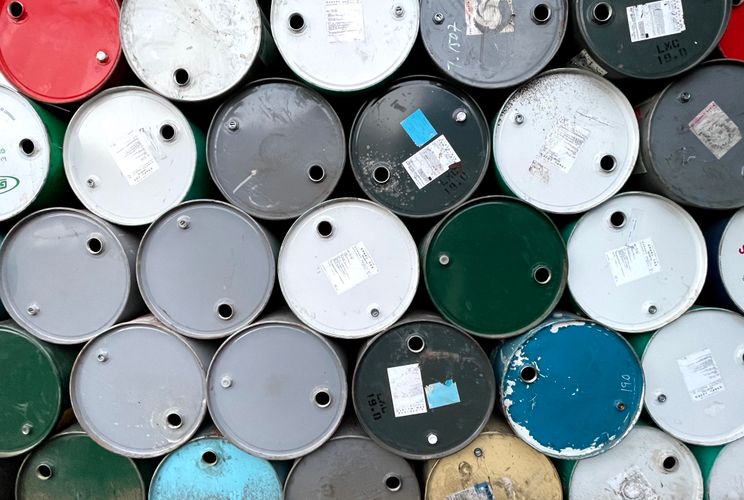
Myanmar has mineral and hydrocarbon resources, but direct investment in sectors/mining and sectors/oil-gas carries a particularly high sanctions, human-rights, environmental and reputational threshold. Mining due diligence must trace beneficial ownership, licences, security actors, land and community impacts, transport routes and the possibility of conflict-linked minerals. For many international groups, specialist safety, maintenance or monitoring services will be more defensible than equity exposure to a mine.
Oil and gas requires additional caution. U.S. persons are prohibited from providing financial services to or for the benefit of Myanma Oil and Gas Enterprise, and OFAC defines financial services broadly to include transfers, accounts, insurance, investments, foreign exchange and letters of credit. Any potential transaction requires jurisdiction-specific sanctions advice and a complete review of ownership, banks and payment flows.
Tourism-hospitality is a longer-horizon and location-specific proposition. International passenger movements improved in 2025, but domestic travel fell by around 10–12% and internal connectivity remained fragmented. Near-term opportunities are more likely to involve management, maintenance, training or selective asset-light partnerships than speculative hotel development.
Underwriting a Myanmar investment
A Myanmar feasibility study should function as an investment memorandum, not a general market report. It should reach a decision on a defined project and quantify what must be true for capital to earn an acceptable return.
- Revenue case: Identify the customer, purchase frequency, price, payment currency, credit period and evidence of willingness to buy. Use contracts, pilot orders or verifiable comparables. A national demand gap is not a revenue forecast.
- Operating case: Build the full delivered cost, including power, fuel, imported inputs, logistics, security, insurance, downtime, labour turnover, tax and compliance. Stress-test utilisation and working capital, not only EBITDA margin.
- Currency and repatriation case: Model official and market exchange-rate scenarios, mandatory conversion, import funding and the timing of outbound payments. Confirm that banks will process the anticipated transactions before relying on dividends, fees or debt service.
- Counterparty and responsible-investment case: Screen owners, affiliates, banks, landlords, ports, agents and security providers. The EU has extended restrictive measures until 30 April 2027, and the FATF continues to call for enhanced due diligence involving Myanmar. Labour recruitment, forced-labour exposure, land and community impacts require active controls following the ILO’s 2025 Article 33 resolution.
- Capital and exit case: Separate market validation, operating setup and fixed investment. Define the milestones that release each tranche and the conditions that stop further funding. Governance documents should preserve audit access, decision rights, cash controls, dispute resolution and an executable exit route.
A staged capital-deployment strategy for Myanmar
| PHASE 1 · SCREEN Define activity, customer and revenue model. Test ownership, licensing, sanctions, customers, partners, currency and logistics. Decide: continue, redesign or stop. | PHASE 2 · VALIDATE Use a distributor, pilot, service contract, leased operation or limited joint venture. Test demand, collections, delivery and compliance before irreversible capital. | PHASE 3 · COMMIT Release larger capital only after permissions, site rights, payment routes, counterparties, contracted demand, power and logistics are proven. |
What investors should verify before committing capital in Myanmar
- The exact permitted activity, foreign-equity position, regulator and current licence requirements.
- Whether an MIC permit, endorsement or SEZ approval creates a genuine operating or land advantage.
- The investment thesis: customer problem, pricing power, route to revenue and reason the project should win.
- The complete foreign-currency cycle, including equity, imports, collections, conversion, debt service and dividends.
- Sanctions and beneficial-ownership exposure across every material counterparty and bank.
- Site-level power, fuel, water, labour, internet, security, insurance and logistics.
- Land title, historic use, community impacts, labour recruitment and forced-labour safeguards.
- Base, downside and severe-downside models for inflation, exchange rates, delays, downtime and disruption.
- Governance, cash controls, audit rights, reserved matters, dispute resolution and exit.
- Capital-release milestones and stop criteria agreed before funds are committed.
From investment interest to execution to this country
Myanmar offers genuine investment needs, particularly in food systems, manufacturing, distributed energy, logistics, essential consumer goods and selected technology services. The opportunity is strongest where capital improves productivity or local supply rather than depending on a rapid macroeconomic recovery.
The appropriate strategy is disciplined and project-specific. Start with customer and payment evidence, then map the exact legal activity, ownership position, sanctions perimeter, site, supply chain and operating costs. Select the entry route only after those facts are known. For many investors, a contract, pilot or asset-light platform will create more value initially than a large greenfield commitment.
At MoveToAsia, we help international companies turn broad Myanmar interest into an investment decision. Support can include market research, customer and competitor mapping, regulatory screening, partner and supplier identification, sanctions-aware due diligence, site comparison, entry-route design and financial feasibility modelling. The objective is to determine whether a project should proceed, be restructured, enter through a pilot or be stopped before capital is placed at risk.