


Myanmar is not a conventional high-growth investment market in 2026. Real GDP contracted by 2.0% in FY2025/26, and the World Bank projects only a 2.0% expansion in FY2026/27. Even with that recovery, output would remain about 11% below its pre-pandemic level, while average inflation is projected at 20%. Foreign direct investment also weakened: inflows fell to USD 1.095 billion in 2024, 27.9% below the previous year.
How to read “growth” in Myanmar
The relevant question is therefore not which sectors are booming nationally. It is where essential demand, production bottlenecks, adaptation spending or export activity can still support a defensible business. This review covers manufacturing, agriculture, renewable-energy, sectors/logistics, consumer-goods, tourism-hospitality, technology, and the higher-risk sectors/mining and sectors/oil-gas.
Top sectors to consider for foreign investment in Myanmar
Across all of them, feasibility depends on more than market size. Electricity shortages, foreign-exchange and import controls, logistics delays, weak purchasing power, fragmented territorial control, labour risks and sanctions exposure can change the economics of a project quickly. A sector may show activity without being accessible, compliant or bankable for an international company.
1. Agriculture and agrifood processing in Myanmar
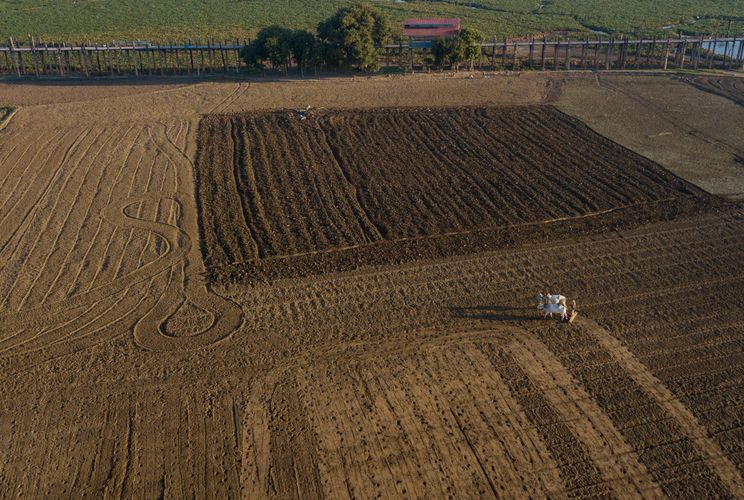
Agriculture remains economically essential and supports demand across food, storage, transport and rural services. The near-term picture is mixed. Cultivated area fell by 9.5% in 2025, and agribusinesses reported lower sales and profits in early 2026. Yet food demand is recurring, and many value chains still lose value through inefficient handling, limited cold storage, inconsistent quality and weak access to finance.
Agrifood processing offers a clearer investment angle than exposure to primary production alone. Food processing represents about 27% of manufacturing gross value added and 22% of manufacturing employment, but surveyed firms operated at only 57% of capacity on average. Most sell mainly into the national market, while direct and indirect exports remain very limited. Processed foods, animal products, milling, packaging and branding therefore offer room for operational improvement rather than simple capacity expansion.
Potential entry points include post-harvest equipment, storage, cold chain, food-safety systems, testing, packaging, efficient milling, local-input development and technical services. The critical test is supply continuity: investors need to verify where crops are sourced, how payments are settled, whether routes remain usable and how farmer or supplier relationships will be monitored. A small processing or service pilot with contracted supply is generally more credible than a large greenfield project built on national production estimates.
2. Manufacturing: selective recovery, difficult operating conditions
Manufacturing shows signs of stabilization, but not a broad industrial rebound. Average capacity utilization increased from 63% in October 2025 to 74% in March 2026, and the share of firms operating at full capacity rose materially. At the same time, input costs reached a 43-month high, purchasing activity continued to decline and almost half of surveyed firms reported difficulty obtaining inputs.
The most realistic opportunities sit in activities linked to essential consumption or replacement demand: food processing, packaging, repair and maintenance, selected garments, basic household products, industrial consumables and some construction-related materials. Import substitution can be commercially relevant where local production reduces foreign-exchange exposure, but only if raw materials, power and quality control can be secured.
For international manufacturers, the preferred model is usually customer-backed and staged. Contract manufacturing, equipment servicing, leased production space or a technical partnership may reduce fixed-asset exposure. Financial models should include backup generation, fuel volatility, customs delays, currency conversion constraints, inventory buffers and the possibility that skilled workers are difficult to retain.
3. Renewable-energy as operating infrastructure in Myanmar
Myanmar’s renewable-energy opportunity is driven less by a smooth national energy transition than by the urgent need for reliable electricity. Grid supply has been around 3,000 MW per day—roughly half of estimated daily demand. In the World Bank’s business survey, 58% of firms used backup generators and 30% had invested in renewable systems.
This creates demand for rooftop solar, battery storage, hybrid systems, energy-efficient cooling, power-management software, maintenance and productive-use systems for farms, processors, clinics, warehouses and telecom sites. Distributed solutions can reduce diesel use and production interruptions, making energy an operating-cost proposition rather than only an environmental one.
The opportunity is still technically and legally complex. Equipment imports, foreign exchange, site security, customer creditworthiness, licensing and after-sales service must be tested. Utility-scale projects require particularly careful assessment of counterparties, land, grid access and sanctions exposure. For many entrants, supplying or financing modular systems to identified commercial customers is more executable than taking full project-development risk.
4. Logistics and trade services in Myanmar
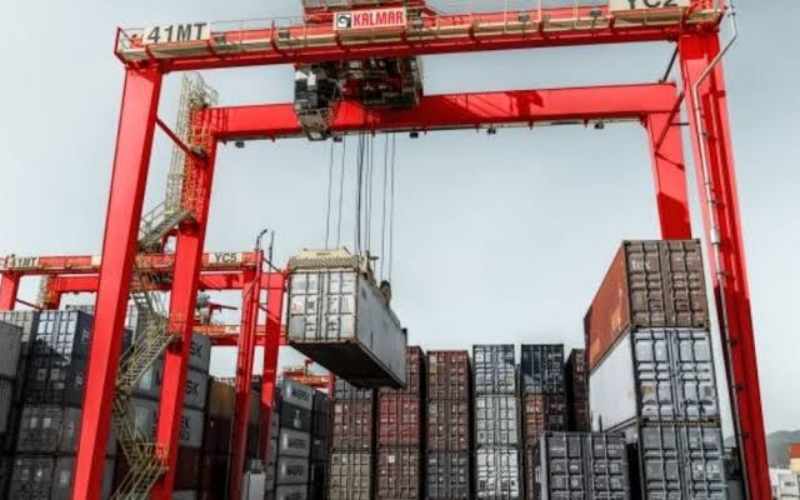
Myanmar’s location between China, India and mainland Southeast Asia creates long-term trade relevance, but current logistics performance is a constraint rather than an automatic advantage. Container volumes increased by 26% over the year in the latest reporting period, yet volumes fell in the second half, freight costs rose by around 40% and some routes doubled in price. Import containers remained at port for an average of 15.8 days, compared with 5.8 days across East Asia and the Pacific.
Demand exists for specialist warehousing, cold chain, customs support, inventory visibility, route planning, maintenance, cross-border documentation and last-mile distribution. Agrifood, pharmaceuticals, consumer products and manufacturing all need more reliable handling. Technology-enabled services can be attractive because they address inefficiency without requiring immediate ownership of large fleets or facilities.
Asset utilization is the decisive issue. Road access and control can change by corridor, while fuel, checkpoints, port processes and payment arrangements can disrupt schedules. Investors should validate specific routes, cargo owners and contingency plans. An anchor-customer model is considerably safer than building generic warehouse capacity on the assumption that national trade growth will fill it.
5. Consumer-goods: essential demand, intense price pressure
Myanmar’s consumer-goods market is sizeable, but household purchasing power is weak. Poverty was estimated at 29.9% in 2025, and inflation reached 24.6% year on year in April 2026. Retail and wholesale businesses reported average sales and profits down by about 12%, despite higher operating capacity.
The better opportunities are therefore concentrated in essential, affordable and frequently purchased products: packaged foods, hygiene items, basic household goods, selected healthcare products and low-cost replacement products. Local sourcing, smaller pack sizes and dependable distribution matter more than premium positioning for most of the market. Consumer products can also create upstream demand for packaging, processing and warehousing.
A foreign brand should not interpret population size as immediate addressable demand. Product registration, import access, distributor economics, counterfeit risk, currency settlement and regional availability need to be verified. A limited-channel launch through a vetted distributor or local production partner can generate evidence on sell-through, repeat purchase and working capital before a wider rollout.
6. Technology: enabling tools rather than a pure digital boom
Technology remains commercially relevant because businesses need to manage scarcity, payments and fragmented operations. Mobile wallets are widely used, while manufacturers, retailers, farms and logistics providers need inventory systems, accounting tools, payment integration, cybersecurity and remote monitoring. The strongest use cases solve a specific operating problem and can function with intermittent connectivity.
The digital environment is restrictive and uneven. Online-store activity has weakened, internet slowdowns and shutdowns disrupt operations, and businesses face VPN restrictions and higher cybersecurity costs. These conditions favour lightweight, offline-first and locally supported products over platforms that assume constant high-speed access.
Potential entry routes include business software for SMEs, distributor and warehouse systems, agritech, fleet visibility, cyber-risk services, backup connectivity and payment infrastructure supplied through local partners. Investors must assess data handling, content and cybersecurity rules, platform access, payment settlement and the safety of staff and users. Technology is best treated as an enabler of essential sectors, not as evidence of an unrestricted digital economy.
7. Tourism-hospitality: a two-speed market
Tourism-hospitality should be approached as a selective, location-specific market. International air passenger traffic increased by 3.5% to about 2.1 million in 2025, but average monthly traffic fell to roughly 120,000 in early 2026. Domestic air travel declined by an estimated 10%–12%, although Heho and Tachilek recorded localized growth. These are transport indicators, not proof of a broad tourism recovery.
Viable demand may exist in limited business travel, domestic leisure pockets, diaspora visits, long-stay accommodation and services around routes that remain operational. Existing hotels may need energy systems, maintenance, booking technology, food supply and cost restructuring more than the market needs new room capacity.
A hospitality project requires current route-level and destination-level assessment. Security conditions, travel advisories, insurance availability, staffing, power, seasonality and the ability to repatriate earnings are central. Large destination developments or projects dependent on high-volume Western leisure tourism are difficult to justify without a clear change in conditions.
8. Mining and oil-gas: activity does not mean market validation
The resource economy requires a separate risk category. Unofficial or mirror-trade data indicate strong growth in exports of rare earths, antimony, tungsten and lead. However, much of this activity is unregulated and occurs in areas of conflict or fragmented governance. The opportunity signalled by mineral demand therefore comes with exceptional ownership, traceability, environmental, community and human-rights risks.
The outlook for sectors/oil-gas is also restrained. Natural-gas production and exports have weakened, while new exploration is unlikely to generate significant output soon. U.S. rules prohibit U.S. persons from providing financial services to or for the benefit of Myanma Oil and Gas Enterprise, and EU restrictive measures have been extended until 30 April 2027.
For sectors/mining and oil-gas, commercial due diligence is inseparable from sanctions, beneficial-ownership, end-use, labour and human-rights due diligence. Banks, insurers, investors and customers may apply standards that are more restrictive than local law. For many U.S.-, UK- or EU-linked groups, a transaction may be prohibited, unfinanceable or incompatible with internal policy even when resource demand is evident. Specialist legal advice is essential before any engagement.
Where the more credible opportunities overlap in Myanmar
Myanmar’s stronger investment cases often sit between sectors. Agrifood processors need cold chain, solar power, packaging and quality systems. Manufacturers need reliable electricity, input planning and specialist logistics. Consumer-goods companies need local production, distributor controls and inventory visibility. Hotels and clinics need energy resilience and maintenance. These combinations turn a general market need into a defined customer problem.
This also changes the preferred entry model. A foreign company does not need to own a farm, mine, utility or national logistics network to participate. It may be better positioned as an equipment supplier, technical service provider, contract processor, software vendor or minority partner with clear controls. The objective is to earn revenue from resilience and productivity while limiting exposure to fixed assets, regulatory uncertainty and difficult counterparties.
From sector interest to a verified opportunity in Myanmar
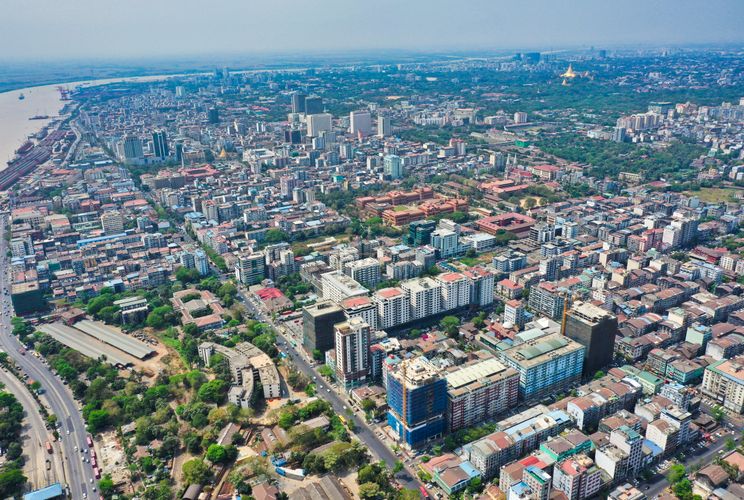
A Myanmar opportunity should pass five tests before capital is committed:
- Evidence of essential or repeat demand. Identify named customers, purchasing criteria, volumes and payment capacity. Broad market-size estimates are not sufficient.
- Operational continuity. Model power, fuel, foreign exchange, imports, inventory, routes, communications and staff availability under a downside scenario.
- Counterparty integrity. Verify beneficial owners, banks, intermediaries, end users and links to sanctioned or military-affiliated entities. Labour and human-rights due diligence should extend through suppliers and subcontractors.
- Staged commitment. Prefer a service contract, distributor pilot, leased site, contract manufacturer or limited partnership before a large irreversible investment.
- Exit and contingency planning. Define what happens if a route closes, a licence changes, a payment channel becomes unavailable or security conditions deteriorate.
Myanmar offers substantial unmet needs across agriculture, manufacturing, renewable energy, logistics, consumer goods and enabling technology. That does not make every need an investment opportunity. The strongest projects connect a necessary product or service with a verified customer, a workable payment route, resilient operations and a compliance framework proportionate to the market’s risks.
MoveToAsia supports international companies with sector research, customer and partner validation, supplier mapping, regulatory and sanctions screening, site and logistics assessment, and feasibility analysis across Southeast Asia. In Myanmar, the objective is not to turn uncertainty into optimism. It is to identify where a project remains commercially useful, operationally realistic and responsible under current conditions.