

Outsourcing vs. In-house Manufacturing in Vietnam: Which Model Is Right for Your Business?
- October 15, 2026
- Posted by: editor
- Category: Uncategorized
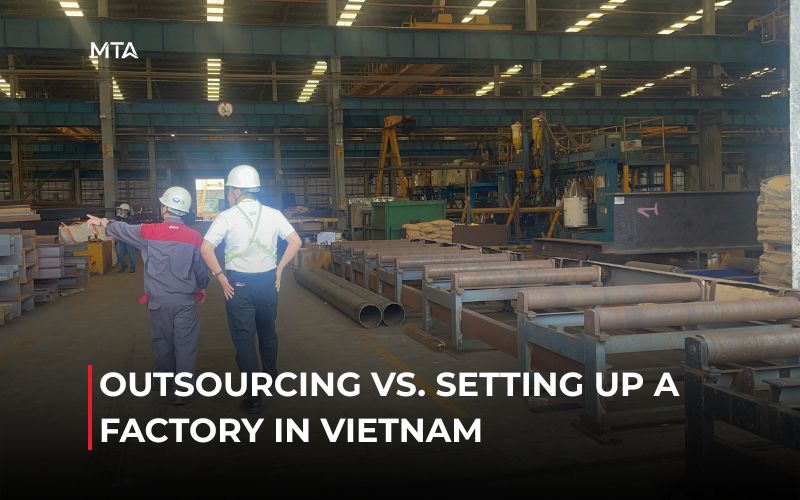
For foreign companies considering Vietnam as a manufacturing base, working with local manufacturers is often a practical way to start production without committing to a large upfront investment. It provides access to existing facilities, production teams and supplier networks while allowing companies to assess whether Vietnam can meet their manufacturing requirements.
However, as production needs evolve, outsourcing may not always remain the most suitable arrangement. Increasing order volumes, more specialized product requirements, tighter quality standards or the need for greater control over production processes may lead companies to consider establishing their own manufacturing operations.
The decision is not simply whether owning a factory is better than outsourcing. It is whether the additional control and production capacity justify the investment, fixed operating costs and responsibility of managing manufacturing operations in Vietnam.
Understanding the differences between these models can help foreign companies make more informed decisions before committing capital or changing their existing supply chain structure.
1. Understanding the Two Manufacturing Models in Vietnam
Foreign companies can manufacture in Vietnam through several arrangements. Two common approaches are outsourcing production to local manufacturers and establishing their own manufacturing facilities.
Although both provide access to Vietnam’s manufacturing base, they involve different levels of investment, operational control and management responsibility.
Manufacturing Outsourcing: Working with Local Manufacturers
Under an outsourcing arrangement, a foreign company contracts an existing Vietnamese manufacturer to produce goods according to agreed specifications, quality standards and delivery requirements.
Depending on the arrangement, the manufacturer may handle the entire production process, from sourcing raw materials to assembly and packaging. In other cases, the buyer supplies materials, components, technical drawings or tooling while the manufacturer provides production labour and facilities.
Common arrangements include contract manufacturing and OEM production. The exact division of responsibilities depends on the product, manufacturing process and commercial agreement.
In some cases, responsibilities may also be shared across multiple suppliers, with different manufacturers handling specific production stages or components.
The main advantage is that the buyer uses production capacity already available in Vietnam rather than developing its own facility. This can reduce the resources required to start manufacturing, although the company remains responsible for selecting suitable suppliers, defining requirements and monitoring performance.
Establishing In-house Manufacturing Operations
Establishing in-house manufacturing operations means investing directly in production activities in Vietnam. A foreign investor may develop a new facility or lease an existing industrial factory and equip it for its manufacturing requirements.
Unlike outsourcing, the company is directly responsible for the resources needed to operate the facility. These may include machinery, production workers, technical personnel, quality management systems, maintenance and local administration.
The company must also build a local management structure to coordinate production, manage employees, oversee suppliers and ensure compliance with applicable regulations.
This model provides greater direct control over manufacturing operations, but it also means taking on costs and risks that would otherwise be partly managed by an external manufacturer.
The differences become clearer when comparing how each model affects production costs, operational control and supply chain flexibility.
2. Outsourcing vs. In-house Manufacturing: Key Business Differences
The financial and operational implications of each model extend beyond the initial cost of production. Companies need to consider how their manufacturing structure affects long-term costs, production reliability and their ability to respond to changing business requirements.
Initial Investment and Total Manufacturing Costs
Outsourcing generally requires less initial capital because the manufacturer already owns or operates the production facilities and equipment. The buyer typically pays through product quotations, tooling charges, material costs and other agreed production expenses.
Establishing an in-house facility involves a different cost structure. Initial expenditure may include factory leasing or site development, machinery, installation, tooling, utilities infrastructure and production systems. The company must also budget for recruitment, training and the costs of preparing operations before commercial production begins.
The comparison should not stop at the supplier’s quoted price versus the estimated cost of producing internally.
For outsourcing, the total cost may include supplier margins, quality inspections, logistics, inventory requirements, tooling and the management time needed to coordinate production.
For in-house manufacturing, the calculation must account for fixed operating expenses, equipment depreciation, maintenance, utilities, labour and working capital.
Capacity utilization is particularly important. An in-house facility can achieve a competitive unit cost when production runs consistently at an appropriate volume. However, if demand falls and equipment or labour remains underutilized, fixed costs continue to accumulate.
Companies should also account for transition costs when bringing production in-house, including equipment procurement, technology transfer, production-line setup, employee recruitment and the time required to stabilize manufacturing processes.
For this reason, businesses should compare the total cost of ownership of both models using realistic production forecasts rather than assuming that internal manufacturing will automatically become cheaper at higher volumes.
Production Control and Quality Management
When outsourcing, the buyer relies on the manufacturer’s production systems and workforce. The level of control depends on the contractual arrangement, technical requirements and the company’s ability to monitor the supplier.
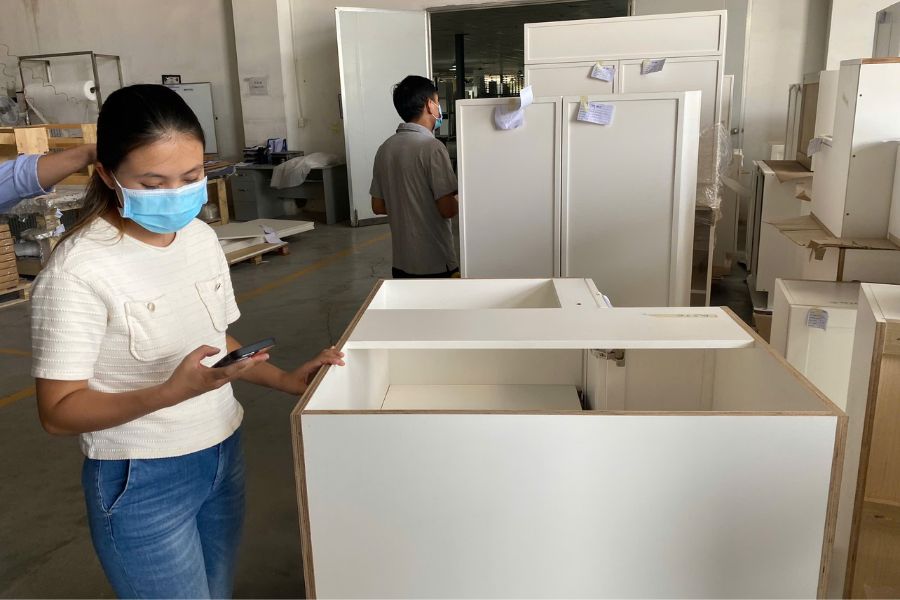
Quality problems may arise when specifications are unclear, production processes are inconsistent or inspection arrangements are insufficient. Addressing these issues requires more than checking finished products. Buyers may need to establish quality control procedures, approve samples, inspect production processes and define corrective-action responsibilities.
An in-house manufacturing facility gives the company more direct authority over production scheduling, process standardization, workforce training and quality management.
This can be particularly relevant for products involving proprietary processes, complex specifications or strict customer requirements.
However, in-house manufacturing does not guarantee better quality. A factory still needs competent production managers, technical expertise, documented procedures and effective quality systems. Without these capabilities, internal production can face many of the same problems as outsourced manufacturing.
Supply Chain Flexibility and Production Capacity
Outsourcing provides access to existing manufacturing capacity without requiring the buyer to operate every production stage. Companies may also work with multiple suppliers for different products or components, depending on their sourcing strategy.
This arrangement can be useful when product demand changes or when a company needs manufacturing capabilities that would be expensive to develop internally.
The trade-off is supplier dependency. A manufacturer’s capacity constraints, material shortages, scheduling priorities or operational disruptions can affect the buyer’s production plans.
With an in-house facility, the company has more direct control over production capacity and scheduling. It can coordinate manufacturing activities around its own demand forecasts and business priorities.
Nevertheless, owning a factory does not eliminate external dependencies. Raw materials, components, packaging, tooling and specialized processes may still come from third-party suppliers.
For foreign manufacturers, the ability to identify and coordinate reliable local suppliers remains important even after establishing their own production facilities. An in-house operation may still depend on external partners for materials, components, maintenance and specialized manufacturing processes.
Neither model is universally preferable. The appropriate choice depends on the company’s production requirements, available resources and how much operational responsibility it is prepared to take on.
3. When Is Outsourcing the Right Choice?
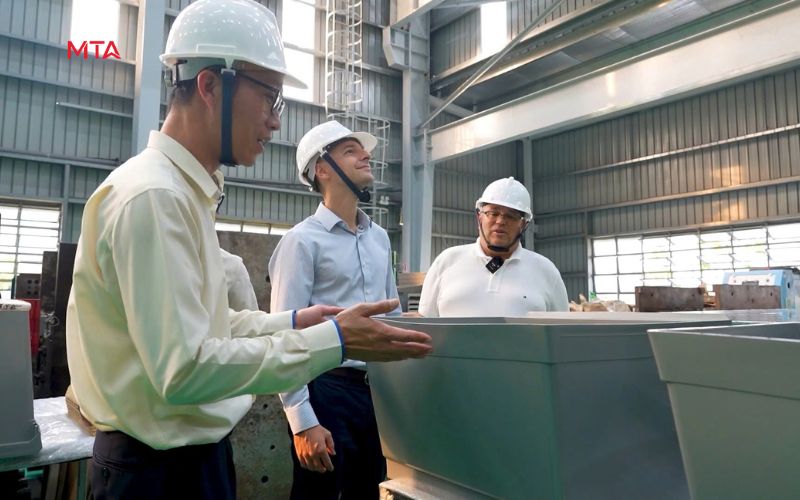
For companies entering Vietnam for the first time, outsourcing can provide a way to establish production without immediately building a local manufacturing operation.
It is particularly relevant when demand, supplier capabilities or long-term production requirements have not yet been fully established.
Testing Vietnam as a Manufacturing Location
A company considering Vietnam may not initially know whether local manufacturers can meet its technical specifications, quality expectations, production timelines or cost targets.
Working with existing manufacturers allows the company to validate these assumptions through supplier assessments, sample development and actual production trials before making a larger investment.
This is useful when a company is diversifying its sourcing base or considering Vietnam as an alternative to its existing manufacturing locations.
However, testing the market should involve more than obtaining quotations from several factories. Companies need to evaluate actual manufacturing capabilities, production processes, quality management systems and available capacity.
A factory that offers an attractive quotation may not necessarily have the technical expertise or production resources to support long-term requirements.
Low or Unpredictable Production Volumes
Outsourcing is often more practical when order volumes are too low or inconsistent to support the fixed costs of an in-house facility.
For example, a company manufacturing several product variations may experience different demand levels across product lines. Maintaining dedicated equipment and production teams for every variation could result in underutilized capacity.
An external manufacturer may be able to accommodate these requirements through its existing production resources, subject to available capacity and minimum order quantities (MOQs).
This does not mean outsourcing is always cost-effective for small orders. Suppliers may impose high MOQs, charge additional setup fees or prioritize larger customers.
Buyers should compare these commercial conditions with the cost of maintaining internal production capacity.
Limited Internal Manufacturing Capabilities
Operating a factory requires more than securing equipment and hiring workers. Companies need people who understand production planning, quality management, procurement, maintenance and local operational requirements.
Businesses without an established manufacturing management team may find it difficult to build these capabilities while simultaneously managing their core operations.
Outsourcing allows them to work with manufacturers that already have production infrastructure and technical personnel. The buyer can focus its internal resources on product development, customer relationships, procurement strategy and supplier performance.
Nevertheless, outsourcing does not remove the need for local oversight. Companies still need sufficient technical and sourcing expertise to assess manufacturers, communicate requirements and resolve production issues.
For businesses with uncertain demand or limited experience in Vietnam, outsourcing can be a suitable long-term model rather than simply a temporary entry strategy.
Evaluating Local Manufacturing Partners Before Making a Larger Investment
Before committing to an in-house manufacturing facility, foreign companies can benefit from gaining a better understanding of the existing manufacturing landscape in Vietnam.
This involves more than identifying factories that can produce a particular product. Companies need to assess production capabilities, technical expertise, quality management systems, available capacity and the manufacturer’s ability to support long-term requirements.
Working with a local partner can help businesses identify suitable manufacturers, assess factory capabilities, coordinate production trials and evaluate potential suppliers before making larger investment decisions.
This process provides a more practical basis for deciding whether to continue outsourcing, expand existing supplier relationships or develop in-house manufacturing operations.
4. When Should You Consider Establishing Your Own Factory?
The decision to establish in-house manufacturing operations becomes more relevant when the limitations of external production begin to affect the company’s ability to meet its business objectives.
Several conditions may indicate that direct manufacturing investment deserves closer evaluation.
Stable Demand and Sufficient Production Volume
Stable and sufficiently predictable demand is one of the strongest indicators that a company may be ready to evaluate in-house manufacturing. However, production volume alone does not determine whether the investment is commercially viable.
A company with recurring orders and relatively predictable production requirements has a stronger basis for estimating equipment needs, staffing levels and operating expenses. It can also develop a production plan around expected capacity utilization.
By contrast, investing in a facility based on temporary demand or optimistic sales forecasts can create financial pressure. Machinery, factory space and permanent employees generate costs even when production volumes decline.
Before investing, companies should calculate the production volume required to cover fixed costs and compare that figure with realistic demand forecasts. They should also test how the financial model changes if orders are delayed, reduced or lost.
The relevant question is not simply whether the company has enough orders today, but whether demand is sufficiently reliable to support the investment over its expected operating period.
Greater Control Over Critical Production Processes
Some manufacturing requirements are difficult to manage through external suppliers, particularly when production involves proprietary technology, sensitive product specifications or processes that require close coordination.
For example, a company may need to standardize production across multiple product batches, maintain strict process documentation or protect specialized technical knowledge.
If supplier arrangements repeatedly limit its ability to achieve these requirements, developing internal production capabilities may become commercially relevant.
However, companies should first identify the actual source of the problem.
Inconsistent quality may result from weak specifications or inadequate inspections rather than a lack of factory ownership. Delivery delays may be caused by poor production planning or supplier capacity constraints that could be addressed through a different manufacturing partner.
Direct investment makes more sense when the required level of process control cannot be achieved reliably through commercially reasonable outsourcing arrangements.
Long-term Manufacturing Commitment in Vietnam
In-house manufacturing may also support a company’s broader regional manufacturing strategy.
For businesses that expect to maintain substantial production activities in Vietnam over an extended period, an in-house facility can provide dedicated capacity and closer coordination with local suppliers, employees and customers.
This may be relevant when Vietnam becomes a core manufacturing location rather than simply one of several sourcing markets.
Before making this commitment, companies should also assess whether their local manufacturing operations can be supported by a reliable network of suppliers, technical personnel and logistics partners over the long term.
A local facility can provide greater flexibility in developing production processes and adapting operations to changing customer requirements.
Still, a long-term presence does not necessarily require bringing every production activity in-house. Some companies may find that direct manufacturing of core products, combined with outsourced components or specialized processes, provides a more suitable operating structure.
Once these conditions are present, the next step is to establish whether the investment can be implemented at an acceptable financial and operational cost.
5. What Should You Evaluate Before Investing in a Factory in Vietnam?
A clear business reason for in-house manufacturing does not automatically make the project viable. Before committing capital, foreign investors need to assess the financial requirements, location and regulatory conditions associated with the proposed manufacturing operation.
Investment Costs and Financial Feasibility
The initial investment should cover more than machinery and factory space. Companies need to estimate the full cost of preparing the facility and bringing it to stable commercial production.
For a leased factory, this may include deposits, rental payments, renovations, electrical systems, equipment installation and production-line preparation. For a new facility, the investment may also involve land-related arrangements, construction and infrastructure development.
Operating costs need equal attention. These include salaries, recruitment, training, utilities, maintenance, administrative expenses and quality management.
Companies should also assess the availability and cost of local technical personnel, production supervisors and middle-management staff. These capabilities can significantly affect the time and resources required to bring a new facility to stable operations.
Another important consideration is the ramp-up period. A factory may not reach its planned production capacity immediately. During this period, the company may need to cover labour and facility expenses while output remains below the level required for commercial efficiency.
A practical financial assessment should compare the two manufacturing models using:
- Initial capital expenditure (CAPEX) and recurring operating expenditure (OPEX).
- Expected production volume and capacity utilization.
- Break-even production volume and estimated payback period.
- Working capital requirements and inventory commitments.
- Sensitivity to changes in demand, labour costs and material prices.
- Transition costs associated with transferring production from external manufacturers.
A factory investment should be evaluated against a realistic financial scenario, not simply an estimate based on the assumption that internal production will eventually reduce unit costs.
Factory Location and Supporting Industries
Location affects both the initial investment and the cost of running a factory.
Industrial parks may offer ready-built infrastructure and access to established manufacturing communities. However, rental prices alone do not provide a complete picture of location suitability.
Companies should examine the availability of relevant suppliers, proximity to ports and logistics routes, access to customers and the availability of workers with the required technical skills.
The local supplier ecosystem is particularly important for manufacturers that depend on locally sourced components, specialized processes or frequent coordination with other production facilities.
Companies should evaluate not only the availability of suppliers but also their technical capabilities, production capacity and ability to meet required quality standards.
For example, a company manufacturing mechanical equipment may need reliable access to metal fabrication, machining, surface treatment and industrial component suppliers. A location with suitable supporting industries may reduce coordination difficulties and transportation requirements.
Infrastructure requirements also vary by production type. Businesses should assess electricity capacity, water supply, wastewater treatment, internal transportation and other utilities before selecting a site.
The most suitable location is therefore not necessarily the one with the lowest rental cost. It is the one that supports the company’s production requirements while keeping logistics and operating expenses manageable.
Investment Procedures and Regulatory Requirements
Foreign investors must also determine whether their proposed manufacturing activities comply with Vietnam’s investment and regulatory framework.
As of October 2026, the relevant investment framework includes the Law on Investment No. 143/2025/QH15, which took effect on March 1, 2026. The law establishes the current framework for investment activities, including market access conditions and investment procedures.
The procedures applicable to a manufacturing project depend on its investment structure, business activities, location and specific project characteristics. Foreign investors should determine whether investment policy approval is required, whether an Investment Registration Certificate (IRC) must be obtained and what enterprise registration and other project-specific approvals apply.
Factory development and operation may also involve requirements relating to construction, fire prevention and fighting, environmental protection, wastewater treatment and sector-specific operating conditions.
These requirements should be assessed before finalizing a site or committing to a lease. A factory that appears commercially suitable may not be appropriate if its existing infrastructure, permitted use or compliance status does not match the intended manufacturing activities.
Investors should obtain project-specific advice from qualified legal and investment professionals rather than relying on a generic incorporation checklist. The regulatory assessment should cover both the initial establishment process and the obligations that continue throughout factory operations.
6. How to Decide: Is It Time to Make the Move?
After comparing the two models and assessing investment feasibility, companies need a structured way to determine whether their current manufacturing arrangement still meets their business requirements.
A useful starting point is to review five areas: demand stability, production economics, operational control, internal management capabilities and long-term manufacturing strategy.
The following framework can help organize that assessment.
| Business situation | Manufacturing model to evaluate |
|---|---|
| Testing Vietnam as a new manufacturing location | Outsourcing |
| Uncertain or fluctuating production demand | Outsourcing |
| Limited internal production management capabilities | Outsourcing |
| Stable demand with sufficient production volume | In-house manufacturing |
| Critical processes requiring direct operational control | In-house manufacturing |
| Need for dedicated production capacity while retaining flexibility | Hybrid model |
This framework is a starting point rather than a fixed rule.
For example, stable demand alone does not justify factory investment if the required production volume remains too low to cover operating costs. Similarly, quality concerns do not necessarily require ownership if they can be resolved through better supplier qualification and quality management.
The decision should also account for the availability of qualified local manufacturers, the company’s ability to manage production in Vietnam and the time required to develop internal manufacturing capabilities.
Assessing Your Current Manufacturing Requirements
Companies should begin by examining the performance of their existing production arrangements.
Are suppliers consistently meeting quality and delivery requirements? Is available production capacity sufficient for forecasted demand? Are supplier-related costs becoming difficult to manage? Does the company need more control over manufacturing processes than its current arrangements allow?
These questions help distinguish between problems that can be resolved through better supplier management and those that may require a different manufacturing structure.
The company should then compare the projected cost of internal production with its current outsourcing expenditure, using realistic assumptions about demand, operating costs and capacity utilization.
If the financial case remains weak or operational requirements are still uncertain, continuing to outsource may be more appropriate than committing to a factory prematurely.
Considering a Hybrid Manufacturing Model
Moving from outsourcing to in-house manufacturing does not necessarily mean bringing all production activities in-house.
A hybrid model allows companies to retain external manufacturers while developing internal production capabilities for selected products or processes.
For example, a company may establish its own facility for core manufacturing activities that require close quality control, while continuing to outsource specialized components, secondary processes or production overflow.
This approach can help companies develop internal capabilities without immediately taking responsibility for every part of the supply chain.
It also provides flexibility during the transition. Rather than transferring all production at once, businesses can validate internal processes, train employees and gradually adjust their supplier network.
The appropriate balance depends on which activities are strategically important to control and which can be managed more efficiently through qualified external partners.
Conclusion
Choosing between outsourcing and in-house manufacturing in Vietnam is ultimately a business decision based on production requirements, financial feasibility and the level of operational control a company needs.
Outsourcing can provide access to established manufacturing capabilities without requiring a significant upfront investment. In-house manufacturing may become more relevant when production volumes, process requirements and long-term business objectives justify the additional responsibility and operating costs.
For foreign companies, the decision should start with a clear understanding of what Vietnam’s manufacturing network can offer, which capabilities need to be developed internally and where reliable local partners can support operations.
In many cases, a combination of external manufacturers and internal production capabilities may provide the most practical approach to building a sustainable manufacturing presence in Vietnam.