
The Quiet Shift of Importers Towards Vietnam
- July 2, 2026
- Posted by: editor
- Category: Blog
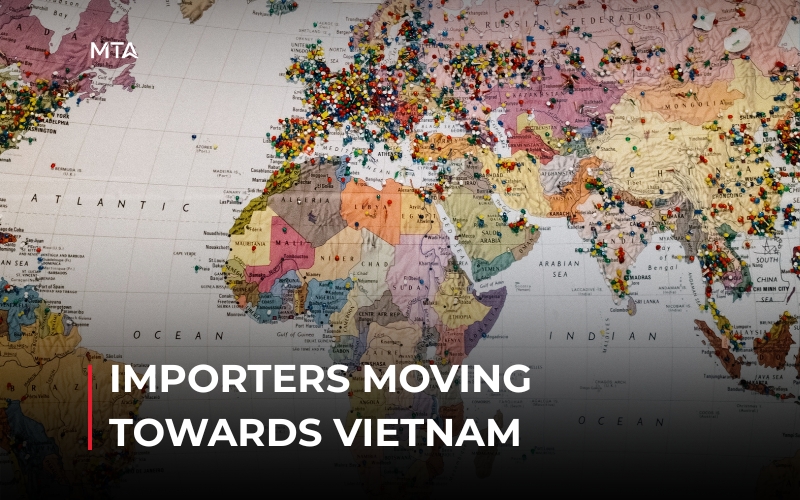
Global importers are not always making dramatic announcements about moving production from one country to another. In many cases, the shift is much quieter. Companies continue working with existing suppliers, but at the same time, they are looking for additional options, testing new supplier bases, and building more flexibility into their supply chains.
This is where Vietnam has become increasingly relevant. The country is not necessarily replacing existing manufacturing hubs overnight. Instead, it is becoming part of a broader diversification strategy for importers who want to reduce over-dependence, explore new production capacity, and prepare for a more uncertain global trade environment.
Vietnam’s role in global manufacturing has been supported by strong export activity, foreign direct investment, and the development of key industries such as electronics, textiles, footwear, furniture, and industrial components. In 2025, processed industrial exports reached US$421.47 billion and accounted for 88.7% of Vietnam’s total merchandise exports, showing how central manufacturing has become to the country’s trade performance.
Importers Are Rethinking Over-Dependence on One Country
For many years, importers focused mainly on efficiency, cost, and speed. A single strong supplier base could be enough if it offered good prices, stable capacity, and reliable delivery. But recent years have changed the way companies look at supply chain risk.
Tariffs, geopolitical tension, logistics disruptions, raw material shortages, compliance pressure, and sudden production delays have made importers more cautious. Depending too heavily on one country, one region, or even one supplier can create serious operational risk. When something goes wrong, companies may have limited alternatives.
This does not mean importers are abandoning their current suppliers. In many cases, they are not. Instead, they are asking a more practical question: is one country alone enough?
Supplier diversification is no longer only about reducing cost. It has become a way to protect continuity, improve negotiation power, and create backup options before problems happen. For companies that rely on international manufacturing, flexibility is becoming just as important as price.
Vietnam is benefiting from this shift because it offers importers another manufacturing option within Asia. It allows companies to test new suppliers, compare production models, and gradually reduce concentration risk without immediately changing their entire supply chain.
Vietnam Is Becoming a Serious Manufacturing Option
Vietnam has moved beyond being seen only as a low-cost production destination. While competitive labor costs remain part of the picture, they are no longer the only reason importers look at Vietnam.
The country has developed stronger production and export capacity across several industries. Electronics, garments, footwear, furniture, packaging, consumer goods, metal parts, and some industrial components have all become important areas of manufacturing activity. These sectors are supported by export experience, foreign-invested factories, local suppliers, and Vietnam’s growing integration into regional supply chains.
Vietnam is also one of the world’s most open and trade-oriented economies, with a trade-to-GDP ratio of nearly 170%, according to the World Bank. This makes the country highly connected to global demand and global supply chain movements.
For importers, this matters because manufacturing is not only about finding a factory with machines. It is also about export documentation, packaging, compliance, lead time management, quality control, and communication. As Vietnam’s manufacturing ecosystem becomes more mature, more companies are starting to see it as a serious option for supplier diversification.
However, Vietnam should not be viewed as a simple copy of China or a direct replacement for every product category. China still has a much deeper and more complete industrial base in many sectors. Vietnam’s advantage is different. It can serve as a second production base, a testing ground for new supplier relationships, or a flexible addition to an existing Asia manufacturing strategy.
The Types of Importers That Can Benefit from Vietnam
Vietnam is especially relevant for importers that want to build more options into their supply chain without making an immediate large-scale move.
This includes companies already working with Chinese suppliers but looking for a China Plus One strategy. Instead of shifting everything at once, they may start by identifying Vietnamese suppliers for selected products, components, or product lines. This gives them a backup option while keeping their existing supply chain active.
Vietnam can also be a good fit for brands that want to test new product categories. For example, a company may not want to commit to large production volumes at the beginning. In that case, Vietnam can be useful for supplier mapping, sample development, pilot orders, and early-stage market testing.
SMEs can also benefit if they approach the market carefully. Some Vietnamese suppliers may be more flexible with product development, communication, or production setup compared with very large factories that mainly focus on high-volume global clients. This can be helpful for companies that need a practical starting point before scaling.
Importers looking for more resilient supply chains may also see Vietnam as part of a broader regional strategy. Instead of depending on one country, they can create a multi-country supplier base across Asia. This gives them more options if costs change, regulations shift, or production delays occur in one location.
That said, Vietnam is not the right answer for every importer. Companies with highly complex technical products, very specialized materials, or extremely large capacity requirements may still need to check carefully whether Vietnam has the right supplier base. The best approach is not to assume that Vietnam can do everything, but to identify where Vietnam is already strong and where supplier development may be needed.
Early Movers Can Access Better Opportunities Before the Market Gets Crowded
One of the most important points about Vietnam is timing.
Good manufacturing opportunities often become visible before the market becomes crowded. At an early stage, capable suppliers may still have more flexibility, more time to support new clients, and more willingness to develop custom solutions. But once many importers start looking at the same group of suppliers, the situation can change quickly.
When demand increases, strong factories become busier. Their minimum order quantities may become less flexible. Their lead times may become longer. Their pricing may become harder to negotiate. Their attention may shift toward larger clients with more stable volumes.
This is why early movers can have an advantage. They have more time to map the market, understand supplier capabilities, test different factories, and build relationships before competition becomes too intense. They can also learn which suppliers are truly suitable and which ones only look good on paper.
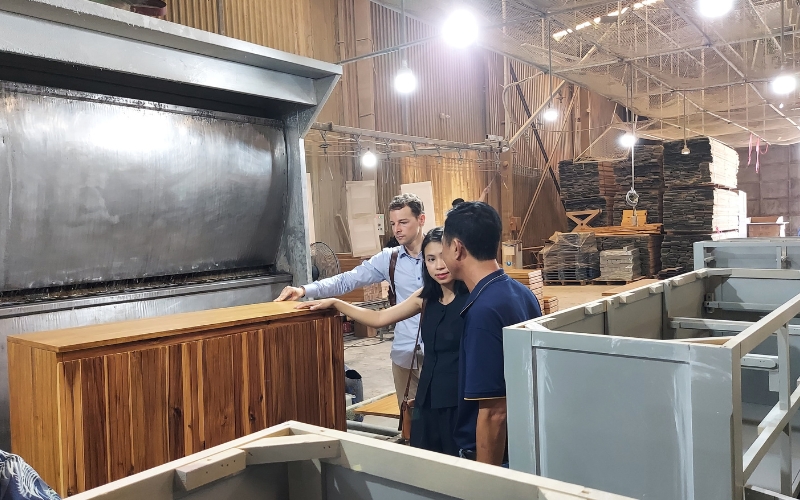
Starting early does not mean placing a large order immediately. In fact, the smartest first move is often much smaller. It can begin with market research, supplier identification, factory visits, sample development, and pilot production. These steps help importers understand whether Vietnam is a realistic option before making bigger commitments.
The quiet shift toward Vietnam is important because the market may not stay quiet forever. As more companies look for alternatives in Asia, the best suppliers are likely to receive more attention. Importers that wait too long may still find options, but they may face less flexibility and stronger competition.
Key Factors to Check Before Working with Vietnam Suppliers
Finding a supplier in Vietnam is not difficult. Finding the right supplier is the real challenge.
The first point to check is whether the supplier actually manufactures the product. In some industries, companies may present themselves as manufacturers but rely heavily on subcontractors, trading partners, or external production units. This does not always mean they are unsuitable, but importers need transparency from the beginning.
Production capacity is another important factor. A supplier may be able to make a good sample, but that does not automatically mean they can deliver consistent quality at scale. Importers should check factory equipment, production lines, workforce, current utilization, lead times, and experience with similar products.
Quality control also needs careful review. A professional supplier should be able to explain how they control incoming materials, in-process production, final inspection, packaging, and traceability. For export products, certifications and compliance documents should be verified rather than assumed.
Raw material sourcing is another key issue. Some Vietnamese manufacturers still depend on imported materials or components. This can affect cost, lead time, origin rules, and supply stability. Importers should understand where materials come from and whether there are alternative sources if disruptions occur.
Communication is also a practical but often underestimated factor. A supplier may have good machines and capacity, but poor follow-up can create delays, misunderstandings, and quality issues. Importers should pay attention to how quickly the supplier responds, how clearly they answer technical questions, and how transparent they are when problems arise.
A successful Vietnam strategy is not about finding any supplier. It is about finding the right supplier for the right stage. A factory that is suitable for sampling may not be ready for mass production. A large export factory may be strong in capacity but less flexible for small test orders. Matching the supplier to the project stage is essential.
A Safer Way to Test Vietnam Before Scaling Production
For importers exploring Vietnam, the safest approach is usually gradual and structured.
The first step is to define product requirements clearly. This includes specifications, materials, quality standards, packaging, target price, expected volume, certifications, and delivery requirements. Without clear requirements, it is difficult to compare suppliers properly.
The second step is supplier mapping. Importers should identify a broad pool of potential manufacturers and then narrow it down based on real capability, product fit, export experience, and communication quality.
After that, a shortlist can be created. The most promising suppliers should be reviewed more deeply through company checks, capability assessment, factory audits, and technical discussions. If the project requires customization, sample development should be used to test not only the product, but also the supplier’s responsiveness and problem-solving ability.
Pilot orders are also useful before scaling. They allow importers to check whether the supplier can maintain quality beyond the sample stage. This is where many hidden issues appear, such as inconsistent materials, production variation, packaging mistakes, or weak inspection processes.
Only after the supplier proves consistency should importers consider larger production volumes. This step-by-step approach reduces risk and gives both sides time to understand expectations.
Vietnam offers real opportunities for importers looking to reduce dependency and build more flexible supply chains. But success does not come from rushing into the market or choosing the first available supplier. It comes from preparation, verification, and local execution.
The shift toward Vietnam may be quiet, but it is meaningful. Importers that start early, assess suppliers carefully, and test cooperation before scaling will be in a stronger position to benefit from Vietnam’s growing role in global manufacturing.
For companies exploring Vietnam, the first step should not be a large order. It should be a structured market and supplier assessment.