

Vietnam’s SMT Manufacturing Industry Has Entered a New Stage of Development
- November 19, 2026
- Posted by: editor
- Category: Blog
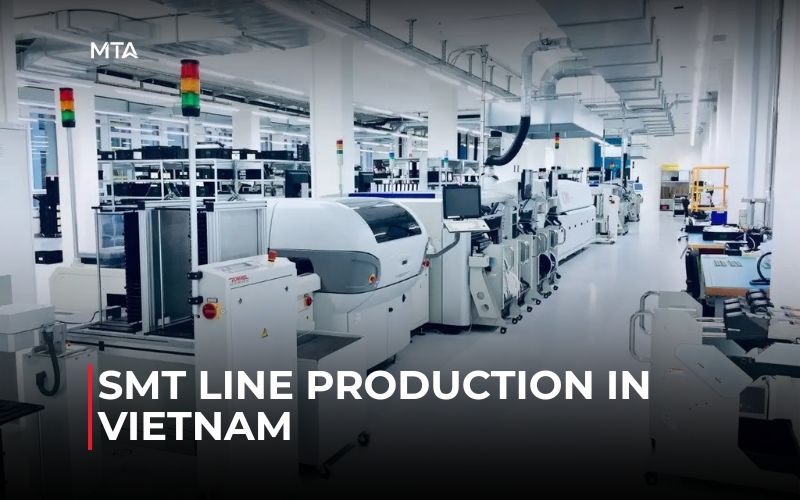
Over the past decade, Vietnam has become one of the fastest-growing destinations for electronics manufacturing in Southeast Asia. Driven by continued foreign direct investment (FDI), improvements in industrial infrastructure, and a skilled manufacturing workforce, the country now plays an increasingly important role in global electronics supply chains.
While much of the early investment focused on large multinational manufacturers, the supplier ecosystem has also matured significantly. Today, Vietnam is home to a growing number of Electronics Manufacturing Services (EMS) providers that support international companies with PCB assembly, box-build assembly, product testing, and complete manufacturing solutions. As a result, businesses looking to diversify their supply chains or implement a China Plus One strategy are finding more options than ever before.
At the heart of this growth is Surface Mount Technology (SMT). Nearly every modern electronic device, from consumer products and smart home equipment to industrial controllers and medical devices, relies on SMT production to assemble printed circuit boards efficiently and at scale. As demand for electronics continues to increase, manufacturers across Vietnam have expanded their SMT production lines to improve capacity, automation, and production efficiency.
For international buyers, however, selecting an SMT manufacturer involves more than comparing production volumes or machine specifications. Two factories may appear similar on paper, yet deliver very different results once production begins. Understanding how an SMT production line operates, and more importantly, what makes it reliable—can help buyers make more informed sourcing decisions and reduce manufacturing risks over the long term.
An SMT Production Line Is More Than a Series of Machines
When manufacturers introduce their facilities, they often highlight the number of SMT lines they operate or the brands of equipment installed on the production floor. These details are important because they indicate the level of investment a factory has made in its manufacturing capabilities. Well-known equipment suppliers such as Fuji, Yamaha, Panasonic, ASM or Juki are widely recognized for their precision and production speed, and many buyers naturally associate these brands with manufacturing quality.
However, an SMT production line is not simply a collection of advanced machines. Every printed circuit board moves through a sequence of closely connected manufacturing stages, beginning with solder paste printing before components are accurately placed onto the board. The assemblies then pass through reflow soldering, where the solder forms permanent electrical connections, followed by inspection and testing to verify that the finished board meets quality requirements. Each step depends on the accuracy of the previous one, meaning that even a small variation early in the process can affect production further down the line.
Understanding an SMT production line is much easier when you can see the manufacturing process in action. The following video, filmed at an SMT factory in Vietnam, walks through the complete production flow, it offers a practical view of how a modern SMT line operates and why every stage contributes to the consistency of the final product.
For this reason, experienced manufacturers focus on controlling the entire production flow rather than optimizing individual machines. A high-speed placement machine may be capable of placing tens of thousands of components every hour, but if solder paste is applied inconsistently or machine calibration drifts over time, production quality can quickly decline. Likewise, sophisticated inspection equipment provides little value if the factory lacks clear procedures for investigating defects and preventing them from recurring.
The strength of an SMT production line therefore lies in how well every process works together. Equipment, engineering, quality control and production planning all contribute to the final manufacturing result, and none of these elements should be evaluated in isolation.
Vietnam’s SMT Manufacturing Capabilities Continue to Evolve
Vietnam’s electronics sector has changed considerably over the past several years. What was once seen primarily as a destination for labor-intensive assembly has developed into a manufacturing environment capable of supporting increasingly sophisticated electronic products.
Many factories now operate automated SMT production lines designed for a wide variety of industries. Consumer electronics remain an important segment, but manufacturers are also producing printed circuit boards for industrial automation systems, telecommunications equipment, LED lighting, automotive electronics, renewable energy products, smart home devices and Internet of Things (IoT) applications. This broader customer base has encouraged factories to strengthen both their production capabilities and their engineering expertise.
The market itself has also become more diverse. Some manufacturers specialize in high-volume production, where efficiency, throughput and cost optimization are the primary objectives. Others focus on lower-volume, higher-mix production that requires frequent product changeovers, engineering support and greater manufacturing flexibility. Both models play an important role within Vietnam’s electronics ecosystem, but they serve different types of customers.
This distinction is particularly relevant for international buyers. A startup developing its first electronic product may benefit from a manufacturer that offers design support, prototype assembly and flexible production planning. By contrast, an established company launching a mature product at scale may prioritize production capacity, supply chain stability and long-term cost efficiency.
Choosing between these suppliers is rarely a matter of determining which factory is “better.” Instead, it involves identifying the manufacturer whose capabilities best match the technical and commercial requirements of the project.
Production Capacity Tells Only Part of the Story
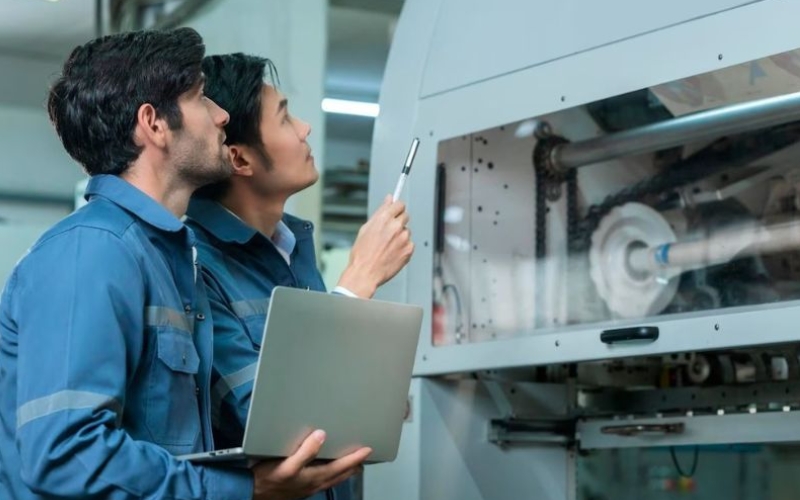
One of the first questions buyers ask during supplier discussions is, “How much can you produce each month?” It is a reasonable question, and most manufacturers are prepared with figures describing the number of SMT lines they operate, their placement speed or their maximum monthly output.
These figures provide a useful starting point because they indicate whether a supplier has enough capacity to support a project. However, they should not be interpreted as a complete measure of manufacturing capability.
Production capacity is often presented under ideal operating conditions. In reality, every manufacturing project introduces variables that influence how efficiently an SMT line performs. Board complexity, component density, feeder setup, product changeovers, inspection requirements and material availability all affect daily output. A production line assembling a simple LED control board may operate at a significantly different speed from one producing an industrial controller with hundreds of fine-pitch components and multiple testing stages.
This is why experienced buyers often distinguish between installed capacity and effective production capacity. Installed capacity reflects what the equipment is theoretically capable of producing, while effective production capacity reflects what the factory consistently delivers during normal operations. The difference between these two figures can reveal a great deal about a manufacturer’s production planning, engineering capability and operational maturity.
A supplier that consistently delivers orders on time while maintaining stable quality is often a stronger long-term partner than one advertising higher theoretical production speeds but struggling to achieve them under real manufacturing conditions.
What Influences SMT Line Performance?
Production speed is often one of the first metrics discussed during a factory presentation, but it rarely reflects how an SMT line performs over weeks or months of continuous manufacturing. In practice, production efficiency is shaped by a combination of technical, operational and supply chain factors that work together throughout the manufacturing process.
One of the biggest variables is product complexity. A factory assembling a simple PCB for household appliances operates under very different conditions from one producing industrial controllers or communication equipment. As boards become more compact and incorporate fine-pitch components, BGAs, QFNs or double-sided assemblies, placement accuracy, soldering profiles and inspection requirements become increasingly demanding. These products naturally require more engineering attention, longer setup times and stricter process control than standard consumer electronics.
Production planning also plays an important role. Many international buyers manufacture multiple product variants, each requiring different component feeders, machine programs and testing procedures. Frequent product changeovers reduce available production time, particularly if preparation is poorly managed. Well-organized factories minimize these interruptions by preparing materials, verifying machine programs and coordinating production schedules before a new job reaches the SMT line.
Component availability has become another critical consideration. Although Vietnam’s electronics manufacturing ecosystem continues to expand, many electronic components are still sourced through global supply chains. Delays in semiconductors, passive components or connectors can disrupt production even when manufacturing capacity is readily available. As a result, experienced manufacturers place increasing emphasis on procurement planning and supplier coordination alongside their production activities.
Rather than viewing production as a single manufacturing step, leading factories treat it as a coordinated operation where engineering, purchasing, warehouse management and production teams work together to maintain stable output.
Process Control Is What Keeps Production Consistent
Regardless of how advanced an SMT line may be, consistent production depends on how well the manufacturing process is controlled from start to finish.
Every production run begins long before the first PCB enters the line. Engineers review the bill of materials, confirm component availability, prepare machine programs and validate manufacturing parameters for the specific product. This preparation reduces the likelihood of errors once production starts and helps ensure that every workstation is operating with the correct information.
During manufacturing, the factory continuously monitors critical process conditions rather than waiting until the end of production to evaluate quality. Solder paste printing, for example, has a direct impact on solder joint reliability. Even slight variations in paste volume or alignment can create defects that become much more difficult to correct later in the process. Placement accuracy, feeder stability and reflow temperature profiles require similar attention because they influence every board moving through the production line.
Environmental conditions also deserve more attention than many buyers realize. Temperature, humidity and electrostatic discharge (ESD) control all contribute to stable manufacturing, particularly when assembling sensitive electronic components. These controls may appear routine, but together they reduce process variation and improve long-term production consistency.
The objective is not to eliminate every possible defect—no manufacturing process is entirely risk-free—but to identify process deviations early, understand their cause and correct them before they affect larger production volumes.
Quality Is Built Throughout the Process, Not Added at the End
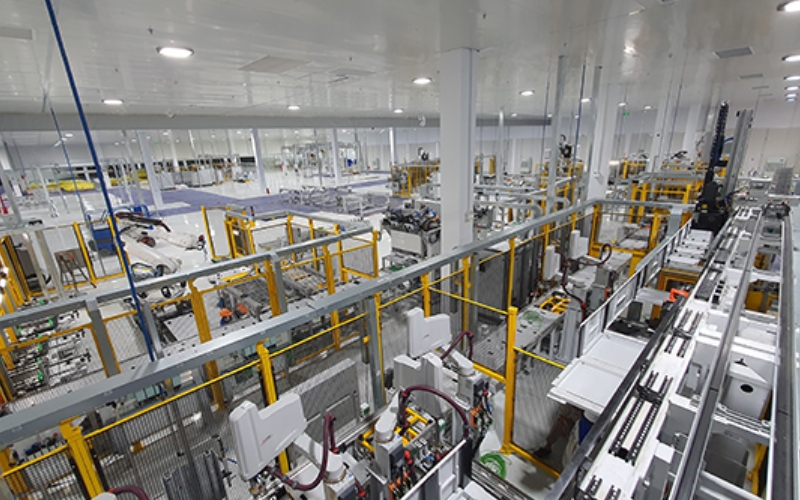
Many buyers associate quality control with the final inspection area, where completed boards are tested before shipment. While final testing remains important, modern SMT manufacturing relies on quality assurance throughout the production process rather than at a single checkpoint.
Inspection technologies such as Solder Paste Inspection (SPI), Automated Optical Inspection (AOI) and, where appropriate, X-ray inspection allow manufacturers to identify issues at different stages of production. Missing components, incorrect orientation, insufficient solder paste or solder bridges can often be detected long before the finished product reaches functional testing.
However, inspection equipment alone does not guarantee product quality.
The value of these systems depends on how the factory responds when a defect is identified. Effective manufacturers investigate the root cause rather than simply repairing individual boards. They review machine settings, verify component feeders, examine production records and determine whether similar defects may have affected other assemblies produced during the same run.
This approach transforms inspection into a continuous improvement process. Instead of correcting isolated problems, manufacturers improve the stability of future production by preventing the same issue from recurring.
For buyers, this distinction is important. A supplier that demonstrates clear corrective action procedures is generally better prepared to support long-term production than one relying heavily on manual rework after defects have already occurred.
Engineering Support Can Be Just as Important as Production Equipment
One aspect of supplier evaluation that is frequently overlooked is engineering capability.
Modern SMT equipment is widely available, and many factories operate similar production lines. What often differentiates manufacturers is the strength of the engineering team supporting those lines.
Before production begins, engineers may recommend Design for Manufacturing (DFM) improvements that simplify assembly, improve solderability or reduce manufacturing costs without affecting product performance. During production, they monitor process data, validate engineering changes and optimize manufacturing parameters as products evolve.
This becomes particularly valuable when launching a new product or transferring production from another country. Early production rarely proceeds exactly as planned. Component substitutions, PCB revisions or software updates often require adjustments that extend beyond routine machine operation. Manufacturers with experienced engineering teams are generally able to implement these changes more efficiently while maintaining production schedules.
Engineering capability also influences how quickly a supplier can introduce new products. Companies planning regular product updates or managing multiple product families often benefit from manufacturers with structured New Product Introduction (NPI) processes, as these reduce the time required to move from prototype assembly to stable mass production.
For international buyers, engineering support is therefore more than an added service. It is an indicator of how effectively a manufacturer can adapt to changing project requirements while maintaining consistent production performance.
Evaluating an SMT Factory Beyond the Production Floor
A factory visit is one of the most valuable stages of supplier qualification. It allows buyers to verify whether a manufacturer’s capabilities match what has been presented during meetings or sales discussions. However, the objective should go beyond confirming that modern equipment is installed on the production floor.
The way a factory operates often reveals far more than the specifications of its machines.
One of the first things to observe is how production is organized. Materials should move through the factory in a logical sequence, with clear identification and minimal risk of mixing components from different production orders. PCB assemblies, electronic components and work-in-progress products should all be traceable throughout the manufacturing process rather than relying on handwritten notes or manual tracking.
The overall working environment also provides useful insights. A clean and organized production area is not simply a matter of appearance; it often reflects the factory’s approach to process discipline. In electronics manufacturing, where static electricity, dust and humidity can all affect product quality, consistent housekeeping usually indicates that production standards are taken seriously.
It is equally important to look beyond the SMT line itself. Warehouses, quality laboratories, engineering offices and testing areas all contribute to manufacturing performance. A factory with modern placement machines but weak inventory management or limited testing capability may still struggle to deliver consistent results once production volumes increase.
Ask How Problems Are Solved, Not Just How Products Are Made
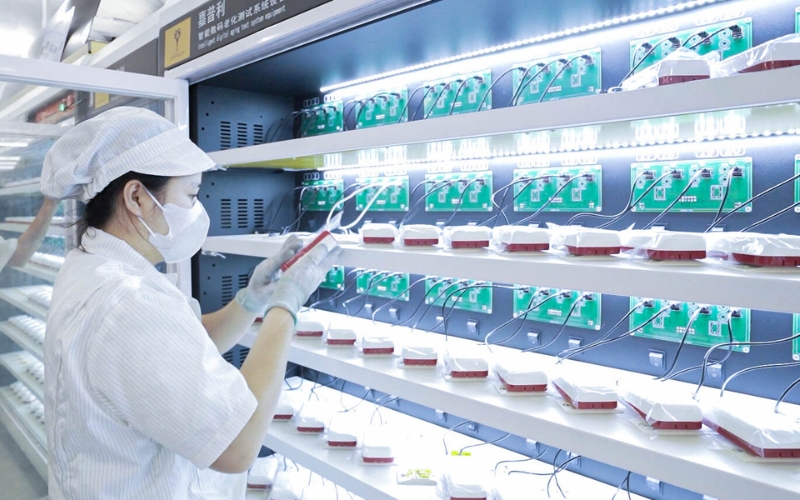
Many factory tours focus on demonstrating how products move through the manufacturing process. While this helps buyers understand production flow, it rarely explains how the factory responds when unexpected issues occur.
In reality, every manufacturing operation experiences challenges. Components occasionally arrive with quality issues, production parameters may require adjustment, and engineering changes can occur after production has already started. What distinguishes an experienced manufacturer is not the absence of problems, but the ability to resolve them efficiently while minimizing disruption to production.
For this reason, buyers should encourage suppliers to discuss real examples rather than ideal production scenarios.
Questions about how engineering changes are managed, how recurring defects are investigated or how production delays are communicated often provide more meaningful information than asking about maximum placement speed. These conversations reveal how different departments work together, whether production decisions are supported by documented procedures and how transparent the manufacturer is when working with international customers.
A supplier that openly explains its problem-solving process usually inspires greater confidence than one presenting only perfect production statistics.
Not Every SMT Manufacturer Is the Right Fit
Vietnam’s electronics manufacturing industry includes a wide range of suppliers, from large multinational EMS providers serving global brands to medium-sized manufacturers supporting OEM projects for international SMEs.
Neither model is inherently better. The most suitable partner depends on the nature of the project.
Large manufacturers often offer significant production capacity, highly automated facilities and well-established quality systems. These strengths make them an excellent choice for mature products with stable demand and predictable production schedules. However, companies with relatively small order volumes may find it difficult to receive the same level of engineering attention or production flexibility as larger customers.
Medium-sized manufacturers can offer a different advantage. Their production planning is often more flexible, communication tends to be more direct, and engineering teams may be able to respond more quickly to product changes or lower-volume manufacturing requirements. For companies introducing new products or gradually scaling production, this flexibility can outweigh the benefits of working with the largest factory available.
The objective is therefore not to identify the biggest manufacturer, but the one whose capabilities, production model and business priorities align with the needs of the project.
Supplier Selection Should Consider the Entire Manufacturing Ecosystem
An SMT production line is only one part of the broader manufacturing operation.
Reliable production also depends on supplier management, engineering support, testing capability, logistics coordination and communication throughout the project. Even a technically capable factory may struggle to meet customer expectations if it lacks robust planning processes or cannot respond efficiently when production requirements change.
This is particularly important for companies manufacturing products with long life cycles. As products evolve, components may become obsolete, designs may be revised and production volumes may fluctuate. Manufacturers that combine technical expertise with structured project management are generally better equipped to support these changes without compromising delivery schedules or product quality.
Looking at the entire manufacturing ecosystem also helps buyers identify potential risks before production begins. For example, understanding which processes are performed in-house and which are subcontracted provides greater visibility into lead times, quality control and production consistency. It also enables buyers to compare suppliers based on their overall operational capability rather than a single production metric.
Vietnam Offers Strong Opportunities for Electronics Manufacturing
Vietnam’s continued investment in electronics manufacturing has created a competitive environment for international buyers seeking alternatives within Asia. Modern SMT production lines are now available across many industrial regions, supported by an expanding network of component suppliers, logistics providers and engineering talent.
At the same time, supplier capabilities continue to vary. Some manufacturers are well suited to high-volume consumer electronics, while others have developed expertise in industrial equipment, medical devices or specialized electronic assemblies. Understanding these differences is essential when selecting a manufacturing partner, particularly for projects with demanding technical or quality requirements.
Rather than focusing solely on production speed or equipment brands, buyers should evaluate how a supplier manages the entire manufacturing process—from engineering preparation and production planning to quality control, testing and continuous improvement. These factors ultimately determine whether an SMT manufacturer can deliver reliable results over the life of a project.
Finding the Right SMT Manufacturing Partner in Vietnam
Choosing an SMT manufacturer is rarely about finding the factory with the fastest production line or the largest facility. It is about finding a partner that can consistently meet your product requirements, production volumes and long-term business objectives.
At MoveToAsia, we help international companies navigate Vietnam’s electronics manufacturing landscape by identifying suppliers that match both technical and commercial requirements. Our supplier evaluation process goes beyond production capacity, considering engineering capability, manufacturing maturity, quality systems, communication practices and long-term scalability.
By combining local market knowledge with on-site factory assessments, we help buyers reduce sourcing risks and make more informed decisions before production begins. Whether you are developing a new electronic product or expanding an existing supply chain, selecting the right manufacturing partner from the outset can have a lasting impact on product quality, delivery performance and overall project success.