


Laos is not a large consumer market by Southeast Asian standards, but it can support focused investment in essential, affordable and frequently purchased goods. The country had an estimated 7.87 million people and a GDP of about US$18.3 billion in 2025. GDP per capita was approximately US$2,325, while around 40% of the population lived in urban areas. Vientiane and selected provincial centres can still sustain meaningful demand for packaged foods, beverages, hygiene products, household consumables, personal care and low-ticket appliances.
The macroeconomic backdrop has improved but remains fragile. The World Bank estimates that growth strengthened to 4.8% in 2025 and that inflation slowed materially, before fuel-price shocks pushed inflation back close to 10% in April 2026. Fuel prices remained 38–40% above pre-crisis levels in early June, directly affecting household purchasing power and distribution costs. Public debt, foreign-exchange constraints and dependence on imported fuel continue to expose the economy to external shocks.
For investors, the central question is therefore not whether Laos will become a mass-consumption economy in the near term. It is whether a company can build a defensible position through the right price point, channel coverage, local partner and degree of localisation. The strongest cases combine essential demand with disciplined distribution and a staged commitment of capital.
Investment Thesis: Selective Opportunity Rather Than Broad Consumer Expansion
Consumer goods in Laos merit consideration when the business model is designed for a small, price-sensitive and geographically dispersed market. Imported brands already compete heavily with products from Thailand, China and Viet Nam. At the same time, gaps remain in product consistency, Lao-language compliance, cold-chain reliability, route-to-market execution, after-sales service and locally adapted packaging.
- Most attractive demand: essential packaged food, non-alcoholic beverages, hygiene and cleaning products, affordable personal care, baby and family products, basic household items, and selected small appliances.
- Most credible competitive advantage: dependable availability, value pricing, smaller pack sizes, local-language packaging, trusted quality and strong distributor controls.
- Preferred entry sequence: distributor-led pilot, followed by local packing, assembly or contract manufacturing once repeat demand is demonstrated.
- Main risks: weak purchasing power, foreign-exchange and import-cost volatility, road and fuel disruption, fragmented retail, informal trade, counterfeiting and uneven regulatory implementation.
Market indicators and their investor implications
| Indicator | Latest signal | Investor interpretation |
| Population | 7.87 million in 2025 | The addressable market is modest; prioritise dense urban and corridor markets rather than national rollout. |
| GDP and income | US$18.3 billion GDP; US$2,325 GDP per capita in 2025 | Mass premiumisation is limited. Value engineering and pack-size architecture are central. |
| Urbanisation | Approximately 40% urban in 2025 | Vientiane is the primary launch market, with selective expansion to provincial hubs. |
| Inflation | 7.7% average in 2025; near 10% in April 2026 | Price lists, inventory and distributor margins require frequent review. |
| Poverty and welfare | National poverty 15% in 2024/25; urban poverty rose to 8.9% | Essential products are more resilient than discretionary categories; affordability remains decisive. |
| Digital access | 66% of people used the internet in 2024 | Social commerce and digital marketing can support discovery, but physical fulfilment remains the bottleneck. |
| FDI intensity | Net FDI inflows equal to 6% of GDP in 2024 | Foreign capital is present, but much is concentrated in resources; consumer projects still require strong local execution. |
Sources: World Bank (2026a, 2026b, 2026c).
How Demand Is Structured
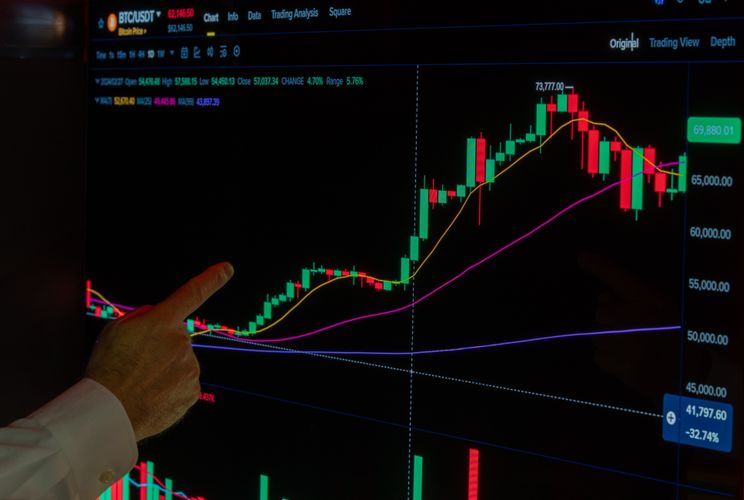
Essential demand is more bankable than discretionary consumption
Laos has made progress in reducing poverty, but household welfare remains exposed to price shocks. The national poverty rate fell to 15% in 2024/25, while the World Bank reports that purchasing power has been eroded by high inflation and limited access to productive jobs. Urban poverty increased from 7% in 2018 to 8.9% in 2024, even as durable-asset ownership and living conditions improved nationally.
This creates a two-speed market. Middle-income consumers in Vientiane and tourism-linked centres support branded products, modern retail and convenience formats. A much larger segment remains highly price-sensitive and purchases through traditional shops, markets and small neighbourhood retailers. Products that solve recurring household needs usually have a stronger investment case than premium discretionary goods dependent on rapid income growth.
Competition is regional and import-led
Laos is closely integrated with neighbouring supply chains. In 2024, bilateral trade data indicate imports of about US$3.58 billion from Thailand, US$2.98 billion from China and US$715 million from Viet Nam. The Lao Trade Portal also recorded significant imports of electrical appliances, plastic products, beverages and finished chemical products during 2024. These figures are not a consumer-market valuation, but they demonstrate the importance of imported manufactured goods and the competitive position of neighbouring suppliers.
Thai products benefit from language familiarity, consumer recognition and short road routes. Chinese suppliers compete aggressively on price and breadth of assortment. Vietnamese companies can use geographic proximity and growing cross-border commercial ties. A new entrant therefore needs more than a recognised international brand. It needs a channel proposition that improves retailer economics, availability or product trust.
Digital channels can accelerate discovery, not replace distribution
Internet usage reached approximately 66% of the population in 2024, creating a meaningful base for social media marketing, messaging-based commerce and digital customer service. However, online reach does not eliminate fulfilment constraints. Digital activity is most effective when integrated with local inventory, reliable resellers and clear returns procedures.
Priority Consumer-Goods Opportunities
| Opportunity | Demand logic | Preferred model | Main caveat |
| Packaged food and non-alcoholic beverages | Recurring consumption, tourism demand and room for local ingredients or processing | Distributor pilot; local co-packing or processing after validation | Food permits, shelf life, cold chain, price competition |
| Hygiene and household cleaning | Essential demand and repeat purchase; potential for small packs and institutional sales | Import and distribute; later local blending or packing | Quality assurance, claims, packaging leakage, counterfeit risk |
| Affordable personal care and cosmetics | Urban youth, tourism and social-media discovery support demand | Registered products through an experienced importer/distributor | Product registration, Lao labels, grey imports and authenticity |
| Baby, family and basic health-related goods | Consumers prioritise safety and trusted quality for family purchases | Pharmacy, clinic and modern-retail partnerships | Category-specific health rules and sensitivity to affordability |
| Small household appliances | Electrification and durable-asset ownership create replacement demand | Authorised distributor with spare parts and warranty service | FX exposure, power quality, after-sales cost and low-cost imports |
| Packaging and private-label manufacturing | Local producers and retailers need consistent packaging, labels and shorter replenishment cycles | B2B supply, contract packaging or light manufacturing | Scale economics, imported inputs and quality control |
Investor assessment based on current macroeconomic, trade and regulatory conditions.
The common theme is localisation, which does not always require a factory. It should be measured by improved sell-through and lower landed cost, not by the amount of fixed capital deployed.
Why Laos Can Still Be Strategically Relevant
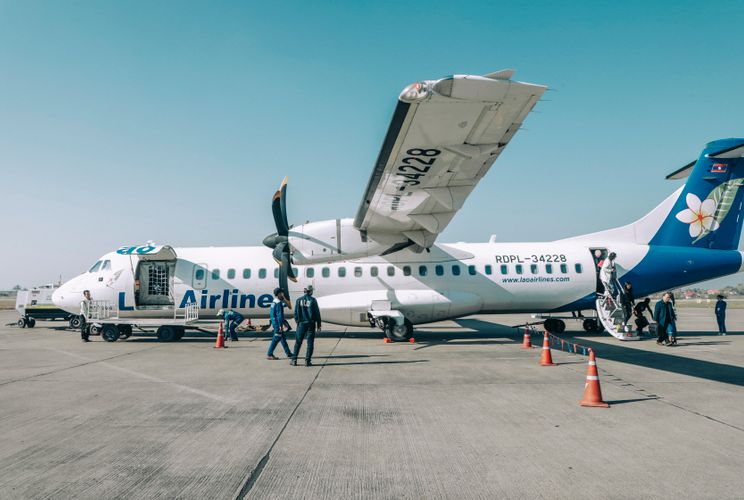
A platform for import substitution and regional corridors
Laos is pursuing a transition from landlocked to land-linked growth through road, rail and dry-port connectivity. This creates a potential role for Laos in serving domestic demand while linking Thailand, China and Viet Nam. The benefit is not automatic: the World Bank continues to identify weak road quality, high logistics costs and vulnerability to fuel and climate shocks. Investors should assess specific corridors and border procedures rather than rely on national infrastructure narratives.
The 2024 Law on Investment Promotion gives particular relevance to environmentally friendly industrial processing, agro-processing and products with import-substitution or export potential. Eligible sector- and zone-based projects may receive profit-tax holidays, while qualifying machinery and raw materials for export manufacturing or import-substitute production may receive customs-duty incentives. Incentives require an Investment Promotion Certificate and implementing approval; ordinary import and resale activity should not be assumed to qualify.
A practical test for localisation
Local production is more attractive when at least three conditions are met: a repeat-demand product can reach sufficient volume; imported packaging or raw materials do not eliminate the cost advantage; and the company can maintain consistent quality and compliance. For many SMEs, local packing, final assembly or contract manufacturing provides a better risk-return balance than a full greenfield plant.
Entry Models: Comparing Capital, Control and Risk
| Model | Capital | Control | Best use | Primary risk |
| Local distributor | Low | Low to medium | Fast testing and limited fixed cost | Weak visibility over sell-through, pricing and sub-distributors |
| Exclusive importer or master distributor | Low to medium | Medium | Clear accountability and coordinated marketing | Concentration risk and dependency on one partner |
| Joint venture | Medium to high | Shared | Local relationships, licences and operational knowledge | Governance, related-party transactions and exit complexity |
| Local packing or assembly | Medium | Medium to high | Lower freight per unit, local labels, faster replenishment | Scale threshold, imported-input exposure and quality systems |
| Wholly foreign-owned manufacturing | High | High | Full control and potential incentive access | Small market, execution risk and long payback period |
| Digital-first brand with local fulfilment | Low to medium | Medium | Efficient demand testing and consumer data | Delivery economics, returns and platform dependence |
A staged structure is usually preferable. A company can begin with a controlled assortment in Vientiane, require monthly sell-through data from the distributor, test two or three price-pack combinations, and add provincial coverage only after inventory turnover and repeat orders are proven. Capital-intensive localisation should follow evidence rather than precede it.
Regulatory and Compliance Framework
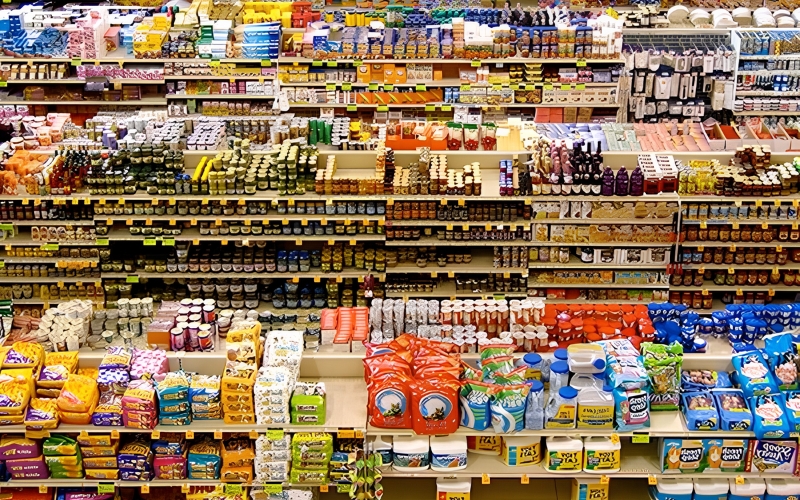
Enterprise registration and distribution rights
Commercial importers must first be registered enterprises and obtain the licences or permits applicable to their product categories. Wholesale and retail operations are regulated separately. Under the 2015 wholesale and retail decision, foreign investors require registered capital above LAK 4 billion. Projects with at least LAK 20 billion may be wholly foreign-owned; foreign equity is capped at 70% for capital from LAK 10 billion to below LAK 20 billion, and at 50% for capital from LAK 4 billion to below LAK 10 billion. The same decision states that a wholesale business may import goods when registered for those imports, while a retail business cannot import goods directly.
These thresholds are material for consumer companies choosing between direct distribution, a joint venture and a local importer. Investors should confirm whether later legislation or sector-specific rules modify the treatment of their exact activity and location.
Labelling, product registration and consumer protection
Imported goods generally require Lao-language labels before distribution to retailers or consumers. The labelling framework places obligations on producers, importers, wholesalers, distributors and retailers, and allows warnings, fines, confiscation or suspension for repeated non-compliance. Labels should be prepared before commercial rollout rather than added as an afterthought at customs or in stores.
Product-specific requirements vary by HS code and category. Agricultural and food imports commonly require permits or licences from the relevant authorities. The Lao Trade Portal indicates that cosmetics require registration, even where a separate import licence is not required for the relevant tariff line. Claims relating to health, children, safety or therapeutic use may trigger additional controls. The portal should be checked product by product, supported by local regulatory advice.
The Consumer Protection Law requires licensed suppliers to provide Lao-language labels, particularly for goods that may affect life, health or safety. Suppliers may also bear the costs of inspection, retesting and public warnings where goods are dangerous or non-compliant. Warranty, complaint handling, recall procedures and traceability should therefore be included in the operating model.
Investment incentives and tax treatment
Incentives are not automatic and should not be the primary investment rationale. The 2024 Investment Promotion Law links benefits to promoted sectors and zones, with profit-tax exemptions of up to ten years in Zone 1 and up to four years in Zone 2, plus possible extensions for priority categories. Customs incentives may apply to qualifying fixed assets and production inputs. A consumer-goods importer focused only on resale is less likely to qualify than an agro-processing, environmentally friendly manufacturing or import-substitution project.
Financial models should use the ordinary tax and customs position until written eligibility is confirmed. Large multinational groups should also review the effect of recent income-tax reforms and international minimum-tax rules with current tax counsel.
Key Risks and How Investors Can Mitigate Them
1. Affordability risk. Use entry-level pack sizes, clear good-better-best architecture and frequent price-elasticity testing. Avoid assuming that GDP growth immediately translates into discretionary spending.
2. Currency and import-cost risk. Model landed cost under weaker kip, higher fuel and delayed customs scenarios. Use shorter pricing cycles and negotiate inventory-sharing mechanisms with distributors.
3. Route-to-market opacity. Contract for sell-through, inventory ageing and sub-distributor reporting. Conduct physical channel checks instead of relying solely on purchase orders from the main distributor.
4. Informal trade and counterfeiting. Register trademarks, use traceable packaging, educate retailers and consumers, and document authorised channels. Do not assume exclusivity clauses will stop grey-market imports.
5. Regulatory execution risk. Map every product by HS code, authority, permit, label and renewal date. Confirm practice at the expected border crossing and province before shipping.
6. Logistics and climate risk. Hold appropriate buffer stock, qualify alternative routes and identify which products are sensitive to heat, humidity, road delays or power interruptions.
7. Partner and governance risk. Verify ownership, financial capacity, tax compliance, licences, litigation and related parties. Build audit rights, termination triggers and inventory ownership rules into contracts.
A Five-Step Market Entry Roadmap
1. Define the real addressable market. Segment consumers by city, income, channel and use case. Build the model from outlet counts, price points and repeat purchase, not from national population alone.
2. Complete product-level regulatory mapping. Confirm classification, registration, import permit, Lao label, testing, customs duty and consumer-protection obligations for each SKU.
3. Select and diligence the route-to-market partner. Compare distributors on category experience, province coverage, working capital, warehousing, salesforce quality, data transparency and conflict with competing brands.
4. Run a measured pilot. Launch a narrow assortment in Vientiane and one or two selected secondary markets. Track sell-through, gross-to-net revenue, retailer reorder, damaged stock, expiry and cash conversion.
5. Localise only after the economics are proven. Evaluate local packing, assembly or manufacturing when demand is repeatable and the landed-cost advantage survives imported-input, quality and compliance costs.
Is the Laos Consumer Goods Sector Worth Investing In?
Yes—but selectively. Laos is most attractive to companies that can operate profitably at modest scale, price for volatility and manage distribution closely. It is less suitable for strategies that require rapid nationwide volume, premium pricing across the mass market or heavy fixed investment before demand is validated.
The strongest opportunities sit at the intersection of essential consumption and operational improvement: affordable products with consistent quality, local-language presentation, reliable availability and trusted after-sales support. Import substitution can strengthen the case where local processing or packing reduces freight, improves replenishment and qualifies for investment incentives. However, localisation should be a commercial decision, not a response to incentives alone.
For foreign investors, the winning approach is evidence-led. Validate demand at outlet level, verify every regulatory step, build visibility into distributor performance and stage capital commitments. In Laos, execution quality matters more than headline market size.
How MTA Supports Consumer Goods Market Entry in Laos
MoveToAsia supports international manufacturers, investors and expansion teams in converting a broad market thesis into an executable Laos entry plan. Support can include:
- Consumer and channel research by city, category and price segment;
- Competitor, pricing and pack-size benchmarking;
- Import, labelling and product-registration mapping with local specialists;
- Distributor, importer, contract manufacturer and retail-partner identification;
- Commercial, ownership and operational due diligence;
- Pilot design, route-to-market strategy and localisation feasibility; and
- Investment-structure assessment, site screening and partner negotiations.
A Laos consumer-goods investment should not be justified by population growth or regional connectivity alone. MTA’s role is to test whether the proposed product, price, partner and operating model can produce repeatable demand and compliant execution before significant capital is committed.