


This paper looks into the factors of foreign direct investment in Laos with emphasis on the prospects in the energy, mining, and agriculture sectors; the competitive differentiation and investment risks; and the recommendations on the long-term investment strategies.
Why Laos Is Becoming an Attractive Investment Destination

Although Laos’ population is 7.8 million, making it one of the smaller ASEAN markets, domestic consumption does not model its economic potential. Rather, its plentiful natural resources and advantageous geographic positioning will.
As reported by the World Bank, Laos increasingly benefits from its geography, bordering China, Thailand, Vietnam, Cambodia, and Myanmar. It provides an important land bridge connecting the many markets.
Disruptions to the global economy impacted growth; however, the ADB maintains growth will be driven by a recovery in tourism, a continued focus on investment in infrastructure, the trade of electricity, and intra-regional trade. External debt and inflation remain important macroeconomic issues.
Laos remains competitively positioned within the Greater Mekong Subregion.
Laos differentiates itself from coastal manufacturing economies by promoting itself as a regional hub for logistics and energy. The China–Laos Railway, linking Kunming with Vientiane, integrates Laos into a regional trade and transport system, enhancing the efficiency of passenger and freight transport.
Enhanced logistics opens new possibilities for export industries.
Transportation of bulk goods is improved for mining companies and regional supply chains for manufacturers.
Foreign investment is an essential element for Laos’ economic growth.
Foreign direct investments predominantly target hydropower and mining; transportation infrastructure and renewable energy and agriculture; as well as investments related to special economic zones, according to untapped resources of the United Nations Conference on Trade and Development (UNCTAD) World Investment Report and the Ministry of Planning and Investment (Invest Laos) annual reports.
Laos is further attractive to investors by its regional economic integration.
Being a member of ASEAN and of the Regional Comprehensive Economic Partnership (RCEP), Laos is already connected to trade agreements in the region that allow for greater access to markets and fewer cross-border restrictions.
Laos, however, is not as advanced as many other economies in Southeast Asia, and investors should recognize and understand the difference.
The greatest potential of Laos is not the size of its consumer market but its great ability for export procedures, and that is due to the integration of multi-modal transport, natural resources, and the growing regional infrastructure.
Of most importance to investors is that the construction of transport infrastructure in Laos positions the country well to take advantage of the significant investment opportunities in energy, mining, agriculture, and processing resources in one of the most rapidly growing economies of the world.
Major sectors and investment opportunities in Laos

Natural resources are still at the forefront of Laos’ investment scene, particularly energy, mining, and agriculture, for both domestic and foreign investors.
Renewable Energy
Energy is one of the most critical sectors of the economy for Laos.
The Mekong River and its tributaries provide good resources for many years of investing in hydropower. Laos has attempted to create the “Battery of Southeast Asia” for the generation of electricity to be utilized and then exported to the neighbors.
The International Energy Agency (IEA) and the Asian Development Bank affirm that the majority of electricity in Laos is generated through hydropower available to be exported, providing valuable foreign exchange earnings.
The demand for clean electricity is propelling power generation and transmission projects as well as the establishment of cross-border trade in electricity and regional energy trading.
Laos is making significant investments in both solar and wind energy in the attempt to move beyond hydropower.
As the government and investors try to offer a more carefully balanced investment portfolio of renewables, hybrid renewable systems along with cross-border electricity trading are expected to play a greater role as the ASEAN countries strengthen regional cooperation in energy trading.
There are many investment opportunities beyond the generation of electricity.
The development of engineering, transmission, construction, modernization of power grids, energy storing, and maintenance services are business opportunities associated with renewable energy in the country.
Mining

Mining is another important sector of Laos.
The country has mineral deposits of commercial interest, including copper, gold, potash, gypsum, tin, lead, zinc, and other industrial minerals. As critical minerals that support electrification and renewable energy and battery technologies gain prominence in the marketplace, more Southeast Asian countries are attracting investment in mineral exploration.
Copper is still important for Southeast Asia because of its role in electrical infrastructure, electric vehicles, renewable energy, and industrial systems.
Gold retains its investment appeal because of the demand for gold as a precious metal and an industrial commodity.
Potash offers a good investment opportunity as infrastructure for advanced industrial and regional economies is built.
An increased demand for fertilizers in global agriculture means potash has favorable prospects given its regional availability.
Beyond extraction, investors are looking at the opportunities offered by subsequent stages in the mineral value chain.
Mineral processing, maintenance of mineral and industrial equipment, environmental and industrial support services, and logistics can offer greater sustained value and impact to an economy compared to exported raw minerals. However, the investments in mining require extensive community consultations and management of the social and environmental impacts. The responsible development of resources is necessary to attract the investment capital and operate the project. International resource companies are under continuous pressure to meet ESG obligations.
Agriculture
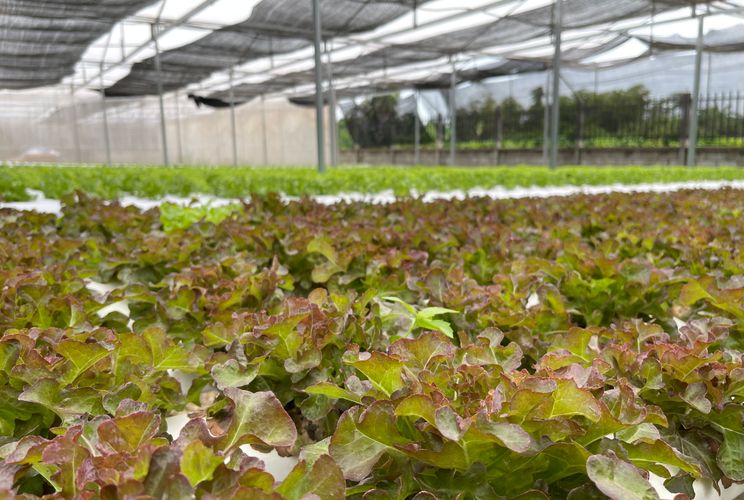
Agriculture, which employs a large part of the country’s population, has potential in investment, especially in export-focused practice and food processing. Coffee is one of the more prominent agricultural products.
Laos has significant exports of specialty coffee to international coffee markets. Coffee from the Bolaven Plateau enjoys an excellent reputation for both Arabian and Robusta varieties. The continuing demand for sustainable premium coffee offers investment opportunities at multiple levels of the value chain.
Rice remains an important part of food security and regional trade.
Commercial production of cassava, maize, rubber, bananas, tropical fruits, and other products has increased to meet the demand of regional markets.
Opportunities continue to go beyond primary production.
Food processing and packaging, cold chain logistics, agricultural technology, irrigation systems, seed development, precision farming, and sustainable farming practices have all been identified as possible sources of foreign investment.
The Food and Agriculture Organization (FAO) states that in the improvement of agricultural productivity, climate change, and sustainable resource management continue to be areas of opportunity with the greatest need.
For international investors, the best opportunities include agricultural production paired with processing and supply chains dominated by export activities.
Instead of exporting primary products, companies can establish integrated systems that enhance the value of the product for export, and in doing so, greater local employment and improved supply networks are created.
Competitive Advantages and Investment Challenges in Laos
Like any developing economy, Laos offers unique opportunities and challenges, all of which need to be balanced carefully given the risks of investment.
Natural resources give Laos the competitive advantage of being the richest country in Southeast Asia in this regard.
Mineral wealth, agricultural land, and hydropower give Laos the potential to host long-term investments.
Labor costs, when viewed from the Southeast Asian perspective, give comparative advantages to industries in Laos.
With the likely ASEAN trading agreements and the expected rise in traveling commerce, Laos will benefit from greater access to the wider Southeast Asian markets.
There have been significant advances in the infrastructure from the investment in the Laos-China railway.
Special economic zones in Laos also offer considerable incentive to further the investment in logistics.
World Bank and Asian Development Bank reviews cite further improvements in infrastructure as key to the goals of the Laos economy.
In spite of the advances noted, there are several positives that potential investors should carefully consider.
The potential customers and clients in Laos are few and growing; thus, businesses are better focused on catering to neighboring markets.
There is uneven focus on further development of infrastructure across certain provinces where rural areas have direct and indirect limitations.
Highly skilled labor is also spotty and would require further investment in workforce training.
Regulatory procedures may also need to be carefully addressed.
Foreign investors should work closely with experienced legal advisors and local authorities to understand many things. These include licensing requirements, land use, environmental approvals, taxation, and sector-specific investment policies.
Environmental and social governance has become another important consideration.
Mining and hydropower, in addition to large-scale agriculture, increasingly require comprehensive environmental assessments and stakeholder consultation, in addition to sustainable operating practices, to address both government requirements and the expectations of international investors.
These requirements should neither dissuade investment nor stand as a substantial barrier.
These requirements indicate the value of a strong local partnership, comprehensive due diligence, and careful planning.
For the business that has a realistic expectation and the long-term investment, Laos is consistently an attractive investment option for the business with the natural advantages of the country.
Building a Successful Investment Strategy in Laos

To begin investing successfully in Laos, it is essential to know the fundamentals of the market instead of making assumptions based on the markets of the neighboring countries.
Before considerable amounts of money are invested, thorough market research should be conducted on the demand of exports, the regional supply, available infrastructure and labor, the cost of various logistics, and the long-term trends in various industries.
It is equally important to know the market regulations.
As the laws of each country outline the specific regulations of market investments, foreign investors must research the laws and regulations that govern licensing, tax incentives, and land use, as well as the environmental and sector-specific laws. The assistance of legal counsel and local market experts would be of great help in navigating the market, as well as in lowering the risks of non-compliance.
Having partnerships with locals is another critical area of success.
Collaborating with government agencies and local businesses, as well as the use of local engineering services, transportation, and even local universities, would help in the improvement of project implementation.
Investors should also place priority on sustainable investments.
The integration of the responsible management of resources, protection of the environment, development of the workforce, and the engagement of the local community in the planning and design of the projects would help in gaining the financing and meeting the requirements in the recent trends of Environmental, Social, and Governance (ESG) assessment and investment.
Potential investors in Laos should consider the following questions before proceeding with their investments:
- Is the project export-focused, or does it rely on domestic consumption?
- Are logistics economically sustainable?
- Does the existing infrastructure support the project’s long-term operations?
- What are the investment incentives for the project?
- How would social and environmental obligations be fulfilled?
- Could operational resilience be enhanced through local partnerships?
These questions would help in lowering the perceived risk of investment.
Ultimately, the most important focus of the successful foreign investors in Laos is that the country is a market that requires long-term investment strategies instead of being a market for short-term profit.
Businesses that thoroughly practice due diligence result in greater return on investment and higher profitability due to greater integration with the economic growth occurring in the country.
Conclusion
Laos has many attractive investment features. Laos has abundant natural resources across many domains: hydropower, minerals, crops, and more. There is also greater integration with neighboring countries. This gives Laos a great potential to be a great investment destination for the future.
Laos does not have an abundance of consumers but rather exports to other countries. This is practical as Laos has more goods and services to offer than most of its neighboring countries. Especially to the demand of other countries for nutrients, minerals, and hydropower.
Investment preparation is required for success. Businesses need to analyze the market, the legal and regulatory concerns, and the state of infrastructure and logistics and also build local alliances before entering the market.
Laos has more to offer long-term international investors than just being a resource-based economy with a small population. There is also the potential for regional investments anchored in the long term, largely due to the impact on the economy from the investments and the use of responsible and sustainable business practices.