


Agriculture in Laos is large enough to matter, but it should not be treated as a simple land-and-crop investment story. The sector generated 16.8% of gross domestic product in 2024 while accounting for an estimated 68.9% of total employment. That gap signals both economic importance and low labour productivity. The strongest foreign-investment thesis is therefore value created through better inputs, aggregation, processing, quality assurance, storage and access to neighbouring markets—not unlimited expansion of primary production.
The wider economy improved in 2025: real GDP grew by 4.8%, average inflation declined to 7.7%, and agriculture expanded by an estimated 3.5%. The World Bank forecasts about 3.0% agricultural growth in 2026, but the recovery remains exposed to fuel costs, exchange-rate movements, weather shocks and constrained public finances. Projects must protect margins and working capital rather than rely on national growth alone.
Is agriculture in Laos worth investing in? Yes, selectively. Coffee, cassava, bananas, vegetables, livestock-related services and staple-food processing offer credible demand signals. A bankable project normally combines a verified off-taker, traceable supply, realistic logistics, climate resilience and staged capital.
Agriculture in Laos: the investment case at a glance
The sector’s headline numbers show a market with substantial production capacity and a broad rural base. They also show why investors must distinguish between volume and value. Rice remains central to food security, while commercial crops demonstrate export potential. At the same time, weather volatility and high domestic production and transport costs can weaken farmer supply and processor utilisation.
| Indicator | Latest evidence | Investor interpretation |
| Agriculture share of GDP | 16.8% in 2024 | Economically significant, but not the country’s only growth engine. |
| Agricultural employment | 68.9% of total employment in 2024 | Large supplier and labour base; productivity, skills and formalisation remain central. |
| Sector growth | 3.5% in 2025; about 3.0% forecast for 2026 | Positive but moderate growth; returns must come from execution and value addition. |
| Paddy production | About 3.6 million tonnes forecast for 2025 | Large staple market, but mostly rainfed output and regional weather losses raise supply risk. |
| Unroasted coffee exports | US$89.5 million and 35.9 million kg in 2023 | Established export crop with scope for quality improvement, processing and market diversification. |
| Selected partner-reported trade | China reported US$192.4 million of cassava starch imports from Laos in 2024; China, Japan and Thailand reported more than US$61 million of banana imports | Strong cross-border demand, accompanied by material buyer and corridor concentration risk. |
Sources: World Bank (2026a, 2026b, 2026c, 2026d, 2026e) and FAO (2026). Trade values should be read as reported merchandise trade for the specified product codes, not as estimates of an entire value chain.
The investment conclusion is not that every farm can scale. It is that relatively small improvements in recovery rates, grading, storage life, certification and buyer access can create value across a sector where much labour is still concentrated in primary production.
Why Laos can support selective agribusiness investment
A location linked to large neighbouring markets
Laos sits between China, Thailand, Vietnam, Cambodia and Myanmar. For export-oriented agribusiness, this geography can matter more than domestic market size. Yet location becomes an advantage only when a project is designed around a specific route, border process and buyer. Fresh produce needs temperature control and predictable clearance; bulk crops need freight economics that remain viable after fuel, handling and delay costs.
A diversified crop base with export evidence
FAO estimated 2025 paddy production at about 3.6 million tonnes and reported that some farmers shifted land from maize towards more remunerative coffee, bananas and vegetables. Laos exported US$89.5 million of unroasted coffee in 2023, while 2024 importing-country data showed substantial cassava-starch flows to China and banana flows to China, Japan and Thailand. These are genuine market signals, but they also expose buyer and corridor concentration.
Policy support for clean agriculture and agro-processing
The amended Investment Promotion Law lists clean agriculture, seed and animal-breed production, industrial crops, environmentally friendly agro-processing, animal feed, fertiliser and agricultural inputs among promoted activities. The Agriculture Law No. 84/NA of June 2025 and the May 2026 decrees on clean agriculture and fertiliser reinforce priorities around food security, quality, safety and green development. Policy support is meaningful, but it also raises the importance of product, traceability and environmental controls.
Where the most credible opportunities are
The strongest opportunities solve a measurable bottleneck for farmers, processors or buyers. Primary production can be investable, but processing and services often provide a more controlled route to the same value chains.
| Opportunity area | Commercial rationale | More executable entry model | Principal watch-outs |
| Rice and staple-food processing | Large recurring domestic demand; room to improve milling yield, drying, storage and packaging | Upgrade or partner with an existing mill; supply dryers, silos, testing or packaging | Seasonal procurement, working capital, electricity, quality variation and regulated trade conditions |
| Coffee | Existing export value and potential premiums for quality, traceability, roasting and branding | Washing/drying station, quality lab, contract processing, specialty sourcing or branded exports | Buyer concentration, inconsistent grading, climate exposure, farmer incentives and certification cost |
| Cassava and feed ingredients | Strong regional demand and scope for starch, chips, feed and by-product utilisation | Off-take-backed collection and processing; equipment or technical-services partnership | Heavy logistics, disease and soil impacts, price cycles, one-market dependence and wastewater management |
| Bananas, vegetables and fruit | Regional demand plus high losses where handling and cooling are weak | Packhouse, pre-cooling, cold storage, crates, transport management or contract production | Perishability, water use, pesticide compliance, border delays and buyer specifications |
| Livestock, feed and veterinary services | Demand for protein and need for safer, more efficient value chains | Feed, breeding, animal-health, slaughterhouse services, cold chain or traceability systems | Animal disease, biosecurity, fragmented supply, licensing and limited certified infrastructure |
| Enabling infrastructure and services | Farms and SMEs need irrigation, machinery, solar pumping, labs, finance and digital records | Equipment distribution, leasing, maintenance, software or shared-service platform | After-sales coverage, small-ticket economics, credit risk, imported parts and user adoption |
Agro-processing and post-harvest systems
Drying, milling, cleaning, grading, starch extraction, roasting, feed production and packaging can reduce losses and create products with more stable specifications. The main risk is building capacity before securing throughput. Investors should start with named supplier clusters and off-takers, then size equipment around conservative contracted volumes. Modular upgrades to an existing operator usually reduce fixed-asset exposure.
Coffee quality and market diversification
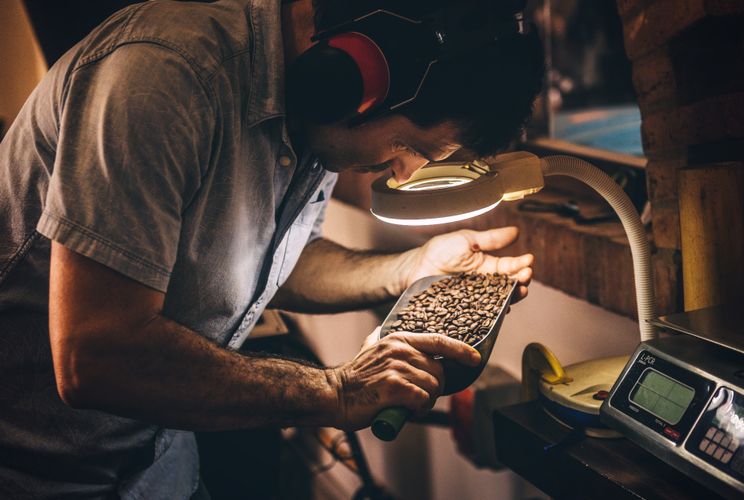
Coffee’s established export base creates scope for better harvesting, washing, drying, moisture control, cupping, traceability and lot separation. In 2023, Vietnam and Thailand represented about four-fifths of reported unroasted coffee export value. Contracts should define quality, rejection, currency, logistics and pricing, while market development should avoid dependence on one intermediary.
Cassava, feed and by-product utilisation
China reported US$192.4 million of cassava-starch imports from Laos in 2024, indicating significant demand. The defensible model is an off-take-backed system that manages variety, starch content, disease, transport distance, water and effluent. By-products may support feed, biomass or soil products where technically and legally appropriate, improving plant economics without removing environmental obligations.
Cold chain, packhouses and quality infrastructure
China, Japan and Thailand together reported more than US$61 million of banana imports from Laos in 2024. Packhouses, pre-cooling, reusable crates, cold rooms, testing and transport management can reduce losses, but assets should be anchored to production clusters and customer specifications. Multi-crop capability and contingency routes reduce the risk of stranded capacity.
Inputs, equipment and technical services
Seed systems, animal genetics, biological inputs, fertiliser, irrigation, solar pumping, machinery, maintenance, laboratories and farm-management tools can raise productivity without owning farmland. Distribution, financing and after-sales service are decisive: leasing, pay-per-use models, demonstrations and local technicians may matter more than the equipment specification itself.
Risks that can change project economics
Agricultural demand can be visible while the project remains unbankable. The following risks should be quantified in the base case and downside case rather than confined to a qualitative risk register:
- Climate and water risk. Most annual paddy production comes from the wet season, and FAO recorded 2025 crop losses from both early-season dryness and later floods and landslides. Site selection, drainage, irrigation access, crop diversification and insurance availability can determine whether supply is dependable.
- Land, forest and community rights. A concession or lease must be checked against land classification, existing use, village interests, forest status and compensation obligations. Forestland projects require suitability studies, local consultation, feasibility analysis and environmental and social assessment.
- Buyer and corridor concentration. Coffee, cassava and bananas demonstrate export demand, but much of the reported trade is concentrated in a small number of neighbouring markets. Revenue models should test a border closure, revised protocol, slower clearance or rejected shipment.
- Input, fuel and currency exposure. Machinery, packaging, fuel, spare parts and some inputs are imported. Even after the 2025 stabilisation, the World Bank described the macroeconomic recovery as fragile, and early-2026 fuel volatility showed how quickly logistics and farm costs can rise.
- Smallholder aggregation and quality consistency. A large rural workforce does not automatically create a reliable commercial supply base. Investors need transparent grading, prompt payment, extension support, field records and incentives that make contract compliance worthwhile for farmers.
- Food safety, pesticide and biological risk. Export buyers may apply stricter residue, biosecurity, traceability and sustainability requirements than minimum domestic rules. Rejection risk should be assigned contractually and supported by testing rather than managed after shipment.
- Working-capital intensity. Crops are purchased seasonally, while processors may wait for export payment. Financial models should include inventory finance, drying loss, quality discounts, delayed receivables and currency mismatch.
Climate change increases the importance of this discipline. World Bank analysis identifies flooding, drought, heat and landslides as growing risks to agriculture and infrastructure in Laos. For investors, adaptation is not a corporate-social-responsibility add-on; it affects supply continuity, asset design and debt service.
Regulations foreign investors should know
Laos provides formal routes for foreign investment, but agriculture projects can involve several authorities and licences. The practical framework can be organised into five questions; activity- and province-specific legal advice remains necessary.
| Regulatory question | What the framework provides | Investor action |
| How can the investment be structured? | The amended Investment Promotion Law recognises wholly foreign-owned investment, joint ventures, contract-based business cooperation, state–private ventures and PPPs. | Compare control, tax, land, governance and exit implications before selecting a local partner or entity. |
| Is the activity general, controlled or concession-based? | Business activities are divided into general and concession businesses; controlled-list activities require sectoral review before licensing. | Confirm classification early. Do not assume that business registration alone authorises operations. |
| What land and environmental approvals apply? | State-land concessions, forestland use and projects with environmental or social effects require separate procedures, studies and approvals. | Complete title, cadastral, forest, water, community, UXO where relevant, and environmental due diligence before committing capital. |
| What product approvals apply? | Food businesses may require public-health technical approval and product registration. Food must meet Lao standards or Codex where Lao standards are unavailable, and operators carry traceability and recall obligations. | Build specifications, laboratory testing, labelling, batch records and recall procedures before commercial launch. |
| What border and plant-health controls apply? | Plants, plant products and regulated articles may require import permits, phytosanitary certificates, designated checkpoints and inspection. | Map permit lead times and documentary responsibilities for seed, planting material, inputs and exports. |
| Are incentives available? | Promoted agriculture and agro-processing projects may qualify for tax, customs and state-land fee incentives according to sector, zone and certificate. | Model incentives only after written confirmation of eligibility, start date, duration and compliance conditions. |
Foreign ownership and investment forms
The amended law recognises wholly foreign-owned projects, joint ventures and contract-based cooperation. A joint venture creates a Lao legal entity; contract-based cooperation may operate without a new entity but must define rights and obligations, be notified to the One-stop Investment Service Office and be notarised. Structure should follow the asset, control needs, land exposure and exit plan.
Investment incentives are conditional
Eligible projects may receive profit-tax exemptions of up to 10 years in Zone 1 and four years in Zone 2, with possible additional periods of up to five and three years for specified priority sectors. Qualifying machinery, production inputs and state-land fees may also receive relief. Investors should obtain written confirmation of eligibility and model a no-incentive case.
Food, traceability and phytosanitary compliance
Food must comply with Lao safety standards, or Codex where Lao standards are unavailable. Food businesses generally require technical approval and product registration, and operators carry traceability and recall obligations. Plants and regulated articles may require permits, phytosanitary certificates, designated checkpoints and inspection. Destination-market residue, labelling and certification rules must be added to this baseline.
Land, environmental and social due diligence
Investors should verify land category, actual users, boundaries, water access, encumbrances, forest overlap and the grantor’s authority. Forestland leases or concessions require suitability studies, local consultation, feasibility work and environmental and social assessment. The investment law also requires cooperation with local administrations, Lao-worker development and environmental compliance. In potentially contaminated areas, survey and clearance status should also be confirmed before earthworks; UNDP identifies unexploded ordnance as a continuing barrier to agricultural livelihoods and rural development.
A practical market-entry strategy

A disciplined entry process reduces the risk of committing capital to production that has no dependable route to market. Six steps are particularly important:
1. Start with the buyer. Define the target product, specification, volume, delivery point, price mechanism, payment terms and rejection rules. A broad export thesis is not a customer.
2. Map the full supply radius. Identify actual producer clusters, seasonal volumes, competing buyers, road conditions, extension needs and realistic farm-gate economics. Verify data through field visits and transaction records.
3. Choose the least irreversible operating model. Test distribution, contract processing, equipment services, a leased facility or a minority partnership before acquiring large land or building a full-scale plant.
4. Resolve licences, land and safeguards before construction. Prepare a permit matrix covering investment, enterprise, sector, food, plant health, environment, water, construction, labour, tax and customs requirements.
5. Pilot one commercial cycle. Measure procurement conversion, yield, losses, quality, energy, freight, border time, receivables and farmer retention. Use the results to redesign the facility and contracts.
6. Scale with controls. Add supplier traceability, laboratory testing, treasury limits, dual routes, backup buyers, maintenance capacity and board-level reporting as volumes grow.
For private equity and corporate expansion teams, the same logic applies to acquisitions. Historical revenue should be reconciled to shipment, bank and tax records; land and licences should be independently verified; and the quality of supplier relationships should be tested beyond management interviews. An existing plant is not automatically a functioning platform.
Investment outlook: selective growth, stronger value-chain logic
Agriculture will remain central to Laos because it supports rural incomes, food security, trade and demand for processing and services. The sector’s high employment share, moderate growth and visible export flows create a real investment landscape. They do not remove the structural constraints that suppress returns in poorly designed projects.
The more credible opportunities are those that convert production into reliable specifications: milling and drying, coffee quality systems, cassava processing, feed, packhouses, cold chain, testing, traceability, irrigation, machinery and technical services. These models can raise productivity without requiring an investor to assume every risk embedded in land ownership and primary production.
A Laos agriculture investment becomes defensible when five conditions are present: a named customer, a traceable and motivated supplier base, lawful land and permits, resilient logistics and climate design, and a staged capital plan. Without those conditions, apparent crop potential can translate into underutilised assets and volatile cash flow.
MoveToAsia supports international companies with agriculture-sector research, value-chain and competitor analysis, customer and off-taker validation, partner and supplier due diligence, site and logistics assessment, regulatory mapping and feasibility studies across Southeast Asia. In Laos, the objective is not to promote agriculture in the abstract. It is to determine which product, province, partner and entry model can produce a commercially realistic and responsible investment.