


Laos is in the early stage of developing its real estate resources. Market conditions change by the day, and the authors look more specifically at residential, commercial, and real estate development opportunities.
Real Estate Overview in Laos
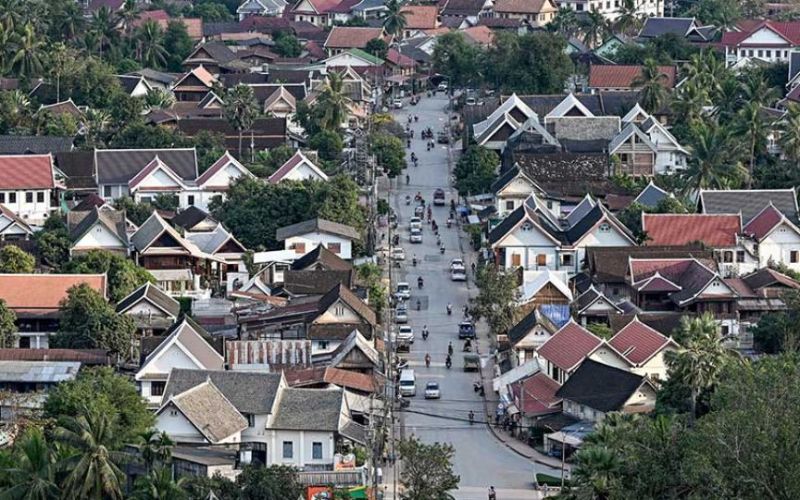
Urban migration has increased demand, particularly for residential and commercial real estate, in Laos’s rapidly urbanizing population. Demand is most concentrated in Vientiane, which has the widest concentration of commercial businesses, government operations, and upper middle class and high income residents. This makes Vientiane the initial and logical focus of urban planning. Development of infrastructure outside of the urban core, available real estate, and local and foreign investor interest shape new projects. Central Vientiane’s real estate market is highly constrained, requiring development to shift to the peripheral outer districts and provincial centers. It is essential to recognize the demand between owner-occupied and investment real estate. Periphery districts are driven by residential need as demand for commercial businesses is more transient and speculative, while the core central districts of Vientiane are driven by speculative demand.
Laos’ real estate market is seeing major development. Urbanization plays a big role in this and there isn’t a specific large project or change in policies that can be attributed to this growth. Regional standards would say that Laos has seen significant price appreciation. According to the latest update in the Global Property Guide, Laos has reported nominal house price growth over the last five years of about 70.48%. This growth has been driven by demand and currency dynamics. Gross rental yields for central Vientiane are about 7.57%. This figure compares very positively to other established regional property markets. Because of this, central Vientiane is favored more by Vientiane’s yield focused investors. These Figures are very preliminary due to how little transaction volume there is in Laos compared to the ASEAN markets. Make sure to source updated transaction volume data or price per square meter data prior to making investments.
Prominent Trends in Laos Real Estate
The concentration of demand for commercial properties in the capital city will continue to shape the property landscape in Vientiane for the foreseeable future. Propelled by increased disposable incomes, the demand is focused predominantly on residential property. There has also been a substantial increase in demand for commercial property to house the burgeoning businesses of both domestic and foreign investors. These businesses are setting up in Vientiane for the first time. Demand is increasing for properties that integrate a mix of residential and commercial functions. A market as small as Vientiane cannot fully support the construction of many specialized properties. Consequently, the city’s central location has become the focus of yield driven property investors, as the demand for Vientiane’s most sought after and best located commercial space offers the highest rental return.
Residential Market in Laos
Laos’s residential market splits fairly cleanly along a few lines. Apartments and condominiums dominate in central Vientiane, catering to professionals, expatriates, and investors drawn to the strongest rental yields in the market. Villas and landed houses sit at the other end of the spectrum, generally larger, more expensive, and more common among wealthier local buyers and longer-term expatriate residents. Pricing differs sharply between city-center and outside-center locations, a gap that reflects both proximity to jobs and amenities and the simple fact that developable land in central Vientiane is genuinely limited. And within all of this, there’s a meaningful split between owner-occupier demand, which is more stable and tied to real housing need, and rental investor demand, which is more sensitive to yield expectations and tends to concentrate in the same central locations where returns currently look strongest.
The Numbers Behind the Laos Residential Market
Rental figures in Vientiane’s city center give a useful sense of where pricing currently sits. A one-bedroom apartment in the city center rents for roughly 18,275,375 LAK per month in the latest available dataset, while a three-bedroom apartment in the same central locations runs closer to 27,310,354 LAK per month. Set against an average monthly net salary of approximately 9,794,191.67 LAK in the same dataset, these figures make clear that central Vientiane rentals sit well above what a typical local salary alone would support, reinforcing that this segment of the market is driven substantially by expatriates, business travelers, and higher-income professionals rather than average local renters. On the return side, gross rental yields in the city center are reported at around 7.57%, a genuinely attractive figure by regional standards. And on the capital appreciation side, Laos’s five-year nominal house price growth is reported at roughly 70.48%, a substantial increase that reflects both real demand growth and the currency dynamics that have shaped Lao asset pricing over the period.
Residential Trends in Laos
Demand for central apartments and rental units continues to lead the residential market, driven by a straightforward preference for urban living and easier access to jobs, services, and amenities. Price sensitivity relative to local income levels remains a defining feature of the broader market, even as a smaller segment of higher-income buyers and renters pushes central Vientiane pricing well above what typical local salaries would support on their own. Rental-led investment strategies appear to be gaining ground relative to pure capital-appreciation plays, a shift that makes sense given how strong current city-center yields look compared with the uncertainty around future price growth in a market with limited historical data. And while overall demand for higher-quality housing remains limited relative to larger regional markets, it is growing steadily as urban incomes rise and more residents, along with a small but persistent expatriate community, look for better-built, better-located homes.
Investment Opportunities
Investments in residential apartments and condominiums are among the most viable in Central Vientiane since rental demand and rental yield are expected to be highest here. Landed houses and villas are popular among well-off local buyers and the smaller expatriate community; they are also expected to retain their value in established neighborhoods. The scale of the current business demand in a market of this size is better served by small-scale commercial construction, such as standalone commercial buildings and retail strips as opposed to large shopping centers. In urban corridors, mixed-use construction serves the demand for housing, retail, and light commercial activities. This has the potential to improve the economic viability of a project in a market where demand for the separate large-scale construction of a single use case is limited. Real estate that is connected to the hospitality business is expected to do well due to the tourism sector in Laos and in Vientiane and Luang Prabang in particular. Based on the rental yield already seen in the city center, rental and serviced apartments are expected to do well. This is even more likely because there is increasing demand for rental accommodation of this type from expatriates and business travelers.
Risks and Challenges of this sector in Laos
Market transparency in Laos real estate remains a persistent problem for investors trying to access reliable and up-to-date data on pricing, the volume of transactions, and current inventory. These data trade-offs are common for developing markets in comparison to their neighboring markets. Liquidity becomes a problem due to a limited number of potential buyers, and the size of the pool is a larger ASEAN market problem. Tight supply for lenders is a problem. Mortgages and development lending in Laos are more conservative compared to the neighboring markets. For foreign investors, navigating local processes and land-rights issues can become a problem. Laos does not share the open land ownership frameworks of other ASEAN markets. Further shrinking the pool of potential customers is the fact that ASEAN’s larger markets provide higher demand for investment.
What Investors Should Monitor
Urban migration patterns will become increasingly important to understand. This is because the speed at which Vientiane and other urban areas become attractive for residents will influence the speed at which real demand for housing and commerce will grow. There needs to be an understanding of the relationship between rental yield and purchase price. Currently, rental yields in the city center are high compared with purchase prices. The value of the center will be high if the investment in quality locations and transport is made. In many places the existing infrastructure is not sufficient to meet the requirements of the market. Changes in foreign ownership and land lease structures will help determine how foreign investment will be permitted in the market. Infrastructure investment in and around Vientiane and the key provincial centers (particularly roads and utilities) are likely to be among the first indicators of the new demand for investment.
Most Common Inquiries
Is Laos real estate a good investment? Yes, particularly the core of Vientiane, which has a rental yield of 7.57%, with strong growth in prices due to a small and undeveloped market.
Which areas are strongest for development? Vientiane is the urban area of greatest demand with the city center providing the biggest yields. The outer districts and selected provincial centers are seeing demand as land in the city center becomes more constrained.
Are rental yields attractive? Yes, to a certain extent. When compared to established regional markets, gross rental yields around 7.57% for the Vientiane’s city center are attractive. However, due to limited data and a smaller buyer base, more care should be taken to analyze these numbers.
Is demand mostly for residential or commercial property? Demand for both property types is growing, but the most evident demand is for residential property rentals and sales. Demand for commercial property is also increasing rapidly, but this is parallel to the increasing number of business activities in the capital.