


Laos has one of Southeast Asia’s most renewable-heavy power systems, but a high renewable share does not make every project investable. The central question for foreign investors is not whether Laos has energy resources. It is whether a project can secure a creditworthy buyer, firm transmission access, reliable foreign-currency cash flows, workable land and concession rights, and an environmental and social package that lenders will accept.
The market changed materially in 2025. Installed renewable capacity reached approximately 12.69 gigawatts (GW), equal to 88.5% of total electricity capacity. Hydropower remained dominant at 10.36 GW, while wind reached 1.15 GW and solar 1.06 GW. The rapid addition of non-hydro capacity shows that Laos is beginning to diversify beyond its traditional hydro-export model.
This creates a credible investment case, especially for cross-border wind and solar, grid infrastructure, storage, industrial power solutions, hydropower modernization and technical services. However, Laos also carries material risks: high sovereign debt, expensive financing, uneven regulatory implementation, foreign-exchange constraints, hydrological exposure, transmission bottlenecks and complex land, community and biodiversity issues. Investors should therefore treat Laos as a project-specific market, not as a generic renewable-energy growth story.
Laos Renewable Energy Market at a Glance
The capacity mix is large relative to the domestic economy and is designed partly around electricity exports. Yet capacity and generation tell different stories. Renewables represented 88.5% of installed capacity in 2025, while the renewable share of actual electricity generation was 77.5% in 2024, the latest generation year reported by IRENA. Hydrology, dispatch, domestic demand, exports and thermal generation all affect the amount of renewable electricity produced in a given year.
| Technology | Installed capacity, 2025 | Share of renewable capacity | Investor interpretation |
| Hydropower | 10,357 MW | 81.6% | The established base and largest export platform, but exposed to hydrology, dam safety and cumulative river-basin impacts. |
| Wind | 1,150 MW | 9.1% | A new utility-scale segment with demonstrated cross-border potential, but dependent on bankable PPAs and dedicated transmission. |
| Solar | 1,058 MW | 8.3% | Rapid recent expansion creates opportunities in utility-scale, industrial and hybrid systems, subject to grid integration and offtaker quality. |
| Bioenergy | 123 MW | 1.0% | A smaller niche linked to sustainable feedstock, agro-processing and waste streams; fuel security is the critical diligence issue. |
| Total renewable capacity | 12,688 MW | 100% | Renewables accounted for 88.5% of Laos’s total installed electricity capacity. |
Source: IRENA (2026). Percentages are calculated from reported installed capacity and may not total exactly because of rounding.
The composition matters for investors. Laos already has a large asset base, so the market is not limited to greenfield generation. It also needs operations and maintenance, refurbishment, forecasting, grid reinforcement, storage, environmental monitoring and commercial systems that improve the reliability and monetization of existing assets.
Why Laos Can Be a Strategic Renewable Energy Market
Regional electricity exports create scale
Laos sits between major power markets in Thailand, Vietnam, China, Cambodia and Myanmar. Its domestic demand alone is unlikely to absorb every large project, so exportability is central to the sector’s economics. The 600 MW Monsoon Wind project reached commercial operation on 22 August 2025 and supplies Vietnam through a dedicated high-voltage interconnection. The project demonstrates that a Lao renewable asset can attract international financing when the concession, power purchase agreement (PPA), transmission route and environmental and social standards are structured together.
For investors, this is an important proof point, not a template that can be copied automatically. Each export project still depends on bilateral approvals, buyer credit, wheeling arrangements, grid readiness, currency denomination, curtailment allocation and termination compensation. A memorandum of understanding or resource study is not equivalent to a financeable revenue contract.
Diversification beyond hydropower is accelerating
Hydropower will remain the backbone of the Lao system, but the 2025 capacity data show a step-change in wind and solar. This diversification can reduce seasonal concentration, broaden the project pipeline and create demand for storage and flexible grid operations. Laos’s national climate reporting includes a 2030 target of 13 GW of hydropower and a conditional target of 1 GW of solar and wind. The latest capacity data suggest the combined solar-and-wind threshold has already been exceeded, although project quality, grid integration and actual generation remain more important to investors than nominal capacity alone.
A large existing asset base needs modernization
An established hydro fleet creates recurring demand for turbine and generator rehabilitation, sediment and catchment management, dam instrumentation, safety reviews, digital monitoring, transmission upgrades and operating optimization. The World Bank recommends incorporating physical climate risks into national and project-level energy planning, strengthening transmission resilience, improving dam safety and using competitive processes to attract private capital to solar and wind. These needs create entry points for engineering groups and specialized suppliers that do not want to assume full greenfield development risk.
Priority Investment Opportunities
1. Cross-border utility-scale wind and solar
The strongest large-project case is generation linked to an identified regional buyer. A hard-currency or otherwise bankable PPA can reduce exposure to the small domestic market and support long-tenor project finance. Attractive sites may combine strong resource quality with proximity to an export corridor. The decisive work occurs before construction: resource validation, interconnection studies, tariff and curtailment terms, sovereign approvals, land rights and lender-grade environmental and social due diligence.
2. Commercial and industrial solar, storage and hybrid systems
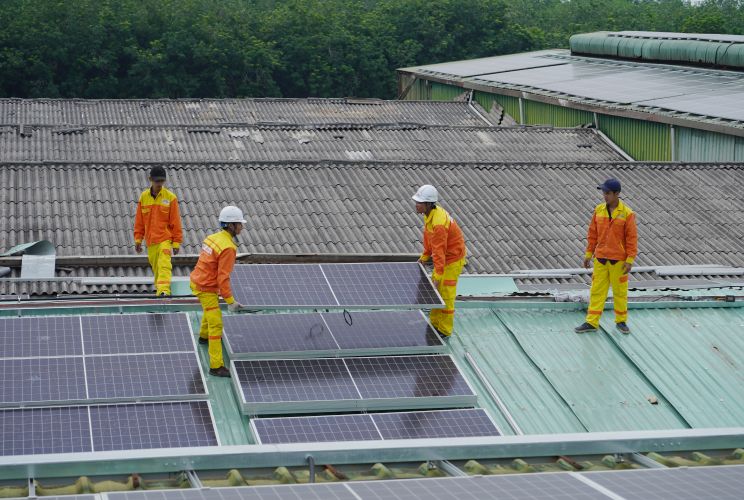
Factories, mines, logistics facilities, hotels and agribusinesses can use on-site solar and battery systems to manage power costs, reliability and carbon requirements. These projects are smaller than export plants and can be developed around a named customer rather than a sovereign utility. They may also support manufacturers seeking lower-emission supply chains. Investors should verify whether self-generation, private-wire arrangements, electricity sales and grid export are permitted for the proposed configuration, and they should stress-test customer credit and payment currency.
3. Transmission, substations and grid flexibility
New wind and solar capacity is only valuable if it can be delivered. Grid reinforcement, cross-border lines, substations, protection systems, forecasting, dispatch tools, smart metering and battery storage are therefore part of the investment opportunity. The World Bank specifically identifies transmission resilience and variable-renewable integration as priorities. Foreign companies may enter as equipment suppliers, engineering-procurement-construction contractors, system integrators, minority investors or long-term maintenance providers.
4. Hydropower rehabilitation and climate resilience
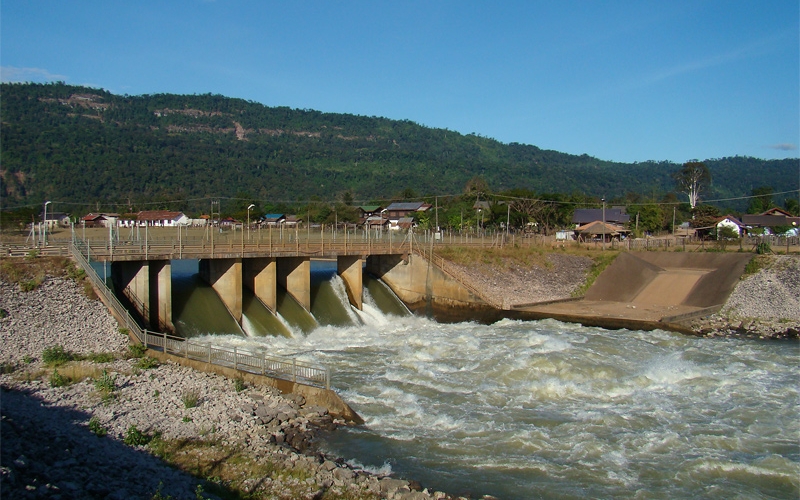
Existing hydropower can often gain output, safety and availability through modernization at lower development risk than a new dam. Opportunities include electromechanical upgrades, spillway and dam-safety systems, hydrometeorological forecasting, catchment monitoring, sediment management and emergency preparedness. The investment thesis should be based on independently verified plant condition and generation history, not only installed capacity. Climate scenarios should be reflected in water availability, flood design, insurance and debt-service models.
5. Specialized services and local capability
The sector also needs bankable feasibility studies, environmental and social management, biodiversity assessment, community engagement, carbon-accounting systems, technical asset management, spare-parts distribution and workforce training. Service-led entry can be a practical first step for SMEs because it reduces land and concession exposure while building relationships with developers, utilities and financiers.
| Opportunity | Typical revenue model | What makes it investable | Principal caution |
| Export wind or solar | Long-term PPA with regional buyer | Creditworthy offtaker, firm interconnection, clear tariff and termination terms | Political, curtailment, transmission and cross-border approval risk |
| Industrial solar and storage | Equipment sale, lease, energy-service agreement or private PPA | Named customer, measurable cost saving, enforceable payment security | Customer credit, licensing and imported-equipment exposure |
| Grid and transmission | EPC contract, equipment supply, concession or availability payment | Defined system need, funded buyer and accepted technical standard | Procurement, right-of-way and payment-delay risk |
| Hydro modernization | Rehabilitation contract, performance-based fee or asset investment | Verified plant condition, operating data and water-resource case | Hidden defects, hydrology and legacy environmental liabilities |
| Technical services | Advisory, monitoring, O&M or recurring software fee | Clear capability gap and local delivery partner | Small contract size and slow procurement cycles |
Regulatory Framework and Market-Entry Requirements

Laos’s amended Law on Investment Promotion entered into force on 1 October 2024. It recognizes wholly foreign-owned companies, joint ventures, contractual cooperation and public-private partnerships. Electricity development is treated as a concession business, and concession terms are project-specific but generally may not exceed 50 years. Applications must demonstrate legal status, relevant experience, financial capacity and technical and economic feasibility.
A practical approval pathway normally includes the following steps:
1. Define the business model and responsible authorities. Determine whether the proposal is a general business, an electricity concession, a public-private partnership, an export project or a customer-sited energy solution.
2. Secure preliminary site, resource and grid evidence. Before committing significant capital, validate land availability, renewable resource, road access, grid capacity and likely buyer demand.
3. Engage the One-stop Investment Service Office and sector authorities. The Ministry of Planning and Investment coordinates concession procedures, while the Ministry of Energy and Mines, Ministry of Natural Resources and Environment, provincial authorities and other agencies participate according to project scope.
4. Complete feasibility and environmental approvals. Concession signing requires approved technical and economic feasibility, environmental and social impact documentation, an environmental and social management plan and relevant land certification.
5. Negotiate the concession, PPA and interconnection package. These documents should allocate construction, force majeure, curtailment, change-in-law, payment, termination and handback risks consistently.
6. Register and import capital through compliant channels. The amended law sets project-value-based registered-capital thresholds and capital-import timelines, with Bank of the Lao PDR certification requirements.
Investment incentives require written confirmation
The 2024 law provides zonal and sectoral profit-tax incentives, customs-duty exemptions for qualifying machinery and materials, and potential land-use incentives. However, eligibility depends on the project category, location, implementing regulations and the final investment or concession documentation. The World Bank reported in December 2025 that additional regulations were still needed to clarify fiscal-incentive strategy and reduce discretion. Investors should therefore model the project both with and without headline incentives until the competent authorities confirm the treatment in writing.
Environmental and transboundary obligations are central
Laos’s Environmental Protection Law requires environmental impact assessment and an environmental and social management and monitoring plan to be approved before an affected project operates. For Mekong mainstream projects, regional procedures may also require notification and prior consultation through the Mekong River Commission. These processes address downstream and cumulative effects, including river flows, fisheries, water quality and community impacts. International lenders may impose standards beyond minimum local requirements, particularly for resettlement, Indigenous Peoples or ethnic groups, biodiversity, labor, dam safety and grievance mechanisms.
Key Risks for Foreign Investors
| Risk | Why it matters | Investor response |
| Offtaker and sovereign risk | A project can generate power but still fail if the buyer cannot pay or contractual remedies are weak. | Assess buyer finances, guarantees, escrow, payment currency, termination compensation and dispute resolution. |
| Grid and curtailment risk | Transmission may lag generation or become unavailable across a border. | Obtain binding interconnection terms, grid studies, completion milestones and clear curtailment allocation. |
| Climate and hydrology | Drought, floods, heat and storms affect hydro output and energy infrastructure. | Use climate-adjusted resource cases, resilient design, insurance and downside debt-service tests. |
| Foreign exchange and financing | High borrowing costs and currency mismatch can undermine tariffs and returns. | Match debt and revenue currencies, limit unhedged exposure and verify repatriation and account arrangements. |
| Land, community and biodiversity | Large sites and linear infrastructure can create livelihood, forest and cumulative-impact issues. | Complete early stakeholder mapping, land-chain review, biodiversity screening and lender-grade management plans. |
| Regulatory implementation | Approvals and incentives may depend on project-specific interpretation and coordination among agencies. | Build a written regulatory roadmap, use experienced counsel and condition capital deployment on approvals. |
Macroeconomic and financing constraints deserve particular attention. Laos remains in debt distress and has limited fiscal space, while the World Bank identifies high borrowing costs as a constraint on clean-energy competitiveness. A project that relies on public balance-sheet support or a low tariff should therefore be assessed under delayed-payment, refinancing and currency-depreciation scenarios.
Regulatory transparency and contract enforcement also require careful diligence. The U.S. Department of State notes that foreign investment in Laos is concentrated in sectors including hydropower, mining and infrastructure, while investors continue to face concerns around administrative transparency and implementation. These risks do not make investment impossible, but they increase the value of documentary controls, reputable local partners and staged capital commitments.
How Foreign Investors Should Enter the Market
The preferred entry model should match the investor’s ability to manage concession, construction and country risk. A developer with regional utility relationships may pursue an export project. An equipment company may begin with grid, hydro or solar supply contracts. An SME may enter through technical services or a customer-backed industrial system. A private-equity investor may prefer an operating asset or rehabilitation platform with verifiable cash flow rather than early-stage greenfield exposure.
Before committing capital, an opportunity should pass seven tests:
- Demand: Is there a named domestic or regional buyer with a documented need and payment capacity?
- Revenue: Are tariff, currency, indexation, curtailment and termination terms sufficiently clear for financing?
- Grid: Is interconnection technically feasible, funded and synchronized with the generation schedule?
- Resource and climate: Has an independent adviser validated wind, solar or water assumptions under downside conditions?
- Land and environmental matters: Are rights, community impacts, biodiversity and cumulative effects understood before site control becomes irreversible?
- Counterparties and governance: Have beneficial owners, contractors, intermediaries and decision-making processes been checked?
- Exit and contingency: Can the investor pause, resize, refinance or exit if approvals, transmission or the PPA do not materialize?
A staged commitment is generally more defensible than immediate full-scale deployment. Useful stages include a resource campaign, grid study, conditional site agreement, customer pilot, limited development budget, or technical-service contract. Each stage should have measurable evidence requirements before the next tranche of capital is released.
How MTA Supports Renewable Energy Market Entry in Laos
MTA helps international companies translate sector interest into a project-level market-entry decision. Support can include:
- Market and competitor analysis by technology, customer group and export corridor;
- Offtaker, developer, EPC contractor, distributor and local-partner identification;
- Regulatory mapping across investment, energy, land, environmental and provincial approvals;
- Site, grid, logistics and supply-chain pre-feasibility;
- Commercial validation of tariffs, customer demand, payment structures and entry models;
- Partner due diligence, stakeholder interviews and risk screening; and
- Go-to-market planning for developers, manufacturers, service providers and investors.
The objective is not to present Laos as automatically attractive because it has abundant renewable resources. It is to determine where resource quality, regional demand, regulation, infrastructure and counterparty strength combine into a commercially executable project.
Conclusion: Is Renewable Energy in Laos Worth Investing In?
Yes, selectively. Laos offers a large renewable asset base, growing wind and solar capacity, regional export potential and a clear need for grid, storage, modernization and technical capability. The 2025 commissioning of the Monsoon Wind project confirms that sophisticated cross-border projects can reach operation. The market also offers smaller, potentially more controllable opportunities in industrial systems, equipment, rehabilitation and specialized services.
However, the investment case is not based on capacity growth alone. Bankability depends on the quality of the PPA, interconnection, payment currency, concession, land rights, environmental and social performance, climate resilience and counterparties. Tax incentives can improve returns, but should not rescue a weak commercial structure. For most foreign entrants, the strongest approach is to validate a specific customer or export route, stage capital and maintain a clear downside plan.
Companies considering renewable-energy expansion in Laos can engage MTA for an independent market assessment, partner and offtaker validation, regulatory roadmap and project feasibility review. The next step should be a defined investment thesis – technology, customer, location, revenue model and risk limits – tested against current market evidence before capital is committed.