


Laos has moved from post-pandemic reopening to a more credible tourism recovery. International arrivals reached 4.58 million in 2025, an 11% increase from 2024 and approximately 96% of the 2019 peak. The momentum continued in the first five months of 2026, when the country recorded more than 2.1 million international visitors, up 8% year on year, with reported tourism revenue exceeding USD 960 million.
For investors, however, rising arrivals do not automatically justify new hotel capacity. Laos already had 3,447 accommodation establishments and 75,924 rooms in 2024, while reported provincial occupancy rates generally ranged from 39% to 59%. The stronger thesis is therefore selective: invest where improved rail and regional connectivity meet an identifiable destination, customer segment and service gap. In many locations, operating expertise, asset repositioning, guest experiences and hospitality infrastructure may offer better risk-adjusted potential than a large greenfield hotel.
This investor guide assesses the market outlook, opportunity areas, regulatory framework, incentives, risks and practical entry strategy for foreign companies considering tourism and hospitality investment in Laos.
Laos Tourism Market Outlook: Recovery with Important Qualifications
The recovery is commercially meaningful. International arrivals increased from 3.42 million in 2023 to 4.12 million in 2024 and 4.58 million in 2025. In 2024, international tourism generated an estimated USD 1.42 billion, compared with USD 934.7 million in 2019. Average stay and spending also improved: the Tourism Development Department estimated an average stay of 6.25 days and spending of USD 74.53 per visitor per day across all visitor categories. Longer-haul international visitors averaged 10.49 days and USD 119.76 per day.
Table 1. Laos tourism and hospitality market snapshot
| Indicator | Latest figure | Investor interpretation |
| International arrivals | 4.58 million in 2025 | Demand is close to the 2019 peak, but source-market concentration remains high. |
| 2026 momentum | 2.1+ million, Jan–May | Growth continued, although rising travel costs affected some destinations. |
| International tourism revenue | USD 1.42 billion in 2024 | Higher spending and longer stays support premium experiences, not only room volume. |
| Accommodation supply | 3,447 establishments; 75,924 rooms in 2024 | Room supply grew about 37% from 2019, increasing the need for property-level feasibility. |
| Arrival mode | 54.4% land; 45.6% air in 2024 | Rail, road and border access are as important as airline capacity. |
| Domestic tourism | 3.90 million trips in 2024 | Domestic and expatriate demand can reduce reliance on international leisure seasons. |
The visitor mix matters as much as the headline total. Thailand, China and Vietnam supplied 3.77 million visitors in 2025—about 82% of all international arrivals. These markets benefit from proximity and improved land connections, but many visitors are price-sensitive and take shorter trips. By contrast, longer-haul travellers represent a smaller volume but a higher-spending segment. A viable investment needs to decide which economics it is designed around: regional volume, higher-yield independent travel, business demand, domestic tourism or a combination.
Why Laos Can Be a Strategic Tourism and Hospitality Market
Connectivity is changing the investable map
The Laos–China Railway has materially reduced travel time across the northern and central corridor. By April 2026, its international passenger service had handled more than 800,000 cross-border trips from travellers representing over 120 countries and regions. The Kunming–Vientiane journey takes less than ten hours, connecting Vientiane, Vang Vieng, Luang Prabang and destinations in Yunnan within one itinerary.
The investment implication is not simply “build near a station”. Railway-linked demand must be converted into bookable products, reliable transfers, multilingual distribution and multi-destination itineraries. Hotels, destination-management companies, activity operators and food-and-beverage concepts that integrate with the corridor can capture more value than stand-alone assets that rely on walk-in demand.
Cultural and natural assets support differentiated products

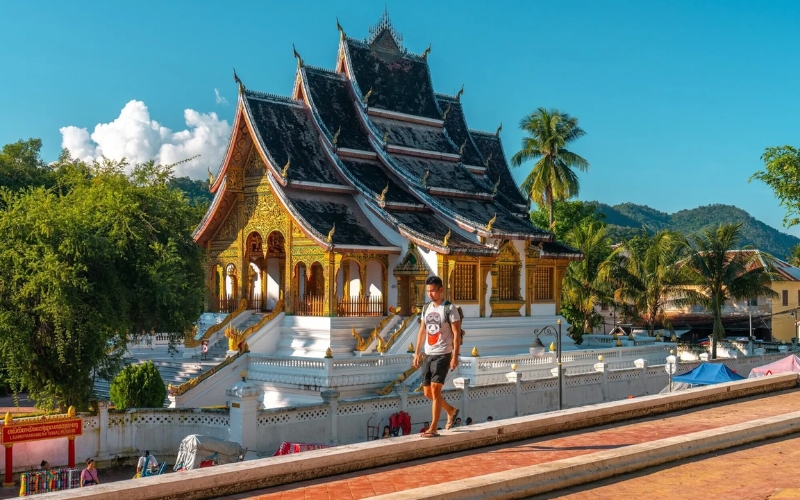
Laos now has four UNESCO World Heritage properties, including the Town of Luang Prabang, Vat Phou and the Champasak Cultural Landscape, the Plain of Jars, and the transboundary Phong Nha-Ke Bang–Hin Nam No property added in 2025. The national tourism inventory counted 2,410 tourist sites in 2024, with natural attractions forming the majority.
This asset base supports boutique heritage accommodation, conservation-led eco-lodges, wellness, river and trail experiences, culinary tourism and community-based products. The opportunity is strongest when the product extends length of stay and local spending. It is weaker when an investor treats scenery or heritage status as sufficient demand evidence without testing access, carrying capacity, seasonality and distribution.
Tourism is aligned with national growth priorities
Tourism and transport helped raise Lao economic growth to 4.8% in 2025, according to the World Bank, while the Asian Development Bank expects services to remain supported by tourism, transport and logistics in 2026. The 2024 Investment Promotion Law also identifies environmentally friendly and sustainable natural, cultural and historical tourism as an incentive-eligible sector.
This policy alignment is useful, but it does not remove execution risk. Incentives are conditional, detailed implementing rules matter, and a project still requires enterprise registration, sector licences, land rights and—where relevant—investment, concession, construction, environmental and heritage approvals.
Where the Strongest Investment Opportunities Sit
Table 2. Destination and business-model opportunity map
| Market | Demand logic | More credible entry models | Key diligence question |
| Vientiane Capital | Business, government, development-sector, transit and short-break demand | Select-service hotels, extended stay, serviced offices, MICE support, branded F&B | Can the asset sustain weekday and low-season occupancy without relying on one client group? |
| Luang Prabang | Heritage, culture, wellness and higher-yield leisure | Boutique/upscale management, adaptive reuse, wellness, curated experiences | Do design, traffic, heritage and environmental rules permit the proposed concept? |
| Vang Vieng and rail corridor | Regional leisure, adventure, domestic tourism and rail-linked short stays | Limited-service accommodation, activity operations, safety systems, transfers | Is demand durable outside weekends, festivals and peak weather periods? |
| Pakse, Champasak and southern islands | Heritage, river, nature and cross-border itineraries | Eco-lodges, boutique resorts, destination services, culinary and river products | Are access, utilities and seasonal operating costs reflected in the model? |
| Emerging nature and community destinations | Small-scale eco-tourism and specialist travel | DMCs, community partnerships, guides, equipment, low-impact lodges | Can the project create local benefits while protecting the resource that drives demand? |
1. Repositioning and operating existing accommodation
National room supply increased from 55,541 in 2019 to 75,924 in 2024. This expansion, combined with moderate occupancy, makes acquisition, lease, management contracts and conversion strategies worth examining before greenfield development. Many independent properties can improve performance through revenue management, direct booking, energy efficiency, food-and-beverage redesign, maintenance standards and stronger access to regional online channels.
The core diligence is asset-specific. Investors should reconstruct occupancy, average daily rate, channel costs, foreign-currency exposure, maintenance capital expenditure and source-market concentration rather than relying on national arrival growth.
2. Higher-value experiences and destination management
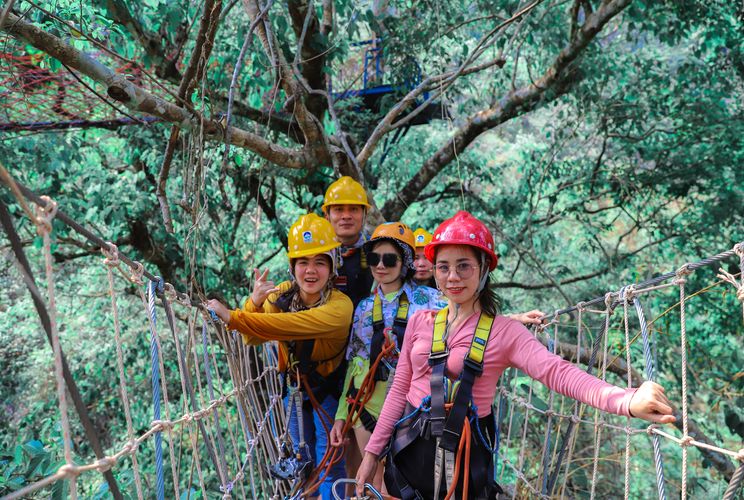
Laos has an opportunity to increase visitor yield by packaging experiences that are difficult to replicate elsewhere: heritage interpretation, river journeys, responsible wildlife and cave tourism, cycling, trekking, wellness, crafts and food. Foreign investors can participate through destination-management companies, specialist tour operations, booking and distribution systems, training, equipment and minority partnerships with local operators.
This model can be less capital-intensive than hotel ownership, but quality assurance is central. Product safety, guide capability, insurance, emergency response, truthful marketing and community benefit-sharing should be designed before scale.
3. Hospitality infrastructure and business-to-business services
A less visible opportunity sits behind the guest experience. Accommodation and restaurant operators need property-management systems, payment integration, multilingual sales support, procurement, laundry, cold chain, water treatment, waste solutions, solar and energy management, maintenance and staff training. These services address operating bottlenecks across multiple properties and can enter through partnerships or service contracts with lower fixed-asset exposure.
4. Sustainable and community-based tourism
The 2024 tourism report recorded 356 homestay providers across 39 villages, showing an established but still small community-tourism base. Conservation-led models can open emerging destinations and distribute income beyond major centres. They also require patient execution: land and resource rights, village consent, revenue sharing, waste capacity, cultural safeguards and realistic visitor volumes must be documented. “Eco” positioning without measurable environmental and community controls creates reputational and regulatory risk.
Key Risks Foreign Investors Must Price into the Business Case
- Demand concentration and seasonality. The dominance of Thailand, China and Vietnam creates exposure to border policies, regional economic conditions, transport pricing and short-stay behaviour. Rainy-season and shoulder-period demand must be modelled separately.
- Macroeconomic and cost volatility. Laos entered 2026 in a stronger position, but the World Bank still projects growth moderating to 3.8%. Inflation returned to nearly 10% in April 2026, and fuel prices remained 38%–40% above pre-shock levels in early June. Imported equipment, food, transport and utilities can move faster than room rates.
- Labour and skills constraints. Hospitality requires language, culinary, digital, maintenance and supervisory skills. The wider economy continues to face labour and skills shortages, so retention, training and staff accommodation may need explicit budgets.
- Property-level oversupply. National arrivals can rise while a particular hotel underperforms because of location, category, access or distribution. New room supply should be approved only after a competitor set and demand-generator audit.
- Infrastructure and service reliability. Rail connectivity is a structural advantage, but roads, airport capacity, utilities, waste systems and digital connectivity vary substantially by destination. Backup systems add capital and operating costs.
- Environmental, heritage and social constraints. Projects near protected landscapes or heritage zones may require impact assessment and design controls. UNESCO has specifically called for tourism carrying-capacity planning and prior review of potentially irreversible projects in Luang Prabang.
- Regulatory interpretation and data quality. Requirements can differ by business type, project size and approval level. Published formalities may not reflect every current provincial practice, making local verification essential before land commitment or construction.
Regulations, Ownership and Investment Incentives
Investment form and approval route
The 2024 Investment Promotion Law permits wholly foreign-owned investment, joint ventures, contract-based business cooperation and public–private partnerships. A non-controlled general business normally proceeds from enterprise registration to a sector business-operation licence. Controlled businesses require enterprise registration, an investment application and investment licence before the relevant operating licence. Concession projects—such as large tourism-site or complex destination developments—can require an MOU, feasibility study, environmental assessment, concession or development agreement and investment licence.
The Lao Trade Portal continues to list separate operating licences for hotels and guesthouses and for restaurants and pubs. Its published foreign-investor notification also places hotels and resorts “over four stars” under conditions including certified financial security and registered capital equal to at least 30% of total project capital. Because this notification predates the 2024 law, investors should confirm its current application and any newer sector rules directly with the central and provincial authorities.
Land, buildings and heritage controls
Foreign hospitality projects typically rely on land leases or concessions rather than unrestricted land ownership. The Investment Promotion Law recognises rights under lease or concession agreements and allows investors to own buildings and constructions on leased or concession land, subject to the relevant laws. It also prohibits foreign investors from buying, selling or subleasing land in ways that do not satisfy the agreement’s objectives.
Land title, boundaries, permitted use, access, compensation history, concession obligations and exit rights should be independently verified. For Luang Prabang and other heritage locations, design approval and heritage-impact requirements can materially affect density, height, demolition, traffic and construction sequencing.
Investment incentives
Environmentally friendly and sustainable natural, cultural and historical tourism is a promoted sector under the 2024 law. Qualifying investments may receive profit-tax holidays of up to ten years in Zone 1 and up to four years in Zone 2. Potential incentives also include customs-duty exemptions for qualifying fixed-asset materials and machinery, a 5% personal income tax rate for eligible specialists, and state land lease or concession fee exemptions of up to ten years in Zone 1 and five years in Zone 2. Detailed eligibility, location classification, certification and implementing rules must be confirmed before incentives are included in a financial model.
The law also provides a right to repatriate capital, profits and other eligible revenues through banks in Laos after taxes, duties and charges have been paid. In practice, investors should map banking, foreign-exchange documentation and dividend procedures at the start of the project rather than at the first planned distribution.
A Practical Market-Entry Strategy for Laos Tourism and Hospitality
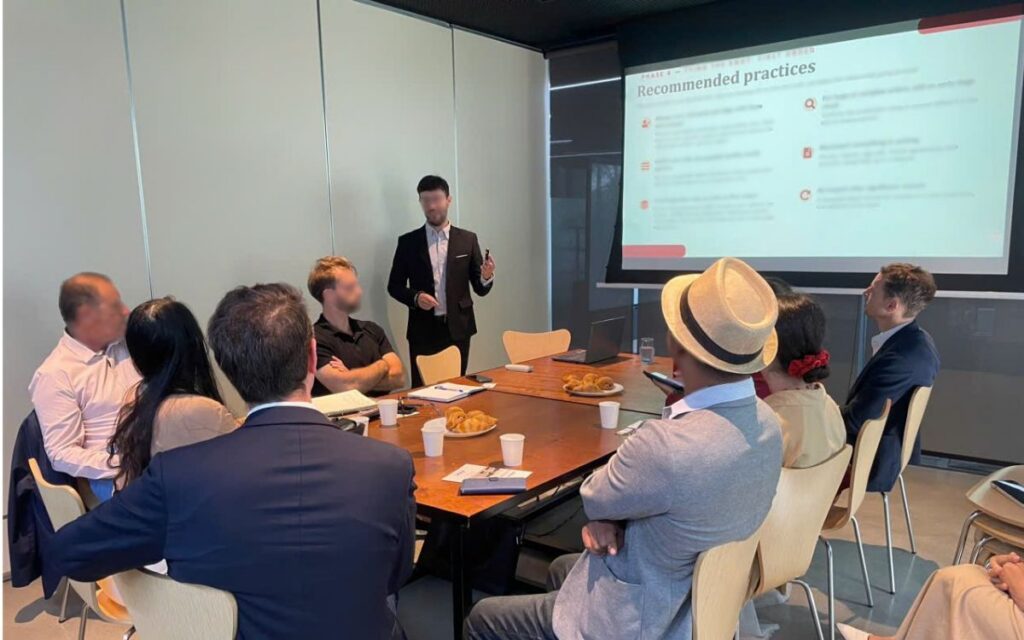
1. Define the demand thesis. Select the guest segment, origin markets, trip purpose, seasonality and price point. A national tourism forecast is not a property forecast.
2. Validate a destination and micro-location. Measure access, travel time, demand generators, competitor performance, planned supply, utilities, labour availability and local development rules.
3. Choose the lowest-risk entry model that can prove demand. Consider a management contract, lease, operating partnership, DMC, service contract or small pilot before committing to a resort-scale development.
4. Complete regulatory, land and partner due diligence. Confirm beneficial ownership, licences, tax status, land rights, concession obligations, environmental history, heritage constraints and dispute exposure.
5. Build a downside operating model. Stress-test occupancy, average rate, imported inputs, fuel, utilities, wages, foreign exchange, channel commissions, closure periods and maintenance capital expenditure.
6. Create local capability and controls. Invest in staff development, procurement standards, safety, anti-bribery procedures, cash controls, data visibility and community engagement before expansion.
The most credible projects will usually have a named customer segment, a defensible destination, a realistic route to licences and land rights, and an operating model that works without aggressive occupancy assumptions. Investors should treat incentives as upside and execution capability as the core investment case.
Conclusion: Is Laos Tourism and Hospitality Worth Investing In?
Laos is becoming more investable as arrivals recover, rail connectivity expands and the country’s cultural and natural assets gain broader regional access. The opportunity is real, but it is not a blanket call for additional rooms. Supply has already expanded, demand is concentrated in neighbouring markets, and operating costs remain exposed to inflation, fuel, skills shortages and infrastructure gaps.
The stronger cases are selective: repositioning an existing asset, building a differentiated boutique or eco-product in a proven destination, serving rail-linked regional demand, creating higher-value experiences, or providing technology and operational services to the hospitality sector. Each case should be tested at destination and property level, with sustainability and regulatory compliance built into the commercial model.
MoveToAsia supports international companies with Laos market research, destination and competitor analysis, partner identification, site and land due diligence, regulatory mapping, incentive assessment, customer validation and entry-strategy design. For investors evaluating tourism and hospitality in Laos, MTA’s role is to convert market momentum into a project that is commercially defensible, locally executable and compliant from the outset.