


Laos is becoming more relevant to mainland Southeast Asian supply chains, but its logistics opportunity is often overstated. The China–Laos Railway, dry ports and stronger cross-border trade have changed the country’s connectivity. They have not removed the structural disadvantages of a small domestic market, uneven roads, concentrated cargo flows and complex border operations.
For foreign investors, the central question is therefore not whether Laos will become a regional logistics hub in the abstract. It is whether a specific corridor, customer base and service model can generate sufficient throughput while controlling regulatory, infrastructure and foreign-exchange risks. The most credible opportunities are targeted: rail-linked freight services, contract warehousing, cold chain, customs technology, consolidation and specialist transport for export-oriented industries.
The investment case is improving. The World Bank estimated real GDP growth of 4.2% in 2025, supported partly by transport, tourism and exports, while foreign direct investment reached approximately USD 950 million in the first three quarters. Yet logistics performance remains below regional peers: Laos ranked 115th of 139 economies in the World Bank’s 2023 Logistics Performance Index, with a score of 2.4 out of 5.
Investor view: a selective opportunity rather than a nationwide logistics boom
Laos offers a strategic position between China, Thailand, Vietnam, Cambodia and Myanmar. This geography can support transit activity, but geography alone does not guarantee attractive returns. Investors need to distinguish between corridors with proven cargo growth and locations where infrastructure exists without sufficient customer demand.
Table 1. Laos logistics market snapshot
| Indicator | Latest evidence | Investor interpretation |
| Economic momentum | GDP growth estimated at 4.2% in 2025; transport services contributed to growth. | Demand is expanding, but the market remains exposed to external trade and macroeconomic volatility. |
| Rail freight | The railway operator reported 5.46 million tonnes of cross-border cargo in 2025, up 14% year on year. | Rail-linked services have the strongest measurable volume momentum, particularly for China-facing trade. |
| Trade concentration | Thailand and China supplied nearly 80% of merchandise imports in 2023; China, Vietnam and Thailand received over 70% of exports. | Corridor selection and relationships with neighbouring-country operators are more important than broad national coverage. |
| Logistics performance | World Bank LPI score of 2.4 and rank of 115 in 2023. | Service quality, infrastructure and shipment reliability remain investable gaps, but also raise operating costs. |
| Trade facilitation | Overall implementation reached 75.27% in 2025; average import release time fell to 3 hours 19 minutes in 2024. | Customs digitisation is progressing, while cross-border data interoperability remains incomplete. |
| Investment framework | The amended Investment Promotion Law took effect on 1 October 2024 and lists logistics and freight transport as promoted activities. | Incentives may improve project economics, but licensing and eligibility must be confirmed for the exact business model. |
The market is therefore best suited to investors that can bring operational discipline, technology, cross-border networks or sector-specific expertise. Generic fleet expansion and speculative warehouse construction are less compelling unless backed by anchor customers.
Why Laos is gaining logistics relevance
The China–Laos Railway has altered north–south freight economics
The 1,035-kilometre China–Laos Railway began operations in December 2021 and now connects Vientiane with Kunming. Operator-reported cross-border cargo reached 5.46 million tonnes in 2025, 14% higher than in 2024. The range of goods has expanded from a narrow group of bulk and general cargo to more than 3,800 product categories, including electronics, photovoltaic products and cold-chain fruit.
This creates demand beyond train operations. Investors can participate through container handling, bonded storage, transloading, rail-road coordination, temperature-controlled facilities, cargo insurance support, tracking systems and specialised distribution. The strongest cases will be located close to proven interchange points and tied to shippers that already use the railway.
Trade flows are large relative to the domestic economy and highly corridor-dependent
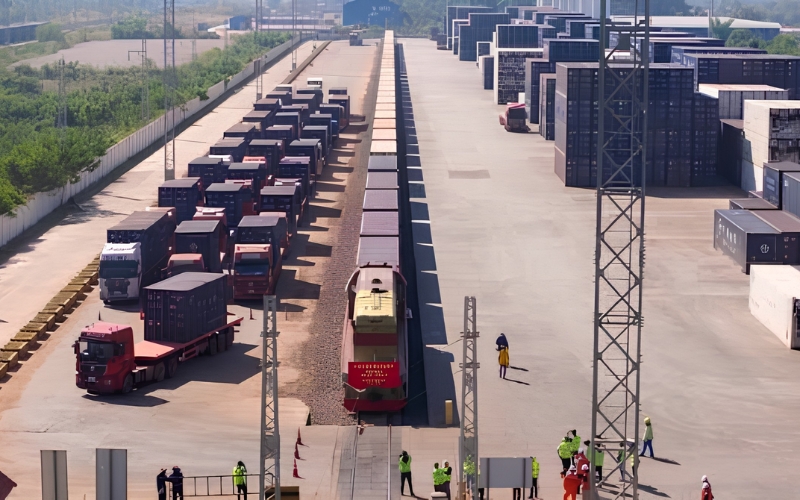
Laos imported USD 7.19 billion and exported USD 6.04 billion in goods in 2023. Thailand accounted for 46.4% of imports and China for 33.3%. On the export side, China represented 38.2%, Vietnam 19.9% and Thailand 13.1%. This concentration makes the logistics market more predictable in one sense: demand is focused on a limited number of cross-border corridors. It also creates dependency on neighbouring-country regulations, port connections and operator agreements.
For investors, the practical market is not “Laos logistics” as a single unit. It is a portfolio of corridor-specific businesses: China-facing rail freight in the north, Thailand-facing import and distribution activity around Vientiane, east–west trade around Savannakhet, and southern flows linked to Thailand, Cambodia and Vietnam.
Customs digitisation is improving the operating environment
The United Nations Economic and Social Commission for Asia and the Pacific reported that Laos’s overall trade-facilitation implementation rate rose to 75.27% in 2025. The 2024 Time Release Study recorded an average import release time of 3 hours and 19 minutes, down from 4 hours and 51 minutes in 2022, while the reported export-processing phase averaged 49 minutes. ASYCUDA covers 99% of international trade, and the National Single Window rollout reached 29 border checkpoints, three train stations and two special economic zones.
The improvement is material, but investors should not confuse customs clearance with end-to-end logistics performance. ESCAP found that domestic paperless trade had reached 74.07%, whereas cross-border paperless trade remained at 50%. Electronic submissions may still be accompanied by physical-document requirements, and interoperability with foreign agencies remains incomplete. Digital freight-forwarding and compliance solutions are therefore an opportunity, but implementation must accommodate hybrid processes.
Where the strongest investment opportunities are
1. Rail-linked multimodal services
The clearest growth segment is the interface between rail and road. Opportunities include container yards, transloading, consolidation, empty-container management, bonded services, scheduled feeder trucking and equipment maintenance. These services can improve asset utilisation without requiring an investor to own railway infrastructure.
However, multimodal economics depend on transfer efficiency. A World Bank review noted that restrictions on Thai trucks and tractor swaps at the Vientiane Logistics Park could add an estimated USD 300–400 per twenty-foot equivalent unit, while limited shuttle capacity and unclear fees reduced the advantages of the new infrastructure. Investors should validate current charges, handling steps and contractual responsibilities rather than relying on headline rail tariffs.
2. Contract warehousing and distribution
Laos has room for professionally managed warehousing serving consumer goods, industrial inputs, mining supplies, agricultural exports and e-commerce distribution. The opportunity is strongest where customers need inventory control, security, temperature monitoring, bonded handling or service-level reporting that informal operators cannot consistently provide.
A build-to-suit or dedicated-user model is safer than speculative capacity. The domestic market is small, and cargo can be seasonal or concentrated among a few large customers. Investors should seek minimum-volume commitments, indexed pricing and clear responsibility for utilities, customs delays and inventory losses.
3. Cold chain and agrifood logistics
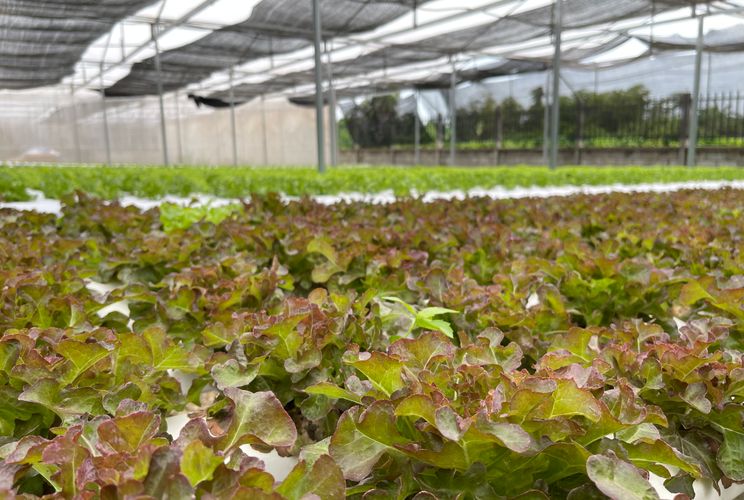
Agricultural exports such as cassava, fruit, rubber and livestock products support demand for pre-cooling, refrigerated storage, packhouses, inspection support and temperature-controlled transport. The railway’s growing use for cold-chain fruit strengthens the case for facilities that connect farms and processors to rail terminals and border gates.
Cold chain is nevertheless a demanding investment. Utilisation can fall outside harvest periods, electricity quality varies, and export access depends on sanitary and phytosanitary approvals. A viable project should combine several product categories, secure backup power and include technical support for traceability, packaging and quality compliance.
4. Freight forwarding, customs and supply-chain technology
Digitisation creates opportunities for shipment visibility, customs-document preparation, route planning, warehouse management, electronic proof of delivery and cross-border data exchange. Foreign providers can differentiate through integration with regional networks and multilingual compliance capabilities.
The preferred product design is practical rather than fully automated. Systems should operate with intermittent connectivity, support both electronic and paper workflows, and provide local implementation and customer support. Revenue models based on enterprise clients or transaction volumes are generally more credible than consumer-scale logistics platforms.
5. Fleet services, consolidation and green logistics
Road freight will remain essential because most cargo still requires first- and last-mile trucking. Opportunities include maintenance centres, tyres and parts, fleet leasing, driver training, load consolidation, weigh-control technology and fuel-efficiency services. Rail-adjacent consolidation centres could also shift heavy freight away from deteriorating roads.
The World Bank has highlighted unpredictable maintenance funding, heavy-truck damage, fragmented road maintenance and climate exposure as major constraints. It recommends stronger axle-weight enforcement, consolidation centres and incentives for rail interchange. Investors can address these gaps, but road-condition assumptions and downtime must be stress-tested.
Table 2. Opportunity and risk matrix
| Subsector | Demand driver | Preferred entry model | Main risk to test |
| Rail-linked handling | Rising cross-border rail freight | Terminal service contract, joint venture or asset-light operating agreement | Transfer fees, interoperability, volume concentration |
| Warehousing and 3PL | Import distribution and industrial inventory needs | Build-to-suit facility with anchor customer | Low utilisation, customer credit, land and power |
| Cold chain | Agricultural exports and food distribution | Multi-customer hub linked to processor or exporter network | Seasonality, electricity, SPS compliance |
| Freight forwarding and customs | More complex multimodal and cross-border movements | Regional network with local licensed partner | Licensing, manual procedures, liability for declarations |
| Digital logistics | Need for visibility and document control | Enterprise software plus local implementation | Connectivity, adoption and system integration |
| Fleet and maintenance services | Large first- and last-mile road requirement | Service centre, leasing or managed-fleet contract | Road quality, parts imports and currency exposure |
Corridor and location strategy
Location selection should follow cargo, not infrastructure announcements. The following corridor logic is useful for initial screening:
- Northern corridor—Boten, Luang Namtha, Oudomxay and Vientiane: strongest for China-linked rail freight, agricultural exports, minerals and regional transit. Rail-access quality and customer concentration are decisive.
- Vientiane–Nong Khai gateway: strongest for Thailand-linked imports, consumer distribution, industrial inputs and multimodal transfer. Investors must examine dry-port charges, truck interchange rules and access to Thai rail and seaports.
- Savannakhet east–west corridor: relevant for Thailand–Vietnam transit, manufacturing support and the Savan dry-port ecosystem. Throughput should be verified by commodity and shipper rather than inferred from corridor status.
- Southern corridor around Champasak and Vangtao: relevant for agriculture, tourism supply chains and trade with Thailand and Cambodia. The smaller cargo base favours multi-user facilities and flexible fleets.
The World Bank recorded three operational dry ports in its 2024 project review: Savan Logistics, Vangtao Dry Port and Thanaleng Dry Port. Their existence demonstrates policy commitment, but performance varies. Investors should assess whether a facility offers transparent tariffs, adequate equipment, reliable customs presence, competitive access and sufficient surrounding demand.
Competitive advantages and material risks

Competitive advantages
- Central geography in mainland Southeast Asia, with direct borders to five countries.
- A functioning international railway with measurable freight growth and expanding commodity coverage.
- Trade flows that are large relative to the domestic economy and concentrated on identifiable corridors.
- Improving customs digitisation and a national policy objective to reduce permit and clearance times.
- A 2024 investment law that identifies logistics, freight transport, warehousing, dry ports and cross-border transport as promoted activities eligible to apply for incentives.
Risks investors should not underestimate
- Small domestic market: transit narratives can mask limited local consumption and a narrow base of large cargo owners.
- Road and climate exposure: flooding, landslides, heavy-truck damage and maintenance gaps can disrupt routes and raise lifecycle costs.
- Border and operating friction: fees, vehicle-transfer requirements, documentation and agency coordination can erode the theoretical savings from new infrastructure.
- Macroeconomic and financing risk: although inflation and the exchange rate stabilised in 2025, foreign-exchange liquidity and debt pressures remain relevant to imported equipment and profit repatriation.
- Customer and counterparty concentration: losing one major shipper can materially affect warehouse or fleet utilisation.
- Execution capacity: skilled logistics managers, technicians, customs specialists and drivers may be difficult to recruit and retain.
Regulations and incentives foreign investors should know
The amended Law on Investment Promotion entered into force on 1 October 2024. It replaced the 2016 law and its 2019 amendment. In 2025, the government established the Investment Promotion and Management Committee and its Office as the central one-stop investment service.
The law distinguishes between non-controlled general businesses, controlled businesses and concession businesses. The applicable route depends on the exact activity, assets and use of state land. A standard logistics service may require enterprise registration and sector operating licences; a dry port, major terminal, public road operation or land-intensive infrastructure project may require additional investment approval, concession arrangements, environmental studies and government negotiation.
Logistics services, freight transport, transit warehousing, dry ports, cross-border connecting roads and passenger or freight transport by road, water, rail and air are listed among promoted sectors. Available incentives can include profit-tax holidays, customs-duty and value-added-tax exemptions, preferential land-lease terms and facilitation for foreign specialists. Eligibility is not automatic and should be confirmed before the financial model assumes any benefit.
Foreign investors also need to plan for customs registration, transport and freight-forwarding licences, land-use rights, environmental approvals, employment compliance, tax registration and foreign-currency banking arrangements. The law recognises profit and capital repatriation through the formal banking system after tax obligations are fulfilled, but actual transaction planning should be discussed with banks and advisers early in the project.
A practical market-entry approach

A logistics investment in Laos should be developed from verified demand backwards. A disciplined process includes:
1. Define the cargo thesis. Identify the commodities, origin–destination pairs, seasonality, handling requirements and current pain points. Avoid using national trade growth as a substitute for customer evidence.
2. Validate anchor customers. Obtain realistic volume forecasts, service specifications, payment terms and willingness to sign minimum-volume or take-or-pay commitments.
3. Map the complete corridor. Test border procedures, road conditions, rail schedules, transloading steps, port links, empty-container flows, insurance and contingency routes.
4. Confirm the regulatory pathway. Determine whether the activity is non-controlled, controlled or concession-based and identify all sector, land, customs, environmental and construction approvals.
5. Select a staged entry model. Consider an operating contract, leased warehouse, minority joint venture, freight-forwarding partnership or technology deployment before committing to a large greenfield terminal.
6. Stress-test the economics. Model lower throughput, currency depreciation, equipment-import delays, higher fuel and power costs, customer default and temporary corridor disruption.
Joint ventures can provide local relationships and licensing knowledge, but partner selection requires beneficial-ownership checks, financial verification, litigation and tax review, site-title confirmation and assessment of government or state-enterprise links. Contractual governance should cover tariff changes, related-party transactions, capital calls, data access and exit rights.
Is logistics in Laos worth investing in?
Yes—under a corridor-specific, customer-backed and operationally disciplined strategy. Laos has moved beyond being only a landlocked market. Rail freight growth, dry-port development and customs digitisation are creating investable needs across multimodal handling, warehousing, cold chain, forwarding and logistics technology.
The opportunity is not yet a broad, low-risk logistics boom. The country’s LPI performance, road constraints, incomplete cross-border interoperability and small domestic cargo base mean that scale must be earned rather than assumed. Projects built around a named customer problem and a proven corridor are more attractive than projects built around the general “land-linked” narrative.
For most foreign investors, the preferred strategy is to enter with a focused service, secure anchor volumes, measure operating performance and expand only after the border, infrastructure and payment assumptions have been demonstrated in practice.
How MTA can support logistics market entry in Laos
MoveToAsia supports international companies in turning regional logistics interest into a bankable market-entry plan. MTA can provide corridor and cargo-flow research, customer interviews, competitor benchmarking, partner and operator screening, site and dry-port assessment, regulatory mapping, licence coordination and financial feasibility analysis.
For investors considering a warehouse, cold-chain facility, freight-forwarding platform, fleet service or multimodal project, MTA can test the assumptions that matter most: available throughput, customer willingness to contract, current border costs, partner reliability, land and utility conditions, and the approvals required for implementation. The objective is not to promote Laos as a logistics hub without qualification. It is to identify where connectivity improvements can support a commercially realistic and responsibly structured investment.