


Technology investment in Laos is not a conventional scale-first proposition. The domestic market is smaller than those of neighbouring Thailand and Vietnam, purchasing power remains constrained, and the technology workforce is limited. Yet Laos also has a clear digital-development policy, rising internet use, expanding mobile payments, new 5G capacity and significant gaps in the systems used by businesses and public institutions. For foreign investors, those gaps can create commercially useful demand.
The central investment question is therefore not whether Laos will become a regional technology hub in the near term. It is whether a company can solve a defined operational problem for banks, merchants, manufacturers, logistics operators, farms, tourism businesses or government agencies, while managing licensing, data, talent and payment risks.
This guide assesses the technology investment landscape in Laos from that perspective. It examines the market’s digital foundations, the most credible opportunity areas, regulatory requirements, entry models and execution risks. The conclusion is selective: Laos can support investment in practical business-to-business technology and digital infrastructure, but most projects should begin with an anchor customer, a local delivery model and a staged capital commitment.
Executive investor assessment
Laos’s digital economy was estimated at approximately 3% of GDP in the World Bank’s national diagnostic, while the government’s long-term strategy targets a 10% contribution by 2040. This signals policy direction rather than proof of current market size. Public data on technology revenue, startup funding and enterprise software adoption remain limited, so investors should avoid building financial models around headline forecasts alone.
The stronger investment case is based on under-digitisation. Many organisations still need basic accounting, inventory, payment, cybersecurity, document-management and customer-service systems. Mobile connectivity and QR payments are expanding, but fixed broadband, digital skills and interoperable systems remain uneven. These conditions favour products that are affordable, mobile-first, locally supported and able to operate with imperfect connectivity.
| Investment factor | Investor interpretation |
| Market demand | Real but concentrated in banks, telecoms, government, larger SMEs, tourism, logistics, energy and urban consumers |
| Scale potential | Limited domestically; stronger when Laos is used as one market in a Greater Mekong or ASEAN portfolio |
| Competitive intensity | Lower than in larger ASEAN markets, but state-linked operators and foreign vendors hold important positions |
| Regulation | Improving, with laws for electronic transactions, signatures, data and cybercrime; implementation remains uneven |
| Talent | A material constraint, especially for advanced software, cloud architecture, data science and cybersecurity |
| Preferred entry | Partner-led sales, managed services, pilot deployments, regional delivery teams and customer-backed expansion |
| Overall outlook | Selectively attractive for problem-led B2B technology; weaker for capital-heavy or consumer-scale strategies |
Market outlook and digital foundations
A stabilising economy, but continued financial constraints
Laos’s macroeconomic environment improved during 2025. The World Bank estimated growth at 4.2%, supported by exports, tourism, transport, energy, mining and manufacturing, while average inflation eased significantly from the previous year. However, public debt, foreign-exchange buffers and financing needs remain important vulnerabilities.
For technology investors, this produces two opposing effects. Greater economic stability can support business confidence and technology budgets. At the same time, many customers remain price-sensitive, local-currency revenues can create foreign-exchange exposure, and government or state-enterprise procurement may be affected by fiscal constraints. Contracts therefore need clear payment milestones, currency provisions and implementation scopes.
Connectivity is becoming broad, but not uniformly meaningful
The International Telecommunication Union reports that 65.6% of individuals in Laos used the internet in 2024. Mobile-phone ownership reached 76.9%, and active mobile-broadband subscriptions were equivalent to 69.6 per 100 inhabitants. At least 4G/LTE coverage reached approximately 76% of the population.
These indicators establish a meaningful digital user base, particularly in Vientiane and other urban centres. They do not eliminate the access gap. The World Bank has identified affordability, service quality and rural coverage as barriers to adoption, while fixed broadband has historically remained much less prevalent than mobile access. Technology products should therefore minimise data use, support low-cost Android devices and provide offline or delayed-synchronisation functions where practical.
| Digital-market indicator | Latest available figure | Investment implication |
| Individuals using the internet | 65.6% in 2024 | Large enough for digital distribution, but not universal |
| Mobile-phone ownership | 76.9% in 2024 | Mobile-first product design is essential |
| Active mobile-broadband subscriptions | 69.6 per 100 inhabitants | Supports app-based services and field operations |
| Population covered by 4G/LTE | About 76% in 2024 | Urban and corridor deployments are more viable than nationwide assumptions |
| Estimated digital-economy share | About 3% of GDP in the 2022 diagnostic | Early-stage market with substantial measurement gaps |
| Government long-term target | 10% of GDP by 2040 | Indicates policy support, not guaranteed commercial demand |
Government policy creates direction, not automatic bankability
The National Digital Economy Development Vision sets targets for digital infrastructure, public services, payments, e-commerce, skills and sector digitalisation through 2030 and 2040. Its 2030 objectives include nationwide 5G coverage, online government services and a 7% digital-economy share of GDP. Laos launched 5G services in 2024, although commercial deployment remained limited as of early 2026.
Investors should treat these plans as a pipeline indicator. Public programmes can generate demand for network equipment, identity systems, cybersecurity, cloud infrastructure and systems integration. Nevertheless, project bankability depends on budget approval, procurement rules, counterparties, implementation capacity and maintenance funding. A policy priority is not equivalent to a funded contract.
Why Laos can support selective technology investment
Under-digitised enterprises create practical B2B demand
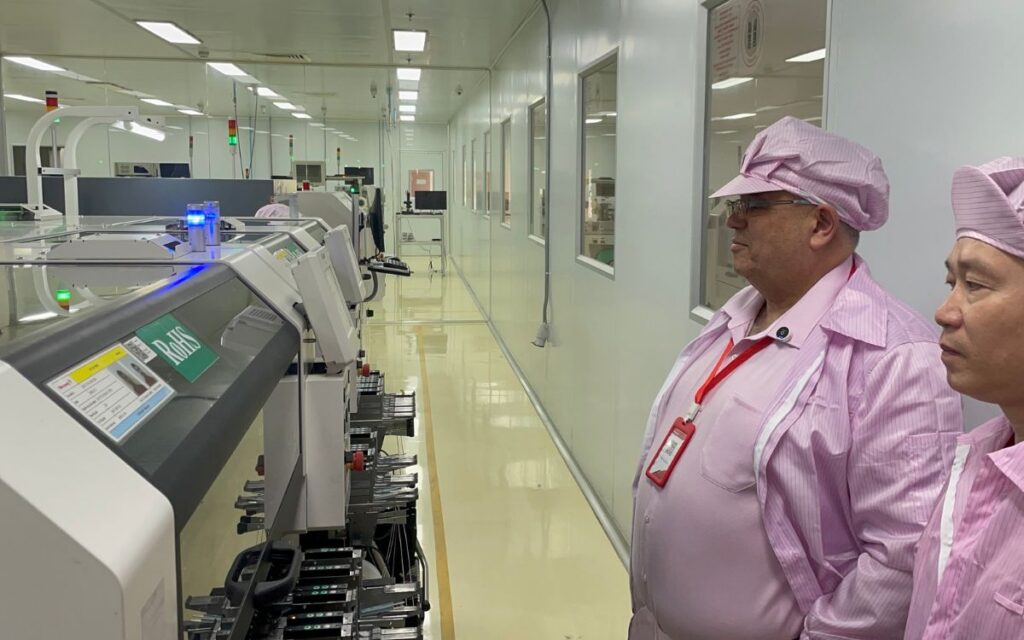
The most credible demand comes from companies that need to control costs, inventory and dispersed operations. Retailers need point-of-sale and stock systems. Distributors need route and warehouse visibility. Manufacturers need maintenance, energy and production monitoring. Hotels and tour operators need booking, channel-management and payment tools. Farms and agribusinesses need traceability, weather, input and procurement systems.
This market rewards implementation quality more than technical novelty. A cloud platform may fail if onboarding, Lao-language support, training and after-sales service are weak. Conversely, a relatively simple system can become defensible if it reduces leakage, improves collections or produces management information that customers previously lacked.
Regional payments can connect technology to trade and tourism
Digital finance is one of the more visible growth areas. Banks and mobile-money providers have expanded QR-based payments, while cross-border payment links with neighbouring countries have been developed to support tourism and commerce. The ITA reported broader QR integration with Thailand, China, Vietnam and Cambodia during early 2025.
Opportunities include merchant acquiring technology, payment orchestration, fraud controls, reconciliation, digital invoicing and software that connects transactions to accounting or inventory. Pure consumer-wallet entry is less attractive because banks, telecom-linked providers and regulatory requirements create high barriers. Foreign companies are better positioned as technology suppliers or partners to licensed institutions.
Low-cost electricity creates a conditional infrastructure proposition
Laos’s power-generation base creates interest in data centres, cloud hosting and energy-intensive digital infrastructure. This can be strategically relevant for regional workloads, disaster recovery and local data requirements. However, low generation cost alone does not make a data-centre project competitive.
Investors must test grid reliability, fibre redundancy, latency to regional hubs, equipment imports, cooling, land, customer commitments and international connectivity. The most credible model is an incremental facility supported by anchor tenants or regulated-sector demand, rather than a large speculative campus based only on energy availability.

Strongest technology opportunities in Laos
1. SME software, cloud migration and managed IT
Accounting, payroll, inventory, customer management, procurement and document workflows offer recurring demand. Many Lao SMEs cannot support a full internal IT department, which creates room for subscription software combined with implementation and managed support.
The strongest products will have simple pricing, Lao or bilingual interfaces, mobile access, reliable backup and integration with local payment methods. Regional software providers can serve Laos from Thailand, Vietnam or another ASEAN base while maintaining a small local customer-success team.
2. Fintech infrastructure and enterprise payments
Payment adoption creates demand beyond wallets. Banks, merchants and public bodies need gateway services, QR acceptance, transaction monitoring, cybersecurity, electronic invoicing and reconciliation. Foreign investors should focus on infrastructure and compliance-enabling tools delivered through licensed banks or payment providers.
The commercial test is transaction economics. Small merchant values can make customer acquisition expensive, so products should be distributed through banks, telecoms, accounting firms, wholesalers or government programmes rather than through an independent merchant-by-merchant sales force.
3. Agritech, logistics and trade digitalisation
Laos’s role in regional transport corridors and its dependence on agriculture create use cases for fleet tracking, cold-chain monitoring, warehouse systems, customs documentation, farm procurement and traceability. The value proposition should be measured in reduced spoilage, fewer empty kilometres, faster clearance or better working-capital control.
Cross-border paperless trade is progressing, but implementation remains incomplete. A 2026 readiness assessment found that amended electronic-transaction law gives electronic documents legal standing, while secondary procedures still often require paper submissions and do not fully support electronic transferable records. Investors should design systems that can support both digital and paper workflows during the transition.
4. Cybersecurity, data governance and compliance services
The expansion of payments, e-government and cloud systems increases exposure to fraud, ransomware, data loss and operational disruption. Laos has laws on cybercrime and electronic data protection, and LaoCERT coordinates national incident response, but institutional and private-sector capabilities remain developing.
Demand can emerge for security assessments, managed detection, identity and access management, backup, staff training and incident-response planning. Services should be adapted to smaller budgets and limited internal expertise. A managed-security model is generally more realistic than selling complex enterprise tools without local support.
5. Digital government and systems integration

Government strategy prioritises online services, data exchange, digital identity and electronic administration. This creates opportunities for systems integrators, identity and authentication providers, secure document platforms, payment systems and data-centre services.
The main risk is procurement and execution. Projects may involve multiple ministries, legacy systems and unclear data ownership. Foreign suppliers should define governance, acceptance criteria, cybersecurity responsibilities, maintenance obligations and source-code or licensing arrangements before implementation.
Entry models that match the market
| Opportunity | Suitable entry model | Why it fits Laos |
| SME software | Regional SaaS with a Lao implementation partner | Limits fixed cost while providing local onboarding |
| Fintech infrastructure | Technology partnership with a licensed bank or payment provider | Addresses licensing, trust and distribution barriers |
| Agritech or logistics technology | Pilot with an exporter, processor, railway user or distributor | Produces measurable operating evidence |
| Cybersecurity | Managed service with local technical support | Converts scarce skills into recurring service revenue |
| Data-centre or cloud infrastructure | Joint venture or customer-backed project | Reduces speculative capital exposure |
| Public-sector systems | Consortium with local and specialist international firms | Combines regulatory access, implementation and technical depth |
A representative office can support market research and relationship development, but revenue-generating operations normally require an appropriately registered enterprise and sector approvals. The investment law recognises wholly foreign-owned companies and joint ventures, while technology or communications operations may fall within concession or sector-licensing frameworks. Investors should confirm the classification of the exact activity before choosing an entity structure.
Regulations technology investors should know
Electronic transactions, e-commerce and signatures
Laos has established a first-generation digital-commerce framework. The amended Law on Electronic Transactions No. 31/NA, adopted in 2022 and promulgated in 2023, recognises electronic documents. The Law on Electronic Signatures and related decisions provide a basis for certification services, while the 2021 Decree on Electronic Commerce regulates registration, contracts and information duties for e-commerce operators.
The practical issue is implementation. Some procedures continue to require physical documents, and recognition of foreign electronic signatures remains limited. Contract design should identify which approvals, originals and signatures are accepted electronically.
Data protection and cybersecurity
The Law on Electronic Data Protection No. 25/NA of 2017 and its implementation guidance govern electronic-data handling. The framework includes security and access obligations, but the World Bank has identified gaps against international practice, including the treatment of cross-border data and institutional enforcement. Technology companies should map what data they collect, where it is hosted, who can access it and whether sector-specific approvals apply.
The Cybercrime Law No. 61/NA of 2015 criminalises unauthorised access, interception, data alteration and system interference. Compliance programmes should also account for content, telecommunications and national-security rules, especially for platforms, messaging, hosting and network services.
Investment, licensing and ICT equipment
General software and consulting may be open to foreign investment, but telecommunications, internet, payment, data-centre and communications-infrastructure activities can require additional licences or concession treatment. Importers and distributors of ICT equipment must obtain relevant approval and comply with technical requirements.
The Investment Promotion Law provides for foreign-owned and joint-venture structures and may offer tax or customs incentives for qualifying promoted activities and locations. Incentives should be confirmed in writing for the specific project rather than assumed from the sector description.
Taxation and intellectual property

A 2024 VAT law expanded the treatment of non-resident digital-service vendors, making tax registration and collection an important issue for cross-border SaaS, platforms and online services. Investors should assess permanent-establishment, withholding-tax, VAT and transfer-pricing implications before invoicing Lao customers from abroad.
The amended Intellectual Property Law No. 50/NA took effect in January 2024 and covers patents, trademarks, trade secrets, integrated-circuit layout designs, copyright and source code. Foreign applicants without a Lao establishment must generally appoint a local representative for industrial-property filings. Contractual controls over code, data, employee inventions and partner access remain essential because enforcement capacity can vary.
Principal risks and how investors should manage them
The first risk is scale. Laos can support profitable niche operations, but customer numbers and technology budgets are limited. Investors should use conservative adoption assumptions and test regional expansion from the outset.
The second risk is talent. Recruiting and retaining developers, cloud engineers and cybersecurity specialists can be difficult. A blended team—local implementation and customer service supported by regional technical centres—is often more practical.
The third risk is regulatory ambiguity. Laws exist, but implementing rules and administrative practice may differ across agencies. Written legal advice, regulator engagement and contract conditions precedent are important for licensed or data-intensive activities.
The fourth risk is infrastructure reliability. Power interruptions, inconsistent broadband and limited redundancy can affect service levels. Systems should include backup connectivity, disaster recovery and clear customer responsibilities.
The fifth risk is commercial collection. Customers may prefer local-currency pricing while foreign investors incur regional or hard-currency costs. Deposits, milestone billing, credit limits and currency-adjustment clauses can protect margins.
Finally, partner selection is decisive. Local partners can accelerate access, but weak governance, unclear beneficial ownership, informal commitments or poor technical capacity can create long-term liabilities. Due diligence should cover ownership, licences, political exposure, financial statements, litigation, cybersecurity and customer references.
From market interest to an investable project
A technology project in Laos should pass six tests before capital is committed:
1. Verified customer problem. Identify the operational loss, compliance need or revenue opportunity that the product will address.
2. Budget and payment evidence. Confirm the buyer, approval process, currency, payment source and procurement timeline.
3. Regulatory classification. Determine whether the activity is ordinary enterprise business, a controlled service, a concession or a regulated financial or telecommunications activity.
4. Delivery resilience. Test hosting, connectivity, power, support, language and cybersecurity requirements.
5. Local execution capacity. Validate the partner or team responsible for sales, implementation, training and first-line support.
6. Staged commitment. Begin with a paid pilot, limited customer segment or anchor contract before committing to large infrastructure or nationwide expansion.
Conclusion: a practical, not speculative, technology market
Laos offers a credible but selective technology investment landscape. Internet use, mobile broadband, QR payments, 5G deployment and government digital policy are expanding the addressable market. At the same time, market size, talent, purchasing power, regulatory implementation and infrastructure reliability limit the case for rapid consumer-scale growth.
The strongest opportunities solve a specific problem: reducing stock losses, collecting payments, securing data, digitising documents, monitoring assets or connecting a regulated institution to regional systems. The preferred investor is therefore not necessarily the company with the most advanced technology. It is the company that can localise the product, support the customer, manage licences and prove value with disciplined capital deployment.
MoveToAsia supports international companies evaluating technology investment in Laos through market sizing, customer interviews, partner and distributor searches, regulatory mapping, competitor analysis, site assessment and commercial due diligence. For technology companies entering Laos, the objective is to convert a broad digital-development narrative into a verified project with defined customers, compliant operations and a realistic route to regional scale.