


This guide looks at the essentials when doing business in Cambodia focusing on operating costs for foreign SMEs, costs for labor, premises, and the compliance and control costs, as well as considerations when doing business from a budgeting perspective.
Labor Costs in Cambodia: Salaries, Benefits and Hiring Expenses
Most businesses spend a large portion of their operating expenses on labor. Rid competitors like Singapore and Malaysia, Cambodia remains cost competitive. However, labor costs have steadily gone up with growing economies and increased competition for labor.
Cambodia’s young population combined with increased manufacturing capabilities bolsters Cambodia’s labor market with workers in manufacturing, logistics, financial services, hospitality, retail, and, more recently, tech. Although lower costs are to be expected for entry level positions, managerial positions and employees with specialized skills and experience are expected to be paid more.
Depending on the type of business and its location, expected levels of compensation are expected to be different. It is expected that compensation in Phnom Penh will be higher due to the concentration of multinationals and financial businesses.
| Position | Typical Monthly Salary (USD) |
| Administrative Officer | 400–700 |
| Accountant | 600–1,200 |
| HR Officer | 600–1,200 |
| Sales Executive | 500–1,500 + commission |
| Software Developer | 1,000–3,000 |
| Finance Manager | 2,000–4,500 |
| Country Manager | 4,000–10,000+ |
Some of the expected salary ranges in Asia have been established by various international recruitment agencies such as Hays, Robert Walters, and ManpowerGroup.
Beyond salaries, employers must account for mandatory employment costs. Cambodia requires employers to contribute to the National Social Security Fund (NSSF), which covers occupational risk and health care benefits. Businesses must also fulfill obligations concerning paid annual leave, paid public holidays, overtime, and severance.
Recruitment can be a large business expense, especially for foreign businesses. It is common to hire recruitment agencies, executive search firms or HR consultancies to hire staff. For professional positions, agencies will charge a fee that ranges between 15% and 25% of the annual salary of the employee.
Another cost that people often neglect are costs to develop employees. Companies often bridge skills gaps and improve retention by investing in their employees through training in English language skills, management, technical skills certification, and through developing their onboarding processes. These programs can be costly, but they improve long-term productivity for the company and reduce costs associated with employee turnover.
Labor costs in Cambodia are attractive when compared to regional costs. However, when considering effective workforce planning, you cannot only consider employee salary costs.
Office Costs and Commercial Space in Cambodia
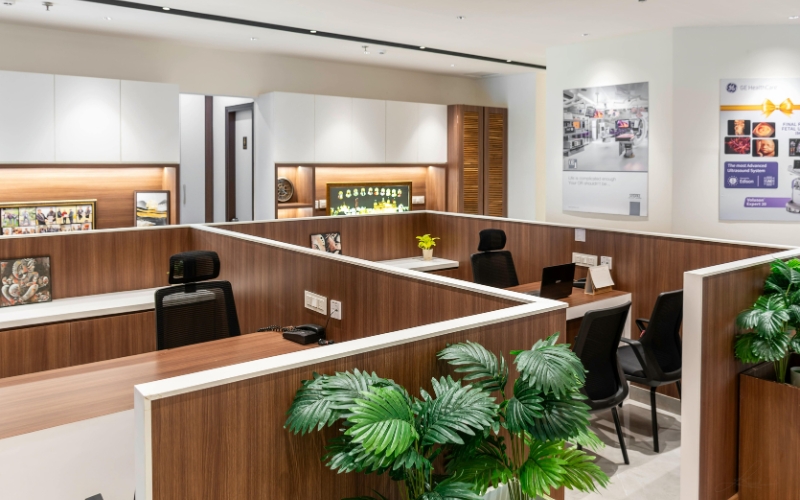
For most overseas investors, opening a corporate bank account in Cambodia is an important steEspecially for companies establishing a presence in Cambodia, office expenses add significantly to operating costs.
Most foreign businesses are located in Phnom Penh as it is the center of business activity in Cambodia. BKK1, Daun Penh, and Tonle Bassac are the most popular office areas due to their rich international business resources and good office infrastructure.
According to CBRE and Knight Frank, Phnom Penh office space has good coverage for business development and budget flexibility.
Typical office rental rates in 2026 are:
| Office Type | Typical Rent (USD/m²/month) |
| Grade A Office | 25–40 |
| Grade B Office | 15–25 |
| Serviced Office | 150–500 per workstation |
| Coworking Space | 100–300 per desk |
For foreign SMEs and representative offices, and companies with business interest in Cambodia but no long-term lease, serviced offices and coworking spaces are the preferred options.
However, rent is only part of the occupancy cost. Businesses should also budget for:
- Service charges
- Electricity
- Water
- Internet
- Parking
- Security services
- Office maintenance
For businesses with a high use of technology and an even higher use of air conditioners, utility costs in Cambodia are surprisingly high.
For companies that only need a registered address and space for occasional meetings, consulting firms especially in the early stage of entry into a market, virtual offices are a low cost option.
The cost of office space is generally more expensive in Phnom Penh. There is a lot of flexibility in Siem Reap and Sihanoukville. The capital, however, has a lot of unused stock of Grade A office space.
The cost of office space is not just rent. It is also the cost of getting to clients, getting to your workforce, your infrastructure cost, and the cost of doing business in the long term.
Taxes, Compliance and Administrative Costs

Expenses related to tax and compliance obligations are vital for operating a business.
In the past few years, there have been several changes to the tax system in Cambodia. Ongoing changes and the developing tax and business laws mean that businesses are required to spend more resources on tax and business support from the start.
Key taxes applicable to most businesses include:
- Corporate Income Tax (CIT)
- Value Added Tax (VAT)
- Withholding Tax (WHT)
- Salary Tax (where applicable)
The required level of compliance largely depends on the size and nature of the business. Foreign owned businesses will typically have transfer pricing and cross-border reporting and compliance obligations.
The cost of compliance and bookkeeping will generally increase with the size and complexity of the business. A small business may spend a few hundred dollars a month to have the books professionally maintained and compliant, while larger more complex businesses may need full finance functions and external audit services.
For most companies, annual audits are a statutory requirement, and are typically performed by a local or large, international professional services firm. Audit costs will vary greatly from company to company and depend on industry and the reporting requirements of the company.
Businesses must also budget for recurring administrative costs such as:
- Patent Tax
- Business license renewals
- Sector-specific permits
- Corporate secretarial services
- Legal advisory services
- Payroll administration
For foreign investors who do not understand the Cambodian market, outsourcing compliance will be cheaper than setting up a compliant function in the country, especially to support the early phase of the business.
While the compliance costs may be lower than the costs of setting up the business and providing ongoing support, the costs are truly a cost of doing business.
Monthly Operating Budget
An extremely common question from investors is: How much would it cost to run a business in Cambodia?
The answer is not simple, considering all the factors to provide a cost (the industry, number of employees to be hired, and office requirements), but we can at least provide a rough budget framework to help businesses plan cost effectively.
For a small foreign-owned company with 5–10 employees in Phnom Penh, a monthly budget may look as follows:
| Cost Category | Estimated Monthly Cost (USD) |
| Salaries | 5,000–10,000 |
| Office Rent | 1,000–2,500 |
| Utilities & Internet | 300–800 |
| Accounting & Compliance | 300–1,000 |
| Payroll Administration | 100–300 |
| Miscellaneous Expenses | 500–1,500 |
| Total | 7,200–16,100 |
If we consider a developing SME with 15 – 30 employees that would require a bigger office, monthly operating costs would be in the region of USD 20,000 – 40,000, depending on the type of business and salary levels.
Compared with neighboring markets, Cambodia remains competitive in several key areas:
| Category | Cambodia | Vietnam | Thailand |
| Labor Costs | Lower | Moderate | Higher |
| Office Rent | Moderate | Moderate | Higher |
| Compliance Costs | Moderate | Moderate | Higher |
| Business Setup Complexity | Relatively Simple | Moderate | Higher |
However, Cambodia must not only be looked at as a low cost business destination. With the rapid increases in salaries, compliance costs and expanded competition in the market to hire skilled personnel, Cambodia should be viewed as a higher cost business destination. Due to this, businesses that enter this market should focus on operational advantages and higher productivity.
Several strategies can help control operating expenses:
- Using serviced offices during the market-entry phase
- Outsourcing accounting and payroll functions
- Adopting hybrid work arrangements
- Leveraging regional shared-service models
- Investing in employee retention to reduce turnover costs
For foreign investors, the focus should be on developing a solid business model that is cost optimised (though not on a shoe string budget), and can support growth for the business in the long run.ve the advantage over their competition.