


The broad investment proposition is therefore credible but selective. Strong projects tend to connect a real market need with a workable ownership structure, location-specific infrastructure, a realistic operating model and disciplined regulatory execution. A favourable sector label or incentive package cannot compensate for weak demand, unreliable utilities, unclear licensing or an unsuitable local partner.
Foreign ownership rules and market entry in the Philippines

The general rule, then the exceptions
Foreign investors may generally own 100% of a Philippine business unless the activity is restricted by the Constitution, a special law or the current Regular Foreign Investment Negative List. The operative list at the time of writing is the 13th RFINL, promulgated through Executive Order No. 113 on 13 April 2026. Because ownership depends on the exact activity; not only the company’s marketing description; investors should classify each revenue stream before incorporation.
| Activity | Foreign-equity position | Practical implication |
| General manufacturing, electronics and most unregulated B2B technology services | Up to 100% | Check whether the business also performs a regulated activity, serves the domestic market below the Foreign Investments Act capital threshold, or requires an industry licence. |
| Retail trade | Up to 100% above statutory thresholds | A foreign retailer generally needs at least PHP 25 million paid-up capital. For more than one physical store, the minimum investment per store is PHP 10 million. Reciprocity conditions also apply. |
| Solar, wind, hydro, ocean and tidal renewable-energy projects | Up to 100% | Full foreign participation is expressly recognised, but service contracts, land access, permits, interconnection and offtake still determine feasibility. |
| Public utilities | Up to 40% | The current definition includes electricity distribution and transmission, petroleum and water pipelines, seaports and public utility vehicles. |
| Telecommunications operation and management | Up to 100% with reciprocity; 50% without | Licensing, critical-infrastructure rules, security requirements and the reciprocity test remain relevant. |
| Private land ownership through a corporation | Up to 40% foreign equity | Foreign-invested businesses commonly lease land or structure site access separately. |
| Government-procured infrastructure projects | Generally up to 40%; up to 75% in specified technology cases | Bid rules, contractor licensing and the project’s technical qualification must be reviewed case by case. |
Domestic-market capital thresholds
For a domestic-market enterprise that is not otherwise restricted, the practical foreign-equity threshold under the Foreign Investments Act remains important. Micro and small domestic-market enterprises with paid-in equity below USD 200,000 are generally limited to 40% foreign ownership. The threshold may fall to USD 100,000 for qualifying activities involving advanced technology, Philippine startups or startup enablers, or a workforce with a majority of Filipino employees and at least 15 Filipino employees. This is not a universal capital rule for every company; the precise test depends on the activity, market orientation and legal structure.
Choosing the operating structure
A locally incorporated stock corporation, including a one-person corporation where appropriate, is a common route for local contracting, hiring and investment. A branch may be relevant when the foreign parent wants direct legal continuity, while a representative office is limited to non-income-generating functions. The Securities and Exchange Commission’s eSPARC platform covers domestic stock corporations, one-person corporations and foreign corporations. The choice should follow the operating objective; sales, manufacturing, importing, project delivery, holding assets or testing demand; rather than a preference for the simplest incorporation form.
Where foreign ownership is capped, nominee arrangements are not a substitute for a compliant structure. Shareholding, governance, control rights and actual operations must remain aligned. A local partner should add more than formal eligibility: the investor should test decision rights, capital commitments, related-party transactions, exit mechanisms, intellectual-property protection and dispute resolution before signing a joint venture.
Tax and investment incentives
The standard corporate income-tax rate is generally 25%. A 20% rate applies to qualifying small domestic corporations that meet the statutory taxable-income and asset tests. Under the CREATE MORE framework, a registered business enterprise using the enhanced deductions regime may also be subject to a 20% tax on taxable income derived from its registered project or activity. Tax treatment should be modelled across the full structure, including withholding taxes, value-added tax, customs duties, transfer pricing, local business taxes and the treatment of related-party charges.
Eligible projects may receive an income-tax holiday followed by a special corporate income-tax regime or enhanced deductions, depending on export status, activity, location, investment tier and approving authority. The 2026 Strategic Investment Priority Plan (SIPP) expands emphasis on high-impact activities including advanced manufacturing, artificial intelligence, cybersecurity, electric-vehicle infrastructure, sustainable aviation fuel, circular-economy projects and selected infrastructure-related activities. BOI stated that the 2022 SIPP guidelines would remain in effect while the detailed 2026 general policies and specific guidelines were being finalised in the third quarter of 2026. Investors filing during this transition should confirm the operative rules directly with the relevant investment promotion agency.
An incentive should improve an already viable project, not create viability on paper. Approval may depend on investment, export, employment, technology, sustainability or location commitments, with reporting and performance obligations continuing after registration. Project models should therefore include both the incentive case and a downside case where approval is delayed, reduced or lost through non-compliance.
Philippines investment sectors at a glance
| Sector | Potential entry points | First feasibility checks |
| Electronics | Semiconductor assembly, test and packaging upgrades; components; power electronics; precision equipment; automation | Customer qualification, utilities, engineering talent, export controls, quality systems and cycle exposure |
| Manufacturing | Medical devices, food processing, packaging, industrial equipment, contract manufacturing and supplier services | Site, power and water, inputs, certifications, labour productivity, environmental permits and delivered cost |
| Infrastructure-construction | Transport, water, housing, digital infrastructure, engineering, project controls and construction materials | PCAB licence, procurement ownership limits, right-of-way, permits, funding, payment risk and bankability |
| Renewable energy | Solar, wind, hydro, storage, grid equipment, energy management and industrial efficiency | Service contract, land, grid connection, offtake, curtailment, permitting, financing and equipment standards |
| Logistics | Warehousing, cold chain, fulfilment, inter-island distribution, freight technology and customs support | Activity-specific ownership, route density, utilisation, port access, service levels, working capital and traceability |
| Technology | Enterprise software, AI, cybersecurity, cloud operations, data services and digital platforms | Customer acquisition, talent retention, data governance, sector licences, cybersecurity and infrastructure resilience |
| Consumer goods | Packaged food, personal care, household products, health and wellness, affordable premium and e-commerce brands | Product registration, labelling, pricing, channel margins, island logistics, localisation and repeat purchase |
Electronics and advanced manufacturing

Electronics is the clearest link between the Philippines and global industrial supply chains. In 2025, electronic products generated USD 45.89 billion of exports, equal to 54.3% of the country’s merchandise exports. Manufactured goods as a whole represented 80.0% of exports. This creates a base of suppliers, industrial zones, technical workers and export processes that new investors can build on, particularly around semiconductor assembly, test and packaging, electronics components and industrial services.
The opportunity is not limited to large factories. International companies can enter through precision tooling, automation, maintenance, quality testing, power electronics, sensors, packaging, medical devices, food processing or contract manufacturing. Projects that solve a confirmed customer problem; capacity, yield, localisation, lead time or compliance; are generally more defensible than a greenfield plant built mainly around labour-cost comparisons.
Feasibility should start with the full delivered cost and the customer qualification path. Investors need to test industrial-site availability, electricity quality and cost, water, import dependence, customs procedures, rules of origin, engineering talent, yield, certification and the utilisation required to support equipment. Electronics also carries customer-concentration, export-control and global-cycle risks. A staged engineering, service or pilot operation may provide better evidence before a larger capital commitment.
Infrastructure-construction and logistics
The Philippines’ archipelagic geography creates structural demand for transport, ports, airports, urban mobility, water, housing, flood resilience, digital connectivity and inter-island logistics. The 2026 national budget set an infrastructure spending target of PHP 1.556 trillion, equivalent to 5.0% of GDP, while the PPP Code provides a unified framework for public-private partnerships across national and local projects.
Investment opportunities include construction materials, specialist engineering, project controls, water and waste systems, data and telecom infrastructure, warehousing, cold chain, fulfilment, freight technology and regional distribution. BOI approvals in transportation and storage reached PHP 230.06 billion in 2025, indicating a substantial prospective pipeline (BOI, 2026a). The best opportunities often sit around a project; equipment, operations, maintenance, software or specialised services; rather than relying solely on winning a large concession.
Entry rules are activity-specific. Contractors need the appropriate Philippine Contractors Accreditation Board licence, and fully foreign-owned contractors may require a project-specific special licence. Government-procured infrastructure generally carries foreign-equity limits, while public utility seaports and public utility vehicles remain subject to the 40% ceiling in the 13th RFINL. Commercial models should account for right-of-way, permitting, bid qualification, payment schedules, foreign-exchange exposure and the utilisation economics of routes and facilities.
Renewable energy
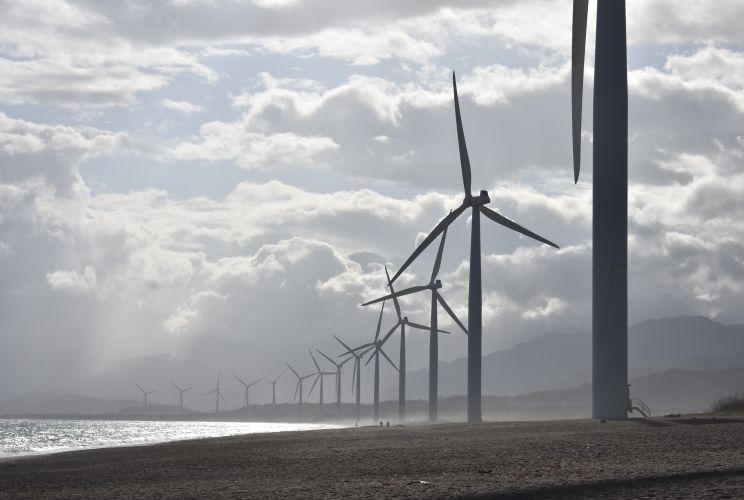
Renewable energy combines a large investment pipeline with one of the clearest recent ownership liberalisations. The 13th RFINL expressly allows full foreign participation in solar, wind, hydro, ocean and tidal projects. Energy represented PHP 970.09 billion of BOI-approved investment in 2025, far more than any other approved sector category (BOI, 2026a; Office of the President of the Philippines, 2026).
Potential entry points include generation, battery storage, inverters and grid equipment, industrial energy efficiency, energy-management software, operations and maintenance, and solutions for manufacturers or data centres seeking more reliable and lower-carbon power. Foreign ownership, however, is only one element of the investment case. Investors still need a valid service-contract pathway, secure site access, environmental and local permits, grid studies, interconnection capacity, an offtake strategy and financeable risk allocation.
Returns should be stress-tested against curtailment, transmission delays, construction costs, currency movements and changing market rules. Resource quality alone does not make a project bankable. In many cases, an equipment, service or corporate-energy solution can provide a lower-capital entry route before an investor develops or acquires generation assets.
Technology and digital services
The digital economy generated PHP 2.74 trillion of gross value added in 2025, equivalent to 9.8% of GDP, and employed 10.39 million people. E-commerce accounted for the largest share of digital-economy value added (PSA, 2026d). This scale supports opportunities in enterprise software, artificial intelligence, cybersecurity, cloud operations, data services, industrial technology, e-commerce enablement and specialised services for banks, retailers, manufacturers and logistics operators.
A service centre for international clients can benefit from English-language capability and an established business-process ecosystem, while products aimed at Philippine companies can address fragmented workflows, payments, supply chains, customer service and compliance. The strongest proposition is normally a specific operational solution with a defined buyer and sales cycle. A generic plan to create a “regional tech hub” is not a market-entry strategy.
Investors should test senior-talent availability, retention, customer-acquisition cost, data governance, cybersecurity, intellectual-property arrangements and any licence attached to the underlying sector. Data-centre and infrastructure-heavy models require separate scrutiny of power, renewable sourcing, water, network redundancy, land, construction timelines and contracted demand. Incentive eligibility under the 2026 SIPP may be attractive for AI and cybersecurity activities, but commercial demand and compliance remain decisive.
Consumer goods
A population above 112 million gives consumer-goods investors significant addressable scale, but the market is not uniform. Income levels, product preferences, channel structure and logistics vary across Metro Manila, other major urban centres and provincial markets. Potential entry points include packaged food and beverages, personal care, household products, health and wellness, affordable premium products and digital-first brands.
Entry can begin through an importer-distributor, marketplace test, retail listing, licensing arrangement or local manufacturing partner. Direct retail investment becomes more relevant when the business can meet the PHP 25 million paid-up capital threshold and, for multi-store models, the PHP 10 million per-store investment requirement. The right route depends on shelf life, import duties, product claims, temperature control, pricing power and how much control the brand needs over customer data and promotions.
A national population figure does not establish product-market fit. Investors should test product registration, labelling, food or consumer-safety requirements, local tastes, distributor margins, listing fees, promotional intensity, island logistics, working capital and repeat purchase. Local manufacturing can improve lead times and reduce import exposure, but only when volume, quality control and supplier economics justify the additional fixed cost.
Cross-sector investment directions in the Philippines

Industrial upgrading rather than cost arbitrage
The most durable manufacturing and electronics projects bring process capability, automation, quality systems, product development or local supplier integration. Labour cost matters, but it is rarely enough to protect returns when utilities, logistics, yield or customer qualification are weak.
Infrastructure, energy and digital capacity are connected
Site selection increasingly links power reliability, renewable access, transport, data connectivity and climate resilience. A manufacturing, logistics or data project should evaluate these factors together rather than treating them as separate workstreams after the investment decision.
Staged entry reduces execution risk
A distributor test, commercial office, customer-led engineering team, pilot facility or minority partnership can generate evidence before a greenfield commitment. The staged approach is especially valuable where licensing, infrastructure delivery, consumer demand or partner performance remains uncertain.
What foreign investors should verify before committing capital
- Evidence of demand: customer interviews, orders, tenders, usage data or credible comparable projects.
- The precise regulated activity, current foreign-equity limit, paid-in capital test, licence and local-governance requirements.
- Whether a local partner is legally required, commercially useful or a source of control and governance risk.
- The full tax position, including withholding taxes, VAT, customs, transfer pricing, local business taxes and incentive conditions.
- Site-level availability of land, power, water, connectivity, labour, suppliers and environmental capacity.
- The complete cost to serve the target customer; not only wages, rent or the headline tax rate.
- Product registration, data, cybersecurity, intellectual property, export controls and certification obligations.
- A staged entry route and explicit stop criteria if demand, licensing, cost or partner assumptions are not confirmed.
A feasibility review should end with an investment decision: proceed, redesign, pilot, partner, acquire or stop. For regulated and capital-intensive projects, the decision package should include an ownership and licensing map, implementation schedule, sensitivity analysis, governance plan and downside case before the investor relies on an incentive approval or an announced infrastructure project.
From market opportunity to execution in the Philippines
The Philippines offers meaningful opportunities across electronics, manufacturing, infrastructure-construction, renewable energy, logistics, technology and consumer goods. Market scale, an established export and services base, infrastructure demand and recent ownership liberalisation create credible entry points. At the same time, the 2025–2026 growth slowdown, activity-specific ownership limits and uneven operating conditions argue for careful project selection rather than a broad country bet.
At MoveToAsia, we help international companies move from general market interest to a practical Philippines investment assessment. Support can include market research, ownership and regulatory screening, competitor and partner mapping, supplier identification, stakeholder interviews, site comparison and feasibility modelling. The objective is to determine whether a specific project has a realistic route to customers, compliance and profitable execution in the Philippines.