


The World Bank has also identified stronger competition in logistics and energy, simpler and more digital permitting, streamlined customs and better investment facilitation as priorities for converting investment interest into productivity and jobs (World Bank, 2025).
Best sectors for investing in the Philippines
For foreign investors, the strongest cases are therefore sector-specific. BPO and IT-enabled services depend on talent, data security and the ability to move into higher-value work. Manufacturing and electronics depend on power, supplier depth, certification and export logistics. Infrastructure-construction and renewable-energy projects depend on permits, land, grid access, procurement and bankable contracts. Consumer-goods opportunities depend on pricing, route-to-market and repeat demand. The market is broad, but each industry requires a different feasibility test.
1. BPO and IT-BPM
Business process outsourcing remains one of the Philippines’ clearest international strengths. The IT and Business Process Association of the Philippines reported that the industry was on track to close 2025 with approximately 1.9 million direct jobs and USD 40 billion in export revenue, after reaching 1.82 million jobs and USD 38 billion in 2024. That scale creates a mature ecosystem of operators, trained managers, recruitment firms, telecom providers, office developers and specialist vendors.
The opportunity is no longer limited to voice-based customer service. Growth is increasingly tied to finance and accounting, healthcare information management, legal and compliance support, analytics, engineering services, cybersecurity, software development and regional shared-service functions. The Philippines remains attractive for work that requires English proficiency, cultural familiarity with Western markets, large-team management and continuous operations. Metro Manila is still the main hub, but Cebu, Clark, Iloilo, Bacolod and Davao can offer different cost, talent and resilience profiles.
The main question is how quickly the sector can move from labour scale to capability depth. Generative AI and automation will reduce demand for some repetitive tasks, but they also increase demand for quality assurance, data operations, AI governance, domain specialists and technology-enabled service delivery. Investors should test the exact talent pool, salary levels, attrition, shift requirements, data-protection controls and business-continuity arrangements for the intended process rather than relying on national workforce claims.
A practical entry route may be a specialised delivery centre, a captive shared-services operation, an acquisition of a local platform or a partnership with an established provider. Large generalist call-centre capacity is harder to differentiate. Higher-value, regulated or industry-specific work can provide stronger margins, but it requires deeper management and compliance capability.
2. Manufacturing and electronics

Manufacturing is central to the Philippines’ export economy even though its recent output growth has been uneven. In 2025, manufactured goods generated USD 67.59 billion and represented 80.0% of total merchandise exports. Electronics alone earned USD 45.89 billion, equivalent to 54.3% of national export sales. The category includes semiconductors and components, electronic data-processing products, office equipment, telecommunications electronics and other specialised assemblies.
This scale supports opportunities in semiconductor assembly, testing and packaging; electronics manufacturing services; wire harnesses; sensors; power electronics; industrial equipment; medical devices; aerospace components; automotive and electric-vehicle parts; and precision engineering. The wider manufacturing base also offers openings in food processing, packaging, chemicals, construction materials and export-oriented consumer products.
Economic zones remain an important route for export manufacturers. The Philippine Economic Zone Authority approved a record PHP 260.89 billion in investment in 2025, 21.9% above 2024, across manufacturing, IT services, facilities and ecozone development. Ecozones can provide established infrastructure and an incentives framework, but investors still need to compare specific sites, utilities, labour catchments, transport links and the rules attached to their registration.
The Philippines’ electronics strength is also a concentration risk. Much of the sector is positioned in assembly, testing and intermediate production, while many inputs and machines are imported. Profitability can be sensitive to electricity prices, foreign-exchange movements, shipping reliability and customer cycles. A plant with an anchor customer, qualified product and defined supplier plan is more executable than a speculative facility built around a general reshoring thesis.
3. Infrastructure and construction
The infrastructure and construction opportunity is driven by a large backlog in transport, water, social infrastructure, urban services and digital connectivity. The government’s 2026 budget framework targeted infrastructure expenditure of around 5% of GDP under the Build Better More programme. At the same time, the public-private partnership pipeline entering 2026 comprised 251 projects with an estimated value of PHP 2.81 trillion, covering national and local initiatives in transport, water, health, trade facilitation, energy, property and information and communication.
This creates potential entry points for developers, engineering firms, contractors, design specialists, project managers, equipment suppliers, construction-technology providers and operators. The opportunity is broader than roads and bridges. Airports, ports, rail, integrated terminals, water supply, wastewater treatment, hospitals, classrooms, mass housing, flood resilience, data infrastructure and municipal services all require private capital and technical capability.
The sector should not be treated as a simple spending story. Project value in a government pipeline does not guarantee procurement, financial close or on-time construction. Right-of-way acquisition, environmental approvals, local-government coordination, utility relocation, financing costs, political transitions and contract enforcement can change the risk profile. International contractors also need to confirm licensing, procurement eligibility, local-partner requirements and the allocation of currency, demand and completion risk.
For many foreign firms, the most realistic first position is not ownership of a large concession. Specialist engineering, project preparation, systems integration, equipment, maintenance, digital monitoring and subcontracting can provide exposure with lower balance-sheet risk.
4. Renewable energy
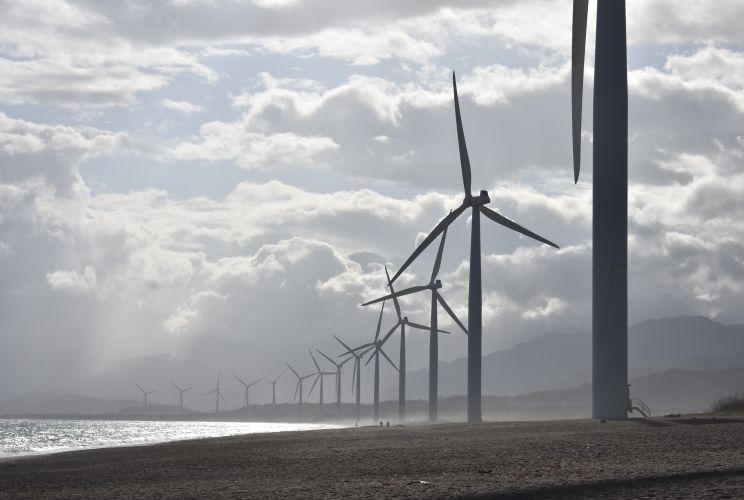
Renewable energy is one of the largest approved-investment categories in the Philippines. Energy accounted for PHP 970.09 billion of BOI approvals in 2025, far ahead of other sectors. The policy direction is also clear: the Power Development Plan targets renewable sources at 35% of the power-generation mix by 2030 and 50% by 2040.
The project pipeline is expanding across utility-scale solar, onshore and offshore wind, hydro, geothermal, battery storage, microgrids and commercial or industrial energy systems. In the fourth Green Energy Auction, the DOE awarded 10,195.49 MW of capacity, including solar, solar paired with storage and onshore wind. The scale of the auction creates opportunities beyond project development, including engineering, procurement and construction, grid equipment, substations, forecasting software, energy management, operations and maintenance, and technical advisory services.
Demand is reinforced by industrial users seeking more reliable and lower-carbon power. Electronics plants, data centres, business campuses, cold-chain facilities and large retail sites can support behind-the-meter solar, efficiency services, storage and corporate power procurement. Island and off-grid markets also create a role for hybrid systems and microgrids.
Execution remains the constraint. Grid connection, transmission capacity, land conversion, indigenous and community consultation, environmental compliance, auction obligations and offtake structure can determine bankability. A technically strong site may still fail if evacuation capacity or revenue certainty is weak. Investors should model curtailment, construction delays, foreign-exchange exposure and the timing of regulatory approvals.
5. Logistics
Logistics is both an investment sector and a condition for every other sector. The Philippines’ archipelagic geography creates persistent demand for ports, inter-island shipping, road freight, warehousing, cold chain, air cargo and inventory coordination. BOI approvals for transportation and storage reached PHP 230.06 billion in 2025. Philippine Ports Authority data also show cargo throughput rising by about 6% to 307.64 million metric tons during the year.
The opportunity is becoming more specialised. Electronics exporters need reliable, time-sensitive logistics. Food and pharmaceutical companies need cold chain and traceability. Consumer brands need regional distribution and e-commerce fulfilment. Infrastructure projects require heavy-lift, project cargo and materials handling. Manufacturers need customs support, bonded facilities, vendor-managed inventory and visibility across imported inputs and outbound products.
Foreign investors can enter through contract logistics, modern warehouses, cold storage, freight forwarding, port and airport services, fulfilment, fleet technology, customs software and industrial distribution. Clark, Subic, CALABARZON, Metro Manila, Cebu and the main Mindanao corridors each serve different cargo flows; location should follow customer density and route economics rather than a generic national-growth forecast.
Operational discipline is essential. Route density, backhaul availability, asset utilisation, port interfaces, fuel exposure, traffic, fragmented inter-island movements and local permits can erode margins. Asset-light forwarding or technology may be a better first step than building a large warehouse or fleet before anchor volumes are secured.
6. Technology
Technology is expanding through both the domestic market and the service-export ecosystem. The PSA estimated that the digital economy generated PHP 2.74 trillion in gross value added in 2025, equivalent to 9.8% of GDP, and employed 10.39 million people. Digital-enabling infrastructure was the largest value component, while e-commerce represented the largest share of digital-economy employment.
Potential investment areas include enterprise software, cloud and data services, cybersecurity, fintech infrastructure, digital payments, health technology, education technology, e-government systems, e-commerce enablement, AI deployment and industrial digitalisation. The overlap with BPO is important: the Philippines has a large base of service-delivery talent that can support implementation, operations and customer success in addition to software development.
The most credible opportunities solve a specific operating problem. Banks need fraud prevention, identity and compliance tools. Manufacturers need automation, traceability and predictive maintenance. Logistics operators need routing and inventory visibility. Retailers need payments, fulfilment and customer analytics. Government and infrastructure operators need interoperable platforms and secure digital records.
The risks are equally specific. Enterprise sales cycles can be long, public procurement complex, and customer budgets uneven. Data privacy, cybersecurity, hosting architecture and sector licensing need to be addressed early. Technology firms also compete for experienced engineers and product managers with multinational employers and overseas markets. A local reseller may accelerate access, but direct implementation capability is often needed to win and retain major clients.
7. Consumer goods

Consumer goods are supported by the size of domestic demand, but the market is highly segmented and price-sensitive. Household consumption increased by 4.5% in 2025, even as broader economic growth slowed. Consumer goods imports reached USD 27.85 billion, or 20.8% of merchandise imports, illustrating both the depth of demand and the competitive pressure from international supply.
Opportunities include packaged food and beverages, health and personal care, household products, affordable premium goods, baby and family products, pet care, convenience formats and digitally distributed brands. Local manufacturing or packing can improve economics for products with high freight costs, local-content needs or market-specific formulations. E-commerce can support initial validation, but modern retail, traditional trade, pharmacies, distributors and regional wholesalers remain essential channels.
The Philippines should not be treated as one national consumer profile. Metro Manila, Cebu, Davao and fast-growing provincial cities have different incomes, channel structures and brand dynamics. Product registration, import duties, labelling, pack size, payment terms, promotional intensity and distributor incentives can be more important than the headline market size.
A staged launch is usually more informative than immediate national distribution. Investors can begin with selected channels or regions, track sell-through and repeat purchase, and then decide whether to expand imports, appoint additional distributors or establish local production.
Where the strongest opportunities overlap in the Philippines
The most attractive opportunities often sit between sectors. Electronics and advanced manufacturing create demand for renewable power, industrial software, testing, specialised logistics and precision construction. BPO growth supports cloud services, cybersecurity, office infrastructure and workforce technology. Renewable-energy projects require engineering, digital monitoring, storage and grid equipment. Consumer brands depend on local manufacturing, e-commerce, payments and nationwide distribution.
These intersections are particularly relevant for foreign small and mid-sized companies. An investor does not need to build a semiconductor plant, own a toll road or develop a utility-scale solar farm to participate in growth. Specialist suppliers can enter through equipment, software, technical services, maintenance, certification, logistics or contract production. A smaller project with a defined buyer can be more investable than a high-profile asset with unresolved permits and demand assumptions.
The location decision should also follow the sector. Metro Manila provides headquarters, clients and a deep services market. CALABARZON and Central Luzon offer industrial clusters and access to ports, airports and economic zones. Cebu combines services, tourism, manufacturing and central-island connectivity. Davao and Northern Mindanao provide access to southern consumer markets, agribusiness and regional logistics. The right location is the one that reduces the project’s specific operating constraints.
From a sector interest to a project with potential
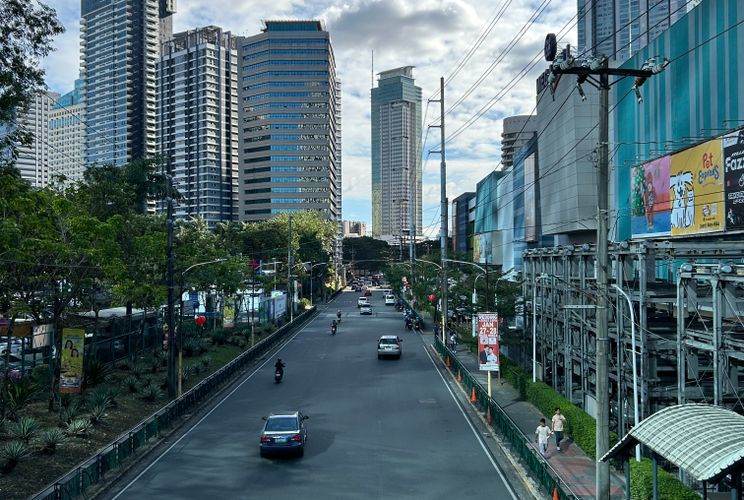
A sector can be attractive while a specific project is not. Before committing capital, investors should test six dimensions.
Demand evidence. Identify target customers, current suppliers, buying criteria, expected volumes and the reason a customer would switch. Interviews, purchase orders and pilot results are stronger than broad market-size estimates.
Exact market access. Confirm foreign-ownership conditions, licences, registrations, incentives, product approvals, land rules and public-procurement requirements for the precise activity. Sector labels are too broad for legal analysis.
Location economics. Compare labour, power, water, telecoms, rent or land, logistics, disaster exposure and access to customers and suppliers. National averages can hide large regional differences.
Execution capacity. Verify management talent, technical skills, contractor quality, local partners, supplier reliability and the time needed to meet customer or regulatory standards.
Resilience. Model outages, typhoons, flooding, supply interruption, currency movement, delayed permits and slower demand. Business continuity is especially important for BPO, manufacturing, logistics and digital infrastructure.
Staged commitment. Where possible, begin with a customer pilot, representative office, distributor, outsourced team, contract manufacturer, leased facility, minority investment or targeted acquisition before committing to a large fixed asset.
The Philippines offers credible opportunities across BPO, manufacturing, electronics, infrastructure, renewable energy, logistics, technology and consumer goods. The country’s competitive advantage is not one low-cost input. It is the combination of service talent, export capabilities, domestic demand and an expanding infrastructure and energy pipeline. The constraint is execution: investors must translate national momentum into a specific customer case, site, licence pathway, operating model and capital plan.
MoveToAsia supports international companies with market research, customer and partner validation, supplier mapping, regulatory screening, site assessment and feasibility studies across Southeast Asia. The objective is to turn interest in a Philippine growth sector into an investment decision based on verified demand and executable assumptions.