


The document is an investor-centric view of the Philippines electronics industry. It analyzes the state of the market, identifies the potential best investments, evaluates the regulatory incentives, and presents the key prerequisites for foreign manufacturers to consider before entering the market.
Philippines Electronics & Semiconductor Market in 2026
The Philippine electronics industry remains one of the country’s largest export sectors and continues to benefit from rising global demand for semiconductors, AI infrastructure, electric vehicles, and industrial automation. For investors, the industry’s recent performance highlights both its resilience and its growing role within global electronics supply chains.
Exports continue to reach record levels
According to the Semiconductor and Electronics Industries in the Philippines Foundation (SEIPI), semiconductor and electronics exports increased from US$42.75 billion in 2024 to US$49.64 billion in 2025, representing 16.11% annual growth. SEIPI expects exports to exceed US$50 billion in 2026, driven by continued demand for semiconductor devices and electronic components.
Growth has been broad-based. Electronics product exports rose 17% to approximately US$46 billion, while semiconductor exports increased 18.7% to US$34.62 billion, confirming that semiconductors remain the industry’s primary growth engine.
For investors, sustained export growth indicates continued international demand and supports confidence in expanding export-oriented manufacturing capacity.
Market fundamentals remain strong
Industry research estimates the Philippine semiconductor market at approximately US$7.21 billion in 2026, with forecasts projecting continued expansion through 2031 and beyond. Although long-term growth projections differ across research firms, they consistently point to rising semiconductor demand over the coming decade.
The industry’s importance is also reflected in the broader economy. Semiconductors and electronics account for nearly three-fifths of the Philippines’ merchandise exports and support around 3 million jobs, making the sector one of the country’s most significant industrial and export drivers.
For manufacturers, this established ecosystem gives the manufacturers experienced suppliers, export infrastructure, engineering workforce, and production capabilities. This reduces risks of starting a new manufacturing industry.
Momentum extends into 2026
Recent trade data suggests that growth remains resilient. National exports, led by electronics, recorded 13 consecutive months of year-on-year growth, reaching approximately US$7.1 billion in January 2026, compared with US$6.6 billion a year earlier.
While monthly trade figures naturally fluctuate, the broader trend indicates that multinational buyers continue to rely on the Philippines as a competitive manufacturing base despite ongoing geopolitical uncertainty and supply chain adjustments.
What do these trends mean for investors?
Recent data indicates that the Philippines is leaving its position as a conventional low-cost assembly location and is emerging as an advanced electronics manufacturing center. An existing industrial ecosystem and an increased focus from the government all provide a solid basis for long-term investments.
However, not every segment offers the same growth potential. The next step for investors is identifying which parts of the electronics value chain are expected to benefit most from industry expansion and government policy in the years ahead.
Investment Opportunities Across the Philippines Electronics Value Chain
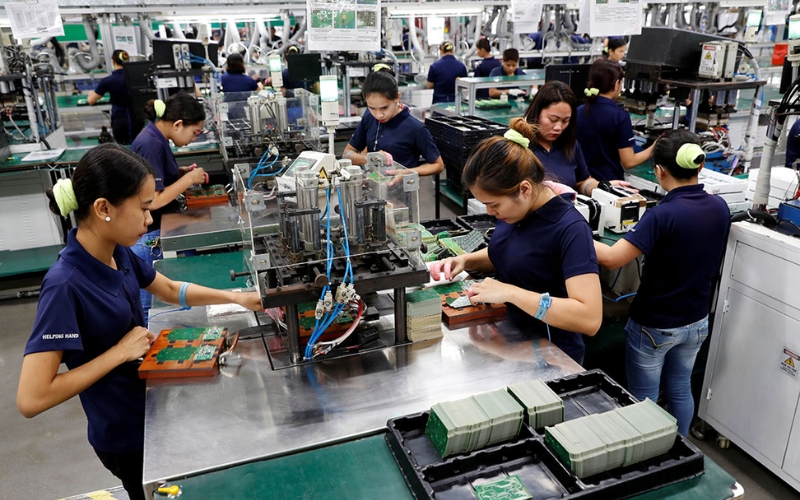
Strong export growth alone does not determine whether an industry is worth investing in. More importantly, foreign manufacturers need to identify where future value will be created. The Philippine government’s US$110 billion Semiconductor and Electronics Industry (PSEI) roadmap provides a clear indication of which segments are expected to receive long-term policy support and private investment.
Advanced semiconductor manufacturing.
The PSEI Roadmap aims to increase annual electronics exports to US$110 billion by 2030, including US$70 billion from semiconductors and US$40 billion from electronics manufacturing. Beyond ambitious export targets, the roadmap signals a strategic shift from conventional assembly toward advanced assembly, testing and packaging (ATP), IC design, and eventually front-end manufacturing.
That means future growth for investors will shift from labor-intensive production to more value-added, sophisticated manufacturing. More advanced packaging, semiconductor engineering, automation, product design and other similar companies will benefit from this shift.
Automotive electronics and multinational investment
The expansion of electric vehicles (EVs) is creating new demand for power semiconductors, sensors, and automotive-grade electronics. Supporting this trend, EMS Group has secured US$1.6 billion from multinational partners to manufacture power integrated circuits for EV platforms, while the government continues promoting local EV production and component manufacturing.
Established manufacturers such as Texas Instruments, Amkor Technology, Analog Devices, ON Semiconductor, ROHM Electronics, and Integrated Micro-Electronics Inc. (IMI) enhances the country’s investment appeal. Assistance in creating effective supplier networks, engineering capabilities, and internationally competitive manufacturing standards is available to new investors through established manufacturers in the country.
For foreign manufacturers, entering an established industrial ecosystem generally reduces supplier-development costs, shortens implementation timelines, and lowers operational risk.
Talent development and regional integration
Recognizing that skilled labor is becoming a key competitive advantage, the government plans to train approximately 128,000 semiconductor professionals over the next five years through industry and academic partnerships. At the same time, the Philippines is leveraging its 2026 ASEAN Chairmanship and regional trade agreements such as RCEP to strengthen integration into Asia-Pacific semiconductor supply chains.
What do these opportunities mean for investors?
The Philippines is moving beyond its traditional role as a semiconductor assembly base toward higher-value manufacturing. While advanced packaging, automotive electronics, and IC design present some of the strongest long-term opportunities, success depends on selecting the right investment structure and incentive program. Understanding the country’s market entry framework is therefore just as important as identifying the right industry segment.
Market Entry Strategy, Legal Framework & Investment Incentives
The correct investment structure has considerable effects on project costs, operation flexibility, and profitability in the long term. For the electronics manufacturer, the decision is not whether to invest, but rather, the manner of market entry to maximize the incentives that are available whilst promoting the growth of the business.
Selecting the appropriate investment structure
Generally, foreign investors establish operations with wholly foreign-owned subsidiaries, PEZA-registered export enterprises, or BOI-registered companies. The best option is determined by factors such as the operation’s export orientation, intended customers, production scale, and planned expansions.
Export-focused manufacturers generally favor PEZA, while businesses serving both domestic and international markets may benefit from the greater flexibility offered by BOI registration.
PEZA and CREATE improve investment competitiveness.
For most electronics manufacturers, PEZA remains the preferred registration route. Companies generally need to operate within a PEZA-accredited economic zone and export at least 70% of production to qualify for its incentives.
The CREATE MORE Act improves the investment environment by lowering corporate income tax for qualified registered business enterprises and providing better tax incentives. After the income tax holiday period, PEZA-registered business enterprises can avail of the following:
- 5% Special Corporate Income Tax (SCIT) on Gross Income Earned; or
- Enhanced Deductions (EAED), including additional deductions for research and development, employee training, and qualified domestic inputs.
Rather than assuming one regime is always superior, investors should compare both options based on projected profitability, operating costs, and capital expenditure.
PEZA or BOI: Which is better?
Since CREATE MORE aligned many investment incentives, the decision between PEZA and BOI is now driven more by business strategy than tax differences.
As a general guide:
- PEZA is best suited for export-oriented manufacturers operating inside economic zones.
- BOI offers greater flexibility for companies serving both domestic and export markets or operating outside PEZA zones.
In addition, preferential trade arrangements such as the Generalized System of Preferences (GSP) and RCEP further enhance the competitiveness of Philippine electronics exports by improving market access to key international destinations.
Practical considerations before investing
Before entering the market, investors should:
- Confirm eligibility for PEZA registration, including the 70% export requirement.
- Compare SCIT and EAED based on long-term financial projections.
- Evaluate manufacturing locations according to infrastructure, supplier networks, workforce availability, and logistics.
- Select a corporate structure that supports future expansion rather than focusing solely on short-term tax incentives.
With an appropriate investment framework established, investors should then evaluate the operational and strategic risks that may influence long-term project success.
Risks, Challenges & Practical Guidance for Investors
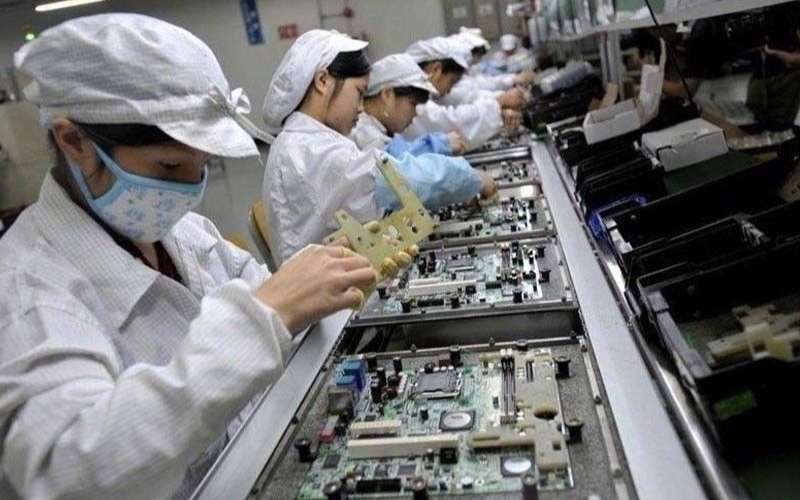
Despite its strong growth outlook, the Philippine electronics industry presents several challenges that investors should evaluate before committing capital. Understanding these risks, and planning for them early, can improve project resilience and long-term returns.
The industry is still moving up the semiconductor value chain.
The Philippines has established a strong position in assembly, testing, and packaging (ATP) but remains less competitive in front-end wafer fabrication. Although the government’s long-term roadmap aims to develop more advanced semiconductor capabilities, this transition will require continued investment in technology, infrastructure, and specialized talent.
This indicates to investors that the nearest high-return opportunities are likely in industries the country has well-established capabilities in, like advanced packaging, automotive electronics, and IC design, rather than areas like large-scale wafer fabrication.
External risks require a diversified strategy.
Manufacturing hubs that focus on exports, such as the Philippines, are vulnerable to the same issues. The Philippines experiences observable impacts from changing trade regulations, global demand for electronics, and geopolitical tensions. While the Philippines’ recent exports suggest these impacts have been somewhat contained, there are still risks associated with disrupture in the supply chain and disruption in demand.
A diversified customer base also supports long-term resilience. Beyond North America and Asia, countries such as Germany and the Netherlands continue to be important export markets for Philippine electronics, reducing dependence on a single region.
Conduct thorough due diligence before investing.
Strong government support does not eliminate execution risk. Achieving the industry’s US$110 billion export target by 2030 will depend on continued policy implementation, infrastructure development, and workforce expansion.
Before entering the market, investors should:
- Confirm eligibility for investment incentives and PEZA registration.
- Compare SCIT and EAED based on projected financial performance.
- Evaluate industrial locations according to infrastructure, utilities, labor availability, and supplier ecosystems.
- Assess supply chain resilience and long-term talent availability.
- Consult experienced legal and investment advisors before selecting an investment structure.
For companies that align their investment strategy with the Philippines’ existing industrial strengths, these challenges are generally manageable and do not outweigh the sector’s long-term growth potential.
Conclusion
The Philippines’ electronics industry is strengthening its position as one of Southeast Asia’s leading manufacturing hubs, supported by record export growth, an established multinational ecosystem, and a government strategy focused on higher-value semiconductor production.
Opportunities for foreign investors exist in advanced assembly and packaging, automotive electronics, IC design, and technology-intensive advanced manufacturing that coincide with the country’s long-term industrial development plans. However, the correct sector selection is insufficient for a competitive advantage. Investors must undertake a detailed analysis of the market entry options, associated investment incentives and evaluate potential locations for manufacturing, considering the availability of a skilled workforce.
As manufacturing companies across the world diversify their production and supply networks, the Philippines is an attractive option with a unique combination of capability to export, investment-friendly policies, and developing competencies in semiconductors. Investors that have performed due diligence in combination with a long-term strategy, will be able to realize a return from the next growth phase of the industry.