


This document aims to provide an investor’s guide to the manufacturing segment of the Philippines. It will help investors determine the alignment of their expansion strategy with the market by outlining the market fundamentals, identifying the segments with the most potential, describing the incentives and the tax process, and detailing the operational challenges and other pertinent factors.
Philippines Manufacturing in 2026
Manufacturing remains one of the Philippines’ most important economic pillars, contributing approximately 18–19% of GDP and employing around 3.5 million people, or roughly 8% of the national workforce, in 2026. Beyond its domestic contribution, the sector plays a central role in exports, industrial employment, and foreign direct investment, making it a key driver of the country’s long-term economic development.
An integrated worldwide manufacturing base has focused the production base for industry in the Philippines. Labor focused assembly is the basis for many growing manufacturers in the region. In sharp contrast to these countries, the Philippines has leveraged many years of investments in specialized capability for electronics, semiconductor, manufacturing for aerospace components, and precise manufacturing. The provision of experienced suppliers, technical workforce, and sturdy export infrastructures have been available to investors due to the development of these industrial ecosystems.
Electronics continue to anchor industrial growth
Electronics remain the country’s largest manufacturing and export industry. The Philippines accounts for approximately 5% of global semiconductor assembly, testing, and packaging (ATP) capacity, while electronic products continue to generate around 40% of total merchandise exports. In 2026, electronics exports are projected to exceed US$50 billion, supported by sustained global demand for semiconductors used in artificial intelligence, electric vehicles, industrial automation, and consumer electronics.
For investors, this is important because sophisticated electronics clusters minimize issues when entering a new manufacturing market. Instead of creating a supply chain from nothing, firms can connect with an existing network of suppliers and transport, engineering, and export services, thereby shortening their operational risk and time needed to enter the market.
Foreign investment remains resilient despite global uncertainty
Investor confidence has also remained relatively strong. Approved manufacturing-related foreign direct investment reached approximately PHP 42.64 billion during 2024, while total approved investments across all sectors exceeded PHP 1.9 trillion, one of the country’s highest levels on record. Manufacturing continues to account for a significant share of these commitments, particularly in electronics, renewable energy components, food processing, and automotive parts.
This steady investment pipeline reflects more than short-term market optimism. It indicates that multinational manufacturers continue to view the Philippines as a strategic production base capable of supporting long-term regional operations, even as global companies diversify supply chains beyond traditional manufacturing hubs.
Competitive strengths extend beyond labor costs
Historically, the Philippines was often viewed primarily as a cost-competitive production location. While labor costs remain attractive compared with many developed markets, the country’s competitive advantage has become increasingly multidimensional.
Several structural strengths now differentiate the Philippines:
- A young workforce with a median age of approximately 25–26 years
- High English-language proficiency that supports communication across engineering, technical, and management functions
- Decades of experience serving multinational manufacturers
- Strong integration into global electronics value chains
- Expanding network of PEZA economic zones with established export infrastructure
- Ongoing policy reforms aimed at improving investment competitiveness
These benefits are especially important for manufacturers with multi-faceted production processes wherein the ability to engineer, coordinate suppliers, and manage quality is as critical as low labor costs.
Investors should also recognize the structural challenges
Regardless of these advantages, the Philippines does not have a friction-less manufacturing environment. Ongoing improvements to infrastructure do not help congestion in the greater Metro Manila area, which slows freight delivery. Among Southeast Asian nations, the Philippines has the highest electric utility costs, which raises the operating costs of energy intensive industries. While there has been a rapid improvement of the regulatory procedures, the investors may still face some of the administrative difficulties of dealing with several government agencies.
Political and policy uncertainty also remains part of the investment landscape. Although recent reforms have strengthened investor confidence, companies should continue monitoring changes affecting taxation, incentives, trade policy, and international supply chains.
Importantly, most of these challenges are operational rather than structural. They generally influence project planning, location selection, and cost management instead of undermining the country’s long-term manufacturing potential. For experienced investors with appropriate due diligence, these risks can often be mitigated through careful site selection, supply chain planning, and incentive optimization.
What does this mean for investors?
Taken together, the data suggest that the Philippines is evolving from a traditional low-cost manufacturing destination into a more specialized production hub serving global value chains. Rather than competing solely on wages, the country increasingly competes on industrial capability, technical expertise, export connectivity, and policy support.
However, these advantages are not evenly distributed across all manufacturing activities. Some industries benefit from mature supplier ecosystems, strong government incentives, and established export demand, while others remain at an earlier stage of development.
Understanding which manufacturing sectors offer the strongest long-term investment potential is therefore the next, and arguably most important, step for foreign investors evaluating the Philippines.
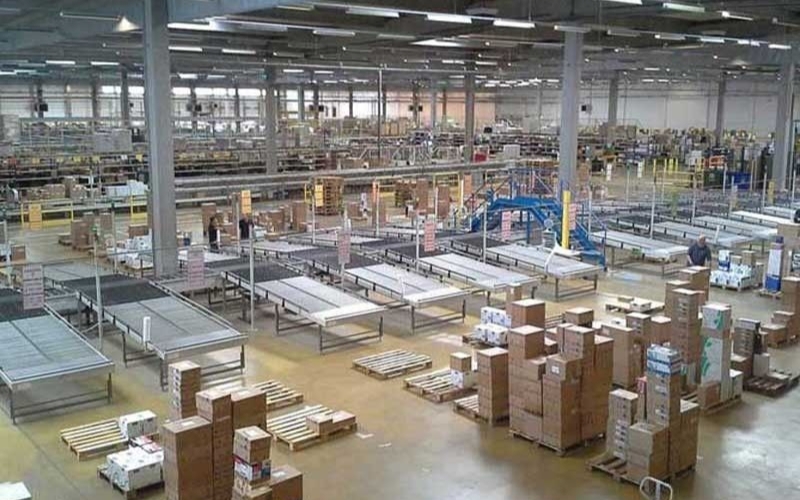
Priority Sectors for Foreign Manufacturing Investment in 2026
While the Philippines offers a diversified industrial base, not every manufacturing segment presents the same investment potential. For foreign companies evaluating market entry, the strongest opportunities are concentrated in industries supported by established supply chains, export demand, government incentives, and long-term industrial policy.
The sectors below combine these advantages and are expected to remain key investment drivers through the second half of the decade.
Electronics & Semiconductors
In the Philippines, the electronics manufacturing sector is the largest and most competitive sector in international markets. The country has around 5% of the world’s semiconductor assembly, testing and packaging, and exported electronics make up almost 40% of the country’s total merchandise exports. Other countries in the region and the world do not have the same levels of foreign direct investment (FDI) and international company support as the Philippines; therefore, the electronics industry benefits most from the investment and creates the most sustainable manufacturing ecosystem.
The Philippines is also one of the world’s leading exporters of semiconductor devices, supported by global manufacturers such as Texas Instruments, Analog Devices, ON Semiconductor, and NXP. Existing industrial clusters reduce supplier risk and provide manufacturers with access to experienced engineering talent and internationally certified production facilities.
For investors, this translates into a lower-risk entry point compared with greenfield industries. Companies entering electronics manufacturing can leverage an established supplier network rather than developing one independently, allowing faster production ramp-up and more predictable operational performance.
Aerospace Components
Beyond electronics, aerospace manufacturing has become one of the country’s fastest-growing advanced industries. PEZA approved more than US$55 million in aerospace-related investments during 2025, while international manufacturers continue expanding aircraft component production for global supply chains.
The Philippines can now provide various items for global aerospace companies such as precision parts, aircraft interior components, wiring assemblies, and maintenance components. Aerospace assembly is different from manufacturing. Manufacturing aerospace components puts emphasis on engineering with stringent quality and international certifications, which are some of the capability areas the country has continually developed.
For investors seeking higher-margin manufacturing rather than purely cost-driven production, aerospace offers attractive long-term potential supported by increasing global aircraft demand and supply chain diversification.
Electric Vehicle Supply Chains
The transition toward electric mobility is creating new manufacturing opportunities across Southeast Asia, and the Philippines is positioning itself to participate in this regional supply chain. Under the Electric Vehicle Industry Development Act (EVIDA), the government is promoting investment across battery assembly, electronic components, charging infrastructure, and supporting manufacturing activities.
The local EV market is still quite small, compared to production for exports, where there are more opportunities. Manufacturing plants that create segment supply chains within the regional auto market can utilize the demands of the ASEAN market, combined with the strength of the Philippines’ electronics, precision manufacturing, and industrial assembly.
Investors entering the market today may gain a first-mover advantage as regional EV production continues to expand over the coming years.
Food & Beverage Processing
Among the manufacturing activities in the country, food processing remains one of the largest due to strong household consumption among the rapidly growing population of over 115 million. The processed fruits, beverages and packaged food industries have access to local raw materials because of the strong agricultural resources of the country. Manufacturing companies also have access to local raw materials in seafood and coconut products.
Government policy further strengthens the sector’s outlook. Food manufacturing continues to receive support under the Strategic Investment Priority Plan (SIPP), particularly for projects involving export-oriented processing, automation, and higher-value agricultural products.
For investors seeking relatively defensive industries less exposed to global technology cycles, food processing offers consistent domestic demand alongside expanding export opportunities throughout Asia.
Pharmaceuticals and Medical Manufacturing
Healthcare manufacturing is receiving increasing policy attention as the Philippines seeks to strengthen domestic pharmaceutical production and reduce import dependence. PEZA and the Board of Investments (BOI) continue encouraging investments in pharmaceutical manufacturing, medical devices, diagnostics, and healthcare-related production facilities.
Growing healthcare expenditure, an aging population, and lessons learned from recent global supply chain disruptions are expected to support long-term demand. While the industry is still developing compared with electronics, it offers significant growth potential for manufacturers with advanced technologies and international regulatory expertise.
Why These Sectors Stand Out
Although these industries operate in different markets, they share several characteristics that make them attractive for foreign investment:
- Strong export orientation supported by international demand
- Existing industrial ecosystems that reduce operational risk
- Government support through the SIPP and investment incentive programs
- Availability of skilled technical and engineering talent
- Opportunities to move beyond low-cost assembly into higher-value manufacturing
These benefits are the reason for the concentration of recent industrial investments in only a few priority sectors in the Philippines, rather than an even distribution across many sectors.
These investments, however, need to be targeted to the right industry. Investors must also be aware of the optimal configuration of their investments to capture the regulatory and tax incentive benefits. The choice of PEZA, BOI or other routes of investments can impact the cost, flexibility of operations, and the profitability of the investments in the long-term.
Investment Framework & Tax Incentives: PEZA, SIPP & the CREATE MORE Act
For many foreign manufacturers, the competitiveness of the Philippines is shaped not only by production costs but also by its investment incentive framework. Recent policy reforms have made the country considerably more attractive by simplifying tax incentives, improving regulatory certainty, and supporting export-oriented manufacturing.
Understanding how these incentives work is essential, as the choice of registration route can have a significant impact on project economics over the life of an investment.
CREATE MORE Act
The Corporate Recovery and Tax Incentives for Enterprises to Maximize Opportunities for Reinvigorating the Economy (CREATE MORE) Act, enacted in late 2024, represents one of the most important investment reforms in recent years. The legislation modernizes the country’s tax incentive system while giving investors greater certainty regarding long-term policy support.
For Registered Business Enterprises (RBEs), the standard Corporate Income Tax (CIT) rate has been reduced from 25% to 20%. The Act gives better deductions on qualifying business expenses, like a 100% deduction on the cost of electricity, which is very helpful for manufacturers running energy-consuming facilities like those that produce semiconductors, fabricate electronics, or assemble electronics, or do advanced industrial production.
For investors, this reform directly improves cost competitiveness while reducing uncertainty around future tax policy.
PEZA Remains the Preferred Route for Export Manufacturers
For export-oriented manufacturers, registration with the Philippine Economic Zone Authority (PEZA) continues to be the most widely used investment pathway.
To qualify, companies usually need to be operating in a PEZA-accredited economic zone or IT park and be exporting around 70% of their production or services. Accredited enterprises get a full package of fiscal and non-fiscal incentives that aim to enhance their international competitiveness.
Following the initial Income Tax Holiday (ITH) period, PEZA-registered companies may choose between two incentive regimes:
- 5% Special Corporate Income Tax (SCIT) on Gross Income Earned, replacing most national and local taxes; or
- Enhanced Deductions (EAED) under the regular corporate tax system, including additional deductions for research and development, employee training, domestic inputs, and infrastructure investment.
The choice depends largely on each company’s operating model, profitability, and long-term tax strategy. Capital-intensive manufacturers with significant qualifying expenditures may benefit more from EAED, while businesses seeking administrative simplicity often prefer the SCIT option.
Strategic Investment Priority Plan (SIPP)
Tax incentives are also guided by the Strategic Investment Priority Plan (SIPP), which identifies industries considered strategically important to the Philippine economy.
Priority manufacturing activities include:
- Electronics and semiconductors
- Electric vehicle components
- Aerospace manufacturing
- Medical and pharmaceutical products
- Renewable energy equipment
- Food processing and agri-industrial manufacturing
- Research and development
- Advanced manufacturing technologies
Inclusion in SIPP means you may qualify for investment incentives. It signifies a long-term alignment with government industrial objectives. Therefore, investors must analyze the degree of correspondence of their planned activities with SIPP classifications during the planning stage, rather than after the project development has begun.
PEZA or BOI: Which Structure Fits Your Business?
Since the implementation of CREATE MORE, the incentive packages offered by PEZA and the Board of Investments (BOI) have become broadly comparable. As a result, the decision is no longer driven solely by tax benefits but by operational strategy.
In general:
- PEZA is best suited to export-oriented manufacturers operating inside economic zones with high international sales.
- BOI offers greater location flexibility and is often preferable for companies serving both domestic and export markets.
Selecting the appropriate registration route at the outset can influence tax obligations, compliance requirements, operational flexibility, and future expansion plans. Investors should therefore evaluate their export ratio, preferred manufacturing location, and long-term commercial strategy before deciding which framework best supports their business objectives.
Once there is an appropriate incentive structure, the next focus should be on how to implement the design. Robust investments can still fail if you do not consider the availability of labor, infrastructure, site selection, supply chain, etc. Furthermore, the success of a manufacturing investment in the Philippines is dictated by the practical issues that need to be solved.
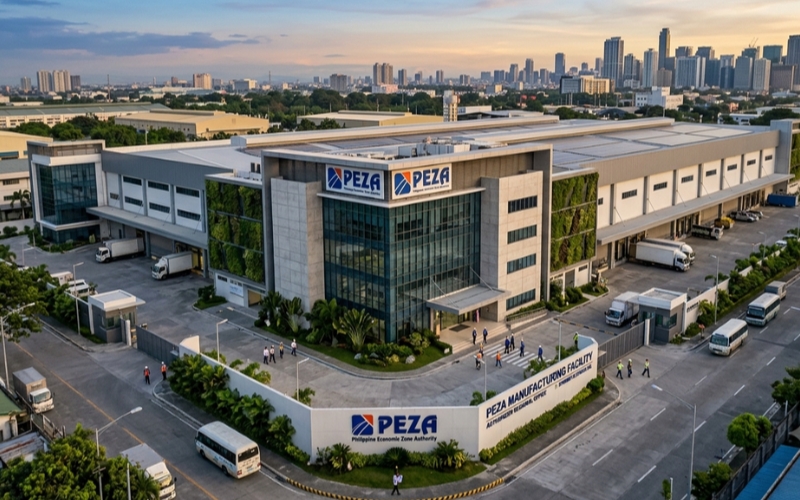
Doing Business in Philippine Manufacturing
Securing investment incentives is only one part of a successful market entry strategy. The long-term performance of a manufacturing operation depends just as much on practical factors such as workforce availability, infrastructure, utilities, and site selection. For foreign investors, understanding these operational realities before committing capital can significantly reduce implementation risks and improve project outcomes.
A Skilled, Young Workforce Supports Higher-Value Manufacturing
Human capital is one of the strongest competitive advantages of the Philippines. The labor force is among the youngest in Southeast Asia, with a median age of 25–26 years, and combined high English proficiency with many years of experience in supporting multinational companies makes the Philippines an attractive proposition for labor-intensive business activities involving cross-border collaborations.
Your labor force would be best positioned to service the electronics, aerospace, and medical devices and engineering services sectors where precision of operations and level of technical expertise far outweigh labor costs. When automation and Industry 4.0 are fully adopted, a competitive edge will be gained from a highly skilled and technical workforce, as opposed to the current business model based on low-cost labor.
Infrastructure Is Improving, but Location Matters
The Philippines has made significant progress in upgrading transport infrastructure through the government’s Build Better More program. Investments in expressways, ports, airports, and industrial corridors are improving connectivity between production centers and export gateways.
However, infrastructure quality varies considerably by location.
Metro Manila remains the country’s largest industrial and commercial hub, but it also experiences congestion that can increase transport costs and lead times. Many manufacturers are therefore expanding into alternative industrial locations such as Clark, Batangas, Laguna, Cavite, Cebu, and Davao, where infrastructure continues to improve while offering greater room for future expansion.
For manufacturers focused on exports, being close to international transportation hubs, suppliers, and industrial clusters generally outweighs any temporary savings on land costs. Having the right location greatly influences the long-term efficiency of logistics, the availability of labor, and the potential for future expansion.
Electricity Costs Remain a Key Operating Consideration
While the Philippines offers many structural advantages, electricity costs remain among the highest in Southeast Asia. Energy-intensive manufacturers, particularly those operating semiconductor facilities, metal processing plants, or continuous production lines, should carefully evaluate long-term utility expenses during project planning.
The recent tax reforms under the CREATE MORE Act and increased deductions for electricity partially help counter this obstacle. That said, energy cost estimates for financial modeling should be more reasonable. Investors cannot take on a more simplistic approach and only compare labor costs.
More manufacturers are investing in onsite solar and renewable energy in order to achieve cost stability and meet the sustainability goals of their overseas clients.
Choosing the Right Entry Structure
Foreign manufacturers typically have several options when entering the Philippine market, depending on their business objectives.
Common structures include:
- PEZA-registered export operations, suitable for manufacturers primarily serving overseas markets.
- BOI-registered companies, offering greater flexibility for businesses targeting both domestic and international customers.
- Wholly foreign-owned subsidiaries, permitted in most manufacturing activities, subject to applicable investment regulations.
- Joint ventures or strategic partnerships, which may provide faster market access in specialized industries where local knowledge or supplier relationships offer a competitive advantage.
The optimal structure depends on factors such as export orientation, target customers, supply chain strategy, and long-term expansion plans rather than tax incentives alone.
Practical Considerations Before Committing Capital
Before finalizing an investment, foreign manufacturers should evaluate several operational factors beyond financial projections:
- Compare industrial locations based on infrastructure quality, supplier networks, labor availability, and export connectivity.
- Assess utility costs alongside labor expenses to understand total operating costs.
- Verify eligibility for PEZA or BOI registration before selecting a project site.
- Review local supplier capabilities if production relies on domestic sourcing.
- Develop workforce training programs early, particularly for advanced manufacturing processes.
Addressing these issues during the planning phase can help reduce implementation delays and improve long-term operational performance.
Ultimately, successful manufacturing investments in the Philippines depend on combining government incentives with sound commercial planning. Companies that align their investment structure, location strategy, and operational model with industry requirements are better positioned to benefit from the country’s expanding industrial ecosystem.
Conclusion
The Philippines’ manufacturing industry offers a compelling investment case for companies seeking to diversify production within Southeast Asia. Supported by a well-established electronics ecosystem, a young and skilled workforce, improving infrastructure, and policy reforms such as the CREATE MORE Act, the country continues to strengthen its position as a competitive export manufacturing hub.
Although identifying a fast-growing market is important for success, it is not enough on its own. Investors must undertake a comprehensive evaluation of priority sectors, utilize the most fitting investment framework, identify locations that fulfill their operational requirements, and consider infrastructure, energy, and workforce from the beginning. A focused and diligent approach will show that the Philippines has ample opportunities for manufacturers wanting to establish resilient, export-led operations. The Philippines has the advantage of being among the most rapidly developing industrial economies in Asia.