


Foreign investors often find securing a business bank account in Laos more difficult than set up incorporation paperwork and company operations. Investors can’t pay staff, pay suppliers, or move capital into Laos until the business bank account is opened. Foreign investors can expect to wait longer to set up a business bank account, compared to Laotian business owners. Understanding the bank setup procedures in advance can minimize delays.
Laos Banking Option
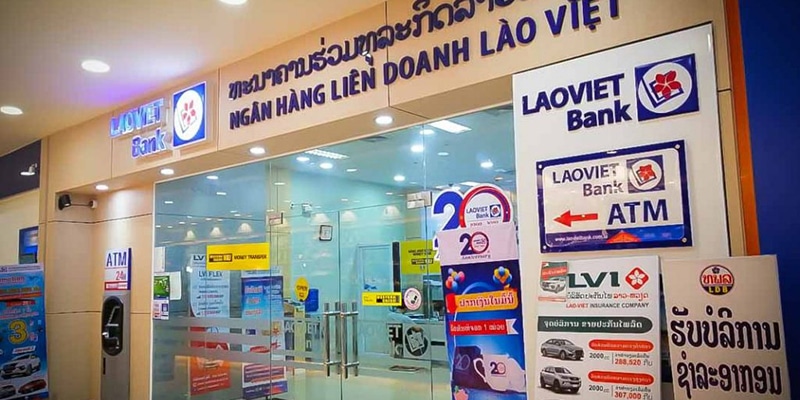
There are local and foreign banks in the Laos banking sector. While some investors might see this as a more limited selection, there are some banks that are present. The domestic banks include the Banque pour le Commerce Extérieur Lao, in addition to Australian, Vietnamese, Thai, Cambodian, Malaysian, Chinese, and French banks. There are about 40 banks that have full licenses to operate in Laos. For most businesses, the selection of a banks depends on their former relations with the banks, the currencies that they transact with, and the banks’ support in carrying out cross-border transactions and trade finance. This may be different for project and holding companies as they have different subsidiaries. As such, there might be a need for a more comprehensive discussion with a particular bank.
Requirements for Opening an Account
To open a corporate account in Laos, banks typically require the Enterprise Registration Certificate, business license, ID for signatories, the company’s articles of association, and may request other documentation. The specific requirements may differ by bank. Some banks may require a minimum initial deposit of around USD 10,000, along with a formal source-of-funds declaration, although sources differ on the initial deposit requirement. With respect to account opening, a separate and important regulatory requirement includes the Bank of the Lao PDR foreign direct investment rules, which require foreign investors to open a foreign direct investment bank account. This account must be in both the local currency (Lao kip) and a foreign currency, and must be opened within 15 working days after the foreign investor obtains a business license or approval of an investment proposal. For this account, registered capital, overseas loans, and profits to be repatriated must be deposited. Other accounts may not be used for this purpose, and misuse may be subject to penalties. In practice, banks also want to see the Enterprise Registration Certificate, and, if applicable, the company seal, before an FDI account is opened. This step typically follows the core registration process.
FX and Transaction Management
A big hurdle for foreign enterprises operating in Laos is currency management. The government has increasingly regulated foreign exchange transactions. Foreign enterprises find it even more difficult when they consider that all of their financial transaction activities such as the transfer of their capital to Laos, the repatriation of profits, and the repayment of loans to foreign lenders, must be processed through the designated FDI bank account. Companies that purchase commercial goods, services, debts, dividends, or payroll generally must exchange foreign currency to Lao kip through a commercial bank and maintain the transaction for audit purposes. The central bank and a group of commercial banks started the LFX system in August 2024, providing a centralized exchange system for spot transactions with the Lao kip, US dollars, Thai baht, and Chinese yuan. The system also set out a limit for each person to transact US dollars 2,000 a day and set out a limit of US dollars 75,000 a day for each corporate entity. Companies must also look out for these limits when they plan receipt and payment transactions for their foreign suppliers and lenders.
Typical Difficulties
For foreign investors, the biggest issue is the lengthy nature of the compliance review. This is related to the banks in Laos being instructed to carry out continuous background checks of foreign account holders, as well as continuous monitoring of foreign account holders’ transactions, thus prolonging the process for the opening of foreign accounts and individual transactions as compared to banking systems of other countries. Incomplete documentation is a regular cause for considerable delay. This often occurs where corporate documents are neither translated nor notarized, and where the nature of corporate documents does not clearly correlate with the payment instructions. Additionally, in February 2025, Laos was included in the debacle list of the Financial Action Task Force for the weaknesses in Laos’ anti-money laundering and counter-financing of terrorism legislation. This status inherently causes international correspondent banks to apply greater scrutiny to transactions involving Laos and causes additional delays for cross-border transactions. Combined with the Foreign Exchange (FX) restrictions and the daily limit of the Laos Foreign Exchange (LFX), there are considerable delays for Businesses that require the ability to transfer large sums of money across borders in a timely manner.
Best Practices
Investors have a higher chance of success when banking discussions begin before or at the same time as the registration of the entity. Waiting until after the Enterprise Registration Certificate is obtained is not recommended, as banks will usually want to understand the structure and purpose of the entity before entering a banking relationship. A clean documented source-of-funds that is maintained from the beginning and not created under time pressure, is usually beneficial, as it helps to avoid long account-opening and compliance review processes. It is also important to align the structure of a bank account with the business model on the first day, as it is disruptive to align the account structure after business operations have begun. The account structure will always need to be aligned with the business model. Lastly, to avoid situations that are likely to trigger additional scrutiny from the bank, a business account should only be used for business activities that have been documented in the registration.
Most Common Inquiries
Do foreign investors need a special bank account in Laos? Yes. In addition to a standard corporate account, foreign investors must also open a foreign direct investment account within 15 working days of obtaining their business license or approval for investment. This account must be used to provide business capital, aircraft loans, and to repatriate profits.
Is there a minimum deposit to open a business account? A minimum initial deposit may be required to open a business account in Laos, with amounts of USD 10,000 occasionally mentioned, though there is no fixed minimum, and requirements may vary by bank.
How does currency conversion work for businesses operating in Laos? The payments for goods, services, salaries and dividends will have to be converted from foreign currencies into Lao kip through a licensed commercial bank. Larger foreign exchange transactions will occur in the centralized LFX market, which has a cap of USD 75,000 per company per day.
What are the barriers to foreign direct investment in the country? The most common barriers are the increased scrutiny of correspondent banks after the addition of Laos to the FATF grey list in February 2025, the documentation gaps and the mismatches that occur between requested payments and registered business activities.