


This guide has both an overview of the market and introduce the places where potential is most likely.
Healthcare Market Overview in 2026
Laos has a public and private healthcare system. The public system is overcrowded and underfunded, and so, people seek private care for faster, quality healthcare. Unfortunately, private care is only available in the capital, leaving the majority of Laos’ population reliant on the public system and forced to travel to Thailand for better, private healthcare. The range of care available in Thailand is superior to that available within Laos and the public system is quickly failing to keep up with the growing, more urban population of Laos who are becoming increasingly health-conscious. Urban populations who are health conscious place preventive care at the top of their interests and so, preventive care and wellbeing are of increasing interest to the consuming population of Laos.
Trends in Laos’ Health Expenditure
Health spending in Laos has been increasing recently and is expected to reach USD 254.8 by 2026. This increase stems from increased spending by households and better health resources. Health spending by households provides insight into the health expenditures Laos households will incur. Laos’ health providers’ revenues will reach USD 342.73 million by 2025. This revenue provides a good approximation of the health services offered by the private and governmental institutions in the country. These figures are modest compared to neighboring countries. Investors who prefer to invest in the early market will examine these figures closely and be less concerned with the congestion of the market. Investors will be particularly interested in the pharmaceuticals segment of the market. It is currently difficult to estimate the specific value for Laos and will require further research prior to the development of the investment thesis for that segment.
Growth factors
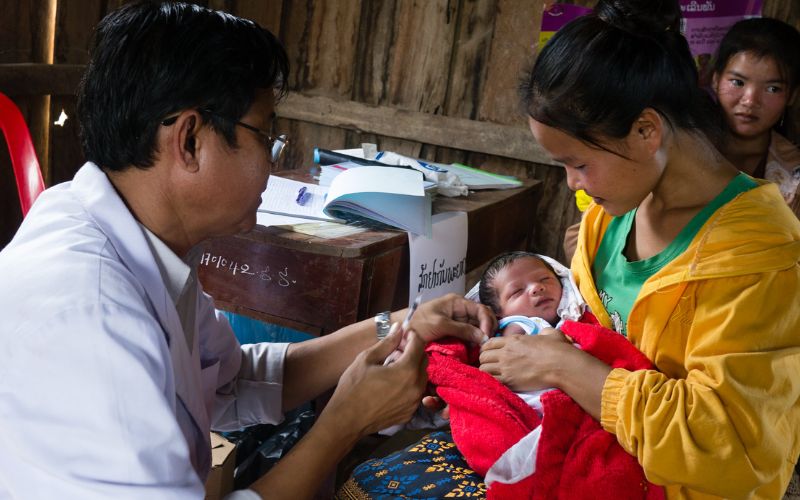
Even with limited healthcare infrastructure, the push for healthcare access in Laos is gaining momentum. Healthcare in urban and populated regions is being supplemented by the growing willingness of patients to pay to access private healthcare. Preventive and wellness services are in demand. Incomes are rising and there is an increasing understanding of health, thus leading to health literacy. Along with the growth of health literacy is the demand for modern medicine. Traditional medicine is still being sought. In healthcare, both traditional and modern medicine are interwoven. Mobile healthcare is an upcoming trend. Outside of Vientiane, access to healthcare specialties is extremely limited.
Investment Options
For investors who can meet higher capital demands, private hospitals and clinics are the most direct investment opportunity. This is especially true in areas surrounding Vientiane because that’s where the demands are most concentrated. Diagnostics and lab networks require much less capital and are a good investment opportunity because they won’t require a full build of a hospital. Medical devices and supplies will be in demand as hospitals and clinics are built. This segment will be in demand as physical infrastructure is developed. Pharmacies and distribution networks address the logistics of being a landlocked country. They also represent the increasing demand of medicine that will grow as health expenditures grow. Investors can use Telehealth as a way to reach patients outside of Vientiane. This would allow investors to avoid the large capital investments related to healthcare infrastructure. Long-term care and rehabilitation services are also good investment opportunities. This segment is especially underdeveloped and will be in demand as the population ages and unmet healthcare needs increase.
Risks and Constraints
Lao healthcare offers new business opportunities, but there are real challenges. The most significant of these is the severe shortage of professionals, especially medical specialists. As a result, the speed at which new healthcare facilities can be built and staffed is severely limited. There is a lack of access to advanced medical technologies. This is also a challenge due to the fact that the medical equipment needs to be imported to the country and requires outside specialists for maintenance. There are also challenges with inadequate general infrastructure, such as unreliable power and poor transport systems which can negatively affect service delivery. This is something that can be overlooked in a market overview, but is of critical importance during the everyday operations of healthcare facilities. The market is simply smaller compared to the neighboring countries. This also puts a limit on the size of the operation, unless business moves to a more challenging market with more competitors.
Things to Consider Before Investment
Investors should consider both the immediate area of a potential investment and the demand in Region’s-Urbans-Stream where the potential investment is located. Since Laos is a smaller country, the population is smaller, which makes location investment more important in Laos than in a potentially larger marketplace. Consider the costs of the staff and the costs to train staff. The costs to make an operating facility may be more dependent on the costs of staff and their training than the costs to build the facility. Consider licensing and health sector regulations early on, since it may be a lengthy process to deal with multiple government ministries. The strongest predictor of revenue is the combination of the facility’s referral network, the payer mix, and how patients come to the facility and pay. When considering advanced medical equipment, bear in mind the costs of locating technology in a landlocked country and the costs of maintaining it.
Most Common Questions
Is investing in healthcare in Laos a good idea? Laos may be a small market, but there is a high demand for healthcare beyond Vientiane. There is a high potential return for initial investors during this period of growing healthcare and may represent a good investment. However, potential returns may be affected by the challenge of staffing, regulatory issues, and constraints in market infrastructure.
Which subsectors of healthcare may be most valuable to investing? Current thinking is that healthcare services that offer diagnostics, delivery of pharmaceuticals, and telehealth services may represent a more cost-effective and stage investment. In contrast, building a full-service hospital will require a greater investment of time and capital to build the service and meet the staffing and equipment constraints.
What are the biggest issues in Lao healthcare? Challenges typically encountered by newcomers include a shortage of skilled workers in healthcare, limited access to advanced medical equipment, and wider gaps in infrastructure in the regions outside Vientiane.
Is more private healthcare needed? Yes. New patients are being drawn to private healthcare as a result of increased urbanization combined with improved health consciousness and a greater emphasis on wellness and preventive healthcare, despite the scope of the market being small in comparison to other countries in the region.