


Vietnam’s Investment Case in One View
The thesis behind investing in Vietnam rests on a few durable pillars rather than a single headline number. The country sits at the center of regional supply chains, benefits from a young and increasingly skilled workforce, and has spent the better part of a decade building the kind of policy infrastructure, trade agreements, industrial zones, tax incentives, that makes large-scale manufacturing and export operations genuinely workable. A growing domestic middle class is adding a second engine to the story: Vietnam’s population of roughly 100 million is spending more, and digital adoption across banking, retail, and logistics has accelerated quickly enough that consumer-facing businesses now see Vietnam as a market in its own right, not just a production base. Geographically, Vietnam’s position within ASEAN and its proximity to Chinese, South Korean, and Japanese supply chains continue to make it a natural landing spot for companies diversifying production away from a single-country concentration.
A 2026 Snapshot

A handful of current numbers tell the story of where investor capital is actually flowing. Total registered foreign direct investment reached $24.81 billion in the first five months of 2026, up 34.9% year-on-year, while disbursed FDI hit $9.75 billion over the same period — the highest five-month disbursement figure recorded in at least 18 years. Manufacturing and processing absorbed more than 70% of that registered capital, underscoring how central Vietnam remains to global production networks even as services and technology investment grow alongside it. Singapore has been the single largest source of new capital this year, contributing roughly $6.8 billion, or close to 46% of newly registered investment, followed by South Korea at around $4.2 billion and China at close to $1.8 billion. On the capital markets side, Vietnam’s benchmark VN-Index has climbed by more than a third over the past year, and in April 2026 FTSE Russell confirmed it will formally reclassify Vietnam from frontier to secondary emerging market status starting September 21, 2026 — a milestone that took nearly eight years of reform to reach and one that is already shaping how global allocators think about the market.
Main Investment Opportunities
Manufacturing and export-oriented production remain the backbone of Vietnam’s investment story, and that hasn’t changed even as the country tries to move up the value chain. Electronics, textiles, footwear, and furniture still account for the bulk of factory-floor activity, but the sector composition is shifting toward higher-value output as semiconductor and high-tech investment accelerates; Viettel’s chip plant in Hoa Lac and FPT’s advanced semiconductor packaging facility are early signals of where the government wants manufacturing to go next.
Consumer goods, retail, and e-commerce represent the second major opportunity, driven by rising disposable income and a population that has adopted mobile commerce and digital payments faster than many of its regional peers. Vietnam has set its sights on becoming Southeast Asia’s second-largest e-commerce market by 2030, which gives consumer-facing investors a long runway to build brand presence and distribution networks now.
Logistics, warehousing, and industrial infrastructure form a third pillar, closely tied to the broader manufacturing build-out. As more factories come online and trade volumes grow, demand for modern warehousing, cold storage, and last-mile logistics capacity continues to outpace supply in several regions, creating openings for both developers and operators.
Technology, software, and fintech are earning a larger share of investor attention as Vietnam pushes digital transformation across government and the private sector alike. A young, increasingly technical workforce, combined with government incentives for innovation-driven sectors, has made Vietnam an attractive base for software development, business process outsourcing, and increasingly for AI-adjacent services.
Renewable energy and green supply chain services round out the opportunity set, supported by Vietnam’s own commitments to reduce emissions and by multinational manufacturers that need cleaner power and greener logistics to satisfy their own sustainability targets and those of their customers abroad.
Investment Incentives and Support
Vietnam offers a layered set of incentives designed to steer capital toward priority sectors and locations. Corporate income tax incentives, including multi-year exemptions followed by reduced-rate periods, are generally available to projects in high-tech, large-scale manufacturing, or under-developed regions. Land rent relief and reductions are common inside industrial zones and special economic areas, often paired with customs and import-duty preferences on machinery and equipment brought in to establish a new production line. Beyond the tax code, recent policy moves have added further support for the private sector specifically: new measures introduced under Decree 20/2026 include personal income tax exemptions for experts working in innovative sectors, removal of the business license tax starting in 2026, and a mandate that localities set aside dedicated land, at least 20 hectares per industrial park, or 5% of total industrial land, for high-tech firms, small and medium enterprises, and startups. Provinces and industrial park developers also frequently offer their own administrative fast-tracking and dedicated investment promotion support, which can shave real time off a project’s path from decision to operation.
Best Sectors for Foreign Investors
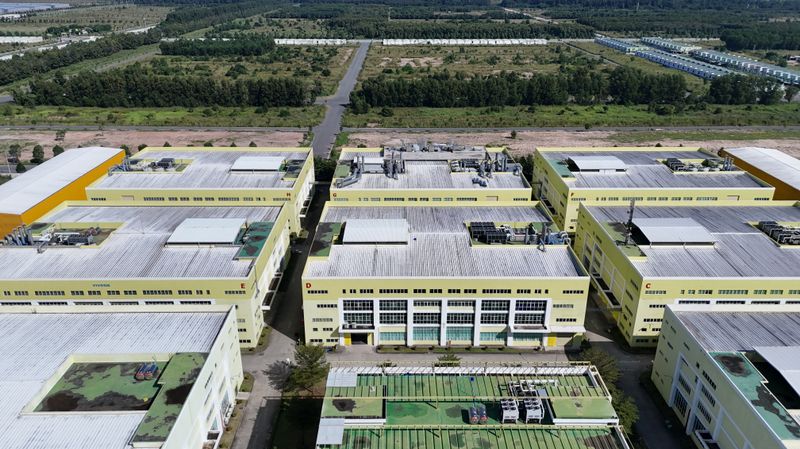
Electronics and component manufacturing continue to draw the largest share of new capital and benefit from the deepest incentive packages, particularly for projects tied to semiconductor or high-tech industrial policy goals. Industrial parks and the supporting industries that serve them, packaging, logistics, component suppliers; represent a lower-profile but consistently profitable adjacent opportunity. Consumer and retail businesses are riding genuine demographic and income tailwinds rather than policy support alone, which makes that sector somewhat less dependent on incentive structures holding steady. Healthcare, education, and professional services are attracting growing interest as Vietnam’s middle class expands and demands services that match its rising income. The digital economy and financial services sector, finally, is benefiting both from domestic demand and from the broader capital markets reforms that are reshaping how foreign capital can flow into Vietnamese companies.
Risks and What Investors Should Check
Regulatory complexity and licensing timelines remain the most commonly cited friction point for new entrants, even though recent reforms; including the move to let investors establish a company before finalizing investment registration, have shortened some of the early steps considerably. Land and site-selection risk is real and worth taking seriously, since infrastructure quality, environmental compliance, and pricing power vary widely even between parks in the same province. Infrastructure bottlenecks, particularly around power reliability and logistics congestion, still show up in some provinces even as the national picture improves. Certain activities carry foreign ownership restrictions or require a joint-venture structure, so confirming sector-specific ownership rules early avoids restructuring later. And ongoing compliance, tax, and labor obligations don’t disappear once a project is licensed; they’re a permanent part of operating in Vietnam and deserve the same diligence as the initial investment decision.
How to Evaluate an Opportunity
A useful opportunity assessment generally works through the same set of questions regardless of sector. Market demand should be tested against real data rather than assumed from Vietnam’s overall growth story, since demand for any specific product or service can vary enormously by region and income segment. Legal structure needs to be settled early, since it shapes everything from ownership limits to the licenses required down the line. Incentive eligibility should be mapped against the specific project’s sector, location, and scale, because incentive packages are not uniform and rarely apply automatically. Supply chain fit matters as much for a consumer brand sourcing locally as it does for a manufacturer feeding into export channels. Talent availability varies sharply by region and skill level, so workforce planning belongs in the feasibility study, not as an afterthought. And exit strategy, whether through trade sale, IPO, or long-term operation, is worth thinking through before capital goes in, not after.
A Practical Checklist for Investors

Before committing capital, most successful investors confirm their sector and ownership structure, verify licensing requirements against the latest regulatory framework, check which incentives apply in their target location, validate labor, logistics, and utility access at the specific site under consideration, and map out the ongoing compliance obligations that will follow once the project is operational. Treating these as a single pre-investment exercise, rather than handling them sequentially after capital has already been committed, tends to save both time and money.
Frequently Asked Questions
Why is Vietnam attractive for foreign investors in 2026?
Vietnam combines fast, broad-based economic growth 8.02% in 2025, with most international forecasters expecting continued growth above 6% in 2026; with a young workforce, deep manufacturing supply chains, and capital markets reforms that are drawing renewed global attention, including the confirmed FTSE Russell upgrade to emerging market status in September 2026.
What sectors offer the best opportunities right now?
Manufacturing and electronics remain the largest opportunity by volume, but consumer goods, logistics, technology, and renewable energy are all attracting growing investor interest as Vietnam’s economy diversifies.
What incentives are available to foreign investors in Vietnam?
Common incentives include corporate income tax holidays, land rent reductions, and import-duty preferences for qualifying sectors and locations, alongside newer measures supporting startups and high-tech firms introduced through recent private-sector policy reforms.
Is Vietnam better suited to manufacturing or services investment?
Both, depending on strategy. Manufacturing still absorbs the largest share of FDI and benefits from the most mature incentive infrastructure, while services, technology, and consumer-facing businesses are growing faster off a smaller base and offer a different risk-and-return profile tied more closely to domestic demand than to export markets.