


This guide examines the legal framework, investment models, market trends, development opportunities, and the key considerations foreign investors and developers should understand before entering Vietnam’s real estate sector.
Vietnam Property Market Overview
After the most difficult years of 2022 and 2023, 2025 brought more visible signs of stabilization to the real estate market in Vietnam. The activity of buyers and a gradual recovery of transactional activity were evident in selected market segments and led to an improvement of confidence of developers and investors.
However, the restoration was not the same in all segments. The degree of activity in the market was determined by projects with a strong legal base, led by established developers, in locations where investment in infrastructure has taken place. The most important message for foreign investors looking at Vietnam in 2026 would be the selective recovery of the market.
2025 Market Performance
There are multiple factors to consider when stating that the real estate market in Vietnam gained a positive outlook in 2025.
According to findings of Global Property Guide, recovery rates of residential transactions exceeded rates of the period following the pandemic and were reaching transactional levels of the 2020-2021 market cycles.
Investments retained their strength. As stated in data published by JLL Vietnam, average prices of apartments in Ho Chi Minh City in 2026 were approximately USD 7,300 per square meter, representing a YoY increase. Prices in Hanoi appreciated even more due to new supply constraints and pressure from end-user demand.
Demand was greater than supply, and though the balance began to correct, supply continued to lag. As noted by Savills Vietnam, in recent years, residential absorption rates of key projects reached new peaks due to the pressing demand for prime projects with secure legal status and reputable developers.
The demand was also supported by other factors. Vietnam’s GDP posted a growth rate of 8.02% in 2025, and inflation was kept under control sustaining demand for real estate and maintaining buyer confidence.
The demand was not only domestic. Real estate continued to be a leading sector of Foreign Direct Investments in Vietnam due to the ongoing interest from regional developers and institutional investors, as well as cross-border funds, due to the urbanization and economic growth of Vietnam.
2025 also taught that due to the economic environment, speculative projects were out of favor as demand was directed to projects with quality fundamentals.
2026-2027 Prediction
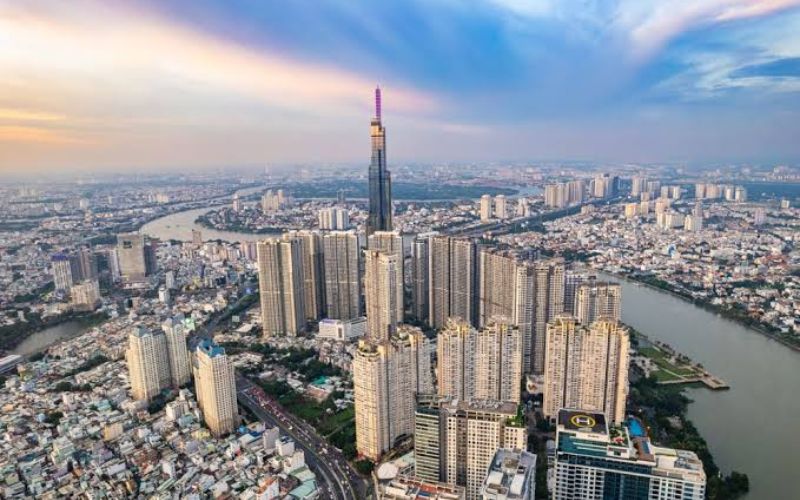
With the absence of unforeseen disruptions, the greater consensus among international property consultancies is for continued recovery in Vietnam’s real estate market in 2026 and 2027. It is anticipated that this recovery will continue to be uneven across different asset classes and geographies.
Having reviewed the market, Savills, CBRE, and JLL report marked improvements to project approvals and a gradual increase in supply, along with increased demand based on end-users and occupiers, as opposed to speculative demand. It is expected that the forthcoming recovery will be uneven. As such, demand and investment will be focused on the market segments that are underpinned by the long-term fundamentals of the economy.
In the case of the Vietnamese residential market, the new levels of supply are likely to be significantly higher than those offered during the 2022-2024 period. However, affordability is a significant concern for both Hanoi and Ho Chi Minh City. As costs for land, construction, and financing increase, demand for mid-market to affordable housing will likely be greater than demand for luxury housing.
Vietnam’s industrial and logistics property markets will likely be among the best performing markets. CBRE and JLL believe that demand for industrial property, both land and logistics facilities, and supply chain infrastructure will continue to be strong due to ongoing construction and investments in the industrial sector.
Convergence to the “flight to quality” construction and management is influencing the office and retail property markets. Grade A properties that are environmentally sustainable, efficient, and operationally effective continue to be the focus of multinationals.
For foreign investors, the next two years offer opportunities much less than predicting a broad market recovery. Instead, investors can focus on the urbanization and industrialization trends in Vietnam and the resulting long-term opportunities for investments in the right asset classes and in cooperation with the right development partners. Profit will be available in the sectors that investment in infrastructure will support.
Vietnam’s Property Market
Although most discussions about the property market in Vietnam are unified, the reality is that different property market segments perform differently. Even within the property market, which is the largest market by volume of transactions (Vietnam’s property market), there are many segments that are growing and attracting both local and foreign investments. These include logistics, industrial, and Grade A offices and some select tourist destinations.
For foreign investors, the most important factor to consider is what is driving the substantial demand in the various property market segments, as opposed to the foreign investment sentiment in the domestic property market.
Industrial and Logistics Real Estate
Of all the segments of the Vietnamese property market, the industrial and logistics property market leads the other segments in terms of performance.
Because of Vietnam’s growing dominance in the manufacturing sector and the diversification of Global Value Supply Chains to include Vietnam, this segment of the property market is well positioned to attract Foreign Direct Investment. Industrial land in many of the parks in Southern Vietnam are at or near complete occupancy, with high demand across the market.
Of particular interest to foreign manufacturers in the automotive and consumer goods industries, as well as logistics, are the clusters of industrial parks in the provinces of Binh Duong, Dong Nai, Long An, Bac Ninh, Hai Phong, and Hung Yen.
The development of Ready-Built Factories (RBF) and Ready-Built Warehouses (RBW) has increased investment opportunities. CBRE Vietnam reports that occupancy rates in many industrial facilities remain high, as companies prefer leasing facilities to greenfield construction, to expedite entry to the market.
The upcoming trends point to the demand from high-value industries, including semiconductors, electronics, data centers, renewable energy supply chains, and advanced manufacturing. These industries require complex industrial facilities, thus, presents opportunities to developers who can provide the necessary facilities with modern infrastructure with the required level of technological specifications.
For foreign investors, industrial and logistics real estate in Vietnam provide exposure to the long-term growth story of the country and are one of the most appealing opportunities.
Residential Real Estate
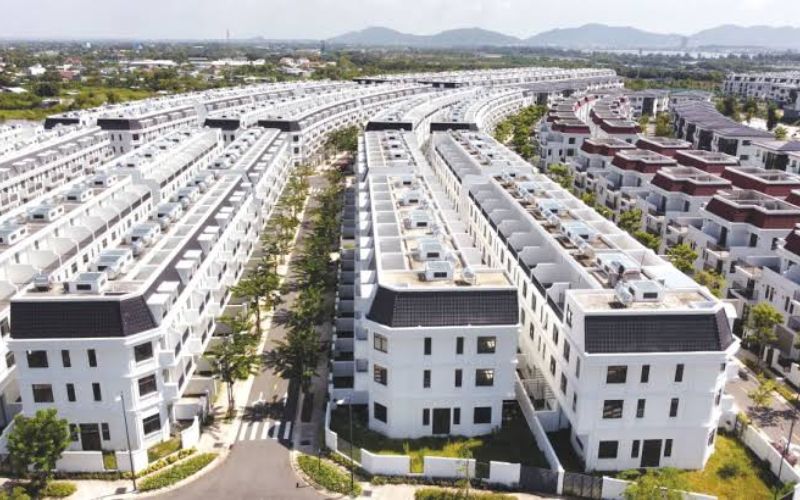
Residential real estate is still the largest real estate market segment in Vietnam. This is especially evident in Ho Chi Minh City and Hanoi.
Despite the tightening in the housing market in the last two years, housing prices in major Vietnamese cities have increased. Reports by Cushman & Wakefield and CBRE show that prices of apartments in prime districts have hit record prices due to supply shortages and sustained demand for housing.
Growing land costs, the increase in construction real costs, and the adjustment of regulatory requirements have pushed many new projects to the mid, high-end, and luxury segments, thus causing a significant demand for affordable housing in the last few years.
Policymaking bodies are recognizing some imbalances in the market. With the government’s planned expansion of social housing and affordable housing, opportunities for development, contracting, and investment will follow.
Considering steady urbanization, demographic changes, and the expansion of the middle class, the residential market will continue to present opportunities for potential investors. However, opportunities will be bound instead to the types of development that fulfill the requirements of actual users of residential units, and not to luxury developments.
Office and Retail
In Vietnam’s offices and retail markets, property consultants cite a notable trend called “flight to quality.”
Instead of a wide, market-level expansion, demand is now evident for well-situated properties that are of modern design, built to international standards, and have quality, professional management.
In the office market, Grade A buildings of Ho Chi Minh City and Hanoi are seeing an influx of corporate tenants, tech firms, and banking and professional services companies. Newer stock has entered the market, but even with the introduction of new buildings, the older stock has seen greater improvement to occupancy and rental levels.
The retail market is no different. Stronger demand for tenants is present in newly constructed, modern shopping centers and mixed-use developments and engaging retail offerings. The focus of international retail brand expansion in Vietnam is a growing urban populace and increased consumer spending.
The most important element for potential projects and offerings is the quality of the asset.
Real Estate and Tourism
The renewed confidence in international travel has led to a renewed interest in travel-related real estate.
Investment in travel related hospitality and resort real estate is taking place in Phu Quoc, Da Nang, Nha Trang, Quy Nhon, and Ho Tram. The future of real estate in these locations is improving with investment into the upgrade of transport systems, the improvement of airport facilities, and the increase of international travel.
According to the Vietnam National Authority of Tourism, the continued recovery of international travel is providing renewed opportunities for the development of travel related real estate.
Tourism real estate is more cyclical than industrial or residential real estate. The success of a project is determined by the location and the demand for the destination, the accessibility of the destination, and the strength of the brand. Because of this, competitive advantage markets need to be selected rather than relying on general demand expectations.
Destinations that provide high quality locations and that have the potential to be developed with a high quality hospitality product are of opportunity to the market over the medium to long term.
New Real Estate Laws: What Foreign Investors Should Know
Starting in 2025, new Land, Housing, and Real Estate Business laws will initiate a new phase in Vietnam’s property laws. The new set of laws is the first major change to the legal infrastructure of Vietnam’s property system in over ten years.
The changes brought by new laws and regulations have a considerable practical effect even beyond the changes in the law. Such changes modify the approval processes of property development projects, the means to access land, how developers are able to raise funds, and what real estate rights are available to foreign individuals and corporations. The reforms, on one hand, intend to create a wider set of opportunities for foreign investment, and, on the other hand, require investors to adjust their assumptions regarding the market, which have been formed on the basis of previous regulations.
Land Law 2024: Changes Impacting Investors
The 2024 Land Law introduces a series of reforms that are relevant to foreign direct investment and property development.
Among the most significant of these reforms is the widening of the ways that foreign invested enterprises may access land. While foreign investors cannot own land in Vietnam, eligible Foreign Invested Enterprises may secure rights to the use of land via state grants, leasing arrangements from the state, or by taking over projects that have existing rights to the use of land, subject to the investment and sector-specific provisions.
The law also revises Vietnam’s land pricing system. Starting in 2026, it is anticipated that land price lists for provinces will be published on an annual basis, as well as being made more consistent with the market. For developers, this adds some clarity, but project costs may also increase in regions where state-determined land prices have previously been set below market prices.
Another change centers on land use rights in industrial parks, export processing zones, and high-tech zones. The new system offers more clarity for dealing with industrial land in light of the growing and sustained demand of the market for manufacturing and logistics.
From the viewpoint of business, Land Law 2024 aims to lessen the legal concerns of business and improve the lucidity of the market. Investors, on the other hand, will need to prepare for more effort and thorough project evaluations and higher levels of compliance and due diligence as authorities start to enforce the new system.
Foreign Property Ownership
The Housing Law 2023 and the Law on Real Estate Business 2023 offer more details on foreign access to the Vietnamese residential market.
As before, foreign individuals can purchase residential real estate in government approved commercial housing projects, within the foreign ownership limits set by Vietnamese law. In general, foreign ownership is limited to 30% of the units in apartment buildings, and 250 units in ward level real estate projects.
The updated legislation enhances the rights of foreign owners to lease, inherit, and manage eligible residential properties for the duration of their ownership. As a result, foreign buyers have more investment assurance in Vietnam as a long-term investment rather than as a short-term residence.
The Law on Real Estate Business 2023 introduces additional protections for buyers, requiring developers to satisfy a greater number of legal and construction obligations before they are permitted to take a deposit from buyers. This protects buyers from the risk associated with incomplete or illegal projects.
Though foreign buyers face greater limitations than domestic buyers, particularly with land ownership, the reforms are primarily focused on the development of a stable legal system that enhances transparency and protection for investors.
For firms engaged in real estate development or investment in Vietnam, awareness of the changes to the legal system is now as critical as understanding the market or location.

Prime Investment Locations
The real estate market in Vietnam is becoming more influenced by location and less by overarching national trends. While Hanoi and Ho Chi Minh City remain the largest markets, the focus of investment is on the industrial provinces and newer city centers, which are the focus of infrastructure and population development and expanding.
For investors and developers, the right investment asset class is important, but so is the direction of capital.
HCMC and Hanoi
As before, Ho Chi Minh City and Hanoi are the two most developed areas in Vietnam, including the most developed real estate markets. They are developing along different paths.
Ho Chi Minh City has seen the most development in the Central Business District and the urban areas experiencing the greatest growth. District 1 and Thu Duc City, as well as the eastern corridors, have seen significant demand for graded A office space, premium residential, and mixed-use developments. Metro expansion and transportation improvement projects will facilitate the long term growth of the districts adjacent to those being developed.
Rising land costs have forced developers to move to the suburbs, where larger land banks are available. Projects along the routes of major infrastructure improvements are being developed in the suburbs due to the relative cost and to avoid Central Districts.
In Hanoi, demand for real estate has been driven primarily by the growth of the government and business sectors, and the growth of manufacturing in Northern Vietnam. The western corridor has seen the greatest growth, and the development of offices, housing, and mixed-use urban areas has spread to the districts of Nam Tu Liem and beyond.
The Ho Chi Minh City area has the most concentrated commercial activities in the country, making it the center of business activities. The growth of the Northern Vietnam industrial economy, along with Hanoi’s role as the political capital, is giving Hanoi the greatest potential.
Emerging Markets Outside of Major Cities
Outside of Hanoi and Ho Chi Minh City, some secondary markets are garnering increasing investor interest.
Hai Phong is quickly becoming one of the most essential cities for Vietnam’s industry and logistics. Foreign investment and the demand for industrial real estate is growing, thanks to Hai Phong’s valuable, competitive advantages, such as its developing industrial parks and strong base of manufacturing.
The development of Long Thanh International Airport is expected to significantly impact the value of Dong Nai. With growing interconnectivity and further industrial development, there is potential for rapid growth across logistics, industrial, residential and commercial infrastructure.
Da Nang is one of Vietnam’s best tourism and lifestyle markets outside of Hanoi and Ho Chi Minh City. Being smaller than the two major cities, investment is still flowing into Da Nang for hospitality and mixed-use and select residential developments, all of which are supported by tourism and infrastructure recovery.
Bac Ninh and Hung Yen provinces, in the North of Vietnam, are benefitting from investment in manufacturing and supply chains. High-tech manufacturing and industries that focus on export have driven the need for industrial real estate, workforce housing and commercial developments in the manufacturing supply network.
For those investors willing to look further than the two largest cities in Vietnam, these secondary markets present good growth opportunities, lower costs of entry and the ability to take a position in industrial and infrastructure developments before demand drives value.
Key Trends Reshaping Vietnam Real Estate in 2026
The Vietnam real estate market is undergoing changes that require looking beyond cycles of demand and supply. These changes include the preferences of investors and tenants, the speed of technology adoption, and the impact of sustainability. All of these contribute to changes in the structure, financing, and management of real estate projects.
Longer term trends also need to be understood by developers and investors when assessing opportunities.
Sustainability and Demand for Green Buildings
Across the real estate sector in Vietnam, sustainability is becoming increasingly important.
International tenants, institutional investors, and global corporations place more importance on energy and environmental performance, and ESG considerations, when selecting a building. This trend has meant that increasingly, developers are choosing to build sustainably.
Certification of Green buildings through LEED, LOTUS, and EDGE is becoming a trend in Grade A buildings, large industrial buildings, and large scale, mixed use developments. Investors are also increasingly interested in the sustainability of a building’s operations and the building’s long term resilience, beyond the certification.
For Developers, sustainability is becoming a competitiveness issue in attracting tenants and increasing the value of their assets.
Data Centers, Smart Cities, and New Asset Classes
The fast digitalization and technology investment in Vietnam is creating a lot of new opportunities for investment and is one of the major trends that is impacting the Vietnam real estate market.
Investors, both foreign and local, are drawn to the region due to the increasing demand for infrastructure to support cloud services and AI, and for advanced digital services. Fast improvements in Vietnam’s digital economy and in the overall connectivity of the region are making Vietnam a better option for additional data centers. There are also more widespread urban developments with the adoption of smart city technologies. More and more, local governments want to advance their cities with modern infrastructures and systems that incorporate advanced digital technologies, smart transport and utilities, and consolidated urban services.
There is more of a focus on developing large urban ecosystems that support community growth and development over extended periods of time, as opposed to developing areas for single purposes. This includes integrating places to live, work, shop, dine, and public amenities.
These developments in Vietnam point to the potential to expand beyond the more conventional offerings to both international and local investors and real estate developers, and means a wider variety of opportunities may be presented to more technologically driven real estate companies.
Conclusion
The combination of factors such as developing in infrastructure and technology, and urbanization, along with a more advanced and more transparent legal framework for investment, mean the prospects for growth for real estate in Vietnam are much better than in previous years. While affordability, execution of projects, and selective areas of the market still pose challenges to growth, the prospects for growth are better than in previous years due to a developing infrastructure and a growing middle class.
Investors who already penetrate these markets know that selecting the optimal segment, the most strategic location, and the best investment strategy, are crucial for entering the foreign market today. Continued improvements in infrastructure are opening up new opportunities in the emerging markets, where growth in manufacturing is driving opportunities in industrial and logistics assets and the major metropolitan areas are the focal points for commercial and residential demand. As the Vietnamese real estate market continues to develop, the best opportunities for the future real estate investors will be for those who have a strong understanding of the local real estate market and the regulatory and business frameworks.