


This page explains the construction market, regulatory framework, investment opportunities, procurement environment, and the essential considerations for foreign companies entering Vietnam’s construction sector.
Vietnam Construction Market Overview
The construction sector in Vietnam is a focal point of the continued economic development of the country. Driven by construction sector investments in infrastructure, and industrial, urban, and foreign direct investments (FDI) correlating, the sector offers opportunities for contractors, engineering firms, and suppliers of construction materials and modern technologies wishing to join one of the most rapidly developing markets in Southeast Asia.
For foreign firms, construction activities in Vietnam should not be perceived as only developing residential construction. Growth demand is coming from investment in construction of industrial parks, manufacturing facilities, logistics infrastructure, transportation networks, and sustainable urban construction.
Infrastructure Investment and Industrial Growth
Public infrastructure investment is a key motivator for construction in Vietnam. During 2021-2025, the Vietnamese government earmarked VND 2.87 quadrillion for the Medium-Term Public Investment Plan. Significant funds were allocated for public infrastructure and development project networks (transport, airports, logistics, healthcare, and urban infrastructure).
As a result of these large investments (North-South Expressway, Long Thanh International Airport, urban metro systems of Hanoi and Ho Chi Minh City), there is a constant demand for construction materials, contractors, engineering, and project management consulting services.
Construction demand is also driven by industrial growth. The Foreign Investment Agency (FIA) reported that Vietnam registered USD 38.23 billion in Foreign Direct Investment (FDI) in 2024, with manufacturing and processing being the primary sectors. Multinational companies expand production in Vietnam and diversify their supply chains, growing the demand for factories, warehouses, logistics, employee housing, and related infrastructure.
This generates construction opportunities related to project delivery and industrial building construction systems, MEP, and automation technologies and specialized construction services.
Urbanization and Long-Term Demand
Vietnam’s construction opportunities are also driven by long-term demographic trends and urbanization.
The World Bank indicated that Vietnam’s urbanization rate was around 40%. Compared to other developed Asian economies, this shows that Vietnam has a large growth area for urban development. As cities expand, so will the demand for housing, transportation and urban infrastructure, public utilities, hospitals and clinics, schools, and commercial real estate.
The demand for building projects and public utilities remains due to the rapid growth in Vietnam’s population (which is over 100 million). Continued economic development and higher incomes lead to demand for modern and better quality projects such as housing, office and retail spaces, as well as urban mixed-use developments.
Structural factors show that construction and investment activities in Vietnam are not prompted only by specific projects, but also by the economic and demographic trends that shape the development of Vietnam for years to come.
Key Growth Segments in Vietnam’s Construction Industry
Construction activities in various sectors have been booming. However, there are some sectors that are showing the highest rates of growth, and are expected to be growth engines in the years to come. These areas are of utmost interest, particularly to foreign contractors, suppliers and investors, as they are the areas in which highest growth potential will be exhibited.
Transportation Infrastructure
The construction of transportation infrastructure is one of the largest construction demands in Vietnam.
The Government of Vietnam continues to focus on the construction of projects that will enhance the link between the industrial zones, ports, airports, and the major urban centers. One of the largest transportation infrastructure projects in Vietnam is the North-South Highway System and the Long Thanh International Airport is expected to be the principal airport of Southern Vietnam, once it is completed.
Mixed-use developments also are creating demand for construction and design services, particularly in the areas of urban rail in both Hanoi and Ho Chi Minh City.
For enterprises dealing in heavy construction, sourcing engineering services, providing equipment, and dealing in infrastructural materials, public investments and national development priorities provide long-term business opportunities.
Industrial and Logistics Facilities
Within Vietnam’s construction market, the rapid growth of industrial construction is clearly visible.
Due to the growth of industrial investments, construction in the provinces of Binh Duong, Dong Nai, Long An, Bac Ninh, Hai Phong, and Hung Yen is seeing demand for the construction of factories, warehouses, and logistics centers, and construction of auxiliary facilities.
Modern logistics facilities, cold storage construction, and distribution centers are being constructed to support the growth of e-commerce and supply chain construction. This supports the industrial construction business as well as warehouse construction, the design of automated systems, and industrial engineering businesses.
Compared to the growth of the housing construction market, industrial construction strongly supports long-term investment initiatives and growth in exports, making it a preferred market for many foreign construction companies.
Green Buildings and Sustainable Development
In Vietnam’s construction market, the incorporation of sustainability is a growing trend.
More and more developers, multinational tenants, and institutional investors are focused on energy efficiency, environmental impacts, and ESG. Because of this, building certifications such as LEED, LOTUS, and EDGE are becoming commonplace in commercial, industrial, and mixed-use developments.
Because of this, a market has formed for the construction of green buildings, the design of energy efficient systems and smart buildings, water-saving technologies, and environmental consulting.
The international businesses that specialize in green construction and sustainable design have opportunities in Vietnam’s construction sector that go far beyond the usual construction activities thanks to Vietnam’s increasing emphasis on ESG. As the integration of sustainability into construction increasingly affects project planning and investment decision-making, having green building capabilities will provide a significant competitive edge.
Key Trends Reshaping Vietnam’s Construction Sector
The construction industry in Vietnam is changing. Traditional methods of project construction are being replaced as the infrastructure networks become more sophisticated, the industrial facilities that are constructed become advanced, and the international investors that are engaged in construction increasingly demand efficient and sustainable facilities. The construction industry is adjusting to new methods of construction and new standards for the protection of the environment.
These changes are not only affecting how construction projects will be done, but are creating new opportunities for foreign contractors, construction technology, and advanced engineering services and construction materials.
Use of New Technologies
Digital construction is starting to become mainstream for construction projects in Vietnam, especially large infrastructure projects and industrial and commercial facilities.
One of the most prominent examples of this is the introduction of construction projects using Building Information Modeling (BIM). As part of construction projects that have been prioritized for Digital Vietnam, the Ministry of Construction has chosen projects to promote the use of construction methods based on the BIM approach. BIM is an advanced construction method that provides for better project stakeholder coordination, less design conflicts, and construction phases that are optimized and construction assets that are managed throughout the entire life cycle of a project.
Modular construction and prefabrication provide developers with the option for less on-site labor and faster delivery with better quality control. Though compared to Singapore or Japan modular use is low, this construction style has been adopted to build industrial structures, worker housing, and large-scale residential buildings where fast construction and a consistent end product are of higher priority.
Smart buildings are the future. Grade A offices, hotels, and mixed use facilities now have building management systems at the center of design. Coupled with energy monitoring, automation, and smart security technologies, these buildings are only construction efficiency focused. Smart buildings go further to meet the demands of large multinational clients.
The focus of construction technologies, bridge and road builders, and specialty construction in Vietnam should be the services that are scarce. PhD holders in construction fields, among others, will be highly sought after over the next decade for services in Project Management, Industrial Automation, Smart Building Technologies, and Modular Construction.
Demand for Sustainability, ESG, and Green Building
Sustainability is no longer a “nice to have”, it is now a “must have” in construction in Vietnam and is becoming a business imperative.
In the regional and global markets, manufacturing companies and investors are no longer indifferent to the ESG criteria of their Corporate Social Responsibility. Because of this, building design is under pressure to incorporate and commit to higher standards of Sustainability.
This trend is evident through the increasing prevalence of certifications such as LEED, LOTUS, and EDGE. These certifications are appearing more and more in industrial parks, office developments, logistics facilities and mixed-use projects, especially in the presence of international tenants.
Demand is increasing for sustainable construction practices along with building materials and systems that incorporate energy and water efficiency, as well as ‘smart’ high performance building envelopes and systems. These “green” buildings are perceived to have higher initial costs; however, building developers and investors are realizing the benefits of increased asset value, reduced operational costs, and the ability to attract higher quality tenants.
For foreign companies that engage in construction and construction-related activities, the introduction of ESG requirements have created opportunities that are not solely limited to construction activities. Sustainable design and construction, energy and water efficiency, environmental services, and green building consulting and construction services will likely provide companies with additional construction-related opportunities as Vietnam continues with its commitment to sustainability in its development.
Strategic Participants in Vietnam’s Construction Industry
To comprehend Vietnam’s construction industry, the focus cannot merely be on the expanding segments. Foreign firms must know the project stakeholders, the nature of the procurement process, and the construction ecosystem where they will find the opportunities.
Even though the industry is populated by thousands of contractors, developers, consultants, and suppliers, the competitive construction industry in Vietnam is dominated by a small number of local contractors, state-linked firms, foreign construction engineering firms, and large construction material suppliers.
For foreign firms planning to do business in Vietnam, an understanding of the industry stakeholders will assist in identifying business opportunities to partner with or to serve as a customer or possible acquisition target in a foreign market.
Major Local Contractors and State Enterprises
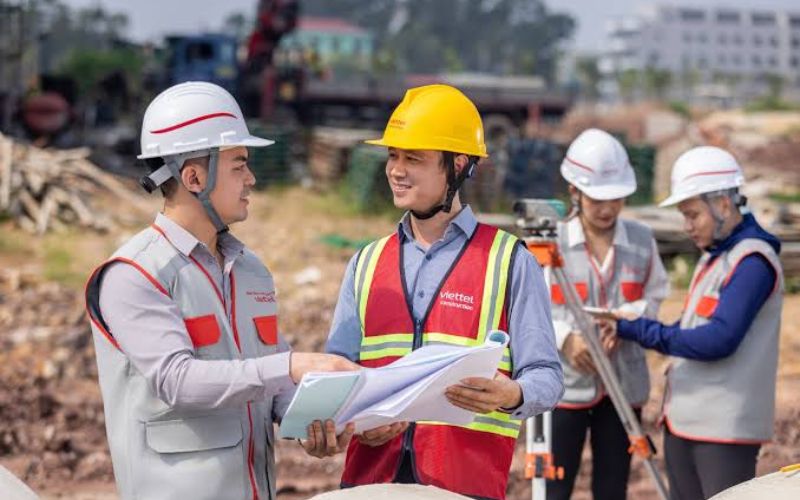
Local contractors dominate most segments of the construction industry, particularly the construction of public infrastructure, buildings, and other civil projects.
Vinaconex is one of the largest and most prominent of Vietnam’s construction and infrastructure firms. They have large capabilities for almost any type of construction, and the firm has maintained a good market position due to their long history in construction and participation in government projects.
Coteccons and Hoa Binh Construction are the most notable competitors in the private sector for high rise and commercial buildings. They have won large civil contracts from both large local and foreign clients.
Within their respective construction specialties, other contractors are becoming more prominent as well. Fecon, for example, has a notable capability for foundation and other geotechnical construction, and Delta Group and Cofico have large capabilities for commercial and industrial construction.
For several international firms, these companies might be more valuable business partners compared to their business rivals. Many foreign firms doing business in Vietnam partner with well-established local contractors familiar with the regulations, supply chains, and major clients.
Foreign Contractors and Market Entry
Traditionally, foreign contractors have only focused on business segments where they have a clear competitive advantage. This may be due to the level of engineering and management complexity or the international project standards.
Obayashi, Kajima, and Shimizu are a few of the well-established, quality, Japanese contractors in Vietnam. Japanese firms have a quality reputation and continue to be a preferred contractor for many investors.
Vietnam has seen a rapid increase in major Korean investments, especially in the manufacturing and real estate sectors. This growth has increased the construction output of major South Korean contractors; Hyundai E&C, GS E&C, and Lotte E&C, and is reflective of the impact of Korean firms on Vietnam’s growth.
Chinese EPC contractors are competitive in large industrial and infrastructure projects. These highly competitive, large-scale contractors are thoughtful of the engineering and procurement requirements. Increasingly, there has been a shift away from cost to quality, performance and competency based evaluations of contractors.
For the majority of foreign construction companies, the most effective way to penetrate the market is not through competing with local contractors for labor-intensive construction activities. Services that are in short supply, such as construction and civil engineering, project management, design and consulting, as well as digital construction technologies, are likely more viable options.
Building Materials and Supply Chain Opportunities
Construction in Vietnam gives contractors many opportunities beyond the execution of the projects.
Vietnam has significantly enhanced its self-sufficiency for basic construction inputs (cement, steel, stone aggregate, construction materials) and established substantial construction material suppliers in the Hoa Phat and Hoa Sen Groups, as well as several other international firms.
Despite the growth of basic construction materials, Vietnam’s extensive industrial development, advanced manufacturing, and logistics operations are creating a greater demand for construction materials and services for:
- Industrial Mechanical, Electrical, and Plumbing (MEP) systems
- Building automation
- High-performance building facades
- Advanced building insulation and thermal control
- Fire protection
- Specialized material handling and logistics
- Data center construction
To be most effective when pursuing opportunities in the Vietnamese construction market, especially for specialized construction materials and services, foreign companies should pursue business partnerships with local distributors, engage with Engineering, Procurement and Construction (EPC) firms, and address the needs and demands of local industrial and commercial project developers and owners.
Conclusion
Vietnam has captured significant foreign manufacturing investments, has rapidly modernized its construction infrastructure, and has expanded its supply of higher-quality construction assets. These factors have positioned Vietnam’s construction market to provide significant opportunities for foreign companies that offer and integrate advanced construction methodologies, specialized services, and higher-value construction solutions.
Evaluating more than just the growing areas is necessary for organizations assessing the market to be successful. Company analysts should consider the evolution and competitive structure of the industry as well as how procurement will be impacted. Companies that fit in with the priorities and investments made by the Vietnamese government concerning Infrastructure, Industrials, and Sustainability, in the next phase of the country’s economic evolution, will capture the greatest opportunities in one of the most rapidly developing construction markets in Southeast Asia.