


This guide covers the ecosystem, investment landscape, talent availability, regulations, and business opportunities that foreign technology companies and investors should understand before entering Vietnam’s technology sector.
Vietnam’s Tech Ecosystem
Vietnam has one of the fastest growing technology markets in Southeast Asia. It has transformed from being the low-cost option for outsourcing to a regional center of services and innovations for digital technology. The young and cheaper workforce, increasing government support, and rising foreign interest are making Vietnam the center of digital technology for Southeast Asia.
Vietnam presents a favorable combination of skills, scalability, and affordability for potential digital transformation partners, technology purchasers, and multinational enterprises. While sophisticated technology markets in Asia have positioned themselves to develop further in conjunction with the growing global demand for software engineering, cloud services, AI, and other digital offerings, Vietnam is asserting itself as an alternative.
Market Size and Growth Figures
There has been significant growth in Vietnam’s Information and Communication Technology (ICT) sector over the past decade. The government’s digital transformation programs have led the Ministry of Information and Communications (MIC) to estimate that Vietnam’s digital economy will comprise approximately 30% of the country’s GDP by 2030. In 2025, the ICT sector will have generated more than USD 170 billion. The rapid growth of the technology sector is outpacing that of most other sectors. Telecommunications, software, IT services, and digital platforms are the key growth areas. IT services and software exports are of increasing importance to Vietnam’s economy, and the international demand for IT services including software development, quality assurance, cloud services, cybersecurity, and enterprise digital transformation services is sustaining the growth of the sector.
Furthermore, the development of the country’s nascent startup ecosystem is attracting further venture capital, especially within the domains of fintech, AI, SaaS, e-commerce tech, and enterprise software.
Vietnam vs. Regional Peers
Vietnam is being compared more frequently with the established technology markets of India, the Philippines, and Indonesia. Each of these markets has their own unique offerings. India, for example, has scale, a mature outsourcing ecosystem, and strong engineering capabilities, while the Philippines is known for its BPO and Customer Service.
Indonesia boasts a large domestic digital economy and a large number of start-ups.
Vietnam boasts competitive costs, strong engineering resources, political stability, and rapid digital adoption.
What sets Vietnam apart is the affordability of its strong talent. Although labor costs are falling in other regional competitors, Vietnam’s strong digital engineering and software transformation services have garnered valuable regional reputation.
It is for these reasons, Vietnam has been an appealing option for firms looking for other alternatives to traditional outsourcing countries.
Skilled Workforce and Education
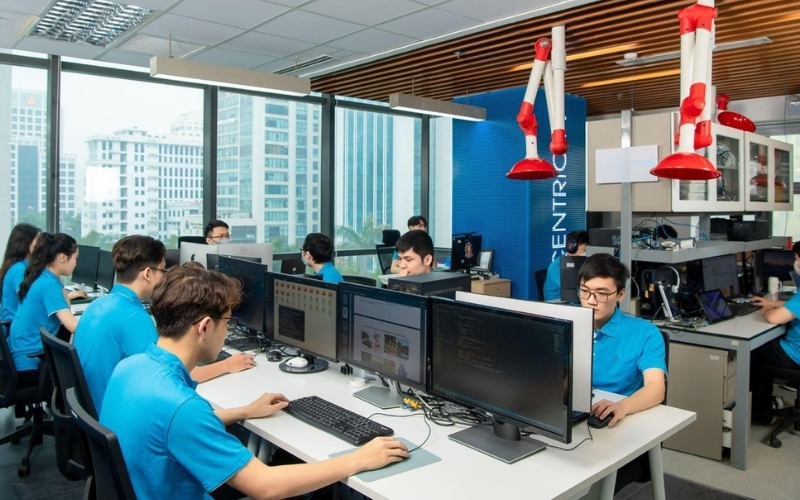
Vietnam’s technology workforce is one of its main competitive advantages.
Large amounts of university and polytechnic graduates in the country, particularly in engineering and technology, have recently been enabling the growth of major educational hubs (e.g. Ho Chi Minh City University of Technology, Hanoi University of Science and Technology, and FPT University) to supply a strong workforce to the global labor market.)
Vietnam is frequently ranked one of the top countries with skilled software developers in the world and excels in a variety of trade areas, especially:
- Software engineering
- Mobile development
- Embedded systems
- AI and machine learning
- Cloud technologies
- Quality assurance and testing
These workforce factors combine to place Vietnam in a favorable position for foreign technological investments and outsourcing contracts, especially when costs are compared.
Key Technology Hubs
Vietnam’s technology landscape is concentrated in a few metropolitan centers. Ho Chi Minh City is and has been the largest outsourcing and start-up city containing a lot of software development, technology, and digital services companies.
Enterprise software, government tech, telecommunications and R&D operations characterize Hanoi. Large technology firms are present in the capital.
Located between the Central Highlands and South East Asia, Da Nang is becoming a growing technology center. It has government support, lower operational costs, and growing investment in software development and innovation.
Da Nang, Hanoi, and Ho Chi Minh City are the major technology zones in Vietnam that attract foreign investment.
Government Digital Transformation Agenda
Technology for Vietnam’s government is an economic strategy for the long term.
The National Digital Transformation Program outlines the government’s ambitious targets in a digital government, digital business, and digital society. Priorities for the government are the:
- Expanding digital infrastructure
- Increasing cloud adoption
- Developing AI capabilities
- Promoting digital payments
- Supporting startup innovation
- Strengthening cybersecurity
The government hopes the digital economy will grow to 30% of the GDP by 2030. This goal will provide a lot of opportunities to technology companies, investors, and digital services.
With digital transformation of economies and industries, the need for IT services will continue to grow in the foreseeable future.
Segments of the IT Services Market in Vietnam

Vietnam’s IT services market encompasses far more than software outsourcing. It offers numerous opportunities focused on software development, cloud services, business process outsourcing, cybersecurity, AI, and data services. International firms should understand these to assess opportunities for partnerships, outsourcing, and market entry.
Software Development and IT Outsourcing (ITO)
In Vietnam, software development is the largest industry among IT services.
Vietnam has several competitive advantages that lead it to frequently be listed among the best countries for IT outsourcing, such as the high level of technical expertise, affordable costs, and an increasing ability to take on more complex projects. International clients have begun to rely on Vietnam for more than just programming and maintenance, including product development, digital and business process transformation, enterprise solutions, and technologies in their infancy.
Some of the industry leaders are:
- FPT Software
- TMA Solutions
- KMS Technology
- Axon Active
Some of the common outsourcing services include:
- Custom software development
- Mobile applications
- Enterprise systems
- QA and software testing
- Product engineering
- Embedded software
Due to the growth of digital transformation around the world, the services that Vietnamese software companies offer are in high demand.
IT Infrastructure and Cloud Services
The total economy of Vietnam is rapidly adopting Cloud solutions.
Vietnamese companies are more frequently moving their operations to a Cloud environment in order to better control costs and become more efficient and secure. As a result, the multinational Cloud services providers, such as Microsoft, Amazon, and Google, are expanding their offerings in Vietnam.
Local providers, such as Viettel IDC and VNPT Cloud, are also heavily investing in data centers.
Particular interest comes from:
- Financial services companies
- Manufacturers
- Retailers
- Healthcare providers
- Government agencies
Cloud services are likely to be among the fastest growing areas of IT in Vietnam.
Business Process Outsourcing (BPO) and Knowledge Process Outsourcing (KPO)
Vietnam is also growing further as an outsourcing business destination beyond IT process outsourcing.
There are a variety of services that BPO traditionally offers, such as:
- Customer support
- Data processing
- Finance and accounting
- HR administration
- Back-office operations
Whereas KPO offers:
- Market research
- Business analytics
- Legal process outsourcing
- Financial analysis
- Industry research
Vietnam is relying on higher knowledge and skilled driven services in order to make them competitive in services that are outside of routine practice.
Cybersecurity Services
The digital transformation has changed the landscape of the services that are offered from the private and public sectors. Vietnam has seen an interest in the services of cybersecurity.
The private and public sectors have a myriad of services and concerns, such as:
- Data protection
- Cloud security
- Regulatory compliance
- Threat detection
- Incident response
Cybersecurity ventures still face a global skills gap and challenge. This provides a gateway for specialized services and international firms in cybersecurity to capitalize and enter the Vietnam market. With the continued digitization of operations, cybersecurity will garner a greater financial investment.
AI, Data and Emerging Technologies
Within the Vietnam technology ecosystem, artificial intelligence has rapidly gained prominence as a strategic focus. Sectors have begun to spend on:
- Generative AI
- Machine learning
- Data analytics
- Computer vision
- Natural language processing
- Intelligent automation
Vietnam has begun to rapidly innovate AI solutions to commercial enterprises through the development of a support system for their emerging software with improved engineering resources and a rapidly growing startup ecosystem. This offers a massive opportunity for many stakeholders who may wish to participate in the growth of Vietnam through their data and AI services.
Key Players, International Investments, and the Startup Ecosystem

Vietnam’s tech sector thrived with the support of local tech behemoths, multinationals, VC-fueled startups, and a gradually more active investor market. Collectively, the tech sector has positioned Vietnam as one of South East Asia’s most thriving tech markets and moved Vietnam’s role from an outsourcing market.
For foreign venture capital stakeholders and tech buyers, recognizing the key stakeholders and the intended target audience in Vietnam’s digital economy gives insights to the level of sophistication and future planning of Vietnam’s digital economy.
Leading the Digital Transformation
Multiple Vietnamese tech companies started shaping their country’s digital shift and also started going internationally. One great example is FPT Corporation. Being the largest publicly traded tech company in Vietnam, FPT also provides software, digital transformation, and tech outsourcing and off-shoring services. FPT Software services clients in North America, Europe, and Asia Pacific and serves as one of the most internationally visible tech companies from Vietnam.
The other key domestic market players are:
- Viettel Group
- VNPT
- CMC Corporation
These companies have gone on to expand their local tech capabilities by investing in Cloud, Cybersecurity, AI, Digital Ind infra and GovTech. Their efforts increased the local demand for engineers, software developers, and tech service providers.
Global Tech Companies Expanding to Vietnam
Vietnam is a primary focus for multinationals to tap tech engineering talent, R&D, and access to SEA markets.
An example is Samsung Electronics, which has its biggest global manufacturing and research footprint in Vietnam. Its Hanoi R&D Center is one of the biggest centers in Southeast Asia and is vital for the company in regard to software and product innovation.
- Intel Corporation
- LG Electronics
- NVIDIA Corporation
- Marvell Technology
Likewise, these companies are embedding Vietnam in the semiconductor, electronics, AI, and software engineering frameworks. Their investment is crucial to show Vietnam has opportunities for development in high-value technology, as opposed to low-cost outsourcing.
Vietnam’s Startup Ecosystem and Emerging Unicorns
Vietnam’s startup ecosystem has developed rapidly, housing thousands of tech companies in verticals such as fintech, e-commerce, SaaS, logistics tech, healthtech, edtech, and AI.
Regional leaders include:
- VNG Corporation
- MoMo
- Sky Mavis
- KiotViet
Fintech has helped Vietnam develop unicorns and a nascent high-growth startup economy, and innovation has followed with the increase in digital payments and financial inclusivity and accessibility.
The startup ecosystem has a growing reserve of technical talent, and also benefits from improved founder experience and international investors.
Venture Capital and Funding Landscape
Vietnam is one of the most active emerging venture capital markets in Southeast Asia.
Key market players include:
- Do Ventures
- Genesia Ventures
- Jungle Ventures
- 500 Global
Many investors see Vietnam as one of Southeast Asia’s most favorable technology markets in the long-term, particularly given the strong funding opportunities in AI, fintech, enterprise software, healthtech, and climate technology. This optimistic view exists even after a dominant trend of decreasing global venture funding. In the short term, larger deals and greater participation from institutional investors are expected.
Accelerators, Innovation Hubs, and Technology Infrastructure
There are many talented people in the field of innovation in Vietnam. Many of them are recent graduates and are connected to research through a growing network of incubators and accelerators. State sponsored technology parks are slowly being filled to capacity.
Examples include:
- Saigon Hi-Tech Park
- Hoa Lac Hi-Tech Park
- Quang Trung Software City
These offer a variety of resources for researchers and start-ups, such as funding, mentorship, and opportunities for corporate research partnerships. These incubators are also important for the fostering of entrepreneurship through their partnership activities with government, academia, and industry.
With continued investment in innovation infrastructure, Vietnam will have well-developed systems that will support the need for technology commercialization and the establishment of start-ups in the region.
Opportunities, Challenges, and How to Enter Vietnam’s IT Market

For foreign businesses, the technology sector in Vietnam offers considerable opportunities for outsourcing, starting a local business, investing in start-up businesses, and establishing technology services to Southeast Asia. Like any other fast-growing market, the opportunities and challenges need to be understood for successful competition.
Why Global Companies Outsource to Vietnam
Vietnam has been rising in global popularity for IT outsourcing and software development services.
Vietnam is a growing outsourcing option. Compared to countries in traditional outsourcing markets, Vietnam offers advantages to customers, including:
- Competitive labor costs
- Strong engineering talent
- Growing English proficiency
- Cultural compatibility with international clients
- Political and economic stability
Due to all these advantages combined, many businesses have started viewing Vietnam as a substitute or a good partner to India and the Philippines for software, product development, and even QA and new technology.
When assessing outsourcing companies, buyers look at:
- Technical expertise
- Industry experience
- Delivery capabilities
- Security standards
- Communication quality
A growing reputation for the country with large global companies is growing, further establishing Vietnam in the international outsourcing market.
Investment and Partnership Models
Foreign technology companies have a number of ways to do business in Vietnam. Some of the more common ways include:
Wholly Foreign-Owned Entity (WFOE)
The only option for complete control and commitment to that market.
Representative Office
These offices serve as a way to gather intel about the market and establish connections, but do not allow for revenue generation.
Strategic Partnerships
Working with local tech companies provides an easy way to enter the market and gain access to customers, employees, and industry connections.
Venture Capital Investments
Funding Vietnamese companies that have lots of growth potential, and doing it with low operational requirements.
The best method will depend on the goals of the company, how long they want to invest, and what level of risk is acceptable.
Talent Acquisition and Workforce Competition
Even though many Vietnamese people graduate with technology degrees, it is a very competitive workforce. The people in highest demand include:
- AI engineers
- Cloud architects
- Cybersecurity specialists
- Data scientists
- Senior software developers
This challenges not only multinational companies, but local tech companies, along with startups, to get the same employees.
Successful business differentiators include options for:
- Professional development opportunities
- International projects
- Competitive compensation
- Flexible working arrangements
- Strong employer branding
Talent retention is as essential as talent acquisition.
Vietnam’s Regulatory and Intellectual Property Challenges
Foreign tech companies need to consider Vietnam’s changing regulations.
This includes:
- Data protection requirements
- Cybersecurity regulations
- Cross-border data management
- Intellectual property protection
- Software licensing compliance
Vietnam’s regulations are catching up with the digital economy. If you are a company offering cloud services with sensitive data, you should get local lawyers. The best risk management strategies include contracts, licensing, and cybersecurity.
Emerging Opportunities Beyond Traditional Outsourcing
Outsourcing is just one of the many opportunities Vietnamese technology has to offer. Some of the fastest expanding technologies include:
- Semiconductors
- AI
- Financing Technology
- Health Technology
- Educational Technology
- Cloud Technologies
- Cybersecurity
With the large commitments to Vietnam’s technology by foreign investors, it is clear that Vietnam can offer companies beyond outsourcing.
Conclusion
With the tools available and the growing reputation of Vietnam’s Technology and IT services, there is potential for growth. From development and services for software and clouds to AI and Cybersecurity, there are opportunities for investors and companies looking for growth in Southeast Asia.
The combination of skilled workers, low costs, expanding digital infrastructure, and government policies draws multinationals and buyers from around the world. Increasing innovation and entrepreneurship in Vietnam create new opportunities in rapidly growing sectors such as fintech, healthtech, edtech, and artificial intelligence.
Despite remaining issues around the competition for talent, the ability to comply with regulations, and workforce development, the outlook for the tech industry in Vietnam is positive for the long term. Vietnam is becoming a competitive market and a strategic technology hub in the ASEAN digital economy for foreign businesses interested in partnering, outsourcing tech services, investing in innovation, or expanding to the region.