


This guide provides an overview of the automotive market, government policies, investment environment, supply chain development, and the key factors foreign companies should consider when expanding into Vietnam’s automotive sector.
Vietnam’s Automotive and Motorcycle Industry
Vietnam has become one of the most competitive automotive and motorcycle markets in Southeast Asia because of the rapid urbanization, one of the fastest growing economies in Asia, developing infrastructure, and an expanding middle class. In the last decade, the automotive sector has also seen dramatic growth which has resulted in investment by international automotive companies, automotive component suppliers and electric vehicle manufacturers.
For businesses with interests in manufacturing, distribution, mobility and automotive supply chains, Vietnam has an appealing combination of dynamic domestic demand and the potential for decades of sustained industrial development.
Market Overview
The automotive and motorbike industries are becoming more and more central to the Vietnamese economy. They contribute to manufacturing and greater employment and to developing retail and other industrial activities.
Vietnam is emerging as one of the most important automotive markets in ASEAN alongside Thailand and Indonesia. The Vietnam Automobile Manufacturers Association (VAMA) reported that vehicle sales in Vietnam exceeded 600,000 units in 2025, one of the strongest sales years in history. Analysts project sales growth to continue as household incomes grow and the ability to purchase vehicles becomes a reality for more middle-income households.
Government policy is also strongly supporting the automotive industry by promoting local manufacturing, component production and the production of electric vehicles. Automotive manufacturing has also been made a priority for the government of Vietnam.
Although passenger vehicle ownership in Vietnam is still far lower than in neighboring countries, this also reveals strong potential for growth.
Motorbikes Continue to Dominate Transportation

In spite of the growth in vehicle ownership, Vietnam remains one of the largest markets for motorbikes in the world.
It is estimated that motorbike sales of 2.5 to 3 million units per year make Vietnam one of the largest markets for two-wheelers globally. Motorbikes are still the most convenient and affordable means of transportation in Vietnam, which continues to be the case for many consumers with the added benefit of being practical in a congested urban setting.
There are several driving factors for the continued growth in the demand for motorbikes:
- Lower purchase costs compared with automobiles
- High fuel efficiency
- Ease of navigation in congested cities
- Extensive repair and maintenance networks
- Consumer familiarity and cultural acceptance
Motorbikes likely will remain an important part of Vietnam’s transportation system, even with improvements to public transportation.
Motorbikes are a part of Vietnam’s transportation culture. However, the demand for other transportation vehicles is changing. Demand is for more premium options, electric scooters, smart vehicles, and more, as the demand for sustainable and smart vehicles continues to grow.
Vietnam’s automotive market is still young compared to other ASEAN markets. Most assessments agree that Vietnam has fewer passenger vehicles than Thailand or Malaysia, offering a majority of the growth potential.
Current market trends show the:
- Cost to own vehicles is decreasing
- More financing options are becoming available
- Roads are expanding
This is driving an increase of the middle class and an increase of the demand for owning personal vehicles.
Demand is high for:
- Passenger vehicles
- SUVs
- Pickups
- Commercial vehicles
- Electric vehicles
The growth of services such as ride hailing, logistics, and other delivery services is driving demand for commercial vehicles.
The future of Vietnam shows a growing urban population and a growing middle class with the demand for personal vehicles.
Ho Chi Minh City has the largest auto and motorbike market in Vietnam. This is fueled by its size, level of income, and business activity. Ho Chi Minh City has the highest number of vehicle registrations and is the main distribution center for southern Vietnam.
Hanoi has the second largest market and has a strong demand for cars, high-end motorbikes, and electric vehicles.
Outside Ho Chi Minh City and Hanoi, demand is growing in:
- Da Nang
- Hai Phong
- Can Tho
- Binh Duong
- Dong Nai
These emerging markets are experiencing industrial growth, urbanization, and an increase in household incomes.
As Vietnam’s growing middle class continues to move into regional cities, the demand for vehicles is expected to have a greater geographic variation. This provides an opportunity for manufacturers, distributors, dealers, and mobility service providers.
Key Players and Manufacturing Landscape
Vietnam’s automotive and motorbike sector has transitioned from an assembly-led market to an advanced manufacturing market. Today, the sector encompasses multinational automotive manufacturers, domestic manufacturers, component manufacturers, and a nascent ecosystem of other related industries.
Automotive Manufacturers in Vietnam
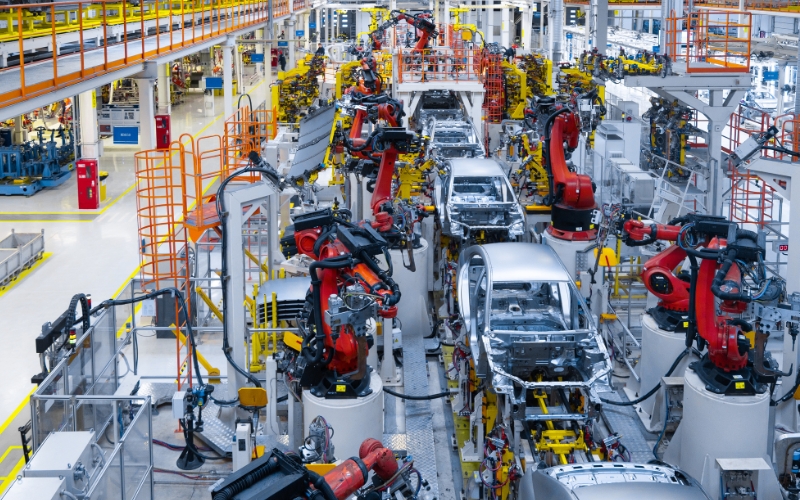
Vietnam has both the manufacturing and assembling capabilities for many international automotive brands.
The main automotive manufacturers in Vietnam are as below:
- Toyota Motor Corporation
- Honda Motor Co., Ltd.
- Hyundai Motor Company
- Kia Corporation
- Ford Motor Company
Most international manufacturers operate through local assembly using CKD (Completely Knocked Down) models. However, there still a considerable number of fully imported vehicles.
The government is hoping to boost competitiveness and lower import reliance by promoting greater localization and production of domestic components.
Domestic Leaders and Traditional Auto Joint Ventures
Vietnam’s auto sector has a mix of domestic companies and longstanding international partnerships. While the global spotlight has fallen on Vinfast, other companies are active in the diverse passenger, commercial and support industries as are companies in other sectors.
Among Vietnamese companies, Vinfast is the frontrunner in EVs, EV buses and EV two-wheelers. They have invested a lot and other companies have started to show interest in not only EVs but in supporting industries like components, electronics, and the charging and distributing network.
Another major player is THACO, Vietnam’s largest auto group. From its complex in Chu Lai, Quang Nam Province, THACO forms partnerships with a number of companies for assembly and distribution including Kia, Mazda, Peugeot, BMW, MINI, and a number of commercial vehicle companies. They also engage in logistics, industrial manufacturing, and auto parts manufacturing and are among the most major players in the Vietnamese auto market.
Traditional foreign-invested joint ventures dominate the Vietnamese passenger vehicle market. Toyota, Honda, Ford, Hyundai, and Mitsubishi, for example, continue involvement because of the importance of their investment to vehicle manufacturing, technology, and the workforce and development of local supply chains. These companies built their own operations, networks, and supply chains in Vietnam over decades.
Along with local industry leaders, foreign-invested joint ventures are transmuting Vietnam’s role in the region from vehicle assembly to vehicle manufacturing.
Motorbike Manufacturers and Market Leaders
Vietnam’s motorbike industry is a competitive market dominated by a few large companies.
The majority of motorbike sales in Vietnam are made by Honda Vietnam.
Other notable companies are:
- Yamaha Motor Co., Ltd.
- Piaggio Group
- Suzuki Motor Corporation
Demand is strongest for scooters, especially for those commuting in urban areas.
Electric motorbikes, a cleaner alternative, are beginning to dominate more of the market.
Vietnam is beginning to transition to cleaner alternatives of transportation due to the initiatives of the government and increased awareness.
Auto Parts Suppliers and Supporting Industries
The automotive supply chain of Vietnam is developing rapidly and increased localization is evident for certain categories of automotive vehicles.
The country’s supporting industries now include manufacturers producing the following:
- Wiring harnesses
- Plastic components
- Metal parts
- Seating systems
- Electronic components
- Tires and rubber products
Government policies positively affect the establishment of manufacturing companies for Automotive Components and Suppliers in the region. These policies benefit manufacturers who seek to strengthen the supply chain and enhance local procurement.
This opens the market to foreign vendors of automotive electronics and other goods. These would include suppliers of EV components, precision engineering, industrial automation, and advanced manufacturing technologies.
Industrial Zones Supporting Automotive Manufacturing
Automotive production is centralized to a few industrial regions.
Key automotive manufacturing centers are:
- Vinh Phuc
- Hai Phong
- Quang Nam
- Dong Nai
- Binh Duong
These locations have the suitable infrastructure to support industry, labor and resource networks, and logistical connections.
As the automotive industry in Vietnam transforms and focuses on manufacturing technologies of higher value, coupled with the industry’s electrification, the industrial clusters outlined above will likely gain even more investment and attention from automotive manufacturers and parts suppliers.
Electric Mobility and Green Transition in Vietnam
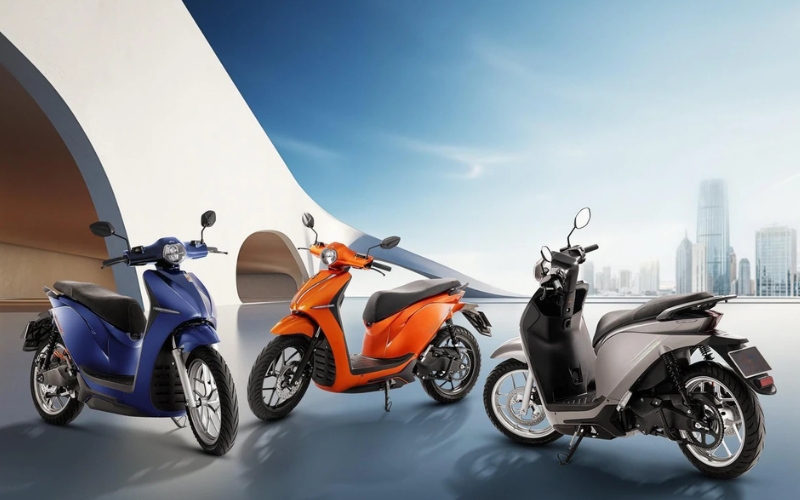
Vietnam’s automotive and motorbike industries are undergoing a significant transformation with the shift to electric mobility. While the sales of internal combustion engine (ICE) vehicles continue to dominate, electric vehicles (EV) are one of the fastest market segments. With the government’s sustainable development policies, the increased awareness of the environment, and the growing investments of local manufacturers, Vietnam has become one of the most important EV markets in Southeast Asia.
Investment opportunities are not limited to the production of vehicles. Battery production, manufacturing of the electric mobility ecosystem (including charging stations and automotive electronics), semiconductors, and EV components are expected to be developed in Vietnam with the country’s long-term strategy for the electrification of transport.
EV Market Development
Vietnam’s EV market is smaller compared to China and other well established ASEAN markets, but it has one of the fastest growth rates.
Government initiatives, consumer awareness and local manufacturers’ investments (VinFast, Dat Bike, THACO Auto and other new market entrants) are the factors driving the market.
Government forecasts and industry analysts enhance the idea of the accelerating EV adoption in Vietnam market post 2030 with the improvements in consumer EV price, charging infrastructure, and greater public knowledge of electric mobility.
Compared to other ASEAN markets, the combination of strong local manufacturing capabilities and government engagement gives Vietnam the opportunity to become a regional EV manufacturing hub.
Electric Motorbikes Lead the Charge
Electric cars garner the attention, but electric motorbikes are a much larger opportunity in the near term.
Because two-wheelers dominate over half of Vietnam’s transportation network, electric scooters and electric motorbikes occupy a favorable position for initial electrification efforts, with several companies competing for market share.
Companies are targeting customers in cities looking for transportation options that are more affordable and cost-efficient, less maintenance intensive, and complementary to environmentally-conscious lifestyles.
Electric motorbikes are more appealing than electric cars because they help overcome more barriers to electric vehicle adoption, including the cost and accessibility to the charging infrastructure. With the improvement of battery technology and charging technology, motorized two-wheelers will likely outpace passenger electric vehicles in the race to dominate the marketplace.
Government Policies and the Road to Net Zero
Vietnam’s green shift is an expression of its commitment to achieve sustainability.
The government has a long-term commitment to cleaner transportation technologies with a goal of net-zero carbon emissions by 2050. Support for the adoption of EVs includes:
- Reduced registration fees for EVs
- Preferential taxation policies
- Support for charging infrastructure development
- Incentives for green manufacturing projects
- Promotion of renewable energy integration
These policies support Vietnam’s commitment to modernizing its transportation sector and moving away from a fossil fuel dependency.
For investors and manufacturers, with increasing policy stability, the EV market will have long-term investment certainties.
Charging Infrastructure
While the demand for electric vehicles is expected to rapidly grow, the infrastructure for charging electric vehicles is one of the largest barriers to developing a Vietnamese EV ecosystem.
In several large metropolitan areas such as Ho Chi Minh City, Hanoi, and Hai Phong, charging stations have been quickly built. However, in less populated areas, there is little to no coverage and a concern of range anxiety.
However, there is great investment potential from this challenge.
Potential growth areas include:
- Public charging networks
- Fast-charging solutions
- Battery swapping systems
- Fleet charging infrastructure
- Smart energy management systems
With an increase in EVs, infrastructure investments will become one of the most rapidly expanding opportunities in Vietnam’s mobility industry.
International Investment Opportunities throughout the EV Supply Chain
The transition to EVs offers investment opportunities that go much further than the manufacturing of vehicles.
International investors are actively considering opportunities in:
- Battery manufacturing
- Battery materials and recycling
- Electric motors
- Power electronics
- Automotive semiconductors
- Charging equipment
- Software and connected vehicle technologies
Vietnam has already begun to develop a large portion of its EV supply chain, thanks to its established and rapidly growing domestic electronics manufacturing sector, and its industrial and export-focused manufacturing strengths. This provides the context and opportunities for international partners to consider Vietnam as a regional production hub.
For international partners focused on automotive solutions and manufacturing, the next decade will position Vietnam as one of the most important areas for business growth as automotive technology increasingly focuses on electrification.
Automotive Solutions, Investment and Market Entry

Vietnam’s automotive sector provides a broad array of options for investors, suppliers, and service providers, and a growing market for vehicle sales and interrelated technologies. For international partners, Vietnam offers the opportunity to focus on system integration and service provision, while considering the legal and regulatory environment that governs economic activity in the country.
Opportunities for Importing and Distribution
Despite the tremendous growth in local vehicle assembly, there is a crucial ongoing market for imported vehicles in Vietnam.
Premium, luxury and certain commercial vehicles are imported as Completely Built Units (CBUs). This brings several opportunities for foreign firms concerning:
- Vehicle distribution
- Brand representation
- Dealer network development
- Fleet sales
- Commercial vehicle solutions
The strongest growth is occurring within premium vehicles due to the growth of the affluent population in Vietnam.
Auto Parts Sourcing from Vietnam
Vietnam is emerging as a key sourcing hub for automotive components.
The supplier base supports the production of:
- Wiring harnesses
- Plastic components
- Rubber products
- Precision metal parts
- Electronic assemblies
- Seating systems
Manufacturers are diversifying their supply chains and reducing reliance on traditional sourcing countries by developing networks of suppliers in Vietnam. For those suppliers who can meet the necessary international standards, e.g., IATF 16949, there is a good chance to access both domestic and export markets.
Aftermarket and Automotive Services
The expanding vehicle fleet in Vietnam is leading to a greater demand for automotive aftermarket services.
Key areas include:
- Vehicle maintenance and repair
- Spare parts distribution
- Tire services
- Car care and detailing
- Vehicle accessories
- Fleet management solutions
Aftermarket services are more appealing than vehicle sales because they are less capital-intensive and provide the opportunity for recurring revenues, which are the characteristics of a scalable business model. The demand for a consistent level of vehicle care and service has led to the opportunities for franchises.
Regulatory Landscape for Foreign Businesses
Foreign businesses must consider a number of regulations that pertain to the:
- Vehicle imports
- Distribution licensing
- Product standards
- Technical inspections
- Environmental compliance
The compliance regulations for the automotive industry differ if a business is involved with manufacturing, importing, distributing, or servicing vehicles.
The assistance of local legal and regulatory specialists is necessary to identify the compliance regulations and avoid entry delay.
Key Risks and Challenges
There are many challenges even with the expected growth.
These include:
- Infrastructure constraints in major cities
- Traffic congestion
- Parking limitations
- Policy changes affecting taxes and incentives
- Increasing competition
- Supply chain volatility
For automotive manufacturers, the volatility of import tariffs, localization, and consumer buying power can further affect the market.
Long-term plans with an understanding of the local market present businesses with the greatest advantage of the growth potential in Vietnam’s automotive market.
Conclusion
Vietnam’s automotive industry has the interests of potential investors with its growing domestic market and manufacturing capability. With other developments in infrastructure and the expansion of the middle class as consumers, growth in vehicles beyond the motorbike has great potential.
The shift toward electric mobility adds new prospects in the value chain for electric vehicles. The increased use of electric vehicles and the government support for green transportation and manufacturing in Vietnam will add new value from electric vehicle batteries and charging infrastructure to transportation electronics and software.
For foreigners wishing to make an investment in Vietnam, there are many chances outside of vehicle assembly. These opportunities include automotive parts, supply and distribution services, aftermarket services, and mobility technologies. Firms that can adapt to Vietnamese regulatory changes, customer changes, and changes to the industrial system are likely to capture many of the benefits offered by Vietnam’s growing automotive and mobility services market in Southeast Asia.