


This page outlines the main regulations, market trends, investment models, and commercial considerations that foreign investors and education providers should evaluate before entering Vietnam’s education sector.
Overview of the Vietnamese Education Market
The education market in Vietnam is undergoing a rapid transformation, and an increasing number of private education providers, EdTech companies, and investors are focusing on long-term opportunities.
Foreign investors can look beyond conventional schools and universities. The rapidly changing methods of providing and consuming education in Vietnam are utilizing online learning and digital education systems, as well as corporate and workforce training and upskilling. The size, potential growth, and demand drivers of Vietnam’s education industry must be understood in order to find the greatest prospects for investment.
Market by the Numbers
With Vietnam’s population exceeding 100 million and the country’s strong national focus on education, the education industry is one of the largest service sectors in the consumer market.
The education market is forecast to expand at an approximate 7.8% CAGR from 2025 to 2032, in large part due to the growing private sector’s contribution and increased funding for education. Data from the Ministry of Education and Training (MOET) indicate that in the 2023–2024 school year, there were 25 million learners in Vietnam across all levels of education. The size of the student population provides a great deal of support for market growth.
Investors are particularly interested in the private K–12 education sector. Based on education market research, the K–12 education market in Vietnam is valued at around USD 8.15 billion. This segment of the education market is growing as a result of the demand for private schools, international curricula, and bilingual programs.
The EdTech sector has evolved into a rapidly developing subset of the education industry. The education technology market in Vietnam made sales of around USD 1.08 billion in 2024 and is projected to surpass USD 3.7 billion in 2034. This growth would be a result of the flourishing demand for digital learning platforms, online tutoring, test prep, and learning tools that are driven by AI.
The growth of online education and e-learning platforms has been notable. Industry forecasts show that Vietnam’s e-learning market had generated sales of over USD 328 million in 2023. This growth is expected to continue over the next several years. The factors contributing to increased sales are strengthened internet and mobile technology, as well as consumer demand for more convenient, modern learning solutions.
Another high-potential area of focus is vocational education and workforce development. As Vietnam rises in the global manufacturing ecosystem, the need for increasingly sophisticated technologies and workforce training will also grow.
Three Major Demand Drivers
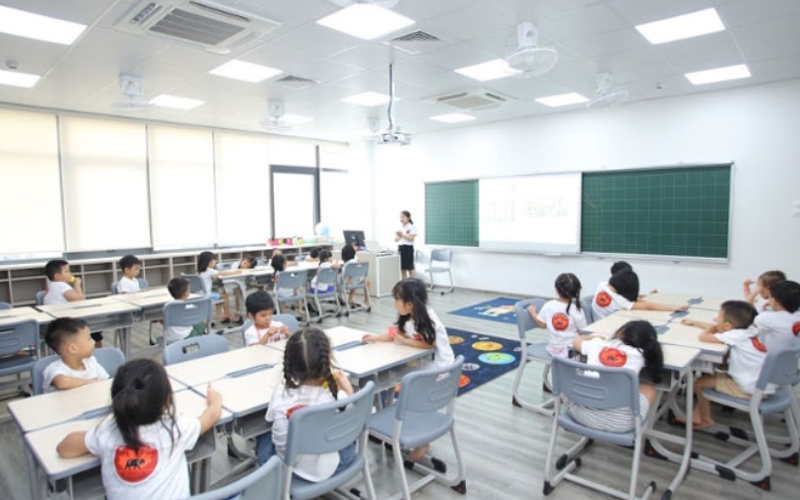
The growth of the Vietnamese education market is the result of many long-term structural changes. It is expected that these changes will continue over extended periods.
Young and Growing Population
Compared to many developed markets, Vietnam has a relatively younger population. Although demographic trends are beginning to shift, Vietnam still has an extensive population of school aged children, and the younger generation will support workforce development initiatives. This will ensure strong, consistent demand for all levels of education from K-12, higher education, and vocational training.
Furthermore, industry changes that have been driven by the adoption of new, advanced technologies that push Vietnam toward more sophisticated, high-value production have increased the importance of workforce reskilling and upskilling.
Demand for Education Services
The expansion of Vietnam’s middle class has transformed the types of educational services that parents are willing to pay for. Parents now pay for private educational services, international schools, English programs, STEM education, and extracurricular workshops.
In the large urban centers of Ho Chi Minh City and Hanoi, the demand for private educational services exceeds the number of private educational facilities. Increasing disposable income has also led to an increase in the demand for private schools and supplementary educational services.
A Focus on Education
Within Vietnam’s long range economic planning, education as a focus has a primary place. Building policies are focused on developing human capital and being work-ready and digitally and innovatively equipped.
There is a large public investment in the education system, and agencies are encouraged to assist in investments. This builds a good environment for investors who want to be a part of education sector growth.
The Focus of Digital Transformation
One of the important trends of Vietnam’s education system is digital transformation.
The government has started a number of programs to modernize teaching, increase access of learners to digital learning, and embed education technology in schools and training centres. National education programs have a number of ambitious goals for technology, digital content and online learning.
A primary goal is the deeper embedding of classroom EdTech solutions to assist schools in utilizing dedicated digital channels for teaching, assessment, administrative tasks, and student engagement. These solutions have driven demand for the following:
- Learning Management Systems (LMS)
- Virtual Classrooms
- Online Tutoring Systems
- Digital Assessment Tools
- Educational Content Systems
- AI-Based Learning Systems
Vietnam’s digital state favors this. The internet’s penetration is over 80%, and smartphone use is on the rise in both urban and rural populations. This means that the conditions of scalable, digital, educational solutions are strong.
The growing ecosystem of startups is improving the state of things. Local EdTech companies are receiving more venture capital, while the global education technology companies survey opportunities in Vietnam.
For foreign investors, the combination of government support, the state of digital affairs, and the high demand for education, means that EdTech is one of the most favorable segments in Vietnam’s education sector.
Education Sector Investment Areas
The demand for education is greater than what the supply of educational services can offer, and this is motivating foreign capital to invest in Vietnam’s educational sector. For foreign investors, the focus of opportunity is on private K–12 schools, international schools, EdTech Systems, and Vocational Training, which are four key areas. Each of these areas has distinct risk, regulatory, and growth characteristics. Investors need to focus their strategy on these to optimal effect.
Private and International K–12 Schools
Vietnam’s K–12 education system provides enticing investment opportunities.
Urbanization, increased disposable income, and heightened interest in education meeting international standards have all contributed to the expansion of the private and international school sectors. In cities like HCMC and Hanoi, premier international schools can charge between USD 10,000 and USD 30,000 yearly, and an increasing number of schools have waiting lists. This creates a market opportunity for expansion.
Current system investments reflect strength. By 2025, many education groups will begin to grow their school networks in priority locations by adding new schools in both HCMC, Hanoi and in newly developing secondary cities. New school networks are likely to include a growing number of bilingual programs, which include an international curriculum and the Vietnamese curriculum.
Additionally, many areas are reporting strong interest in:
- Early Childhood and Kindergarten Education
- K–12 Bilingual Schools
- STEM and STEAM Schools
- Schools with an International Curriculum
- Tiered Private School Networks
Early Childhood and Kindergarten Education
Early childhood education is one of the fastest growing market segments in private education in Vietnam. Increasing early childhood programs have resulted from increased disposable income, more parents working, and a growing understanding of the importance of early learning.
Urban families have begun to source childcare outside of public services. Many families have begun to adopt childcare services that integrate English competency and creativity into their programs. These families also appreciate these services for their focus on emotional intelligence and soft skill development.
K–12 Care is focused on addressing the needs of these families in the following ways:
- Montessori Education
- Reggio Emilia Education
- International Preschool Frameworks
- Bilingual Kindergarten
- High-Quality Daycare & Early Learning
The Vietnamese economy is experiencing rapid growth and an expanding middle class. The major urban areas of Ho Chi Minh City, Hanoi, and Da Nang, along with Vietnam’s emerging secondary markets, represent the highest demand for quality childcare in the region. The global markets for quality childcare are still developing, so opportunity exists for new entrants and expansion.
Because new entrants are common, there is a risk of oversaturation. Urban competition is increasing as English language and International training schools expand their services. Because of this, offering quality, differentiating services will be necessary for lasting success.
Regardless of these growing challenges, K–12 private education presents some of the best long-term opportunities to invest in the education sector in Vietnam. This is due to the overall demographics and focused, dedicated, and persistent demand for quality education coming from parents.
EdTech, Higher Education, and Vocational Training
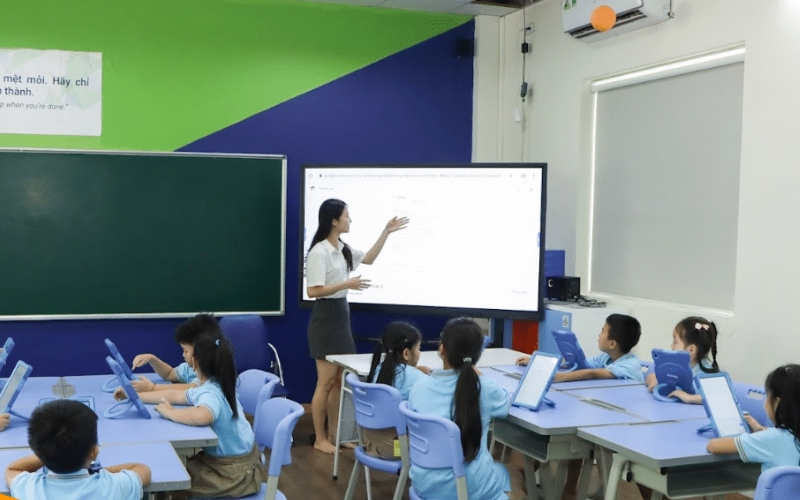
Beyond traditional schools, several education segments are experiencing rapid growth as technology adoption and workforce development become national priorities.
EdTech
Vietnam’s EdTech ecosystem has evolved significantly over the past decade. Local platforms specializing in online learning, coding education, language training, and digital tutoring have attracted growing investor interest.
Particularly strong demand exists in:
- Online English learning
- Coding and digital skills education
- STEM and STEAM programs
- Learning management systems (LMS)
- AI-powered educational tools
- Corporate learning platforms
Government support for digital education and widespread internet access continue to create favorable conditions for EdTech adoption. As schools and universities integrate more technology into their learning environments, demand for scalable digital education solutions is expected to increase further.
Higher Education
Vietnam’s higher education sector is also attracting greater private investment. Demand for internationally recognized degrees, industry-relevant programs, and employability-focused education continues to rise.
Private universities are expanding rapidly, while partnerships between Vietnamese institutions and international education providers are becoming increasingly common. Programs focused on business, technology, engineering, healthcare, and digital skills are particularly well-positioned to benefit from evolving labor market requirements.
As Vietnam seeks to develop a higher-skilled workforce, higher education institutions that can align academic programs with industry needs are likely to see continued growth.
Vocational Training
Vocational education may represent one of the most underappreciated opportunities in Vietnam’s education sector.
The country’s transition toward higher-value manufacturing, technology-intensive industries, and advanced services is creating substantial demand for technically skilled workers. Sectors such as electronics, automation, logistics, renewable energy, and industrial manufacturing increasingly require specialized training programs.
Government policies continue emphasizing workforce development as a national priority, encouraging investment in vocational schools, technical training centers, and industry-led certification programs.
In addition to traditional vocational education, corporate training has become an important growth area. Companies operating in Vietnam are investing more heavily in workforce upskilling, particularly in:
- Digital skills
- English language training
- Leadership development
- Technical certifications
- Management capabilities
As labor market requirements evolve, vocational and professional training providers are expected to play a critical role in supporting Vietnam’s long-term economic development.
Legal Framework, Incentives, and Market Entry Routes

Vietnam has made considerable efforts to liberalize the investment environment related to its education sector. These liberalization efforts have been complemented by legislative changes aimed at drawing international investment and educational innovation. In the Vietnamese education market, there are numerous opportunities (i.e. K–12, higher and vocational education, EdTech); however, the investor will need to balance the market with the laws that regulate quality education, national interests, and the role of foreigners.
Decree 124/2024/ND-CP has brought several clarifications related to foreign investments in education and enabled more opportunities to international education service providers. Foreign investors need an understanding of the ownership mechanism, tax benefits, and other ways to enter the market to create their investment plan.
Decree 124/2024 and New Rules
Out of all foreign investment regulations for education in Vietnam, Decree 124/2024/ND-CP is one of the most important developments. This regulation has made improvement for conditions of investments, the educational business licensing, and education operational standards.
The Vietnamese education regulatory framework allows foreign investors to establish 100% foreign-owned education institutions in many segments of the market. After meeting the relevant licensing and operational requirements, foreign investment is allowed in the following areas:
- International schools
- Preschools and kindergartens
- K–12 educational institutions
- Educational institutions of higher education
- Vocational training centers
- Providers of specialized education
Due to the ownership flexibility, Vietnam is one of the most open education markets in Southeast Asia, compared to the other member countries of ASEAN.
The government has made investment on education-related projects very attractive. Depending on the type and location of the project, preferential treatment of CIT may mean lower CIT, tax incentives, or CIT holidays and reductions. Tax exemptions for imports of certain educational equipment, teaching materials, and learning resources can make the initial cost of starting a new educational institution lower.
It should also be noted that foreign-invested schools must satisfy the requirements for the curriculum, teachers, facilities, and students. For schools of certain levels and licensing categories, the authorities may also stipulate the requirements for the ratio of Vietnamese and foreign students.
The balance of requirements promotes the foreign investment of education services and the improvement of education services.
Market Entry Models
Various models for entering the education market in Vietnam are available for foreign investors. Each model has distinct benefits and can be selected based on investment goals and available resources.
Direct Investment
The simplest model may be the establishment of a fully foreign-owned school or the establishment of a joint venture with an existing school operator, thus providing control.
This approach provides maximum control over:
- Curriculum development
- Brand positioning
- Operational management
- Pricing strategy
- Long-term expansion plans
The commitment of resources for the model is the responsibility of the foreign investor.
Strategic Partnerships and Joint Development
It is common for foreign investors to engage Vietnamese education providers through partnerships, joint ventures, and academic cooperation agreements.
Local partners can provide the following:
- Market knowledge
- Regulatory support
- Existing student networks
- Operational infrastructure
- Brand recognition
Most partnership agreements are found in higher education, vocational training, and special education programs, as local partnerships often help provide the access needed to enter the market and reduce the risk involved.
EdTech Licensing and Technology Partnerships
Establishing a market entry for education technology firms may require even less capital than establishing a physical presence.
Many EdTech providers enter Vietnam through:
- Software licensing agreements
- Platform partnerships
- Content distribution arrangements
- School technology integrations
- Corporate training collaborations
EdTech companies have found that the rapid growth in digital learning in Vietnam has propelled the potential for fast growth and has offered the least difficult entry to the education market in Vietnam.
Franchise and Brand Expansion Models
Franchising education brands, language centers, and specialized training has also become a popular option for foreign investors.
Franchise systems provide international brands, particularly in English language training, STEM education, coding, and early childhood education, with the ability to grow rapidly in different countries and at the same time utilize the expertise of local staff.
For foreign investors, the most favorable market risks are associated with the least amount of operational risk. Foreign investors that thoroughly assess the potential market with the associated risks of partnership and the local regulations are in the best position to succeed in entering the rapidly expanding education market in Vietnam.
Education Investment Risks and Success Factors

The long-term forecast on investment opportunities in Vietnam’s education sector looks promising. However, the long-term success potential comes with a myriad of operational challenges of which the investors must be aware. Understanding these challenges will be particularly important for foreign investors. The primary barriers for most foreign investors is not a lack of interest in the market, but a lackof understanding and effective execution.
Structural Risks
One of the major ongoing challenges of Vietnam’s education system has been the lack of qualified teachers. The demand for teachers that are bilingual, teach international curricula, teach STEM, or are English teachers, remains strong and outstrips the supply, especially outside large metropolitan areas. Recruiting and retaining quality teaching staff continues to be a major challenge to the operation of the providers of education services.
There are also imbalances in the regions. A major concentration of the most quality private schools, international schools, and other private education services is in Ho Chi Minh and Hanoi. Investors looking into the potential of rural and secondary cities in Vietnam will have to consider the quality of infrastructure, potential average household income, and the availability of teaching staff.
There is also a risk of market saturation in certain segments. Rapid establishment and expansion of international schools, preschool chains, and language training centers have led to increased competition. Quality differentiation, teaching and educational outcomes as well as effective positioning in the market are required of any new education enterprise.
Let’s also take into account regulatory changes. Vietnamese authorities modernizing quality control and oversight means their education system is going through changes as well. Investors must stay in contact with local and regulatory specialists to stay compliant during all the stages of the investment.
How Successful Foreign Education Operators Win in Vietnam
International education providers have built successful and sustainable businesses in Vietnam by overcoming challenges and focusing on outcomes, not just on enrollment.
The businesses that have been the most successful have placed their programs in line with the needs of the market, regardless of whether this is K–12, higher education, vocational education and training, or corporate training. Education businesses and programs that have successful outcomes for their students and employment and that are willing to improve their business offer of education have stronger reputations and achieve higher retention.
Another important critical factor is adjustment for the Vietnamese market. While families want education businesses that have an offer based on international standards, education programs still need to integrate the local culture, language, and academic expectations. The education businesses that have been the most successful have adjusted their education models to the needs of the local market by using the most modern best practices.
Digital-first strategies are a critical factor of success. Vietnam has a high internet penetration rate and a high rate of smartphone use. Considerable education businesses have adopted online education, hybrid education, and mobile education business models. Successful education businesses have created mobile education business models and have localized content.
Last but not least, successful education investors often form alliances with businesses and industry communities. As Vietnam’s economy becomes more advanced and moves to higher-value industries, Corporate training and education-related workforce upskilling have become very appealing areas for business growth. These alliances also help education providers align their programs with the needs of the market and create new revenue.
The opportunity in Vietnam’s education market is still enormous for international investors. The organizations that combine quality education with elements such as a solid understanding of the local market, the ability to work with discipline, and a commitment to developing the business with the goal of building trust, are the organizations that dominate the market.
Conclusion
Vietnam’s education market is a strong investment market as a result of favorable demographics, improved household incomes, increasing education-related spending, and a strengthened workforce. The continued commitment of Vietnam’s government to workforce education also strengthens the market. There is increased demand for private schools, international education, and vocational training and technology, and educational investment will be rewarded if the investor has the appropriate strategy and a long-term commitment.
However, introducing a service to a high-demand area is not enough. Investors face a variety of challenges such as inadequate teacher training, failure to meet educational standards, lack of sufficient investment, a poor understanding of the local education market, and low competition. The most successful education operators are those that combine international standards with local market understanding, focus on measurable student outcomes, and are responsive and flexible to the evolving requests of learners.
The education sector will continue to provide opportunities for international investment in Vietnam as the government and private sector seek to grow Vietnam’s knowledge economy.