


Myanmar is still seen as a frontier market within Southeast Asia and has been attracting investment from those looking for long-term market moves rather than the more common short-term wins. Even though Myanmar has had a tough economy and operational challenges recently, Myanmar is still a country with a lot of risk or return fundamentals such as a population of 55 million, a strategic location in South/Southeast Asia, and a lot of natural resources that are disconnected from the infrastructure and industrial capacity of the country.
For international investors, the potential to invest in Myanmar goes beyond FDIs. The private investment market of Myanmar, along with the capital investment markets, unfilled basic needs, the untapped manufacturing potential, and the unfulfilled services, all pose a myriad of investment opportunities that will become essential in the next ten years, as the infrastructure of the country still needs a lot of work.
Long-term investment horizons will be essential when investing in Myanmar. The market is illiquid, with many regulatory concerns, and potential investors will need to perform extensive research on the market, as the opportunities will be based on the long-term potential, rather than the short-term aspects.
The investment environment in Myanmar will be the focus of this paper, aiming to summarize the conditions of the capital markets of Myanmar, identify major opportunities for growth, and outline the possible risks and rewards for potential investors in 2026 and beyond.
Understanding Myanmar’s Investment Landscape in 2026
Myanmar is sometimes viewed as a frontier market. This designation applies to economies that are not as developed as emerging markets but that have the potential for great long-term economic growth. Like most frontier markets, investment is riskier than usual for potential higher returns. This allows investors to enter untapped markets.
One of Myanmar’s most significant potential market advantages is geographic location. Myanmar is located between China, India, and other major economies of Southeast Asia. This positioning creates opportunities within trade and the related markets of logistics and manufacturing, as well as infrastructure.
The estimated 55 million population of Myanmar, according to the World Bank, provides both a labor force and market.
The market is further enhanced by the continued influx of foreign capital measures. According to the Directorate of Investment and Company Administration (DICA), manufacturing and the infrastructure of power and telecommunications, as well as logistics, are current investment priorities.
For investors, there are several routes to gain exposure to Myanmar’s economy:
- Foreign direct investment (FDI)
- Joint ventures
- Private equity investments
- Venture capital
- Strategic partnerships
- Public capital markets
- Infrastructure investments
Unlike more mature ASEAN economies, Myanmar’s investment story is closely linked to development needs. Significant investment is still required in transportation, energy, industrial facilities, healthcare, education, housing, and financial services.
Several long-term trends continue to support investment interest:
- Urbanization
- Digital adoption
- Infrastructure modernization
- Manufacturing development
- Growing demand for essential services
- Financial inclusion
These structural elements indicate that the major attraction for investing in Myanmar is probably the country’s development potential instead of the sophistication of its markets.
Businesses and investors need to understand that Myanmar is a long-term strategic market and opportunities linked to the country’s economic modernization and development of its different sectors will be greater than the opportunities associated with Myanmar’s immediate economic viability and financial performance.
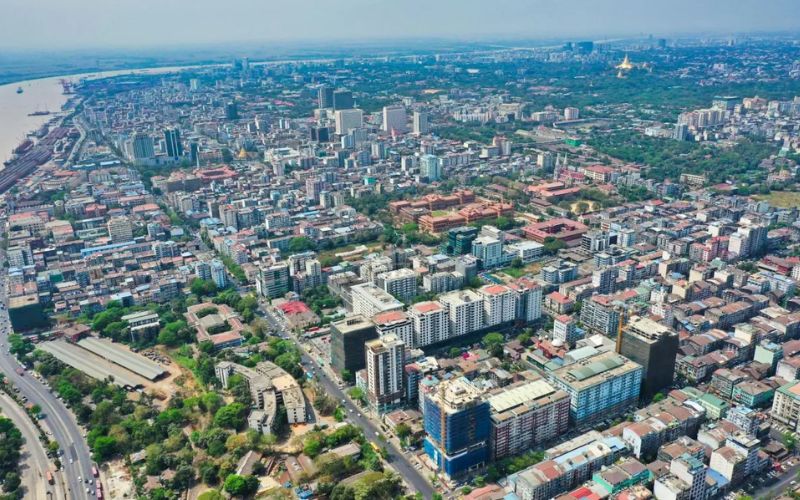
Myanmar’s Capital Markets
Cardiff University wrote a report on Myanmar’s financial progression. They concluded that Myanmar’s capital markets are relatively underdeveloped compared to their neighboring countries, such as Thailand, Malaysia, and Vietnam—but they are still progressing. For Myanmar to reach its full economic potential, the capital markets must continue to develop.
According to the report, the major player in the development of the public capital markets in Myanmar is the Yangon Stock Exchange (YSX).
The YSX opened its doors in 2015 and facilitates the first formal market in evidence-based capital-raising as well as the foundation for growing involvement in voluntary corporate disclosure and economic participation by local investors.
As of 2026, the exchange remains relatively small, with fewer than ten listed companies. Some of the best-known listed firms include:
- First Myanmar Investment (FMI)
- Myanmar Thilawa SEZ Holdings (MTSH)
- TMH Telecom
- Ever Flow River Group
- Amata Holding
Compared with other major ASEAN exchanges, YSX deals with low trading volume and low liquidity, causing issues with the execution and pricing of trades.
Yet, the significance of YSX transcends size. The exchange lays the groundwork for future development of the capital markets and of corporate governance.
While still very underdeveloped, the fixed-income market is another part of the Myanmar financial system. Government bonds create funding for government projects and help the nascent growth of building the markets. Even with low markets, the payments and bonds market is vital for the growth of the financial system.
Compared to securities and equities, private markets are better investment opportunities for most investors.
Private equity investors often focus on:
- Manufacturing businesses
- Consumer goods companies
- Logistics operators
- Healthcare providers
- Financial services firms
- Technology businesses
Myanmar’s private sector remains dominated by privately owned companies, creating opportunities for strategic investments, partnerships, and growth capital transactions.
The startup ecosystem remains relatively small but continues to attract interest in areas such as the following:
- Fintech
- Digital payments
- E-commerce
- Software services
- Business technology solutions
As digital adoption expands, venture capital and early-stage investment activity may gradually increase.
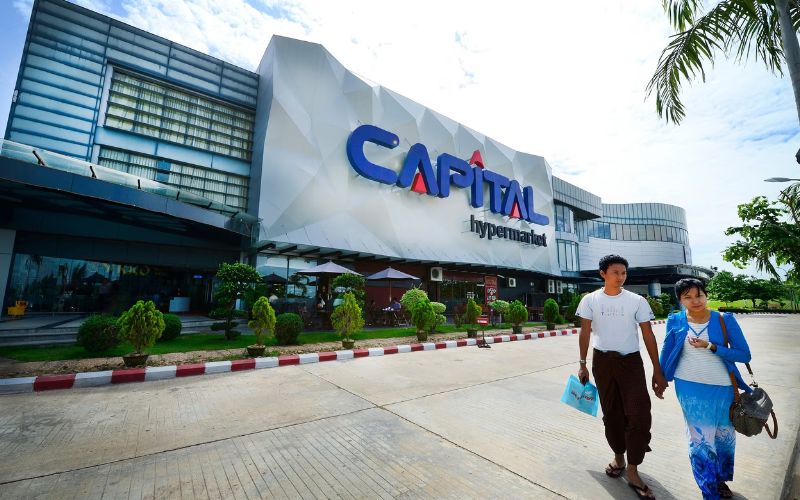
From a business perspective, investors should recognize that Myanmar’s most compelling capital market opportunities often exist outside the public stock market. Private investments, strategic partnerships, and direct participation in business development currently offer greater access to the country’s growth potential.
Long-Term Investment Themes and Growth Sectors
Although capital markets have not developed fully, there are a variety of opportunities for investment in the Myanmar economy. These opportunities create long-term audience interest.
Infrastructure and Logistics
Investment in infrastructure is particularly important for Myanmar because of the lack of available investment in this area.
The Asian Development Bank claims that for Myanmar’s economy to develop, large investments need to be made in the transportation networks, energy systems, logistics facilities, and urban infrastructure.
Opportunities may exist in:
- Industrial parks
- Warehousing
- Distribution centers
- Transport infrastructure
- Energy-related projects
As regional trade networks evolve, logistics assets could become increasingly important.
Manufacturing and Industrial Development
Manufacturing remains a core component of Myanmar’s economic development strategy.
The country has historically attracted investment in:
- Garments
- Food processing
- Consumer products
- Light manufacturing
Continued interest in export-related businesses is a result of Myanmar’s low labor costs and advantageous geographic position.
The construction of manufacturing infrastructure has led to greater investment in trade-related financing, and examples include the Thilawa Special Economic Zone.
Financial Services and Digital Finance
Banking and other financial services in Myanmar are less developed than those in other ASEAN countries.
The World Bank and IFC note that advancing financial inclusion is a focus area for them for the years to come.
Investors and technology innovators should be interested in the developments in digital payments, mobile financial services, and modernized banking.
If the rate of improvement of financial technology services continues, they will offer various financial services faster and more accessibly to a larger user base.
Real Estate and Urban Development
Urbanization remains a powerful long-term trend.
Myanmar’s residential real estate market is projected to reach USD 1.71 billion in 2026, according to Mordor Intelligence, and is expected to grow to USD 2.56 billion by 2031, representing a CAGR of 8.35%.
Beyond residential housing, opportunities may also emerge in:
- Industrial real estate
- Logistics facilities
- Commercial developments
- Mixed-use projects
Healthcare, Education, and Essential Services
Essential services continue to benefit from structural demand.
Myanmar’s population requires ongoing investment in:
- Healthcare infrastructure
- Pharmaceutical distribution
- Medical technology
- Education services
- Professional training
These sectors are considered defensive investment themes due to demand being stable through all economic cycles.
These sectors have one thing in common—they all embrace modernization. Those who serve this demographic of businesses and investors have a very good chance of being involved with Myanmar’s long-term development.
Risks, Challenges, and the 2026–2030 Investment Outlook
Investors must remain cautious when considering risk. Myanmar remains a frontier market in which the risks challenge the potential for profit; however, each market has regulations that must be managed.
Investors must manage the risk that regulations will change.
Foreign investors are allowed to enter the market; however, thorough legal and compliance reviews must be conducted. The regulatory frameworks may change, and contracts must be reviewed for compliance and performance.
Investors also have to be concerned about capital controls and the foreign exchange market. These both affect how foreign currency transactions affect the value of capital transfers and how profits can be repatriated.
Liquidity also represents a challenge when considering public capital markets. The abundance of companies that are listed on the exchanges is not sufficient when compared to other regional exchanges.
Operational risks also must be considered.
Best practices include:
- Partner due diligence
- Corporate governance reviews
- Financial audits
- Regulatory assessments
- Scenario planning
- Exit strategy development
Despite these challenges, long-term investors continue to monitor Myanmar because many of the country’s structural development needs remain unresolved.
Looking ahead to 2026–2030, several themes are likely to shape the investment landscape:
- Infrastructure modernization
- Expansion of logistics networks
- Growth in digital services
- Financial sector development
- Healthcare demand
- Urbanization
- Industrial development
These sorts of trends will drive investments even beyond the volatile short-term markets.
As a general trend-applied market, Myanmar helps steer the market sentiments of institutional investors, private equity, family offices, and strategic corporate investors, especially with the expectation of a somewhat longer investment horizon. Investing with the economy’s long-term state in mind may open gateways to opportunities.
The most important summation of the cited trends is not assuming Myanmar is a short-term, fast-return financial market. It is a frontier economy needing considerable coordinated effort in the form of partnerships and a substantive appreciation of the long-term economic states to sustain and ensure the success of the investment.
Conclusion
As a developing market, Myanmar creates excitement for investors interested in frontier markets in Southeast Asia. Although the focus of public markets is limited, the investment horizon is not. Private investment can and should be made in multiple sectors such as infrastructure, urban development, manufacturing and logistics, financial services, healthcare, and education.
The potential for investment in these developing industries is much greater than speculation on the fluctuations of the public market. The demographic trends in favor of investment are the 55 million population, the urbanization of this population, the expansion of this population’s demand for services, and the need for significant investment in basic infrastructure.
Prominent investors such as multinationals and international development groups have identified these favorable economic conditions. These investors also understand the need to approach the market with conservatism and a healthy respect for the revolving door of Myanmar’s military/civilian government cohort and the economic volatility these conditions create.
With a focus on assisting the regions of Myanmar that are the most underdeveloped, those investors that are successful in the market will fulfill the potential of the market and assist the citizens.