


With a large, growing, and urbanizing population, a medical infrastructure and service delivery gap, and increasing healthcare needs, the healthcare sector is, and will continue to be, one of the most critical, essential, and strategically significant sectors in Myanmar. Even with the structural, operational, and other challenges of the healthcare system in Myanmar, the demand for healthcare services of all types is clearly present in urban and rural areas.
For businesses and investors, the healthcare system in Myanmar is not just a social service system but a commercially viable one. The need exists for hospitals, clinics, and a wide range of services, including pharmaceuticals, medical and healthcare-related devices, and diagnostics; healthcare services; healthcare-related professional and technical services; and even healthcare services training. There are a growing number of prospects for organizations that will offer expertise and technology; provide operational improvements and specialized services; and develop and provide innovative, specialized, and/or vertical healthcare services.
Like most emerging economies, the health care services system and infrastructure in Myanmar demand balancing opportunities against regulations and operational and service delivery factors. However, the demand for healthcare services is mainly from the demographic and structural aspects, rather than short-term economic cycles.
This paper provides a summary of the healthcare system in Myanmar, the segments of the system that are most rapidly growing, and the opportunities for non-resident foreign investors. The remaining focus areas will be the challenges confronting the system and the long-range outlook.
Understanding Myanmar’s Healthcare Market
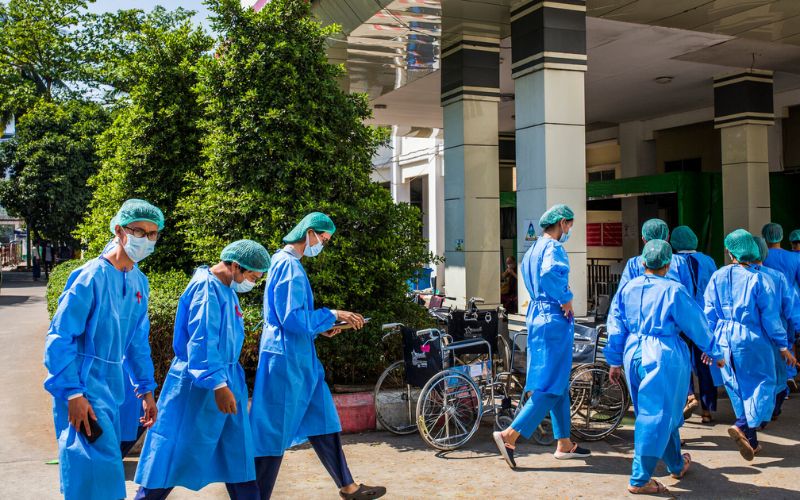
Myanmar has both public and private healthcare. The Ministry of Health manages the public healthcare system. It coordinates the public hospitals and health centers, helping most of the population access healthcare.
Over the last twenty years, the private healthcare system has become more prominent, especially in the major cities of Yangon, Mandalay, and Naypyidaw. Patients seeking more thorough and specialized healthcare opt to go to private hospitals, specialists, and private diagnostic and health service centers.
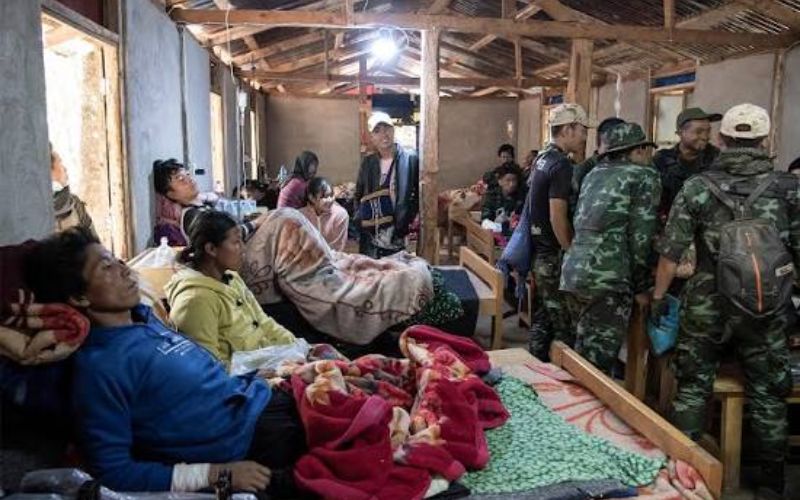
The healthcare system benefits from a population of about 55 million, bringing a lot of potential clients. In 2026, an estimated 9.3 million people will require support to access basic health services across Myanmar. The World Bank reported, and the World Health Organization concurred, that Myanmar’s healthcare system struggles with infrastructure, the health workforce, financing, and accessibility.
The public system in the cities encourages people to migrate for work, and this concentrates the population in urban areas. The demand for healthcare services like specialized clinics in cities leads to the need for more outpatient services and diagnostic clinics. The urban population expects a better level of service and quick, convenient, and effective healthcare.
Compared to the other ASEAN countries, healthcare expenditures are relatively low. Private healthcare services and out-of-pocket expenses account for the majority of the healthcare services, indicating a lack of sufficient healthcare coverage.
There are benefits and downsides presented by these variables. Movement in one direction prevents balanced healthcare access throughout the country. Movement in another direction makes chances in the private sector, as well as supply and service innovation, more apparent due to the considerable unexplained demand.
The perpetual demand characteristic of the majority of services in Myanmar’s healthcare market is especially appealing to investors. Even amidst hardships, the publicly accessible services sector will continue to be a priority.
The most important consideration is the gap that exists in the healthcare services of Myanmar when measured against the needs of the population. The difference creates room for expansion and modernization.
Key Segments Driving Growth and Investment
Due to an emerging demand and the need for structural market changes, several healthcare sectors are becoming more appealing to both domestic and foreign investors.
The private healthcare market is one of the fastest-growing sectors.
Private hospitals and clinics have become a vital part of servicing those patients who require more expensive medical services, have less time for appointments, and have more specialized medical needs. These services are in demand by the business class and better paid household heads in the developing world, especially in large cities.
More advanced healthcare specialized services are in demand by patients, especially those needing care in the fields of cardiology, oncology, and orthopedics, as well as by women and those that are health-conscious. These services have more demand because patients have more expectations and awareness of healthcare.
The pharmaceutical sector is also becoming a growing field of investment.
There are many unfulfilled needs and a large demand for imported medicines and pharmaceutical products in Myanmar. This gap creates an area of potential investment for medical and healthcare service providers, pharmaceutical supply chains, and healthcare logistics companies. As the demand for more healthcare services increases, the need for more advanced healthcare services and pharmaceuticals also increases.
There is also potential to invest in healthcare and pharmaceutical services that have research and development to improve the quality of products.
Medical devices and equipment make up other attractive segments.
Many healthcare facilities continue to require modernization and equipment upgrades. Demand exists for:
- Diagnostic imaging equipment
- Laboratory technology
- Patient monitoring systems
- Surgical equipment
- Hospital information systems
- Telemedicine solutions
Healthcare providers will gradually adopt more medical technologies to enhance their operational efficiencies and treatment practices.
The value of diagnostic services is increasing.
Laboratories, imaging centers, and other specialized diagnostic providers can alleviate access challenges and enable more precise and timely treatment that makes better sense. In many of the emerging healthcare markets, diagnostics services are likely to be the first area of significant investment before a broader expansion of the healthcare facilities, especially hospitals.
Digital health is emerging as a smaller, but more significant, area.
Healthcare providers are adopting more technologies that improve patient access and administrative and service delivery efficiencies. In the evolving healthcare infrastructure, telehealth, electronic medical records, digital appointment scheduling, and healthcare management systems will have a greater stake.
While these areas are more commercially viable and satisfying to investors, private healthcare services, pharmaceuticals, diagnostics, and medical technologies are perceived to offer the greatest potential and the most persistent demand.
Opportunities for Foreign Investors
Myanmar’s healthcare value chain contains many potential avenues for foreign investors. Most are concerned with enhancing accessibility and refining quality and efficiency in service and operations.
Infrastructure remains the biggest area of opportunity.
There is a need for continual investment in hospitals and healthcare centers and outpatient and specialty clinics. Investors who have knowledge in healthcare, hospital management, development, and operations will have the best opportunities.
There is also an important role to play by the suppliers of healthcare technology and equipment.
Providers of healthcare are in want of quality improvement through advanced technologies of diagnosis and treatment; this is an emerging area of opportunity for foreign developers of medical devices, laboratory equipment, imaging equipment, and healthcare IT and other systems.
There is also a great deal of opportunity that exists in the pharmaceutical sector.
Myanmar’s dependence on imported medicines creates demand for:
- Pharmaceutical distribution
- Supply chain management
- Cold-chain logistics
- Regulatory support services
- Quality assurance solutions
Companies that can enhance the availability and reliability of pharmaceuticals may find opportunities for long-term growth in the market.
Additional areas for investment include healthcare education and workforce development.
As with many young healthcare systems, Myanmar lacks healthcare professionals with specialized training in many areas. Many organizations that focus on medical education and professional training and continuing education and healthcare workforce development can help build the capacity of the healthcare system and grow the sector.
Partnership-based business models may be particularly effective.
Foreign companies often enter healthcare markets through:
- Joint ventures
- Strategic alliances
- Technology partnerships
- Distribution agreements
- Management service arrangements
Working with local health care providers will help investors understand the operations, the market, and the complexities of health care provision.
There are possibilities in digital health and health care technology.
Health care providers increasingly need services to support scheduling, management of patient records, analysis of data, efficiency of operations, and telemedicine. Technology that meets those needs will be in demand as health care providers modernize.
Health care needs in Myanmar will demand services over the long term and are not tied to market fluctuations. There will be a continuous demand in different segments of health care as the access, capacity, and quality of services in health care are improved.
The best opportunities in health care provision and patient services will be those that are commercially viable.
Challenges, Risks, and the 2026–2030 Outlook
Myanmar’s healthcare sector is attractive for long-term investors but has many obstacles.
There are multiple hurdles concerning healthcare infrastructure. Facilities are patchy, as are equipment and service capacities. This variability can create a lot of complexity for healthcare investors.
This sector is also challenging in terms of development of the workforce.
Myanmar has a shortage of many skilled, experienced healthcare professionals. Like many developing markets, this will require investment in order to recruit and retain doctors, nurses, and healthcare administrators.
To consider investing in Myanmar’s healthcare sector, you also need to think about the many regulatory hurdles.
Health businesses have to comply with many different operational regulations. This segment of the market usually requires a lot of due diligence and a professional advisory.
There is also a lack of access between urban and rural areas, and this drives the dynamics of the market. Most of the larger cities are only able to support more developed healthcare services. Reaching urban, underserved populations will often require operational flexibility.
Long-term healthcare fundamentals are still interesting and will probably outweigh these challenges.
Several structural factors are expected to support demand through 2030:
- Population healthcare needs
- Urbanization
- Growing healthcare awareness
- Rising demand for specialized care
- Expanding use of medical technology
- Healthcare workforce development initiatives
Privately funded healthcare will probably expand. Some examples of where value for patients can be added include convenient services, high-quality offerings, and specialized skills.
Modernization and the push for operational efficiency will mean gradual adoption of new medical technologies by healthcare providers.
Healthcare education, diagnostics, pharmaceutical distribution, and digital health will likely continue their rapid growth.
For foreign investors, having a realistic, long-term outlook will likely mean greater success. Patience, operational understanding, and strong local partners will be required for successful investing in healthcare construction. Even with a focus on operational understanding and local partnering, the healthcare construction industry is likely to thrive. For Myanmar, investing in healthcare builds for the future and focuses on large, structural, and mostly enduring market demands.
In Myanmar, the privatization of and investment into healthcare services are likely to positively impact the healthcare system and are of great long-term economic opportunity for investors. There are also positive, structural, long-term demands for healthcare services. These include modernization of healthcare and improvement of accessibility and quality of services.
Conclusion
Myanmar’s healthcare sector is an important area for long-term development. This is due to the population’s heightened healthcare needs and a lack of services. There are still issues with healthcare-related infrastructure and the workforce. However, hospitals and the healthcare field as a whole are presented with opportunities related to pharmaceuticals, diagnostics, technology, and training as a result of the increasing demand for healthcare services.
The most appealing investment opportunities are in areas where international skills and services can be combined to improve market healthcare services and outcomes. Achieving this goal requires more than a commercial approach, as the market is not ready for immediate investment.
Because of the evolving state of modernization in healthcare and increased demands and expectations from healthcare consumers, private investment, and therefore private business, will be a growing and important factor in both the financing of healthcare and in improving the quality of healthcare. There may be good opportunities in Myanmar healthcare for a business with commercial interests and a desire to increase and improve the vast yet insufficient healthcare services within the country.