


This guide will be providing readers, corporate investors in particular, the opportunities that are presented in the policies that are favorably focused in the sectors of automotive, electric vehicles (EV), and electronics and semiconductors that are expanding rapidly. These policies are expected to bring hundreds of billions of dollars.
Thailand’s 2025-2026 FDI Landscape

The global macroeconomic landscape has recently experienced profound realignments, compelling multinational corporations to aggressively diversify their supply chains. Amidst this strategic restructuring, Southeast Asia has emerged as a primary beneficiary, with Thailand consistently outperforming its peers in attracting high-value corporate expansion. The Kingdom has successfully transitioned from a traditional production base into a sophisticated hub for advanced manufacturing, a shift clearly validated by a historic surge in foreign capital. In 2025 alone, total registered FDI reached a record-breaking $60.23 billion, representing a massive 67% year-over-year growth.
This unprecedented financial wave is primarily driven by industrial powerhouses from China, Singapore, Japan, and Europe. These international players are actively pursuing specialized ecosystems capable of sustaining complex, multi-tiered production networks. The catalyst behind this favorable business climate is the highly proactive regulatory framework orchestrated by the Board of Investment. To catalyze industrial modernization, the BOI has designed a suite of incentives tailored explicitly for high-tech sectors. Eligible corporations can secure extensive Corporate Income Tax (CIT) holidays, complete waivers on import duties for advanced machinery, and critical privileges such as 100% overseas ownership in targeted industries.
Located in the center of what is now an industrial renaissance, the Eastern Economic Corridor (EEC) is made up of three main provinces. The EEC is the first ‘plug-and-play’ area in the country, facilitating mass exports. Substantial government investments into improving deep-sea port facilities and transport infrastructure and the construction of dedicated industrial estates are apparent. This zone provides multinational firms a means of establishing a presence in the region that is heavily subsidized and enables firms to securely manage operational risks for an extended period.
Automotive Industry
For decades, the nation has proudly held the title of the “Detroit of Asia,” an accolade earned through the meticulous cultivation of the most comprehensive automotive supply chain in ASEAN. Unlike neighboring countries that focus primarily on final vehicle assembly, the local industrial landscape boasts a deeply integrated network of Tier 1, Tier 2, and Tier 3 suppliers. This historical dominance continues to attract massive capital, with the automotive and machinery sectors accounting for roughly 20% of all BOI-approved projects in 2025. However, the true narrative of the 2026 business environment involves aggressive repositioning as traditional internal combustion engine (ICE) architectures give way to next-generation mobility solutions.
During the current transition, overseas component manufacturers have much to gain during this transition period. While the news focuses on fully electric vehicles, the immediate solution for the world’s automakers will be heavily dependent on Hybrid Electric Vehicles (HEVs) as well as smart car technology. As a result, the current supply chain is undergoing a large level of technological disruption. International companies that own advanced thinking on powertrains, smart sensors, and lightweight materials will find a great deal of opportunity in a B2B environment that is positive to new developments that will occur as a result of collaborations and/or supplier contracts.
In addition, there are strategic advantages to placing car operations here that go way past just the borders of the country. In order to protect the country’s ability to be a global car exporter with the changes in technology, the government has smartly pushed back the export compliance for cars produced in the country to 2027. This policy gives the producers more time and allows them to grow their operations without the threat of tariffs. Because of the numerous free trade agreements, the parts manufactured here are able to easily access the greater Asian market, allowing the supply chains to stay strong and close to the main areas of assembling the parts.
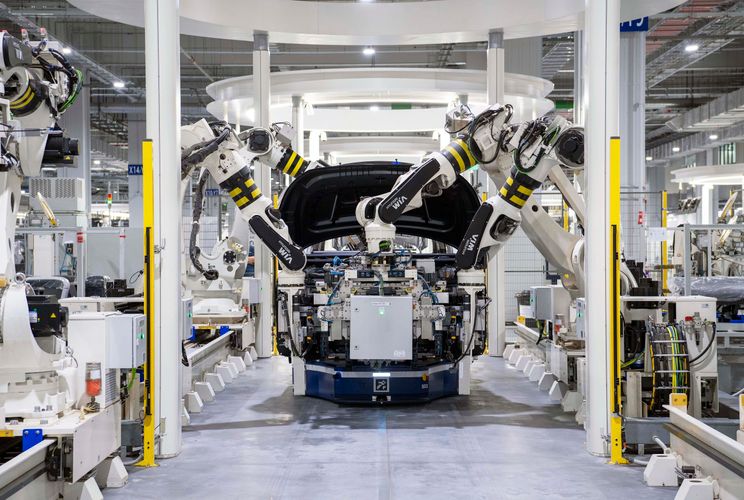
The Electric Vehicle (EV) Era
While the broader automotive sector adapts, the pure electric vehicle segment has engineered an explosive trajectory entirely its own. The market has moved rapidly from nascent adoption to mainstream dominance, cementing its status as one of the most compelling FDI magnets in the modern era. By the beginning of 2026, cumulative capital injected into the zero-emission value chain exceeded $4.1 billion, and sales of passenger and light electric vehicles breached the 44,000-unit threshold. This financial commitment is unequivocally backed by astonishing domestic consumption metrics, pushing the local EV market penetration rate to a record-breaking 48%, firmly positioning the nation as a regional leader in zero-emission adoption.
This hyper-growth is the direct result of precision-engineered legislative frameworks, most notably the EV 3.5 Policy. For B2B stakeholders, understanding the mechanics of this policy is paramount. While the state provides robust demand stimulus via direct consumer subsidies, accessing these corporate benefits requires strict adherence to aggressive localization mandates. Entering 2026, the regulatory landscape tightened significantly: the allowable value of imported batteries factored into a vehicle’s ex-factory price is now forcefully capped at just 10%.
In order to stay in compliance and keep energy storage pricing competitive, global automobile manufacturers are essentially required to localize their energy storage supply chains. This creates a fast, self-contained B2B market for international businesses that focus on manufacturing battery cells, assembly of battery modules, and integration of battery packs. Companies that have the capability to rapidly create localized solutions for the manufacturing of battery systems will likely become a target for many automotive manufacturers that want to buy compliant systems. In addition to batteries, this creates enormous impact across many markets for companies that construct high-voltage charging systems and modern smart grids and create localized systems for producing cathodes.
Electronics & Semiconductors
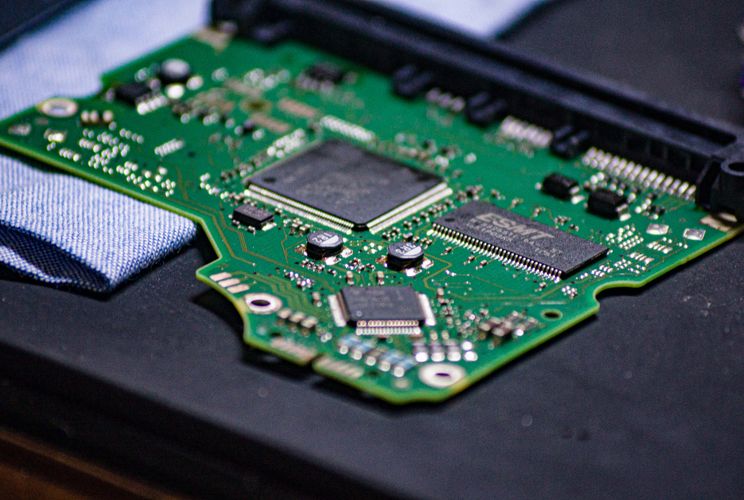
Parallel to the mobility revolution, a massive structural shift is occurring within the electronics and semiconductor domains. As geopolitical tensions mandate the diversification of critical technological assets, the region has become a sanctuary for advanced electronics manufacturing. Industry projections illustrate a steep upward trajectory: the domestic Electronic Manufacturing Services (EMS) market is firmly on track to achieve a valuation of $7.67 billion in 2026. Looking slightly further ahead, this sector is forecast to expand at a compound annual growth rate (CAGR) of 10.38%, ultimately propelling market size to $12.57 billion by 2031. The momentum backing these projections is already visible in recent capital deployment metrics. Throughout 2025, the broader Electronics and Electrical Appliances category attracted a formidable $8.91 billion distributed across 470 distinct ventures. This aggressive pace has continued unabated, with the first quarter of 2026 alone registering an additional 40.4 billion THB in incoming foreign commitments.
Within this expansive landscape, the assembly of Printed Circuit Boards (PCBs) has emerged as the foundational pillar of the industry, capturing a dominant share of the Electronic Manufacturing Services (EMS) market. This concentration is a direct response to surging global demand across multiple downstream verticals, including next-generation smartphones, factory automation systems, and high-capacity networking equipment. However, the most profound commercial leap is occurring further upstream in the value chain. Fueled by the insatiable global appetite for artificial intelligence (AI) processing and hyperscale data center expansion, semiconductor manufacturing within the country experienced a dramatic 32.1% year-over-year surge.
In line with this trend, national governments have formed specialized task forces with more aggressive goals to capture specific types of funding. For strategic corporate planners, this has created a golden age of government-driven partnerships. Companies entering the supply of passive components, microchips, advanced packaging, and the supply of localized data centers are eligible for the highest-tiered BOI incentives. If technology hardware manufacturers establish a presence in this multi-billion dollar value growth pole, they are able to sustain their supply chains. Finally, they are able to capture the value from the technology growth of Asia.
Conclusion
By 2026, Thailand’s manufacturing expansion creates awesome opportunities for businesses to enter the Southeast Asian market. Thailand is not waiting for shifts in the global supply chain to react. They are developing a business ecosystem for global use. The combination of shifting from Thailand’s automotive sector into a leading position in the manufacturing of electric vehicles and simultaneously grasping market control of electronics and semiconductors places Thailand at the center of global trade. For B2B stakeholders, strategies are clear. Using Thailand’s aggressive localization, taking advantage of Thailand’s unprecedented BOI incentive packages, and establishing a business presence in the Eastern Economic Corridor (EEC) create a strong potential for regional leadership. Countries establishing businesses in Thailand’s three priority sectors will gain a benefit during Asia’s rapid-growing technology and economy.