


This guide will address the current manufacturing landscape in Thailand, investment prospects, the law, and operational concerns to better assist foreign investment in alignment with the long-term growth prospects in Thailand’s manufacturing sector.
Thailand’s Manufacturing Sector in 2026
Thailand’s manufacturing sector entered 2026 with solid operating momentum despite a more challenging global economic environment. Industrial activity has remained resilient, supported by export-oriented production, continued foreign direct investment (FDI), and government policies encouraging advanced manufacturing industries.
One of the clearest indicators of this resilience is the country’s manufacturing purchasing managers’ index (PMI). Thailand’s Manufacturing PMI reached 54.1 in March 2026, marking the 12th consecutive month of expansion before easing to 52.7 in April as higher raw material, transportation, and energy costs began affecting factory operations. Although growth moderated, a PMI reading above 50 continues to indicate expansion, suggesting manufacturers remain confident despite mounting cost pressures.
For investors, this signals that production activity is still growing, but financial models should account for higher operating expenses rather than assuming the lower input costs seen in previous years.
There is an increasingly optimistic framing of fdi, particularly in the context of the world bank’s reporting on fdi applications to thailand. In the first nine months of 2025, fdi applications to thailand have concentrated on digital infrastructure and related industries like the manufacturing of batteries, electronics, and other components of the electric vehicles. Unlike the previous decades of fdi in thailand, now, more capital is concentrating on technology-intensive production.
This is more indicative of the change in the Thai industry and the markets connected to it. Companies are focusing on more than just production, but also on developing capacity for advanced electronics, integrated clean mobility, automation, and other connected digital industries. One way of looking at it is integrated clean mobility manufacturing ecosystems that comprise more than one country’s systems and infrastructure create a more reliable supply chain and address a manufacturing talent shortage.
At the macroeconomic level, the picture is more nuanced. Thailand’s GDP growth is projected to slow to around 1.6% in 2026 before recovering to approximately 2.3% in 2027, reflecting softer global demand and external economic uncertainty. However, the slowdown has not materially weakened investment appetite in priority manufacturing industries, where long-term structural trends continue to support expansion.
For investors, this distinction is important. Short-term GDP growth provides only part of the picture. Manufacturing investment decisions are increasingly driven by industrial policy, regional supply chain diversification, and technological upgrading rather than annual economic fluctuations alone.
The overall data indicate Thailand’s position as one of the most developed manufacturing locations in ASEAN, but the elements of competition are evolving. The focus of Thailand’s growth is likely to shift from conventional manufacturing to more advanced and high-value industries, design and research industries, as a result of greater government support and the formation of modern industrial facilities.
For foreign investors, the next major strategic question is to understand where this shift will be most significant and locate competitive advantages. For investment in Thailand, the most important competitive advantage is the creation of the Eastern Economic Corridor (EEC).
The Eastern Economic Corridor
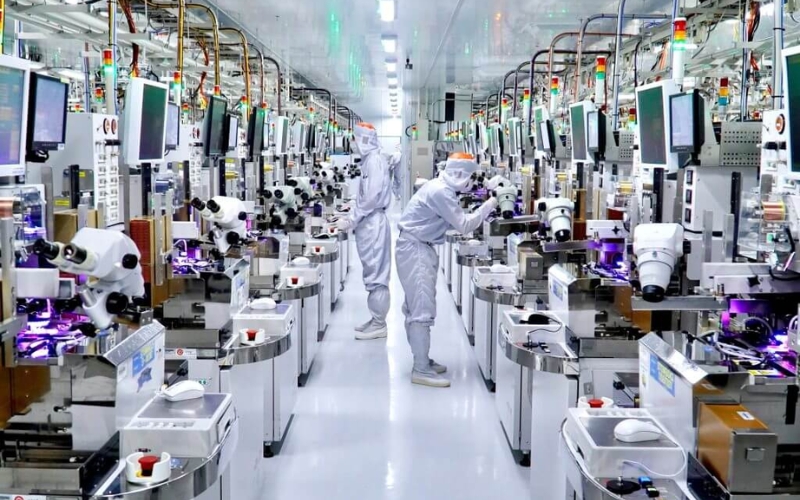
For most foreign manufacturers, evaluating Thailand means evaluating the Eastern Economic Corridor (EEC). Covering the provinces of Chonburi, Rayong, and Chachoengsao, the EEC has become the country’s primary destination for high-value manufacturing, combining world-class infrastructure, integrated supply chains, and one of ASEAN’s most comprehensive investment incentive frameworks.
Unlike traditional industrial estates, the EEC is designed to accelerate Thailand’s transition toward advanced industries. Government policy prioritizes five strategic clusters: next-generation automotive, digital industries, medicine and healthcare, the Bio-Circular-Green (BCG) economy, and high-value services. This sector-focused approach allows investors to benefit from concentrated supplier networks, specialized talent, and infrastructure tailored to technology-intensive production.
Investor confidence is demonstrated by the magnitude of capital flowing into the corridor. The EEC received about US$60.23 billion in investment applications in 2025, making it one of the most prominent regional active industrial investment zones. While this illustrates manufacturing potential with confidence in the outlook of Thai manufacturing in the long term, it equally means that the competition has become much more serious and aggressive for prime industrial locations, skilled labor, and local Thai suppliers, as compared to only a few years back.
The composition of foreign investment shows the direction of Thailand’s industrial transformation. The Thailand Board of Investment (BOI) stated that Singapore has been the dominant player with an approved FDI of approximately 57% in the recent reports, mainly in data centers and PCB manufacturing. China, with an approved FDI of about 12%, has been mainly interested in high-density interconnect PCBs, battery elements, and precision machinery. Japan, with an approved FDI of roughly 10%, has been continuing its traditional investments in the automotive and advanced manufacturing industries.
Rather than relying on a single source of capital, the EEC is attracting investors from multiple industrial economies, creating a diversified manufacturing ecosystem that supports both regional and global supply chains.
Another defining characteristic of new investment is the growing importance of sustainability. Thailand’s industrial policy now places Advanced Green Manufacturing at the center of future development, with Bio-Circular-Green (BCG) principles increasingly embedded in investment approvals, factory design, and supply chain requirements. For manufacturers entering the market today, environmental performance is no longer simply a corporate responsibility initiative; it has become an important factor influencing project competitiveness and access to government support.
Investors should note that being successful in the EEC will increasingly come down to timing. Due to high demand, industrial land has been running out in the main estates. This results in increased land costs and higher lease prices. As developers gain the most negotiating power, companies that start choosing sites earlier will gain the best locations and the most strategically valuable sites that have potential to grow.
Long-term production in the EEC is still Southeast Asia’s best option to continue manufacturing for the foreseeable future. Unfortunately, to fully enjoy the EEC, companies still have to do more than just choose an industrial estate. Developers have to know the most effective way to develop incentives based on how the country wants to develop its industry.
Legal Framework & BOI Incentives
Thailand has built one of Southeast Asia’s most established investment promotion systems, with the Thailand Board of Investment (BOI) serving as the primary gateway for foreign manufacturing projects. Rather than offering broad incentives to every industry, the BOI focuses on activities that strengthen industrial competitiveness, encourage technology transfer, and support higher-value production.
For eligible manufacturing projects, BOI promotion can significantly improve investment returns through a combination of fiscal and non-fiscal incentives. These commonly include corporate income tax holidays, import duty exemptions on machinery, duty exemptions on raw materials used for export production, and additional support for investments involving automation, smart manufacturing technologies, research and development, and Bio-Circular-Green (BCG) initiatives.
For investors, these incentives reduce both initial capital expenditure and long-term operating costs, making Thailand particularly attractive for export-oriented manufacturing projects with substantial equipment investment.
Projects located within the Eastern Economic Corridor may also qualify for enhanced support beyond the standard BOI package. Because the EEC represents Thailand’s flagship industrial development program, qualifying investments benefit from continued government investment in transport infrastructure, utilities, digital connectivity, and industrial estate expansion. Manufacturers operating within the corridor therefore gain not only tax incentives but also access to an ecosystem specifically designed for advanced production.
Increasingly, the quality of an investment is more important than the quantity when it comes to incentive eligibility. Firms in the electric vehicles and upstream battery and advanced electronics supply chain sectors, for example, are under pressure to create more domestic value. This may include, for example, sourcing materials from local suppliers. It is, therefore, advisable for investors to create suppliers as part of their long-term manufacturing investment strategy rather than treating local sourcing as a necessary compliance activity.
Thailand is still relatively open to foreign investment in manufacturing. With regard to most of the manufacturing activities promoted by the BOI, foreign ownership can be equal to or greater than 50%. With regard to other manufacturing activities, some provisions of the Foreign Business Act may apply. Prior to making an investment, it is advised that companies obtain the most appropriate and specialized local legal counsel to confirm that the required ownership is in compliance with the manufacturing activities they intend to undertake.
Ultimately, the BOI should be viewed as more than a tax incentive agency. It provides a structured framework that aligns foreign investment with Thailand’s industrial strategy while helping manufacturers reduce project costs and improve long-term competitiveness. Once investors have identified the appropriate BOI pathway, the next step is assessing operational risks, including rising production costs, increasing competition for industrial sites, and evolving supply chain requirements, that may influence project execution and future profitability.
Risks, Challenges & Practical Guidance for Investors
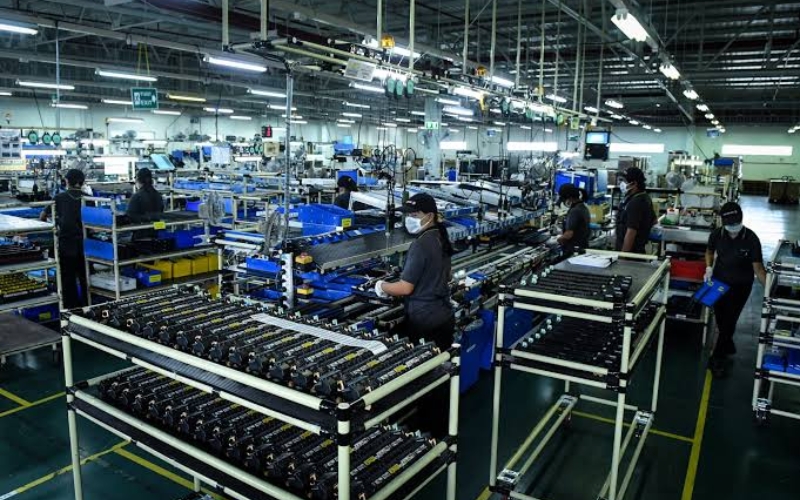
Thailand remains one of Southeast Asia’s most established manufacturing destinations, but 2026 is no longer a low-cost, low-competition environment. Investors evaluating the Thailand manufacturing industry should balance strong industrial fundamentals with rising operating costs, tighter industrial land availability, and increasingly demanding sustainability requirements. Entering the market successfully now depends as much on strategic planning as on selecting the right investment sector.
Rising costs present an immediate concern. In Thailand, the April 2026 Manufacturing PMI was a positive 52.7, but manufacturers reported a sharp rise in input costs. Middle Eastern geopolitical issues create increased costs in oil, transportation, and raw materials, as well as disrupted global supply chains, forcing manufacturers to raise prices after an 8 month price freeze. This requires foreign investors to model the costs of energy, transportation, and raw material procurement at levels significantly greater than they have been during the past.
There is a notable decrease in the availability of industrial land in the Eastern Economic Corridor (EEC). Demand for investment throughout 2025 has sharply reduced the availability of land in the major Industrial Estates in Chonburi and Rayong. Increased land and lease costs have resulted in a seller’s market. To minimize the impact of increased land costs and delays, companies should select sites for major manufacturing projects long before the building phase of the projects begins and secure major land sites before the building phase of the projects begins.
Competition has also intensified. More than US$60 billion in investment applications flowed into the EEC during 2025, attracting many of the world’s leading manufacturers in semiconductors, electric vehicles, batteries, data centers, and advanced electronics. The implication is clear: simply establishing production capacity is no longer enough. Investors are increasingly expected to differentiate themselves through automation, high-value manufacturing capabilities, sustainable production methods, and integration with Thailand’s Bio-Circular-Green (BCG) economic strategy.
Before committing capital, foreign manufacturers should complete several key due-diligence steps:
- Confirm eligibility for BOI promotion based on the project’s industry classification and planned activities.
- Assess domestic sourcing requirements if targeting higher-tier incentives, particularly in EV, battery, and advanced manufacturing supply chains.
- Compare industrial locations based on long-term operational priorities:
- Eastern Economic Corridor (EEC): Best suited for export-oriented advanced manufacturing with integrated logistics.
- Central Thailand: Strong supplier ecosystem and convenient access to domestic customers.
- Northern and Northeastern Thailand: Attractive for agro-processing, food manufacturing, and labor-intensive industries.
- Southern Thailand: Competitive location for rubber processing, halal food production, and maritime-related manufacturing.
- Include rising industrial land costs and longer site acquisition timelines in project budgets.
- Engage experienced local legal, tax, and industrial-estate advisors before finalizing investment structures.
While other areas of Thailand’s economy are likely to see modest growth in 2026, the structural advantages Thailand’s manufacturing sector has over regional competitors means manufacturing will continue to grow. Thailand will continue to be one of the leading manufacturing countries in ASEAN because of over a year of continuous manufacturing growth, foreign investment, a modern logistics system, and government support for advanced industries.
2026 will be a year of opportunity for companies that wish to invest in automation, sustainable manufacturing and flexible supply chains, as they will be able to set up operations in Thailand before the rest of the region starts to grow industrially. Manufacturing companies will have to carefully research the different locations in the country, align their manufacturing projects with the priorities of Thailand’s Board of Investment (BOI), and continue to design state of the art and modern facilities if they wish to be successful.
Conclusion
Thailand’s manufacturing industry continues to offer compelling opportunities for foreign investors seeking a stable, export-oriented production base in Southeast Asia. While rising costs, tighter industrial land supply, and stronger competition require more disciplined investment planning, the country’s advanced infrastructure, BOI incentives, established supplier networks, and strategic focus on high-value manufacturing continue to strengthen its long-term competitiveness.
Those businesses which integrate projects with the Eastern Economic Corridor (EEC), implement sustainable production, and take advantage of the changing landscape of industry in Thailand will be in the best position to benefit from Thailand’s next level of growth in manufacturing. Instead of asking if Thailand is still attractive, investors should be asking how to enter the Thailand market and at what location, with what kind of operating model and with what type of strategy in order to achieve the best returns.