


This guide examines the market outlook for 2026, the government’s semiconductor strategy, available investment incentives, and the key risks investors should evaluate before entering one of the region’s most established electronics manufacturing markets.
Thailand’s Electronics Industry in 2026
Thailand’s electronics industry remains one of the country’s most important export sectors and continues to evolve toward higher-value manufacturing. While traditional electronics production remains a key economic pillar, government policy and private investment are increasingly focused on semiconductors, integrated circuits (ICs), and advanced electronic components.
Electronics and electrical products generated approximately THB 1.86 trillion (US$58.9 billion) in exports during 2024, while semiconductor exports alone reached THB 436 billion (US$13.8 billion). Together, electronics-related products account for roughly one-quarter of Thailand’s total merchandise exports, underscoring the industry’s importance to the national economy. This strong export base gives investors immediate access to well-established global supply chains rather than requiring them to build new export networks from scratch.
Another sign of investor confidence is the constant rate of BOI-promoted investment. Thailand received 1,748 investment promotion applications from 2018 to November 2025 in the electrical and electronics sector, indicating proposed investment of seventeen billion dollars. Consequently, electronics is Thailand’s leading sector in providing investment promotion, constituting around 19% of all BOI applications. These figures indicate that multinational manufacturers continue to view Thailand as one of the preferred locations in ASEAN to have large-scale production of electronics.
The industry’s outlook also remains positive despite a challenging global environment. Between 2026 and 2028, Thailand’s integrated circuit production is projected to expand by 3.0–4.0% annually, while IC export values are expected to increase by 2.5–3.5% per year. Growth will be supported by rising demand for AI computing, cloud infrastructure, automotive electronics, industrial automation, and data centers, all of which require increasingly sophisticated semiconductor components.
Established Manufacturing Base
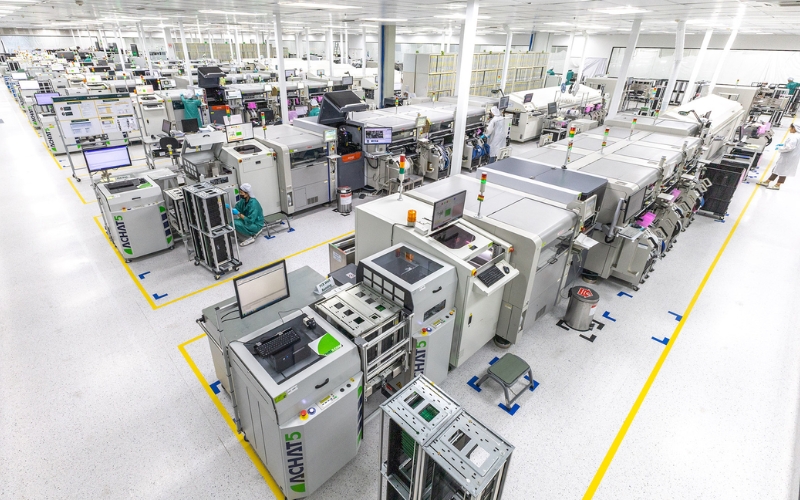
Thailand has built one of the most sophisticated electronics manufacturing systems in Asia. It boasts an excellent network of suppliers, modern factories, good transportation systems, and an experienced workforce. Production costs are lower and operational risks are fewer when compared to newer manufacturing hubs.
Because of these features, and rather than competing strictly on the cost of labor, Thailand is now competing on the capabilities of its manufacturing and its supply chain integration. Because of this, reliable manufacturing based production systems for electronics is more expensive in Thailand than in many of its neighboring countries, but in return for the expense you get reliable systems.
Transition Toward Semiconductors
While consumer electronics and electrical appliances remain important, Thailand’s investment priorities are shifting toward semiconductor manufacturing and related technologies. Government agencies are actively encouraging investment in integrated circuits, advanced packaging, testing services, and chip design to strengthen the country’s position within the global semiconductor value chain.
This change indicates that future growth is more likely to emerge from higher-value segments, as opposed to traditional electronics assembly. Therefore, it is critical to understand the areas of focus for Thailand and the potential support available from the Thai government before considering particular investment opportunities. The following section analyzes the national semiconductor strategy of Thailand and the sectors that will yield the greatest long-term value.
The Semiconductor Opportunity
The electronics industry in Thailand is evolving. Global integration of Thailand’s national policies regarding the semiconductor supply chain is the primary driving force. Thailand aims to emerge as a global semiconductor industry player. Rather than entering competition with established dominant players in the industry such as Taiwan and South Korea’s wafer fabrication industry, Thailand will focus on its core manufacturing strengths and gradually step up into higher semiconductor value added activities. In this way, multiple foreign investors with various skills and capabilities will be interested in collaborating with Thailand.
The centerpiece of this strategy is the government’s “Made-in-Thailand Chips” roadmap, which aims to attract more than THB 2.5 trillion (approximately US$79 billion) in semiconductor-related investment and develop a workforce of 230,000 skilled professionals by 2050. For investors, this long-term commitment provides greater policy certainty than short-term incentive programs, particularly for capital-intensive manufacturing projects with extended payback periods.
Building on Existing Strengths
Rather than pursuing leading-edge wafer fabrication immediately, Thailand is prioritizing areas where it already has industrial capabilities and supplier networks. Current investment promotion focuses on:
- OSAT (Outsourced Semiconductor Assembly and Testing)
- Integrated circuit (IC) design
- Power semiconductors
- Sensor chips
- Photonics
- Analog and discrete semiconductor devices
Investors can use Thailand’s advanced electronics manufacturing ecosystem and increasing government support during phases of this strategy. As companies enter programs with greater assistance, they encounter advanced, local, and skilled employees and faster market entry. Companies that focus on developing technology in less advanced support areas do not experience these benefits.
Strong Industry Momentum
Thailand’s semiconductor ambitions are supported by an established base of multinational manufacturers. Companies including Infineon, Analog Devices, Lumentum, Microchip Technology, and Foxsemicon already operate production facilities in the country, demonstrating confidence in Thailand’s manufacturing capabilities.
The government is attempting to pull in more investment funds. In 2026, a Thai group traveled to Washington, D.C., to advertise the semiconductor investment opportunities for the companies GlobalFoundries, Teradyne, and Phononic. Notably, Phononic is looking to centralize its production in Thailand by 2027. These efforts imply that the government’s strategy to prompt investment is shifting from forms of policy declarations to direct formal engagement with leading industrial scientists all over the world.
Global market conditions further strengthen the investment case. Industry forecasts expect the semiconductor market to exceed US$1 trillion by the end of 2026, driven by AI, cloud computing, electric vehicles, industrial automation, and high-performance computing. Thailand is positioning itself to capture part of this expanding demand by supplying specialized chips rather than competing across the entire semiconductor value chain.
Demand Anchored by Domestic Industries
One of Thailand’s competitive advantages is that semiconductor demand is supported by its own industrial base. The BOI has aligned semiconductor development with sectors where Thailand already has strong manufacturing capabilities, including automotive production, renewable energy, industrial equipment, and data centers.
The combined method decreases dependency on demand for exports. It also emphasizes the need for collaboration between chip producers and downstream industries. Investors benefit through the ability to invest across multiple value chains and not just as standalone exporters.
Because Thailand’s semiconductor industry is maturing, investors should know how the government is using incentives to stimulate investments in the sector and the derived investment regulations. The next part describes the BOI and the benefits available to foreign electronics producers.
BOI Incentives & Investment Framework
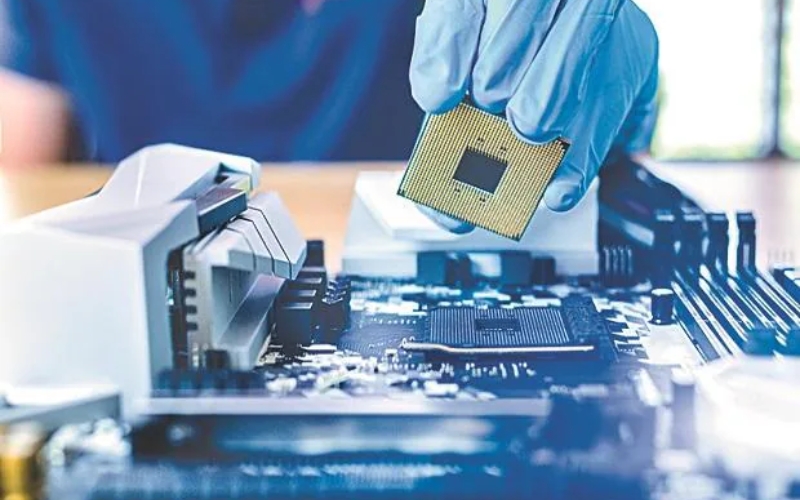
Thailand’s semiconductor ambitions are backed by one of ASEAN’s most established investment promotion systems. For foreign investors, the Thailand Board of Investment (BOI) serves as the primary gateway for accessing tax incentives, streamlined approvals, and government support for electronics and semiconductor projects.
The BOI focuses on manufacturing technologies that correspond with Thailand’s semiconductor roadmap and does not provide general incentives for all manufacturing operations. Therefore, to define the investment structure and the scope of the project, the BOI should be taken into account.
BOI Incentives
Eligible electronics and semiconductor projects may receive a combination of fiscal and non-fiscal incentives, including:
- Corporate income tax exemptions for qualifying projects.
- Import duty exemptions on machinery and production equipment.
- Duty exemptions on raw materials used for export-oriented manufacturing.
- Faster investment approval and facilitation for priority semiconductor activities.
These incentives can significantly reduce upfront capital costs and improve project economics, particularly for manufacturers investing in advanced production equipment.
Aside from the incentives, the Thai government is sharpening the infrastructure for semiconductor production. Future investments will fund dedicated industrial clusters, upgraded systems for water management and flood protection, as well as improved reliability and access to clean energy. Upgrades will mitigate specific operational risks focused on the fabrication, packaging, and testing of semiconductors.
Long-Term Investment Support
Thailand’s semiconductor strategy extends beyond traditional tax incentives. The national roadmap proposes expanding funding mechanisms for high-value industries through new co-investment programs and innovation funds, creating additional financing opportunities for strategic technology projects.
Foreign investors also benefit from a generally open investment environment. Electronics manufacturing is typically eligible for majority foreign ownership under BOI promotion, although ownership structures may vary depending on the specific business activity under the Foreign Business Act. Investors should therefore confirm applicable regulations before finalizing their investment structure.
Thailand’s well-established manufacturing ecosystem and long-term plans for semiconductor advancement, paired with the strategies detailed previously, showcase the conditions advancing the regional capability for the creation of electronics. Given this, foreign direct investment is warranted. Investors should understand that, while advantageous, the improved conditions also create increased competition for Thailand from neighboring markets. Thailand’s position in the semiconductor value chain also presents additional challenges. The risks, in addition to the value and applicability of the semiconductor manufacturing efforts in Thailand, are examined in the subsequent section.
Risks & Practical Considerations
Thailand offers one of Southeast Asia’s most established electronics manufacturing ecosystems, but investors should recognize that its semiconductor industry remains in a transitional phase. While government support is strong and multinational interest continues to grow, the country’s long-term strategy has yet to translate into a fully integrated semiconductor supply chain. Understanding these realities can help investors identify the right entry point and manage execution risk.
Manufacturing Depth and Regional Competition
Thailand’s semiconductor exports continue to expand, but the industry’s manufacturing capabilities are still concentrated in assembly and testing rather than upstream chip production. Although integrated circuit (IC) export values were projected to increase by 29.5–30.5% in 2025, domestic IC production volumes declined by 3.5–4.5% over the same period. In addition, Thailand imported approximately US$1.1 billion worth of semiconductor devices from China during the first ten months of 2025, accounting for 35.4% of total semiconductor imports.
For potential investors, Thailand still remains an essential manufacturing and exporting country, but does not have a fully self-sufficient semiconductor ecosystem. Investors should analyze the supply chain, especially if the business relies on imported semiconductor wafers and parts.
There is also strong competition within ASEAN as well. Vietnam has government incentives and remains a country where more and more semiconductor investments are made. Johor-Singapore Special Economic Zone is another area that is of great interest for more elevated electronics manufacturing in Malaysia. Thailand’s national strategy should be implemented well to continue being the optimal choice in the region.
Execution and Infrastructure Risks
Thailand’s semiconductor roadmap runs until 2050 and is intentionally optimistic. Apart from the roadmap, the independent industry assessment describes the strategy as credible yet difficult to execute. Establishing the entire semiconductor value chain is highly complex, requiring sustained investments over several decades, especially towards skilled workforce development and technological transfer.
For this reason, potential investors should evaluate progress and the strategy’s implementation based on observable intermediate milestones and the committed measurable investments, as opposed to the long-term strategy’s goals. Industrial developments comprising the expansion of industrial clusters, improvements to supporting infrastructure, a skilled workforce, and the attraction of the world’s leading semiconductor manufacturers and investing firms are better indicators of the strategy’s implementation than the announced goals on investments.
The government’s commitment to improve industrial infrastructure, including power reliability, water management, flood protection, and clean energy availability, supports long-term manufacturing competitiveness. However, project timelines may differ across industrial zones, making site selection an important part of investment planning.
Practical Recommendations
Foreign investors can increase their probability of success when they adjust their investment approaches to match the now-prioritized industries of Thailand versus the country’s more aspirational future industries. Companies should reflect on the following before entering the market:
- Confirm BOI incentive eligibility for priority semiconductor segments such as power, sensor, photonics, analog, and discrete devices.
- Select locations with completed or near-term infrastructure upgrades to reduce operational risk.
- Evaluate supply-chain dependence on imported semiconductor materials when planning production capacity.
- Focus on areas where Thailand already has competitive advantages, including OSAT, IC design, and advanced electronics manufacturing.
- Monitor implementation milestones under the national semiconductor roadmap as indicators of future ecosystem development.
Thailand’s semiconductor industry is advancing to higher-value manufacturing. However, investors that align to today’s strengths instead of tomorrow’s ambitions are expected to achieve faster commercialization and lower execution risk.
Conclusion
Thailand’s electronics industry remains one of ASEAN’s most attractive destinations for advanced manufacturing investment. Supported by a mature export ecosystem, strong BOI incentives, and a clear national semiconductor strategy, the country is positioning itself to move beyond conventional electronics assembly toward higher-value chip manufacturing and design.
For foreign investors, opportunity exists where Thailand shows advantages, especially semiconductor assembly and testing, IC design, automotive electronics, industrial electronics, and specialized semiconductor devices. Along with competitive advantages, Thailand has a strong supplier base, good industrial infrastructure, and developing domestic demand affected by automotive and renewable energy and data center growth.
While opportunities exist, investors should be realistic. Thailand is developing a long-term semiconductor ecosystem, rather than operating a fully integrated one. To manage expectations while entering the market, evaluating BOI incentives and aspect readiness and resilience and the location of your project will continue to be important.
Companies that adopt a long-term investment strategy and align with Thailand’s semiconductor priorities are well positioned to benefit from the country’s transition into a higher-value electronics manufacturing hub and its growing role within the global semiconductor supply chain.